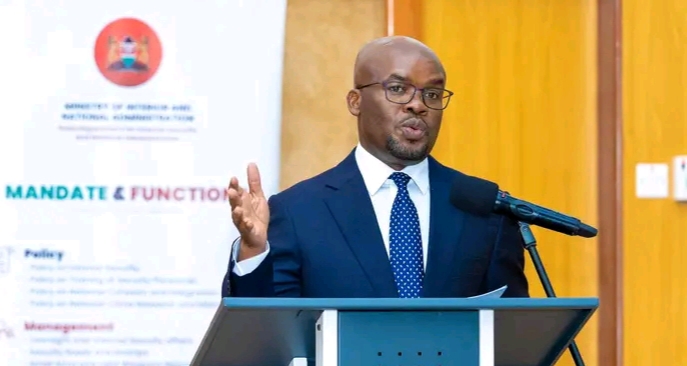
PS Raymond Omollo Opens 12th Cohort of Kenya Coordinated Border Management Programme as Government Moves to Strengthen Border Security
Principal Secretary for Internal Security and National Administration Dr. Raymond Omollo has officially opened the 12th cohort of the Kenya Coordinated Border Management Programme, reaffirming the government's commitment to strengthening national security and improving border operations. The programme aims to enhance cooperation among government agencies, equip frontline officers with modern skills and improve service delivery across Kenya's 35 designated Ports of Entry and Exit. During the event, the Border Management Committees Service Delivery Charters were also unveiled to promote accountability, efficiency and coordination among agencies. The initiative is expected to strengthen the fight against cross-border crime, facilitate legitimate trade, improve the movement of people and goods and enhance cooperation with Kenya's five neighbouring countries.
The programme was officially opened on Monday, November 9, 2026, during a ceremony held at the Kenya School of Government (KSG), Kabete Campus, in Nairobi. The initiative brings together officers and stakeholders involved in border management with the aim of equipping them with the knowledge and practical skills required to address emerging security challenges.
During the event, Dr. Omollo emphasised the importance of Kenya's borders, noting that they play a critical role in protecting the country's sovereignty, supporting economic development and promoting regional integration.
He pointed out that Kenya currently operates 35 designated Ports of Entry and Exit and shares borders with five neighbouring countries. This makes it necessary for government agencies to adopt a coordinated and harmonised approach to managing border operations.
The opening of the 12th cohort also comes alongside the unveiling of the Border Management Committees (BMCs) Service Delivery Charters, which are intended to improve accountability, strengthen cooperation among agencies and enhance the quality of services offered at the country's border points. One of the major objectives of the Kenya Coordinated Border Management Programme is to encourage different government agencies to work together instead of operating independently.
Kenya's border points involve several institutions with different responsibilities, including immigration, security, customs, revenue collection, health inspections and other regulatory services.
Without proper coordination, these agencies may experience challenges involving communication, duplication of responsibilities, delays and difficulties in sharing important information.
The programme seeks to address these challenges by creating a common understanding of border management procedures and encouraging agencies to work towards shared objectives.
Through improved coordination, officers will be better positioned to respond to security threats, identify suspicious activities and facilitate the movement of legitimate travellers and goods.Their introduction is expected to improve service delivery by ensuring that government institutions understand their responsibilities and cooperate in providing efficient services to travellers, traders and other border users.
The initiative also seeks to strengthen accountability by promoting clearer procedures and encouraging agencies to work together in addressing challenges experienced at border points.
For travellers, efficient border management can mean fewer unnecessary delays, better communication and more predictable procedures when entering or leaving the country.
For businesses, improved coordination can make the movement of goods easier and support trade activities.
The service delivery charters therefore represent an important part of the government's wider efforts to modernise border operations and make public services more efficient. For example, immigration officers, customs officials and security personnel need to cooperate when handling travellers, monitoring cargo and responding to possible security threats.
Better coordination is expected to reduce operational gaps and improve the government's ability to respond to emerging challenges.
2. Building knowledge and capacity
The second pillar focuses on training and equipping border officers with the necessary knowledge and professional skills.
Border operations continue to become more complex due to changing security threats, technological developments and increased international movement of people and goods.
Officers therefore require continuous training to understand modern border management practices and effectively perform their responsibilities.3.Improving service delivery
The third pillar focuses on improving the quality and reliability of services offered at border points.
The government wants border agencies to provide consistent services while ensuring that legitimate travellers and businesses can access services without unnecessary difficulties.
The newly unveiled Service Delivery Charters are particularly important in supporting this objective.
Through common standards and improved cooperation, agencies are expected to make border procedures more organised, transparent and accountable.4. Improving operational efficiency
The fourth pillar focuses on making border operations faster, more coordinated and effective.
Unnecessary delays at border points can affect travellers, transporters, traders and businesses that depend on the smooth movement of goods.
By harmonising procedures and encouraging agencies to share information, the programme aims to reduce duplication of work and improve the efficiency of border operations.
This could also contribute to improved trade facilitation and stronger economic relations between Kenya and neighbouring countries.5.Strengthening border security
The fifth pillar focuses on protecting the country's borders against criminal activities and other security threats.
Kenya faces different security challenges that require effective monitoring and cooperation among relevant institutions.
These include cross-border criminal activities, smuggling, trafficking, illegal movement of goods and people, and other threats that may undermine national security.
The programme seeks to strengthen the ability of border agencies to identify risks, enforce regulations and respond effectively to security incidents.
The five pillars work together to create a coordinated system that supports both national security and economic development. Boosting trade and economic development
The programme is not only focused on national security but also on supporting Kenya's economic development.
Borders play an important role in facilitating international trade, particularly for countries that depend on regional markets for the exchange of goods and services.
Kenya's economy is connected to neighbouring countries through road transport, agricultural trade, manufacturing, tourism and other commercial activities.
When border operations are efficient, traders can transport their goods more easily, businesses can reduce unnecessary costs and consumers can benefit from improved access to products.The country shares borders with five neighbouring nations, making cooperation with other countries necessary when addressing cross-border security challenges.
Criminal activities do not always stop at national boundaries. Some security threats involve networks operating across several countries, requiring information sharing and coordinated responses.
The KCBMP encourages officers to appreciate the importance of domestic and international cooperation in managing these challenges.
Kenya's strategic position in East Africa also makes it an important partner in regional security and economic integration.
Through stronger border management systems, the country hopes to improve its relationships with neighbouring states while supporting peaceful cross-border movement and legitimate trade.The Kenya Coordinated Border Management Programme has been implemented through cooperation between the Border Management Secretariat and the Kenya School of Government's Security Management Institute.
According to the Border Management Secretariat, the programme was introduced in 2020 and has previously trained 11 cohorts of frontline border officials.
The training programme is designed to equip officers with practical knowledge and modern skills to improve their performance at the country's Ports of Entry and Exit.
It also promotes cooperation between government agencies by encouraging a whole-of-government approach to border management.The partnership with the Border Management Secretariat also provides an opportunity to strengthen the knowledge and professionalism of officers drawn from different government institutions.
The training is important because effective border management requires more than the presence of security personnel. Officers must understand the laws, procedures, institutional responsibilities and modern practices governing border operations.Improved border coordination could make it easier for citizens travelling to neighbouring countries to access services.
Traders and transport companies may also benefit from more organised procedures and better cooperation among government agencies.
For communities living near international borders, effective border management is important in addressing insecurity and supporting peaceful relations with neighbouring communities.
The programme could also strengthen efforts to combat illegal activities that affect border communities and threaten the country's security.

You Might Also Like
-
Interior Cabinet Secretary Kipchumba Murkomen has reassured international partners that the government is strengthening security arrangements to ensure Kenya conducts peaceful 2027 General Elections. Speaking on Monday, November 9, 2026, during a meeting with Refugee Donor Group heads of mission, re
-
Deputy President Kithure Kindiki has reaffirmed the government’s commitment to equitable development, insisting that every region across Kenya deserves a fair share of national resources. He emphasised that no Kenyan is more important than another and that all citizens have equal rights, regardles
-
Kasarani Member of Parliament Ronald Karauri has officially joined the United Democratic Alliance (UDA) as he positions himself to contest the Nairobi gubernatorial seat in the 2027 General Election on the ruling party’s ticket. His move marks a significant political development as preparations fo
-
The Directorate of Criminal Investigations (DCI) has clarified that the 454-kilogram consignment of suspected methamphetamine seized in Kwale County originated from Pakistan and is not connected to the separate 1,036-kilogram narcotics shipment recovered from the vessel MV Mashala, which was traced
-
Police are investigating the tragic death of 17-year-old Michael Kimani, who was allegedly pushed from the ninth floor of an Airbnb apartment in Gwakairu in an incident that has left his family devastated and raised serious questions about the circumstances surrounding his death. The teenager’s pa
-
Deputy President Professor Kithure Kindiki visited Taita Taveta County on Monday, November 9, 2026, as part of the government's ongoing development. The confirmed activity from the day's programme includes the inspection of Kimala Senior School at Rekeke in Taveta Constituency. The project involves