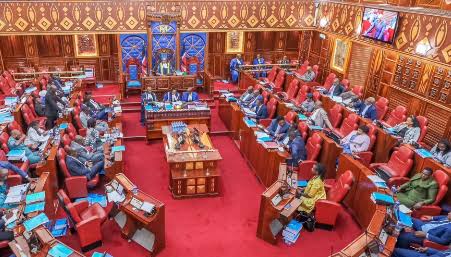
Parliament Passes Landmark Breastfeeding Bill to Support Working Mothers
Kenya’s Parliament has passed the landmark Breastfeeding Mothers Bill aimed at improving support for working mothers and protecting their rights in the workplace.The proposed legislation seeks to promote breastfeeding-friendly environments by encouraging employers to provide suitable lactation facilities, reasonable breastfeeding breaks and flexible working arrangements. The Bill also aims to protect breastfeeding mothers from discrimination and make it easier for women to balance their professional responsibilities with caring for their infants. The move highlights the importance of maternal health, infant nutrition and family welfare, particularly for mothers returning to work after maternity leave. Its implementation is expected to encourage employers to adopt more supportive workplace policies while raising awareness of the challenges faced by breastfeeding women. The proposed law marks a significant step towards creating family-friendly workplaces where mothers can pursue their careers while meeting their children's nutritional needs.
Parliament has passed a landmark Breastfeeding Bill aimed at strengthening support for working mothers and improving conditions that enable women to continue breastfeeding while meeting their professional responsibilities. The proposed legal framework highlights the importance of creating workplaces where mothers can care for their infants without being forced to choose between their livelihoods and their children's nutritional needs.
The development brings renewed attention to the challenges faced by women returning to work after childbirth, particularly those working in environments where breastfeeding facilities, flexible schedules and adequate breaks may be limited. For many mothers, returning to employment marks the beginning of a difficult period in which they must balance demanding work routines with the responsibility of feeding and caring for a young child.
Breastfeeding is widely recognised as an important part of infant nutrition and early childhood development. However, maintaining breastfeeding after returning to work can be difficult when employers do not provide suitable facilities or sufficient time for mothers to express and store breast milk. The legislation is intended to address such barriers by promoting more supportive conditions for breastfeeding women.
The passage of the Bill also places the discussion of maternal health and workplace welfare firmly within the broader conversation about employment rights, gender equality and family wellbeing in Kenya.
Key Provisions of the Breastfeeding Mothers Bill
The Breastfeeding Mothers Bill, 2024, sponsored by nominated Member of Parliament Sabina Chege, seeks to establish clear obligations for employers and strengthen the rights of breastfeeding mothers in Kenya.
One of the central provisions is the requirement for employers to provide suitable lactation facilities within workplaces. These spaces are intended to allow mothers to breastfeed their babies or express breast milk in a private, clean, secure and comfortable environment.
The proposed requirements address a longstanding concern among working women who may lack a suitable place to express milk during working hours. In some workplaces, mothers have had to improvise by using offices, storage areas or other spaces that may not provide the privacy and hygiene necessary for breastfeeding.
Under the proposed framework, employers would be expected to take responsibility for providing appropriate facilities rather than leaving individual mothers to find their own solutions.
The Bill also addresses breastfeeding breaks, recognising that mothers need reasonable periods during the working day to feed their babies or express milk. These provisions aim to make breastfeeding more manageable for women who spend long hours away from their children.
Additionally, the legislation provides for breastfeeding mothers to apply for flexible working arrangements. Such arrangements could involve adjustments to working hours, assignments or work locations, depending on the circumstances and applicable requirements.
The Bill further seeks to protect women against discrimination because they are breastfeeding and to expand access to baby-changing facilities in public places.
Supporting Mothers Returning to Work
Returning to work after childbirth can be a challenging experience for many women. While maternity leave offers mothers time to recover and care for their newborns, the transition back to employment often introduces practical difficulties that require cooperation between employees and employers.
For mothers who wish to continue breastfeeding, the absence of suitable facilities can make the transition particularly difficult. Some may struggle to maintain their feeding schedules, while others may find it difficult to express and store milk safely during working hours.
The proposed legislation seeks to address these challenges by making breastfeeding support part of workplace responsibility.
For example, a mother working in an office could use a designated lactation room to express milk during an appropriate break. A woman employed in a hospital, factory, school or other institution could also benefit from workplace arrangements that recognise her breastfeeding needs.
Such measures could help women maintain their employment while continuing to provide breast milk for their infants.
The issue is especially important for mothers who depend on regular salaries to support their families. Leaving employment because of inadequate breastfeeding support can affect household income, career progression and long-term financial security.
By encouraging employers to create more supportive working environments, the Bill seeks to reduce some of the pressures women experience after childbirth.
Benefits for Infants and Families
Breastfeeding plays an important role in infant nutrition and development. Health professionals generally recommend exclusive breastfeeding for the first six months of life, followed by continued breastfeeding alongside appropriate complementary foods.
However, mothers returning to work may find it difficult to follow these recommendations when their daily schedules do not accommodate breastfeeding or expressing milk.
Access to suitable facilities and reasonable breaks could help mothers continue breastfeeding for longer, depending on their individual circumstances and choices.
Families may also benefit from greater flexibility when managing childcare responsibilities. Where workplaces provide appropriate support, mothers and caregivers can plan feeding schedules more effectively and reduce some of the stress associated with returning to employment.
The proposed law also recognises that the needs of parents extend beyond workplaces. Baby-changing facilities in public places could make it easier for parents and caregivers to travel, attend appointments, shop and participate in community activities with young children.
These facilities are particularly useful during long journeys or visits to public buildings where parents may otherwise struggle to find a hygienic and appropriate place to change an infant.
Implications for Employers
The Bill would place additional responsibilities on employers, requiring them to consider breastfeeding support when organising workplace facilities and employee welfare policies.
Businesses and public institutions may need to assess their existing facilities and determine what changes would be necessary to meet the applicable requirements.
For larger organisations, this could involve designating rooms, installing appropriate equipment and establishing procedures for mothers who need to breastfeed or express milk during working hours.
Smaller businesses may face different practical challenges, particularly where office space is limited. The implementation of the proposed framework will therefore be important in determining how employers meet their obligations across different working environments.
Employers would also need to ensure that breastfeeding mothers are treated fairly and that their needs are not used as a reason for discrimination.
Supportive workplace policies could improve employee morale, strengthen staff retention and help women return to their jobs with greater confidence after maternity leave.
The Bill's passage signals a legislative effort to recognise breastfeeding as an issue requiring attention from employers rather than a responsibility that mothers must manage entirely on their own.
Promoting Equality in the Workplace
The legislation also brings renewed attention to gender equality in employment.
Women continue to carry a substantial share of childcare responsibilities in many households. When workplaces fail to accommodate these responsibilities, mothers can face disadvantages compared with colleagues who do not have similar demands.
A woman may have the necessary qualifications and experience to advance professionally but encounter difficulties when balancing work schedules with the needs of a breastfeeding infant.
Providing suitable facilities, reasonable breaks and opportunities to request flexible arrangements could help reduce these barriers.
The proposed protections may be particularly significant for women working in demanding environments, including healthcare facilities, manufacturing plants, schools, offices and other institutions where leaving a workstation can require advance planning.
The legislation also encourages employers to view maternal support as part of responsible workplace management.
Nevertheless, the practical impact will depend on how the requirements are implemented, how employers respond and whether mothers understand the protections available to them.

You Might Also Like
-
The National Assembly has passed the Sexual Offences (Amendment) Bill No. 78 of 2023, aimed at promoting public awareness, protecting victims’ right to education and aligning existing laws with the Constitution of Kenya. The proposed amendments highlight the importance of safeguarding victims’ r
-
The Kenya Meteorological Department's forecast for October 20–26, 2026, indicates that rainfall is expected in parts of 45 counties across western Kenya, the Rift Valley, Central Kenya, the Coast, the eastern region and the north-eastern counties. Afternoon thunderstorms are particularly relevant
-
Felix Koskei's participation in the Global Trust Summit 2026 placed Kenya's public service leadership within a major conversation about the relationship between institutions and the people they serve. The summit's first day focused on rebuilding trust from the frontline, examining democracy, publi
-
The October 21 protest by public health officers in Nairobi has brought renewed attention to the connection between workers' welfare, adequate staffing and Kenya's preparedness for infectious disease outbreaks. As their nationwide strike entered its 92nd day, the officers demanded the signing of a
-
Governor Patrick Ole Ntutu's reported peace message during the Mashujaa Day celebrations at Esoit Naibor Primary School highlights the importance of unity, security and cooperation in Trans Mara South. The gathering came amid concerns about inter-clan disputes and the need to prevent ethnic incitem
-
Deputy President Kithure Kindiki's development agenda in Gatundu North highlights two important areas: modern market infrastructure and improved road connectivity. Kanyoni Market represents the importance of supporting small-scale traders and farmers, while the inspection of the Thika–Magumu Mau M