Ruto Mocks Edwin Sifuna’s Equitable Party, Questions His Strength Ahead of 2027 Elections
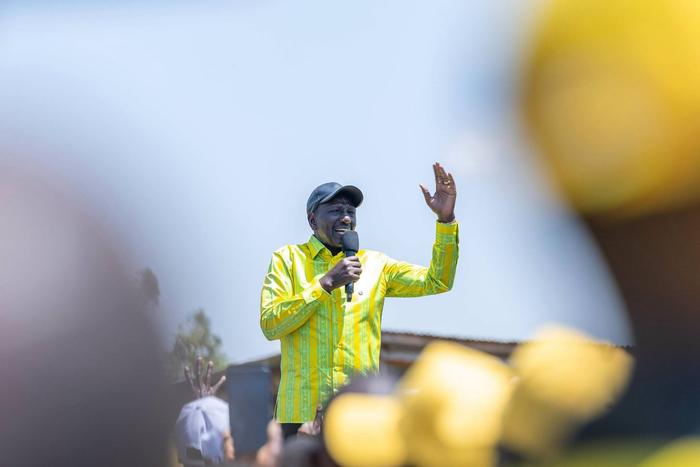
President William Ruto has intensified his political attacks on Edwin Sifuna, ridiculing his political outfit, The Equitable Party (TEP), by referring to it as the “Empty Party.” The President also questioned Sifuna’s ability to mount a serious challenge in the 2027 General Election, portraying him as a weak competitor in the country’s increasingly competitive political landscape. Ruto’s remarks have sparked renewed attention on the emerging political contest ahead of the next General Election, as leaders seek to strengthen their support bases, establish political alliances and position themselves for the 2027 polls. The President’s criticism comes amid heightened political exchanges between government allies and leaders seeking to challenge his administration. As the election approaches, political figures are increasingly using public platforms to criticise their opponents, promote their agendas and question the strength of rival political formations. By describing The Equitable Party as the “Empty Party,” Ruto appeared to cast doubt on the outfit’s political influence and its ability to attract widespread support. His remarks also placed Sifuna’s political ambitions under scrutiny, raising questions about whether the party can establish itself as a significant force in the country’s electoral contest. However, the party’s actual political strength will ultimately depend on its leadership, grassroots structures, policies and ability to convince voters across the country. As the 2027 General Election draws closer, Kenyans will be watching how emerging political formations develop and whether they can translate public attention into meaningful electoral support. The exchange highlights the increasingly sharp political rhetoric expected as leaders prepare for the next election, with voters ultimately set to determine which candidates and parties have the strongest appeal.
President William Ruto has launched a political attack on Edwin Sifuna, ridiculing his political outfit, The Equitable Party (TEP), by referring to it as the “Empty Party” in remarks that highlight the growing political contest ahead of the 2027 General Election.
The President also appeared to downplay Sifuna’s political influence, portraying him as a weak competitor who lacks the political strength to mount a serious challenge in the upcoming polls.
Ruto’s remarks have added to the increasingly heated political exchanges between leaders allied to the government and those positioning themselves as critics of the administration. With the 2027 General Election approaching, political parties and individual politicians are working to establish their influence, attract supporters and present themselves as credible alternatives to the current government.
The President’s criticism of Sifuna comes at a time when political realignments, party formations and disagreements within Kenya’s political establishment continue to shape public debate. Leaders are increasingly using public rallies and political gatherings to communicate their positions, criticise rivals and persuade voters to support their respective political agendas.
By mocking The Equitable Party, Ruto sought to question the political credibility of the outfit and its ability to attract enough support to become a significant force in the country’s political landscape.
However, the remarks also underscore the importance of political competition in Kenya, where parties and candidates must convince voters that they can address the challenges affecting ordinary citizens.
Ruto Questions Sifuna’s Political Influence
In his remarks, President Ruto took aim at Sifuna’s political standing, suggesting that the Nairobi senator should not be regarded as a serious challenger capable of mounting a strong contest in the 2027 General Election.
The President’s description of The Equitable Party as the “Empty Party” appeared intended to ridicule the party’s name and question whether it has the organisational capacity, national support and political influence required to compete effectively.
Political leaders frequently use humour, nicknames and sharp criticism to undermine their opponents during public engagements. Such remarks can attract considerable attention, particularly when they involve prominent politicians who have established themselves as vocal participants in national political debates.
Sifuna is known for his public statements on political and governance issues, making him a recognisable figure in Kenya’s political discussions. His involvement in political debates has also placed him among leaders whose positions attract reactions from both supporters and opponents.
Ruto’s remarks therefore place the spotlight on the political relationship between the President and leaders who challenge his administration or question its policies.
The exchange also demonstrates how political personalities can become central to national conversations, sometimes shifting attention from party manifestos and policy proposals to disagreements between individual leaders.
Nevertheless, the effectiveness of a political party cannot be determined by its name alone. Its strength ultimately depends on its leadership, structures, grassroots mobilisation, ability to recruit candidates and capacity to persuade voters across different parts of the country.
For The Equitable Party, the challenge would be to demonstrate that it can translate its political message into tangible public support if it intends to compete in the 2027 elections.
The Equitable Party Faces Questions Over Its Prospects
The President’s description of TEP as the “Empty Party” has drawn attention to the broader question of whether emerging political outfits can establish themselves in Kenya’s competitive political environment.
For any political party seeking to influence national leadership, the task extends beyond launching a party or attracting attention through public statements. It requires the development of a clear political agenda, effective leadership, an organised membership base and a strategy for reaching voters in different regions.
Parties must also identify candidates capable of competing for elective positions at the county and national levels. Without a strong network of local leaders and campaign structures, even a party with a popular message may struggle to translate public interest into electoral victories.
The 2027 General Election is expected to test the strength of established political parties as well as emerging formations seeking to challenge the existing political order.
Political outfits will need to demonstrate how their policies address issues such as employment, the cost of living, healthcare, education, agriculture, infrastructure and opportunities for young people.
Voters are also likely to scrutinise the credibility of party leaders, their records in public service and their ability to offer practical solutions to the challenges facing the country.
For Sifuna and other politicians seeking to establish alternative political platforms, the task will be to convince Kenyans that their political vision offers meaningful differences from competing parties.
At the same time, criticism from political opponents can increase public attention on an emerging party, potentially giving its leaders an opportunity to explain their agenda and clarify their objectives.
Whether that attention translates into political support, however, will depend on how effectively the party organises itself and engages with the electorate.
The Road to the 2027 General Election
Kenya’s political landscape is expected to become increasingly active as the country moves closer to the next General Election.
President Ruto and his allies are expected to defend their political record and persuade voters to support their leadership, while opposition figures and other political actors will seek to challenge the government on its performance and policy decisions.
The contest will involve more than presidential candidates. Political parties will also compete for parliamentary seats, gubernatorial positions, county assembly representation and other elective offices across the country.
This means that politicians seeking to establish new parties or strengthen existing political movements must consider both national appeal and grassroots organisation.
A party may attract significant attention in Nairobi or other major urban centres but still face difficulties building support in rural areas and across Kenya’s diverse communities. National electoral success often requires a coalition of supporters from different regions, social groups and economic backgrounds.
For a politician such as Sifuna, whose public profile is associated with national political debate, establishing a wider electoral base would be an important consideration if he intends to pursue a larger political role.
Similarly, the President’s allies will need to demonstrate that their political influence extends beyond public rallies and verbal exchanges with opponents.
Ultimately, voters will determine which leaders and political parties have the strongest appeal when they cast their ballots.
Political statements made during the campaign period may influence public discussion, but electoral outcomes will depend on a range of factors, including candidates, party alliances, campaign organisation, policy proposals and the concerns of voters.
Political Insults and the Battle for Public Opinion
Ruto’s remarks also reflect the increasingly confrontational tone of political communication in Kenya, where leaders frequently use pointed language to challenge opponents and strengthen their standing among supporters.
Political insults and nicknames can quickly become popular talking points, particularly when they are delivered by prominent leaders during public appearances.
Supporters may interpret such comments as evidence of a leader’s confidence and willingness to confront political rivals. Opponents, on the other hand, may view them as attempts to distract the public from substantive policy debates.
The description of The Equitable Party as the “Empty Party” is an example of how political language can be used to question an opponent’s credibility without necessarily addressing the details of the party’s policies or organisational plans.
Such exchanges can generate publicity for both sides, as supporters debate the meaning of the remarks and political opponents respond with counterarguments.
However, the long-term impact of political attacks depends on whether they resonate with voters and influence their assessment of the leaders involved.
Kenyans face a range of economic and social concerns, and many voters will expect political leaders to explain how they intend to address these issues.
Consequently, while verbal exchanges can dominate headlines, the more consequential debate is likely to revolve around the policies, leadership records and development plans presented by competing political formations.
The 2027 election will provide an opportunity for voters to assess whether political parties have credible plans and whether their leaders can turn campaign promises into practical results.
Voters Will Have the Final Say
Despite President Ruto’s criticism, the future political strength of The Equitable Party cannot be conclusively determined by a nickname or a single political exchange.
The party’s prospects will depend on its ability to build a strong organisation, communicate its agenda and attract candidates and supporters capable of sustaining its activities beyond the initial publicity surrounding its formation.
Sifuna and other party leaders will also need to demonstrate how their political ambitions align with the interests of the electorate.
For the President, the challenge will be to maintain political support while responding to criticism of his administration and presenting a convincing case for his leadership ahead of the next election.
As political competition intensifies, both government allies and rival leaders are likely to continue using public platforms to challenge one another and promote their respective positions.
The exchange involving Ruto and Sifuna therefore forms part of the wider political contest taking shape ahead of 2027, as leaders seek to define their identities, build alliances and position themselves for the next electoral cycle.
Whether The Equitable Party emerges as a significant political force remains to be seen. Its performance will depend on the strength of its structures, the appeal of its agenda and the support it can secure among voters.
For now, Ruto’s remarks have placed Sifuna and his political outfit at the centre of renewed political discussion, with the President questioning their ability to mount a serious challenge.
As the campaign period draws closer, the focus will increasingly shift to the policies, alliances and strategies that political leaders present to Kenyans.
Ultimately, it will be the electorate—not political insults or public declarations—that determines which parties have earned enough support to shape the country’s leadership after the 2027 General Election.

You Might Also Like
-
The Energy and Petroleum Regulatory Authority (EPRA) has announced a significant increase in fuel prices, with diesel rising by KSh 9.90 to KSh 227.76 per litre, super petrol increasing by KSh 12.93 to KSh 226.96, and kerosene recording the largest increase of KSh 28.49 to retail at KSh 219.87 per l
-
Kenya’s Ministry of Health has confirmed a second case of Ebola Virus Disease involving a close family member of the first patient, prompting intensified contact tracing and surveillance efforts to prevent further infections. Health authorities are monitoring individuals who may have been exposed
-
The Ethics and Anti-Corruption Commission (EACC) has arrested Turkana County Government nurse Gilbert Suleiman Eskuku and his business associate, Abass Abdi Yusuf, over an alleged conflict of interest involving contracts worth KSh2.76 million awarded to their company, Ekwang Suppliers Company Limite
-
Female governors and the G7 movement are intensifying their campaign for women to seek elective leadership positions and for the full implementation of Kenya's two-thirds gender principle ahead of the 2027 General Election. Through the G7 National Women Leadership Forum in Nairobi, women leaders ha
-
Nairobi Governor Johnson Sakaja has called on the Senate to review existing building laws and introduce tougher penalties for developers who disregard approved construction plans. He is also pushing for county governments to be given a greater role in prosecuting construction-related offences, argui
-
British High Commissioner Matt Baugh has delivered two significant messages for Kenya: confidence in the country's ability to respond to Ebola and a commitment by the United Kingdom to engage Kenyan political stakeholders in support of peaceful, free and fair elections in 2027. His assessment of Ke