



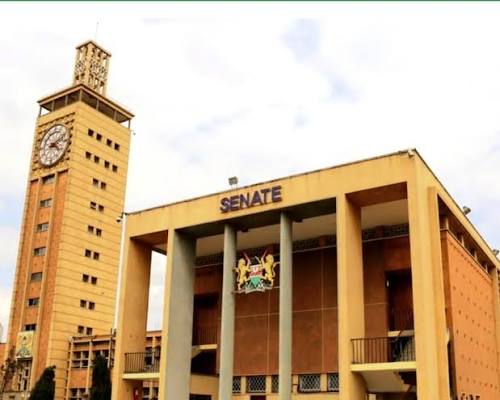
SENATE ORDERS ARREST OF THARAKA NITHI GOVERNOR MUTHOMI NJUKI OVER REPEATED FAILURE TO HONOUR SUMMONSES
The Senate Education Committee has directed the Inspector General of Police to issue an arrest warrant for Tharaka Nithi Governor Muthomi Njuki over his repeated failure to honour summonses since March 2026.
The Senate Standing Committee on Education has directed the Inspector General of Police to issue a warrant of arrest for Tharaka Nithi Governor Muthomi Njuki, following his repeated failure to appear before the committee despite several summonses.
The committee took the decision on Thursday, October 1, 2026, after the governor failed to honour another invitation to appear before senators. According to the latest report, the committee has summoned Governor Njuki on several occasions since March 2026, but he has repeatedly failed to attend the hearings.
The latest development places the governor under increased pressure to appear before the Senate and respond to issues that the Education Committee wants addressed. The committee's decision to involve the police signals a move toward enforcement after previous attempts to secure his attendance did not succeed.
The Senate committees play an important oversight role in examining how county governments perform their functions and manage public resources. Governors and other county officials may be required to appear before committees when senators need clarification on matters falling within their oversight responsibilities.
In Governor Njuki's case, the Education Committee has been seeking his appearance for several months. The repeated summonses date back to March, according to the report, but the governor has not appeared as required.
The committee's action also highlights the continuing tension between parliamentary oversight bodies and county executives over compliance with summonses. Senate committees have previously warned governors and other public officials that failure to appear can attract consequences under the law.
This is not the first time Governor Njuki has faced scrutiny from Senate committees over failure to attend hearings. Earlier in 2026, the Senate Public Accounts Committee also summoned him over issues arising from an Auditor-General's report for the financial year ending June 30, 2025. Committee chairman Moses Kajwang' said the governor's appearance before the committee was mandatory and warned that failure to comply could lead to sanctions provided for under the law.
The latest action by the Education Committee therefore adds another layer to the governor's ongoing engagements with parliamentary oversight bodies.
The committee's directive means the matter is now expected to involve the National Police Service. The Inspector General has been asked to facilitate the enforcement of the committee's order and ensure that Governor Njuki appears before the senators.
However, the reported warrant directive should not be confused with a finding of criminal guilt against the governor. The issue at this stage concerns his alleged failure to honour parliamentary summonses and the committee's effort to secure his attendance.
The Senate has also given the governor another opportunity to appear before the committee. According to the latest report, Governor Njuki is expected to appear before the Senate Education Committee on November 17, 2026, at 9:00 a.m.
The scheduled appearance will provide an opportunity for the committee to question the governor directly and seek responses to the matters for which he has been summoned.
The development comes at a time when Parliament continues to emphasize accountability and oversight of county governments. The Senate's constitutional role includes protecting the interests of counties and exercising oversight over national revenue allocated to county governments.
Through its committees, the Senate regularly invites governors, county executive officials and other public officers to respond to questions concerning county administration, service delivery and the use of public funds.
When officials fail to attend such hearings, committees can face difficulties in obtaining explanations and completing their oversight work. This is why senators have increasingly pushed for stronger enforcement of summonses.
The issue of governors failing to appear before Senate committees has been raised on several occasions. Parliamentary records show previous debates in which senators discussed the need to ensure that county executives comply with summonses issued by oversight committees.
The latest case involving Governor Njuki is therefore part of a wider conversation about the relationship between county governments and Parliament.
For residents of Tharaka Nithi, the outcome of the dispute will determine whether the governor appears before the Education Committee as scheduled. The committee will also have to establish the specific issues it requires the governor to address and consider his responses once he appears.
The decision to direct the Inspector General of Police to issue a warrant demonstrates the seriousness with which the committee is treating the repeated non-attendance. It also sends a broader message that parliamentary summonses are intended to be honoured and that continued failure to appear can trigger enforcement measures.
The governor's expected appearance on November 17 will therefore be closely watched. Senators will have an opportunity to hear directly from him, while Governor Njuki will have an opportunity to respond to the committee's concerns.
For now, the immediate issue remains his attendance before the Senate Education Committee. The committee has moved from issuing repeated invitations to seeking enforcement through the police after the previous summonses were not honoured.
As the November appearance approaches, attention will turn to whether Governor Njuki will attend the hearing and provide the information sought by the committee.
The latest development underlines the importance of cooperation between county governments and Parliament in matters of public accountability. It also demonstrates the increasingly firm approach being taken by Senate committees when public officials fail to respond to formal summonses.
For the people of Tharaka Nithi, the matter will remain significant because the governor's appearance could provide answers to the issues that prompted the Senate's repeated invitations. The committee's proceedings will determine the next steps once the governor is heard.

You Might Also Like
-
Health CS Aden Duale says the Ministry of Health has extended the HMIS transition period by one month, giving Level 5 and 6, private and faith-based facilities more time to complete the migration while ensuring uninterrupted healthcare services.
-
The St. Kizito Litein School for the Deaf eight-kilometre awareness walk gave students and teachers an opportunity to take their message beyond the school compound and into the streets of Litein. The October 1, 2026 activity was aimed at raising awareness about hearing impairment while promoting gre
-
The survey indicates that 52% of respondents support the idea. Among those open to a female Deputy President, Kirinyaga Governor Anne Waiguru leads with 36%, followed by former Deputy President candidate Martha Karua at 27% and Homa Bay Governor Gladys Wanga at 15%.
-
Murkomen's presence in Kiminini and now Saboti places attention on several issues affecting residents of Trans Nzoia: roads and bridges, agricultural development, youth training, public services, security and cooperation between national and county governments. While the exact list of projects he ha
-
The Ogiek meeting in Nandi brought together members of a community that is geographically dispersed across several parts of the Rift Valley, including Kericho, Uasin Gishu and Nandi itself. The gathering came at a time when Ogiek communities continue to discuss ancestral land, historical displacemen
-
President Ruto's current Coast programme is therefore broader than a single-day project launch in Mombasa. It combines land titling, port and maritime development, railway connectivity, Dongo Kundu SEZ, water infrastructure, affordable housing, electricity expansion and regional trade. Mombasa's pos