




Murkomen in Kiminini and Saboti: CS Unveils Key Projects, Delivers Powerful Message on Development and Security
Murkomen's presence in Kiminini and now Saboti places attention on several issues affecting residents of Trans Nzoia: roads and bridges, agricultural development, youth training, public services, security and cooperation between national and county governments. While the exact list of projects he has formally launched during today's Kiminini and Saboti engagements is not yet fully documented in the publicly available sources I could verify, county records confirm substantial ongoing projects in both areas. Kiminini has major investments in bridges, youth polytechnics and agricultural infrastructure, while Saboti has a large portfolio of development projects, including education and technical-training facilities. Murkomen's speeches in the region have consistently connected development with peace, security, unity and cooperation, while his recent national engagements have also focused on eliminating illegal firearms and strengthening security. His movement from Kiminini to Saboti therefore comes amid a wider government effort to highlight development projects while addressing security and public-service concerns across the North Rift.
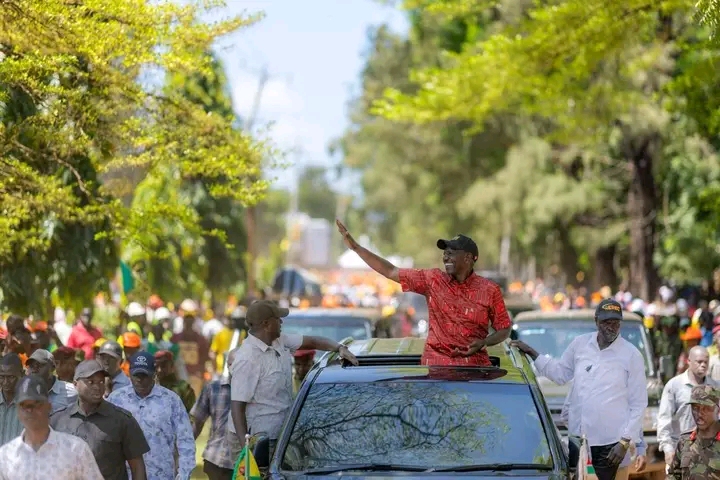
Interior and National Administration Cabinet Secretary Kipchumba Murkomen has continued his engagements in Trans Nzoia County, with his activities in Kiminini and Saboti focusing on government development programmes, security, infrastructure, public services and cooperation between national and county governments.
Murkomen’s visit comes at a time when Trans Nzoia is preparing for a number of government activities and development projects, while the national government has also placed increased attention on security and service delivery in the North Rift. Recent records show that Murkomen has repeatedly used his engagements in the region to discuss development, security and the importance of cooperation between different levels of government.
Murkomen's engagement in Kiminini
Kiminini is one of the five sub-counties of Trans Nzoia and has continued to receive attention in discussions surrounding roads, bridges, agriculture, education and other public infrastructure.
Available county project records show that Kiminini has 179 projects under the current-term project database, with a total budget allocation of about KSh425.3 million and reported expenditure of approximately KSh383.8 million. The county's project-monitoring system puts the average completion level for projects in Kiminini at about 82.8 per cent.
Among the projects recorded in Kiminini are investments in youth polytechnics and agricultural infrastructure. The county project database lists completed KDSP II projects involving cattle-dip renovations in Kiminini and several youth polytechnic projects, including Kiminini Youth Polytechnic, Waitaluk Youth Polytechnic, Machungwa Youth Polytechnic and Naisambu Youth Polytechnic.
Infrastructure has also remained an important issue in the area. In June 2026, the Trans Nzoia County Government reported that construction of bridges in Nabiswa and Sikhendu wards in Kiminini was progressing towards completion. The projects are intended to improve connectivity and movement, particularly during periods when heavy rains make some rural routes difficult to use.
The broader Trans Nzoia development plan also identifies road improvement as a major priority. The county's 2023–2027 development plan proposes the upgrading of several roads, including the Kiminini–Ndalu road, as well as bridge construction and improvements to rural transport networks.
Roads and connectivity
Road infrastructure has been one of the recurring development concerns raised in relation to Kiminini and the wider Trans Nzoia region.
The county development plan identifies road upgrading as necessary to improve movement of agricultural produce, connect rural communities with markets and strengthen links between different parts of the county. The proposed Kiminini–Ndalu road, listed at approximately 5.38 kilometres, is among the roads identified for tarmacking.
For residents of an agricultural region such as Trans Nzoia, road infrastructure has implications beyond transport. Better roads can reduce the difficulty farmers face when transporting maize, vegetables, milk and other agricultural products to markets.
Murkomen has previously argued that cooperation between national and county governments is important in accelerating such development. During an earlier visit to Trans Nzoia, he said national and county governments should work together rather than allow political differences to slow down projects.
What Murkomen has said about development
A major theme in Murkomen's speeches in Trans Nzoia has been the relationship between development and cooperation.
During his July 2025 engagement in the county, he said Trans Nzoia plays an important role in Kenya's food security because of its agricultural production. He also emphasized the importance of keeping markets open and accessible for farmers and traders.
He also spoke about land issues, saying that government would address cases involving public land and illegal occupation. At the same time, he linked development to security, arguing that criminal activities, illicit trade and political violence can undermine economic activity.
His message has therefore combined infrastructure and economic development with security and public administration.
Murkomen's presence in Saboti
Murkomen's engagement with Saboti is also significant because the sub-county contains important administrative and commercial centres within Trans Nzoia.
Saboti has a large number of development projects recorded in the county's project-management system. The database lists 185 projects in Saboti under the current-term period, with an allocated budget of approximately KSh2.13 billion and reported expenditure of about KSh1.82 billion. The reported average completion rate is 85.8 per cent.
Projects listed for Saboti include investments in education and technical training. The county database records completed KDSP II projects at Mukuha Youth Polytechnic and Machewa Youth Polytechnic, each with a budget of about KSh3.59 million.
The sub-county has also featured prominently in Murkomen's previous government engagements.
During his 2025 Jukwaa la Usalama tour, he visited Saboti and assessed civil and mobile national-ID registration at the ACC Central Division. Large numbers of residents had turned up for registration, and Murkomen said the exercise was important because identification documents enable citizens to access government services and participate fully in civic life.
Security remains a major part of his message
Although Murkomen is currently associated with development discussions in Trans Nzoia, his role as Interior Cabinet Secretary means that security remains central to his speeches.
In his previous Trans Nzoia engagements, he warned against criminal gangs, illicit alcohol and drug trafficking and the involvement of security officers in illegal activities. He called on elected leaders to cooperate with law-enforcement agencies to maintain peace and order.
More recently, Murkomen has also spoken strongly about the national government's campaign against banditry. At Nandi Hills Stadium in September 2026, he said the government had recovered about 3,000 illegal firearms and 8,000 rounds of ammunition in banditry-prone areas over a period of about one and a half years. He said the security operation would continue while directing officers to exercise caution and minimise harm to civilians and livestock.
These statements are relevant to his broader message in the North Rift, where security concerns have historically affected movement, trade, farming and investment.
His message on unity
Another issue that has featured prominently in Murkomen's speeches is unity.
In July 2026, he urged religious and political leaders in Trans Nzoia to reject political incitement and promote peaceful coexistence. He argued that political divisions should not interfere with the ability of communities to live and work together.
This message has also appeared in his broader argument that development requires cooperation. His position has been that elected leaders, administrators and communities should work together on issues such as security, infrastructure and public services.
The wider Trans Nzoia development picture
The Kiminini and Saboti engagements should also be understood against the wider development programme in Trans Nzoia.
The county's project-monitoring system records substantial investment across the five sub-counties. Kiminini has 179 projects, while Saboti has 185, according to the current-term database.
The county development plan places considerable emphasis on roads, bridges, transport facilities, markets, drainage, street lighting and other infrastructure. It also proposes improvements to the Kitale airstrip and rail infrastructure as part of a broader strategy to strengthen transport and economic activity.
For Kiminini and Saboti residents, such projects are particularly important because Trans Nzoia is heavily dependent on agriculture. Improved roads and bridges can help farmers transport produce, while youth polytechnics can provide technical and vocational skills to young people.
Murkomen's broader North Rift agenda
Murkomen has recently been involved in preparations for the 2026 Mashujaa Day celebrations, which will be hosted in the North Rift. Uasin Gishu, Nandi and Elgeyo Marakwet are co-hosting the celebrations, with activities expected to include development-project commissioning and sporting events. Murkomen has said the celebrations will showcase progress in sports, security and economic development.
He has also announced a grassroots sporting tournament involving young people from Uasin Gishu, Nandi and Elgeyo Marakwet. According to Kenya News Agency, the tournament is expected to involve more than 10,000 participants, with approximately KSh60 million earmarked for monetary awards.
This demonstrates how Murkomen's current public engagements combine security and administration with youth, sports and development programmes.

You Might Also Like
-
Health CS Aden Duale says the Ministry of Health has extended the HMIS transition period by one month, giving Level 5 and 6, private and faith-based facilities more time to complete the migration while ensuring uninterrupted healthcare services.
-
The St. Kizito Litein School for the Deaf eight-kilometre awareness walk gave students and teachers an opportunity to take their message beyond the school compound and into the streets of Litein. The October 1, 2026 activity was aimed at raising awareness about hearing impairment while promoting gre
-
The survey indicates that 52% of respondents support the idea. Among those open to a female Deputy President, Kirinyaga Governor Anne Waiguru leads with 36%, followed by former Deputy President candidate Martha Karua at 27% and Homa Bay Governor Gladys Wanga at 15%.
-
The Ogiek meeting in Nandi brought together members of a community that is geographically dispersed across several parts of the Rift Valley, including Kericho, Uasin Gishu and Nandi itself. The gathering came at a time when Ogiek communities continue to discuss ancestral land, historical displacemen
-
President Ruto's current Coast programme is therefore broader than a single-day project launch in Mombasa. It combines land titling, port and maritime development, railway connectivity, Dongo Kundu SEZ, water infrastructure, affordable housing, electricity expansion and regional trade. Mombasa's pos
-
The Senate Education Committee has directed the Inspector General of Police to issue an arrest warrant for Tharaka Nithi Governor Muthomi Njuki over his repeated failure to honour summonses since March 2026.