Three Dead, Two Injured in Trailer and Private Car Collision at ACK Salama Along Nairobi–Mombasa Highway
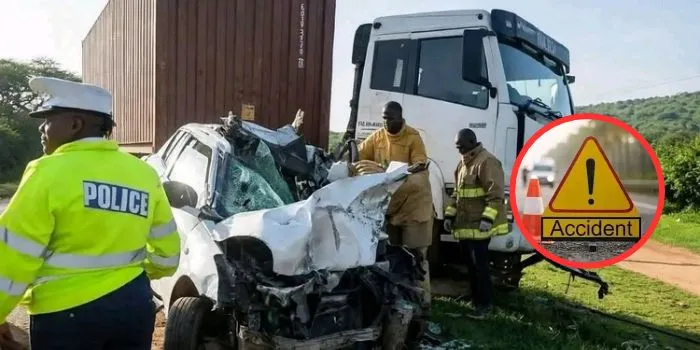
Three people have been confirmed dead, while two others sustained injuries following a tragic collision involving a trailer and a private car at ACK Salama along the Nairobi–Mombasa Highway. The injured victims were rushed to hospital for treatment, with one later transferred to Makindu Hospital for specialised care. The accident has once again raised concerns over road safety along the busy highway, which serves thousands of motorists and commercial transport operators daily. The collision adds to growing concerns over recurring fatal crashes involving heavy commercial vehicles and private cars. Authorities are expected to establish the circumstances that led to the accident as investigations continue. Motorists have been urged to exercise caution, observe speed limits and avoid dangerous overtaking while using the highway. The tragedy has also renewed calls for stronger road safety measures, improved traffic enforcement and greater responsibility among motorists to prevent further loss of lives.
Three people have lost their lives, while two others sustained serious injuries following a tragic road accident involving a private car and a trailer at ACK Salama along the busy Nairobi–Mombasa Highway in Makueni County.
The fatal accident occurred on Friday, November 27, 2026, leaving three people dead at the scene and two others requiring urgent medical attention. The incident involved a private vehicle travelling towards Mombasa and a trailer, which collided head-on near ACK Salama.
According to traffic police, the victims who died in the accident comprised two men and one woman. They reportedly succumbed to their injuries at the scene following the impact, which left the occupants of the private vehicle with devastating consequences.
The two survivors sustained injuries and were rushed to Sultan Hamud Hospital, where they received emergency medical attention. Their condition prompted medical personnel to provide specialised care, particularly for one of the injured victims who suffered severe head injuries.
The Chief Medical Officer at Sultan Hamud Hospital, Stephen Mwangangi, confirmed that the two injured individuals had been admitted to the facility following the crash. However, due to the seriousness of one patient's injuries, the victim was later transferred to Makindu Hospital for specialised treatment.
Meanwhile, the bodies of the three people who died were transported to the Sultan Hamud Hospital mortuary, where they await further procedures and arrangements with their families.
The accident has once again drawn attention to the dangers faced by motorists travelling along the Nairobi–Mombasa Highway, particularly sections around Salama and Sultan Hamud, where fatal collisions have repeatedly been reported.
The highway serves as one of Kenya's major transport corridors, connecting Nairobi and other parts of the country to the coastal region. It is heavily used by private motorists, public service vehicles, buses, commercial trucks and trailers transporting goods between different destinations.
With different categories of vehicles sharing the highway, road safety remains an important concern, especially on sections where motorists encounter heavy traffic and vehicles travelling in opposite directions.
The latest incident adds to growing concerns about road safety along the Nairobi–Mombasa Highway, which has witnessed several deadly accidents in recent months. The Salama area, in particular, has repeatedly featured in reports of fatal road crashes involving heavy commercial vehicles and smaller passenger vehicles.
The accident comes at a time when motorists and other road users continue to raise concerns over the safety of some sections of the highway. The stretch between Salama and Sultan Hamud has been associated with serious collisions, with the movement of heavy trucks and trailers presenting additional challenges for motorists navigating the busy road.
In October 2026, the same general area witnessed another devastating road accident in which at least 17 people lost their lives following a multiple-vehicle collision involving a lorry and several other vehicles. The incident involved Catholic pilgrims travelling towards Subukia National Shrine in Nakuru County. The tragedy attracted national attention and renewed discussions about the need to improve safety along the highway.
Other accidents have also been reported along the route, involving trailers, trucks, buses and private vehicles. These incidents have continued to highlight the risks associated with road travel, particularly where motorists must share limited road space with heavy commercial vehicles.
The repeated accidents have also raised questions about the measures being undertaken by relevant government agencies to improve road safety and prevent further loss of lives. Among the issues frequently discussed are road expansion, better traffic management, enforcement of traffic regulations and identification of dangerous sections requiring urgent attention.
The Nairobi–Mombasa Highway is a critical transportation route for Kenya's economy. It connects the capital city to the Port of Mombasa and facilitates the movement of passengers, agricultural produce, manufactured goods and other essential commodities. Thousands of motorists and commercial transport operators depend on the highway for daily operations.
Its importance means that any major accident along the route can have consequences beyond the immediate victims, potentially disrupting transportation activities and affecting the movement of goods and services.
The latest crash has therefore renewed the importance of responsible driving and strict observance of traffic regulations. Motorists are encouraged to maintain safe distances, avoid dangerous overtaking, observe speed limits and remain attentive throughout their journeys.
Drivers operating heavy commercial vehicles also have a responsibility to ensure their vehicles are properly maintained and that they observe all road safety requirements. Similarly, private motorists must exercise caution when sharing the highway with larger vehicles, particularly on sections where visibility and road conditions may present additional challenges.
The National Transport and Safety Authority and traffic police have an important role in strengthening road safety enforcement, conducting inspections and ensuring that motorists comply with established regulations.
Beyond enforcement, improving road infrastructure remains an important part of addressing the recurring accidents. Authorities have previously discussed interventions targeting dangerous sections of the Nairobi–Mombasa Highway, including road redesign and expansion proposals.
Following previous deadly crashes at Salama, the government announced plans to address dangerous sections and identify accident black spots along the highway. Such interventions are expected to improve road conditions and reduce the risks faced by motorists.
However, the latest incident demonstrates that road safety remains a pressing concern requiring continued attention from motorists, transport operators and relevant authorities.
For the families and friends of the three people who lost their lives, the accident has brought unexpected grief, while the two survivors continue receiving medical attention. The loss of three lives in a single incident is a painful reminder of the devastating consequences of road accidents on families and communities.
The tragedy serves as another reminder of the human cost of road accidents and the importance of strengthening measures aimed at protecting lives on Kenyan roads.
As the country continues to experience road fatalities, motorists are being reminded that caution, patience and respect for traffic regulations are essential in preventing avoidable accidents and ensuring safer journeys for everyone.

You Might Also Like
-
Martha Karua's renewed declaration of her 2027 presidential ambitions marks an important development in Kenya's political preparations ahead of the next General Election. Through her People's Liberation Party and the "Simama na Kenya, Simama na Martha" mobilisation campaign, she is seeking to attrac
-
Bomet East MP Richard Yegon has threatened legal action against individuals and online platforms circulating alleged AI-generated videos and images linking him to the disappearance of nominated MP Sabina Chege's mobile phone. Addressing the National Assembly, Yegon denied any involvement in the inci
-
The Directorate of Criminal Investigations (DCI) and the Anti-Doping Agency of Kenya (ADAK) have signed a Memorandum of Understanding aimed at strengthening the fight against doping-related offences in the country. The partnership will enhance intelligence sharing, coordinated investigations and pro
-
The lawyer representing the family of slain former Rongo University student Sharon Otieno has questioned how former Migori Governor Okoth Obado will continue offering financial assistance to the family while serving his 25-year prison sentence for her murder. The concerns have renewed attention on t
-
President William Ruto is set to resume his Western Kenya development tour on Saturday, November 28, visiting Busia, Bungoma, Kakamega and Vihiga counties in a four-day programme running until December 1, 2026. The tour will feature the launch and commissioning of various development projects target
-
More than 380,000 students enrolled in public universities and colleges across Kenya could face disruptions to their education following a major funding shortfall at the Higher Education Loans Board (HELB). The board has revealed that it requires an additional KSh86.7 billion to meet its financial o