DCI and ADAK Partner to Strengthen the Fight Against Doping in Kenya
The Directorate of Criminal Investigations (DCI) and the Anti-Doping Agency of Kenya (ADAK) have signed a Memorandum of Understanding aimed at strengthening the fight against doping-related offences in the country. The partnership will enhance intelligence sharing, coordinated investigations and prosecution of individuals involved in the use, supply and distribution of prohibited performance-enhancing substances. The agreement will also focus on identifying and dismantling doping networks, protecting athletes from exploitation and ensuring that those who facilitate the use of banned substances are held accountable. The collaboration seeks to promote clean sport, protect Kenya’s international sporting reputation and uphold fairness, transparency and integrity in athletic competitions.
The Directorate of Criminal Investigations (DCI) and the Anti-Doping Agency of Kenya (ADAK) have entered into a new partnership aimed at strengthening the fight against doping in the country’s sporting sector. The two institutions have signed a Memorandum of Understanding (MoU) that will provide a framework for closer cooperation in intelligence sharing, investigations and the prosecution of offences related to the use, distribution and supply of prohibited performance-enhancing substances.
The agreement is expected to improve the ability of the two agencies to identify individuals and organised networks involved in doping activities, while strengthening measures to protect athletes from exploitation. It also seeks to safeguard the integrity of Kenyan sport by ensuring that competitions are conducted fairly and that athletes achieve success through talent, discipline, hard work and dedication rather than the use of prohibited substances.
The signing of the agreement marks an important step towards adopting a more coordinated approach to addressing doping-related challenges. While ADAK is responsible for implementing anti-doping measures, the involvement of the DCI is expected to strengthen the investigative and law enforcement component of the country's efforts. The collaboration will enable the agencies to bring together their respective expertise, resources and information to address cases that may require specialised investigations and criminal justice interventions.
The partnership is particularly important because doping is not always limited to an individual athlete making a decision to use prohibited substances. In some cases, the practice may involve other people who provide, distribute or encourage the use of banned substances. Such activities can create networks that operate behind the scenes, making it difficult for anti-doping authorities to identify the individuals responsible without support from law enforcement agencies.
Through the new arrangement, the DCI and ADAK will strengthen the exchange of intelligence that may help uncover suspicious activities and establish links between athletes, suppliers and other individuals suspected of facilitating doping. Information gathered by either institution could support further investigations, helping the agencies develop a clearer understanding of how prohibited substances enter the sporting environment and how they are accessed by athletes.
The involvement of the DCI is expected to provide additional investigative capacity, particularly in cases where suspected doping activities may involve criminal conduct. The agency has experience in handling complex investigations, gathering evidence, identifying suspects and preparing cases for prosecution. By working alongside ADAK, investigators will be better positioned to address matters that extend beyond routine anti-doping testing and disciplinary procedures.
ADAK, on the other hand, brings specialised knowledge of anti-doping regulations, prohibited substances, testing procedures and international standards governing clean sport. Its responsibilities include detecting and investigating anti-doping rule violations, conducting testing and promoting awareness among athletes and other sporting stakeholders. The agency also works to ensure that Kenya meets its obligations under the international anti-doping framework.
The agreement is expected to strengthen the connection between these responsibilities and the wider criminal investigation process. This could make it easier to follow up on intelligence, investigate suspected suppliers and establish whether individuals or organisations are involved in activities that undermine fair competition. It will also help improve coordination when information gathered through anti-doping activities points to possible offences requiring the attention of law enforcement authorities.
One of the key priorities of the partnership is to target doping networks and prevent the circulation of prohibited substances within the sporting community. The agencies are expected to work together to identify those involved in supplying or facilitating access to banned performance-enhancing drugs, rather than concentrating only on athletes who may be found to have violated anti-doping regulations.
This approach recognises that athletes may sometimes be exposed to doping through people who promise faster performance improvements, better results or greater opportunities in competitive sport. Some may be misled about the substances they are given, while others may be pressured or influenced by individuals seeking financial or competitive benefits. Such circumstances make athlete protection an important part of the wider campaign against doping.
The DCI and ADAK partnership is therefore expected to support efforts to identify those who take advantage of athletes, particularly individuals who may exploit their ambitions, limited knowledge or desire to succeed. By targeting the people and networks that facilitate doping, the agencies aim to reduce the availability of prohibited substances and discourage practices that place athletes at risk.
The agreement also comes at a time when Kenya continues to strengthen its anti-doping framework and reinforce its commitment to clean sport. The country has a strong international sporting reputation, particularly in athletics, where Kenyan competitors have achieved significant success in middle-distance and long-distance running. These achievements have helped raise the country's profile and created opportunities for athletes to compete at major international events.
However, doping-related cases have continued to attract attention and raise concerns about the credibility of sporting results. Positive tests and investigations involving athletes have highlighted the need for stronger prevention, education, monitoring and enforcement measures. The challenge has also demonstrated that anti-doping authorities require cooperation from other institutions to deal effectively with activities that may involve criminal networks.
For Kenya, protecting the reputation of its athletes is not only about responding to violations after they occur but also about preventing doping before it takes place. A clean sporting environment helps ensure that athletes compete under equal conditions and that victories reflect genuine ability and preparation. It also protects the confidence of supporters, sponsors, sporting organisations and international competition organisers.
The collaboration is expected to contribute to these objectives by strengthening the detection of suspicious activities and improving the response to information relating to prohibited substances. Better intelligence sharing could help the agencies identify patterns that might otherwise remain unnoticed, while coordinated investigations may provide a more effective way of dealing with individuals suspected of organising or facilitating doping activities.
The partnership also highlights the importance of cooperation between specialised regulatory institutions and law enforcement agencies. Anti-doping authorities may have the technical knowledge required to identify prohibited substances and establish possible violations, but some cases may require additional investigative powers and criminal justice procedures. Bringing the two institutions together is intended to address this gap and support a more comprehensive response.
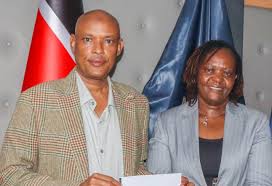
During the signing ceremony at DCI headquarters, Director of Criminal Investigations Mohamed I. Amin, ADAK Chief Executive Officer Peninah Wahome and the agency's chairperson, retired Major General Aphaxard Muthuri Kiugu, were among those present. The officials underscored the importance of cooperation in strengthening the fight against doping and protecting the credibility of competitive sport.
The DCI leadership indicated that the agency would contribute its investigative expertise and intelligence capabilities to support ADAK in carrying out its mandate. The position reflects the view that sporting success should be based on legitimate performance and that the use of prohibited substances undermines the principles of fair competition.
ADAK's leadership also welcomed the partnership, noting that stronger cooperation with law enforcement agencies would improve intelligence sharing, joint investigations and enforcement efforts. The agency has continued to pursue measures aimed at strengthening its capacity to detect violations, educate athletes and promote compliance with anti-doping regulations.
Beyond investigations and enforcement, the success of the partnership will also depend on awareness and cooperation among athletes, coaches, managers, medical personnel, sports federations and other stakeholders. Athletes need accurate information about prohibited substances and the risks associated with using products whose ingredients and effects may not be properly understood. They also need to know where to seek guidance when faced with pressure to use performance-enhancing drugs.
Coaches and athlete support personnel have an important responsibility in promoting clean sport by ensuring that competitors receive appropriate guidance and do not engage in practices that could compromise their health or sporting careers. Sports organisations must also strengthen internal safeguards and encourage athletes to report suspicious approaches or activities without fear of intimidation.
The agencies are expected to use their cooperation to support a stronger environment in which intelligence can be received, assessed and acted upon in accordance with the law. This will be important in ensuring that investigations are conducted professionally, evidence is properly handled and the rights of individuals involved are respected throughout the process.
The agreement also reinforces the need to protect athletes who compete fairly from being disadvantaged by those who seek an unfair advantage. Doping can undermine years of training and sacrifice, particularly when athletes who follow the rules are forced to compete against individuals using prohibited substances. Stronger enforcement is therefore intended to promote fairness and protect the value of honest sporting achievements.
As Kenya continues to invest in sports development and nurture talent across different disciplines, maintaining confidence in its sporting institutions will remain essential. The country relies on the achievements of its athletes to inspire young people, create opportunities and strengthen its presence on the international stage. Preserving that reputation requires consistent action against practices that threaten the credibility of competition.
The DCI-ADAK agreement is expected to provide a stronger foundation for addressing those challenges through improved coordination, intelligence sharing and investigations. Its impact will ultimately depend on how effectively the two agencies implement the commitments, identify those involved in doping-related activities and ensure that appropriate action is taken where offences are established.
The partnership signals a renewed commitment to protecting athletes, disrupting networks involved in prohibited substances and promoting fair competition. By combining anti-doping expertise with criminal investigation capabilities, the two institutions aim to strengthen Kenya's response to doping and ensure that the country's sporting achievements continue to be associated with talent, discipline, integrity and clean performance.

You Might Also Like
-
Martha Karua's renewed declaration of her 2027 presidential ambitions marks an important development in Kenya's political preparations ahead of the next General Election. Through her People's Liberation Party and the "Simama na Kenya, Simama na Martha" mobilisation campaign, she is seeking to attrac
-
Bomet East MP Richard Yegon has threatened legal action against individuals and online platforms circulating alleged AI-generated videos and images linking him to the disappearance of nominated MP Sabina Chege's mobile phone. Addressing the National Assembly, Yegon denied any involvement in the inci
-
The lawyer representing the family of slain former Rongo University student Sharon Otieno has questioned how former Migori Governor Okoth Obado will continue offering financial assistance to the family while serving his 25-year prison sentence for her murder. The concerns have renewed attention on t
-
President William Ruto is set to resume his Western Kenya development tour on Saturday, November 28, visiting Busia, Bungoma, Kakamega and Vihiga counties in a four-day programme running until December 1, 2026. The tour will feature the launch and commissioning of various development projects target
-
More than 380,000 students enrolled in public universities and colleges across Kenya could face disruptions to their education following a major funding shortfall at the Higher Education Loans Board (HELB). The board has revealed that it requires an additional KSh86.7 billion to meet its financial o
-
Three people have been confirmed dead, while two others sustained injuries following a tragic collision involving a trailer and a private car at ACK Salama along the Nairobi–Mombasa Highway. The injured victims were rushed to hospital for treatment, with one later transferred to Makindu Hospital f