HELB SEEKS ADDITIONAL KSH86.7 BILLION AS OVER 380,000 UNIVERSITY AND COLLEGE STUDENTS FACE FUNDING UNCERTAINTY
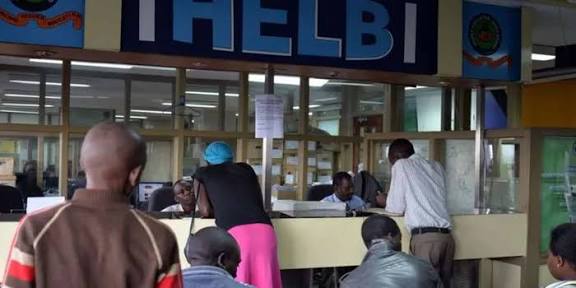
More than 380,000 students enrolled in public universities and colleges across Kenya could face disruptions to their education following a major funding shortfall at the Higher Education Loans Board (HELB). The board has revealed that it requires an additional KSh86.7 billion to meet its financial obligations and adequately support students relying on government loans and scholarships. HELB CEO Geoffrey Monari told the National Assembly Education Committee that the institution had managed to finance approximately 820,000 students against a target of 1.2 million beneficiaries in the current financial year. He attributed the funding crisis to accumulated budgetary shortfalls over several financial years, including KSh10.6 billion in 2024/2025 and KSh18.5 billion in 2025/2026, alongside a further deficit of approximately KSh57.65 billion in the current financial year. The board has appealed to the National Treasury to release additional funds through the Ministry of Education to facilitate the disbursement of outstanding student loans. The financial constraints have raised concerns among learners who depend on HELB support to pay tuition fees, accommodation, upkeep and other essential expenses. The situation also places renewed attention on the sustainability of the student-centred funding model and the government's ability to provide adequate resources to support higher education. Students and education stakeholders are now awaiting the government's intervention to bridge the funding gap and prevent financial challenges from affecting learning activities across universities and colleges.
The Higher Education Loans Board (HELB) is facing a major financial crisis that could affect the education of more than 380,000 students enrolled in public universities and colleges across the country. The institution has disclosed that it requires an additional KSh86.7 billion to meet its financial obligations and support learners who depend on government funding to pursue their studies.
The funding shortage has raised concerns about the continuity of learning for thousands of students during the 2026/2027 academic year, with many facing uncertainty over when they will receive their expected loans and financial assistance. The situation has also renewed debate over the government's ability to adequately finance higher education amid increasing student enrolment and growing demand for financial support.
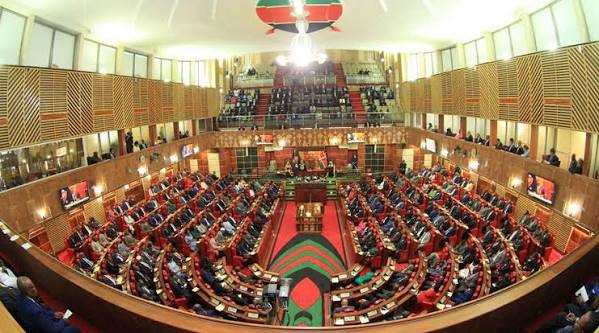
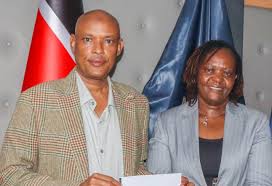
HELB Chief Executive Officer Geoffrey Monari revealed the financial challenges when he appeared before the National Assembly Education Committee on Thursday, November 26, 2026, during discussions on the Budget Policy Statement. The committee, chaired by Tinderet Member of Parliament Julius Melly, was examining funding requirements and financial challenges affecting institutions under the education sector.
During his presentation, Monari informed lawmakers that the board had been unable to meet its funding target due to inadequate financial allocations, leaving hundreds of thousands of students without the financial support required to continue their university and college education.
According to the HELB chief executive, the board had managed to fund approximately 820,000 students against a target of 1.2 million beneficiaries during the current financial year. This means that more than 380,000 learners were yet to receive the expected financial assistance, raising concerns about their ability to meet tuition fees and other education-related expenses.
The disclosure has placed the spotlight on the financial challenges facing students who rely on government loans and scholarships to access higher education, particularly those from households that cannot independently meet the rising costs of university and college education.
Monari explained that the KSh86.7 billion deficit was cumulative, arising from funding gaps experienced over several financial years. He told the committee that HELB had been underfunded by KSh10.6 billion during the 2024/2025 financial year, followed by another shortfall of KSh18.5 billion in the 2025/2026 financial year.
The situation has become more challenging in the current financial year, with the board reporting a funding gap of approximately KSh57.65 billion. The accumulated shortfalls have significantly affected its ability to meet financial commitments and extend support to all eligible students seeking assistance.
The figures indicate that the funding challenges are not limited to the current academic year but reflect financial pressures that have continued to accumulate over time. The growing deficit has therefore raised questions about how the board will settle outstanding obligations while ensuring that students entering and continuing their studies receive the necessary financial support.
Monari told lawmakers that HELB had already supported hundreds of thousands of students despite the financial constraints but acknowledged that the available resources were insufficient to meet the institution's overall target.
The funding situation has also placed pressure on the National Treasury and the Ministry of Education, which are expected to address the financial demands facing the higher education sector.
The board has consequently appealed to the National Treasury to release outstanding capitation funds through the Ministry of Education to enable it to fulfil its obligations. The request is aimed at addressing the financial gap and ensuring that students who have not received their loans can access the support needed to continue their education.
The appeal comes at a time when universities and technical institutions are increasingly depending on government-supported financing arrangements to facilitate learning among students from different economic backgrounds. For many families, HELB loans remain an important source of assistance, particularly in meeting tuition costs, accommodation, food, transport and other expenses associated with pursuing higher education.
Under the existing higher education funding arrangement, the loans board plays a central role in ensuring that students receive financial assistance based on their assessed needs. Tuition allocations are transferred directly to the respective learning institutions, while upkeep funds are deposited into beneficiaries' personal bank accounts to help them meet their day-to-day expenses.
The arrangement is intended to ensure that financial challenges at home do not prevent qualified students from accessing university and college education. However, the latest funding disclosure has raised concerns about whether the available resources can adequately support the growing number of learners seeking assistance.
Students who depend on these funds could face difficulties if the financial gap is not addressed in time. Delayed tuition payments may complicate arrangements between learners and their institutions, while the absence of upkeep money could make it increasingly difficult for some beneficiaries to meet their basic needs while attending classes.
For students living away from home, upkeep support is particularly important because it helps cater for accommodation, meals, transport and other essential requirements. Without timely disbursements, some learners may be forced to depend on relatives, friends or alternative sources of financial assistance to remain in school.
The situation could also place additional pressure on parents and guardians who are already struggling with the high cost of living. Families that had expected government loans to cover part of their children's education expenses may now be required to find alternative ways of meeting those financial obligations.
The challenge is particularly significant for households with more than one child pursuing higher education. In such circumstances, the cost of tuition, accommodation and other expenses can become difficult to manage without the assistance provided through government funding programmes.
HELB's financial difficulties also come amid continued efforts by the government to expand access to higher education through its student-centred funding model. The system was introduced to distribute financial assistance according to students' assessed financial circumstances, with the intention of ensuring that learners from vulnerable households receive greater support.
Under the model, students are assessed through a means-testing process that determines the level of financial assistance they qualify for. The assessment is intended to establish the financial capacity of individual households and guide the distribution of scholarships and loans.
The government has maintained that the approach is designed to make higher education financing more responsive to the needs of individual learners. However, the implementation of the model has attracted attention over concerns about funding adequacy, the assessment process and the ability of institutions to receive sufficient resources to support students.
The latest HELB disclosure has brought these concerns back into focus, particularly as the board struggles to meet its target of supporting 1.2 million beneficiaries. With more than 380,000 students yet to receive funding, questions are emerging over how quickly the government can mobilise additional resources to address the outstanding requirements.
The funding challenge is also significant because universities and Technical and Vocational Education and Training (TVET) institutions serve students with different financial needs and educational requirements. As enrolment continues to grow, the demand for loans and scholarships has increased, placing additional pressure on the institutions responsible for financing higher education.
Technical and vocational institutions are particularly important in providing practical skills and professional training to young people seeking opportunities in different sectors of the economy. Many learners enrolled in these institutions also depend on government assistance to meet tuition and personal expenses throughout their training.
A shortage of funding could therefore affect not only university students but also learners pursuing technical courses and other programmes supported through the higher education financing system.
The financial pressure facing HELB has also raised questions about the sustainability of the current financing arrangements. Education stakeholders have repeatedly emphasised the need for predictable funding to ensure that students can plan their academic activities without uncertainty over the availability of loans and scholarships.
For institutions, delayed payments can complicate financial planning and affect their ability to manage operational expenses. Universities rely on tuition payments to support teaching, examinations, learning facilities and other essential services. Any delays in receiving expected funding may therefore create additional administrative and financial challenges.
The situation could also affect students who are required to clear outstanding balances before registering for examinations, accessing certain institutional services or progressing to subsequent academic stages, depending on the policies of their respective institutions.
However, the extent of the potential disruption will depend on the timing of additional government allocations, the outstanding obligations of the board and how quickly the funds can be processed and distributed to beneficiaries.
Meanwhile, the National Treasury has identified strengthening the student-centred funding model, improving the means-testing system and ensuring timely disbursement of student loans and scholarships as some of its medium-term priorities.
These commitments are contained in the Treasury's November 2026 Budget Policy Statement for the 2027/2028 financial year. The policy document outlines the government's financial priorities and proposed interventions across different sectors, including education.
The Treasury's position places emphasis on improving the administration of higher education financing while ensuring that available resources are distributed efficiently. However, the latest figures presented by HELB suggest that additional financial resources will be necessary if the board is to meet its current obligations and accommodate the growing number of students seeking assistance.
The funding debate is also taking place as Parliament considers proposed changes to the management of higher education financing. The proposed Tertiary Education Placement and Funding Bill, 2026, seeks to restructure the existing arrangement by bringing together HELB, the Universities Fund and the Technical and Vocational Education and Training funding board under a proposed institution known as the Tertiary Education Funding Authority.
Under the proposed framework, the consolidated funds would be managed through the new authority, which would take responsibility for financing higher education institutions and supporting eligible students.
The proposal is intended to streamline the administration of student financing by bringing together functions currently handled by separate institutions. It also seeks to establish a centralised structure for managing financial assistance across universities and technical training institutions.
However, the proposed changes have attracted attention because of their potential implications for students who depend on government support to complete their studies. Among the provisions outlined in the proposal is a financing arrangement based primarily on loans, with beneficiaries expected to begin repayment one year after graduation at a rate of up to 25 per cent per month.
The proposed repayment arrangement has therefore become an important issue in discussions surrounding the future of higher education financing, particularly regarding the financial responsibilities students may face after completing their studies.
As Parliament continues examining the proposed legislation, the immediate concern remains the funding gap affecting thousands of students who are yet to receive their financial allocations for the current academic year.
The National Assembly Education Committee is expected to scrutinise the board's financial requirements alongside other funding requests from government departments and institutions during the Budget Policy Statement discussions.
Lawmakers will be examining how the available national resources can be distributed to address competing priorities while ensuring that essential education programmes receive adequate funding.
HELB's request for additional resources is therefore expected to feature prominently in the discussions, with the board seeking government intervention to address the accumulated deficit and facilitate the release of outstanding student loans.
The institution's appeal to the National Treasury also highlights the importance of timely budgetary allocations in ensuring that government-supported education programmes operate effectively.
For the affected students, the priority is receiving clarity on when the outstanding loans will be disbursed and whether the government will provide additional funding to enable the board to meet its commitments.
The uncertainty comes at a critical period for many learners who have already made financial arrangements based on the expectation that their loans would be available during the academic year.
Some students may now have to seek temporary assistance from their families or alternative sources as they wait for the board to address the funding challenges. Others could face difficulties meeting accommodation and other personal expenses if upkeep allocations remain delayed.
The situation has once again highlighted the importance of sustainable financing in the country's higher education system, especially as the government seeks to increase access to university and technical training opportunities.
While the student-centred funding model is intended to ensure that financial assistance reaches learners according to their individual needs, its effectiveness depends largely on the availability of sufficient resources and the timely processing of allocations.
Education stakeholders are likely to closely monitor the government's response to HELB's request, particularly whether additional funds will be provided through supplementary budget allocations or the release of outstanding capitation.
The coming weeks could therefore be important in determining how the financial challenges facing the board will be addressed and whether the affected students will receive their expected support.
More than 380,000 university and college students remain at the centre of the funding concerns, with their ability to meet education-related expenses depending partly on the government's response to the KSh86.7 billion deficit.
The latest disclosure by HELB has consequently placed renewed focus on the need for adequate and predictable financing to protect access to higher education and ensure that students are not disadvantaged by financial challenges beyond their control.
As budget discussions continue, attention will remain on the National Treasury, the Ministry of Education and Parliament to determine the measures that will be taken to bridge the funding gap and enable HELB to meet its obligations to students across the country.

You Might Also Like
-
Martha Karua's renewed declaration of her 2027 presidential ambitions marks an important development in Kenya's political preparations ahead of the next General Election. Through her People's Liberation Party and the "Simama na Kenya, Simama na Martha" mobilisation campaign, she is seeking to attrac
-
Bomet East MP Richard Yegon has threatened legal action against individuals and online platforms circulating alleged AI-generated videos and images linking him to the disappearance of nominated MP Sabina Chege's mobile phone. Addressing the National Assembly, Yegon denied any involvement in the inci
-
The Directorate of Criminal Investigations (DCI) and the Anti-Doping Agency of Kenya (ADAK) have signed a Memorandum of Understanding aimed at strengthening the fight against doping-related offences in the country. The partnership will enhance intelligence sharing, coordinated investigations and pro
-
The lawyer representing the family of slain former Rongo University student Sharon Otieno has questioned how former Migori Governor Okoth Obado will continue offering financial assistance to the family while serving his 25-year prison sentence for her murder. The concerns have renewed attention on t
-
President William Ruto is set to resume his Western Kenya development tour on Saturday, November 28, visiting Busia, Bungoma, Kakamega and Vihiga counties in a four-day programme running until December 1, 2026. The tour will feature the launch and commissioning of various development projects target
-
Three people have been confirmed dead, while two others sustained injuries following a tragic collision involving a trailer and a private car at ACK Salama along the Nairobi–Mombasa Highway. The injured victims were rushed to hospital for treatment, with one later transferred to Makindu Hospital f