



UNITED OPPOSITION LEADERS URGE SELFLESSNESS IN SEARCH FOR A FLAGBEARER TO FACE PRESIDENT RUTO
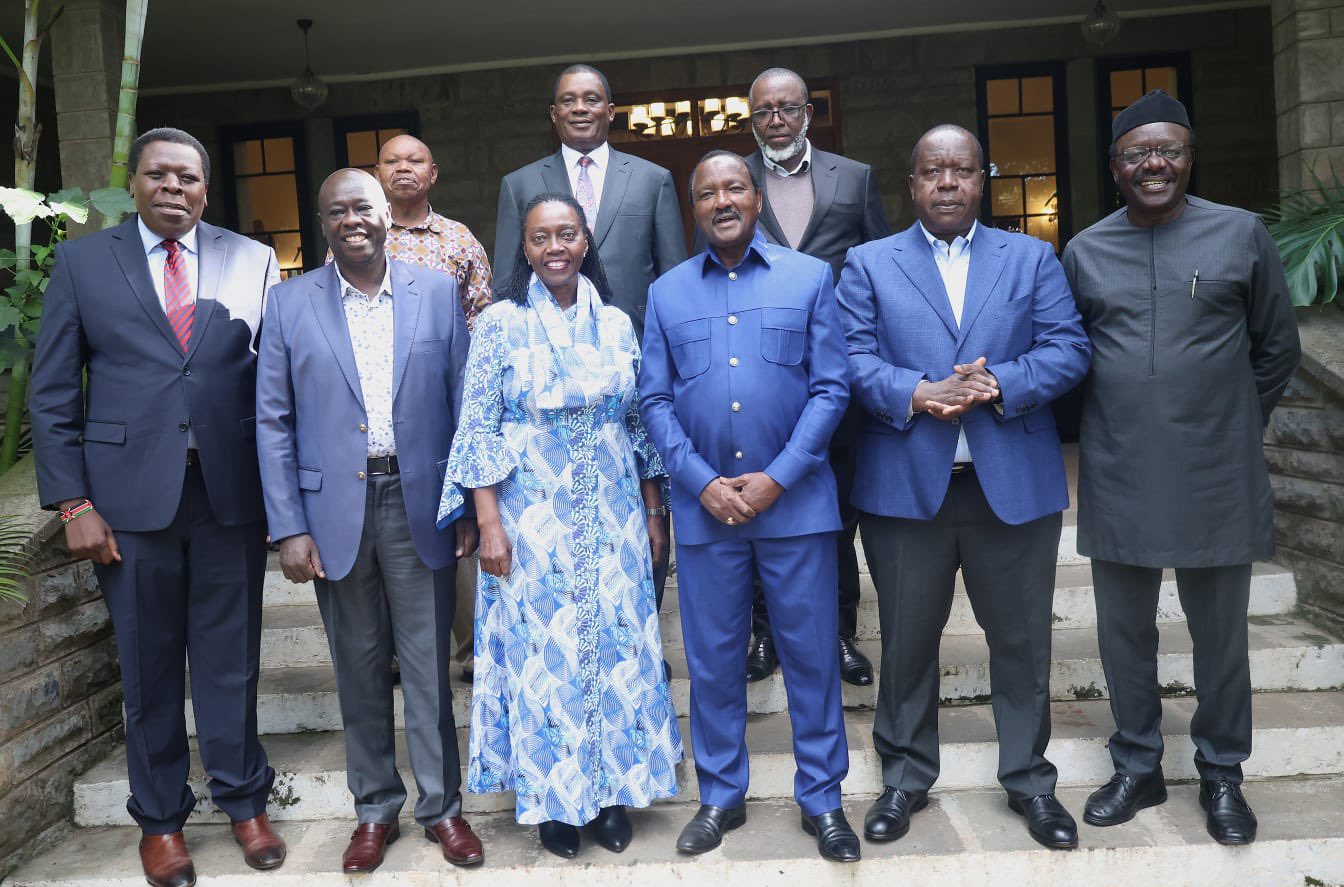
United Opposition leaders are urging unity and selflessness as they prepare to choose a single flagbearer to challenge President William Ruto. The leaders say the selection process must identify the strongest candidate with national appeal, strong leadership qualities and the ability to unite the opposition.

Principals within the United Opposition are calling for unity, selflessness and a collective approach as they prepare for the difficult task of selecting a candidate to challenge President William Ruto in the next General Election.
The opposition leaders believe that the process of choosing a flagbearer must be guided by the interests of the country and the strength of the coalition rather than individual political ambitions. According to the leaders, the opposition will need to identify a candidate with the strongest qualities, broad national appeal and the ability to effectively compete against the sitting President at the ballot.
Leading the calls for unity are Democracy for Citizens Party (DCP) leader Rigathi Gachagua and Democratic Party (DP) leader Justin Muturi. The two leaders have emphasised the need for those seeking leadership positions within the opposition to be prepared to make sacrifices when the time comes to settle on a single candidate.
Their message comes as discussions continue within opposition circles over how different political leaders and parties can work together ahead of the next election. Kenya's political landscape is expected to become increasingly competitive, with various leaders positioning themselves for major roles in the future of the country.
However, the challenge for the opposition will be finding a formula that brings together different political interests while ensuring that the final candidate has the ability to attract support from across the country.
The leaders argue that choosing a flagbearer should not simply be about selecting the most popular politician within a particular region or political party. Instead, the process should consider several important leadership qualities and political factors.
Among the key considerations are expected to be a candidate's national appeal, leadership ability, experience, political strength and capacity to bring together different communities. The opposition believes that its eventual candidate must possess qualities that can make them a strong competitor against President Ruto.
According to the opposition leaders, the person chosen to carry the coalition's flag must be capable of uniting the different political groups that make up the alliance. This is because a divided opposition could weaken its chances of presenting a serious challenge in a highly competitive presidential contest.
The call for selflessness is therefore becoming an important part of the ongoing political conversation.
Political leaders often have personal ambitions, and many may believe that they are the most suitable candidates to lead a coalition. However, opposition leaders are now suggesting that personal interests must sometimes take a back seat for the sake of the larger political objective.
The message is clear: the eventual success of the United Opposition may depend on the willingness of individual leaders to support a process that is considered fair and acceptable to all parties involved.
Rigathi Gachagua has emerged as one of the key voices within the opposition movement, particularly following his political fallout with the Kenya Kwanza administration. His involvement in efforts to bring together opposition leaders has added another dimension to the country's political landscape.
Justin Muturi has also continued to play a role in the growing political discussions surrounding the future direction of the opposition. Together with other leaders, they are calling for an organised and strategic approach towards the selection of a candidate.
The United Opposition is expected to bring together leaders from different political backgrounds and regions. While this provides the coalition with a wider political network, it could also create challenges when the time comes to agree on one person.
Every political party and leader may have their own supporters, interests and expectations. Bringing all these groups together under one candidate will require negotiations, compromise and trust.
This is where the principle of selflessness becomes particularly important.
The leaders believe that not everyone who has presidential ambitions can eventually become the coalition's flagbearer. At some point, a decision will have to be made, and some leaders may be required to step aside and support another candidate.
Such a decision could be difficult, especially for politicians who have invested time, resources and political energy in building their own support bases. Nevertheless, the opposition leaders argue that the larger objective should be to select the strongest possible candidate.
The proposed formula for selecting the flagbearer will therefore be closely watched by Kenyans.
There are several possible approaches that political coalitions can use when choosing a presidential candidate. The leaders could agree on opinion polls, negotiations, regional representation, leadership experience or other political considerations. A coalition may also establish its own internal process for evaluating potential candidates.
However, the most important factor will be whether the process is accepted by the various parties and leaders involved.
A transparent and credible process could help prevent disagreements and ensure that the leaders who are not selected remain committed to the coalition. On the other hand, a controversial selection process could create divisions and weaken the unity that the opposition is currently seeking to build.
For this reason, the leaders are emphasising the importance of creating a formula that considers all major leadership parameters.
The candidate must not only be able to attract support from a specific political base but should also have the capacity to appeal to voters across different regions of Kenya. National politics requires a leader who can speak to the concerns of different communities and demonstrate an understanding of the challenges facing the country.
The opposition's candidate will also need to communicate a clear alternative vision to the electorate. Political competition is not only about personalities. Voters also want to understand what different leaders plan to do about the economy, employment, the cost of living, healthcare, education and other issues affecting their daily lives.
Therefore, the eventual flagbearer will need more than popularity. The candidate will need a strong political message and a capable team.
The opposition leaders also understand that President William Ruto will be a formidable political opponent. As the sitting President, he has a national political platform and an established support structure.
This means the opposition will need to be highly organised if it hopes to mount a strong challenge.
A divided opposition could result in different political groups competing against each other, potentially weakening their collective influence. This explains why leaders are encouraging unity and calling on individuals to place the broader political goal ahead of personal ambitions.
The search for a flagbearer is likely to remain one of the most important political discussions in the country as the next election approaches.
Kenyans will be keen to see whether the opposition leaders can remain united despite the different ambitions within their ranks. The ability of the coalition to manage internal competition could determine its future strength.
The call for selflessness is also a reminder that political leadership requires compromise. A leader who is willing to support another candidate for the sake of a common objective may still play an important role within the coalition.
The eventual flagbearer will also need the support of other prominent leaders to build a strong national campaign. Even the strongest presidential candidate cannot succeed alone. A successful political movement requires cooperation among leaders, political parties, grassroots supporters and other stakeholders.
As a result, unity will remain a major factor in the opposition's strategy.
The coming months and years are expected to feature more consultations, meetings and negotiations as opposition leaders attempt to create a united front. While disagreements may emerge, the leaders will be under pressure to find common ground and avoid divisions that could weaken their political ambitions.
Ultimately, the United Opposition faces a major test of leadership and political maturity. The decision on who will become its flagbearer will require careful consideration and a willingness among leaders to put collective interests before personal ambitions.
As Rigathi Gachagua, Justin Muturi and other opposition leaders continue calling for selflessness, the message is increasingly becoming central to the coalition's future plans.
The opposition hopes that when the decisive moment arrives, its leaders will be able to agree on a candidate who possesses the necessary leadership qualities, political strength and national appeal to face President William Ruto at the ballot.
Whether they will successfully achieve that unity remains to be seen. However, one thing is clear: the race to identify the opposition's flagbearer could become one of the defining political battles ahead of Kenya's next General Election.
-
The fire along the Voi–Taveta Road in Taita Taveta County on September 6, 2026, was initially reported as a possible tanker-related fire but was later confirmed by the Kenya Red Cross as a bush fire. The correction came after ground teams assessed the situation. The response brought together the
-
The death of Martina Chepkemoi Rutto has left her family facing profound grief while also demanding answers about what happened to their loved one. She had been reported missing on August 26 before her body was reportedly recovered from Kimugu River with multiple stab wounds. Police have opened inve
-
Content creator Eric Omondi has proposed major changes to Kenya's governance structure, including reducing the number of counties, scrapping the Senate and cutting the number of elected and nominated leaders. His proposal has sparked debate about the cost of governance, representation and the future
-
The planned Kenya Power interruptions for Monday, September 7, 2026, affect selected areas in six counties: Nairobi, Bomet, Siaya, Migori, Nyeri and Meru. The longest interruption periods generally run from morning into late afternoon, although the exact schedule varies by location. The affected c
Featured News
Stay Connected
Get Newsletter
Subscribe to our newsletter to get latest news, popular news and exclusive updates.