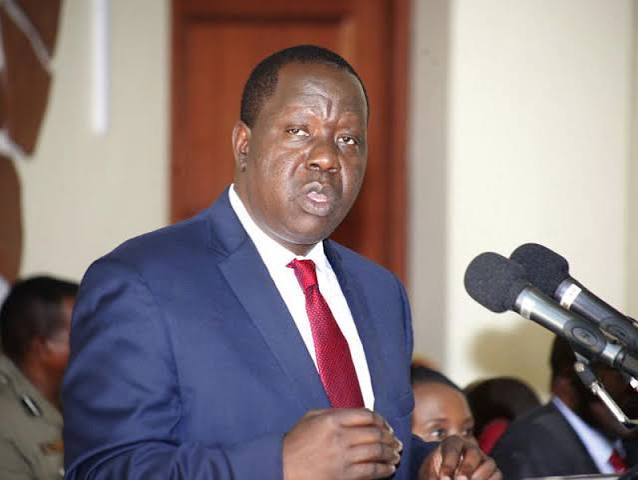
Matiang’i Accuses Ruto of Spending KSh2 Million to Mobilise Crowds in Keroka
Jubilee Party leader Fred Matiang’i has criticised President William Ruto over his recent Gusii tour, accusing the Head of State of using money to mobilise crowds during public engagements. Matiang’i alleged that KSh2 million was discussed for mobilisation in Keroka, Nyamira County, raising questions about the methods used to attract people to presidential events. His remarks have sparked fresh political debate over campaign mobilisation, transparency and the influence of money in Kenya's political activities. The allegations also come amid growing political competition ahead of the 2027 General Election, as leaders from different political camps continue engaging communities and seeking to strengthen their support across the country. The discussion has renewed calls for accountability and transparency in political activities, with attention now turning to the claims surrounding the alleged mobilisation arrangements during the President's visit to the Gusii region.
Jubilee Party leader Fred Matiang’i has accused President William Ruto of using money to mobilise crowds during his recent tour of the Gusii region, raising fresh political debate over the methods employed by leaders to attract public attendance at political gatherings.
Matiang’i claimed that the President's mobilisation activities involved discussions about a payment of KSh2 million in Keroka, Nyamira County. According to the former Interior Cabinet Secretary, the alleged amount was intended to facilitate mobilisation during the President's engagement with residents in the area.
The claims have added another dimension to the political exchanges surrounding Ruto's recent visit to the Gusii region, where leaders from different political camps have continued to compete for public support and influence.
Matiang’i's remarks have attracted attention because they touch on a broader debate about political mobilisation, the use of financial resources during public engagements and the relationship between politicians and ordinary citizens.
Political tours are an important feature of Kenya's democratic environment. They provide leaders with opportunities to communicate government policies, explain development programmes, interact with residents and present their political positions. Such gatherings also allow communities to raise concerns about issues affecting their livelihoods.
However, questions frequently emerge over how crowds are assembled, particularly when political events attract large numbers of people. The latest allegations have once again brought attention to the practice of mobilisation and whether attendance at political gatherings reflects genuine public interest or is influenced by financial incentives.
Matiang’i's accusation places the spotlight on the events surrounding the President's visit to Keroka and the wider Gusii region. The former Cabinet Secretary questioned the alleged financial arrangements, suggesting that the use of money to attract people to political functions raises concerns about the nature of political engagement.
The KSh2 million figure mentioned by Matiang’i has become a central part of the political discussion. However, the allegation remains a claim made by the Jubilee Party leader and should be distinguished from independently established facts.
The issue has also highlighted the growing political competition in the region, where national leaders have continued to seek support through development promises, public meetings and engagements with local communities.
The Gusii region remains politically significant because of its population, voting strength and influence in national political conversations. Political leaders from different parties have therefore continued to make efforts to strengthen their relationships with residents and local political representatives.
Ruto's tour provided an opportunity for the administration to engage with residents and communicate its development agenda. Such visits often involve meetings with elected leaders, public addresses and inspections or announcements relating to government projects.
For the government, regional tours provide an opportunity to demonstrate its development priorities and explain the progress being made in different parts of the country. They also allow the President to interact directly with communities and respond to concerns raised by residents.
At the same time, opposition and rival political leaders often use such visits to question government performance, challenge political messaging and highlight issues they believe require greater attention.
Matiang’i's comments are part of this wider political exchange, with the former Interior Cabinet Secretary using the alleged mobilisation arrangements to question the manner in which political support is demonstrated during presidential visits.
The controversy has also renewed discussion about the cost of organising political events. Large gatherings require planning, transport arrangements, security coordination, communication and other logistical preparations.
Political organisers may incur expenses when arranging meetings in different locations, especially where participants are expected to travel from surrounding areas. However, the distinction between legitimate event expenses and payments intended to influence attendance remains an important issue in discussions about political accountability.
The use of public resources during political activities is another matter that often attracts public scrutiny. Citizens expect government expenditure to be managed transparently and directed towards programmes that improve their lives.
Where allegations arise involving the use of money during political mobilisation, there is a need for clear information about the source of the funds, the purpose of the expenditure and the individuals responsible for making such arrangements.
Such questions are particularly important in a country where many households continue to face economic challenges, including high living costs, unemployment and pressure from the cost of essential goods and services.
For ordinary residents, political gatherings should provide an opportunity to engage leaders on matters affecting their communities rather than becoming events whose attendance is determined primarily by financial considerations.
The debate also raises questions about the relationship between political popularity and crowd size. A large turnout at a political event does not automatically establish the level of support a leader enjoys across an entire region or country.
Similarly, a smaller gathering does not necessarily mean that a politician lacks support. Attendance can be influenced by several factors, including the location of an event, timing, transport availability, public interest and the ability of organisers to reach residents.
Political support is more complex than the number of people attending a rally. It is shaped by policy positions, leadership records, development priorities, public confidence and the ability of politicians to address issues affecting citizens.
Matiang’i's remarks therefore provide another opportunity for public discussion about how political leaders communicate with communities and demonstrate their support during public engagements.
The allegations also come at a time when political activity across the country is gradually gaining momentum ahead of the 2027 General Election. Leaders from different political formations are increasingly engaging communities, strengthening alliances and positioning themselves for the next electoral contest.
As political competition intensifies, questions surrounding campaign financing, mobilisation and accountability are likely to remain part of the national conversation.
Kenya's electoral laws provide a framework governing political activities and campaign financing. Transparency in political expenditure is important in ensuring that competition takes place within the law and that financial influence does not undermine the democratic process.
Political parties and individual candidates are expected to conduct their activities responsibly while respecting the rights of citizens to participate freely in political processes.
The latest controversy also highlights the responsibility of political leaders to ensure that their public statements are supported by credible information. Allegations involving financial arrangements should be examined carefully, particularly where they concern public officials and the use of resources.
For residents of Keroka and the wider Nyamira region, the discussion comes against the backdrop of everyday development concerns. Communities continue to seek improvements in roads, healthcare, education, water access, employment opportunities and agricultural support.
These are issues that directly affect households and determine the quality of life for many residents. Political engagements provide an opportunity for communities to demand explanations from leaders and assess whether government commitments are being translated into meaningful results.
As the debate continues, attention will remain on the circumstances surrounding the alleged KSh2 million mobilisation arrangement and whether further clarification will emerge from the individuals involved.
The President's recent Gusii tour has also demonstrated the importance national political leaders attach to regional engagement as they seek to communicate their positions and connect with local communities.
Meanwhile, Matiang’i's criticism has added to the political exchanges surrounding the administration's activities, with the Jubilee Party leader questioning the manner in which public attendance is secured during presidential visits.

You Might Also Like
-
The reported Panga Boys attacks in Likoni have exposed the growing security concerns facing residents of Mombasa County. With more than six people reportedly injured, including boda boda operators and other members of the public, the incidents have left families distressed and residents demanding ur
-
President William Ruto has responded to criticism surrounding corruption and the World Bank report, questioning attempts by some individuals to hold him responsible for the construction of the Mombasa–Nairobi Standard Gauge Railway (SGR). The Head of State maintains that the railway was constructe
-
The eCitizen platform has helped reduce pilferage in government revenue collection by strengthening transparency, improving accountability and limiting opportunities for the misappropriation of public funds. Through digital payment systems, Kenyans can access various government services and make pay
-
A Kenya National Examinations Council (KNEC) supervisor is recuperating after allegedly being abducted, brutally assaulted and abandoned for dead in Kinangop, Nyandarua County, in an incident linked to suspected examination cheating. The supervisor is reportedly believed to have been targeted by sus
-
Deputy Inspector General of Police Eliud Lagat has warned that the National Police Service will not tolerate goonism, political violence, intimidation or any other criminal activities as Kenya approaches the 2027 General Election. Lagat's remarks come amid growing political engagements and preparati
-
President William Ruto has congratulated Rt. Rev. Joseph Obanyi following his appointment by Pope Leo XIV as the first Archbishop of the newly established Archdiocese of Eldoret. The President described the appointment as an important milestone that ushers in a new chapter for the Catholic Church in