President Ruto Defends SGR Construction, Says Railway Was Built Under Previous Administration
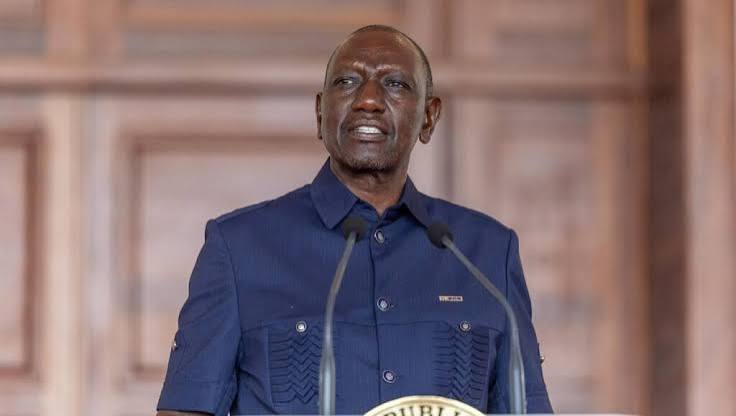
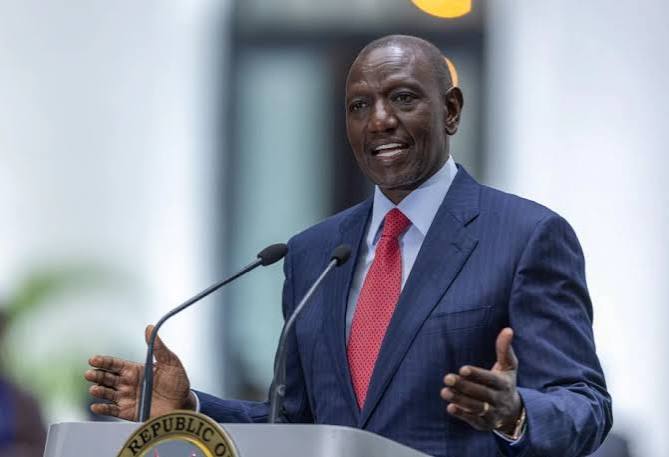
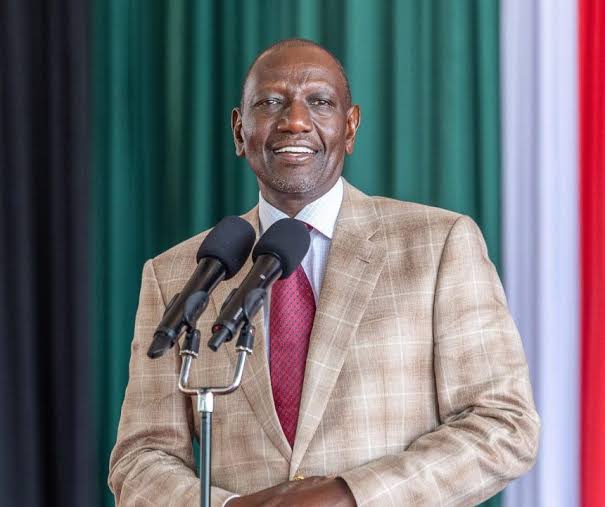
President William Ruto has responded to criticism surrounding corruption and the World Bank report, questioning attempts by some individuals to hold him responsible for the construction of the Mombasa–Nairobi Standard Gauge Railway (SGR). The Head of State maintains that the railway was constructed during a different administration and at a different time, arguing that responsibility for decisions made under previous governments should be considered within their proper historical context. His remarks come amid growing political debate over corruption, public expenditure, infrastructure development and the management of taxpayers' money. The World Bank report has also attracted attention, with different political leaders interpreting its findings while debating Kenya's economic performance, employment growth, exchange rate stability and public debt. Ruto's comments have renewed discussions about accountability for major national projects and the need to distinguish between decisions made by previous administrations and those being implemented by the current government. The SGR remains one of Kenya's major infrastructure investments, having been developed to improve passenger and cargo transportation between Mombasa and Nairobi, strengthen connectivity and support economic activity. However, questions surrounding its financing, construction costs and long-term financial sustainability continue to feature in public discussions. As the political debate unfolds, Kenyans are looking for transparency, responsible management of public resources and clear explanations from leaders regarding government projects and economic policies. The President's remarks have once again placed corruption, the World Bank report and accountability for the country's major infrastructure investments at the centre of national conversation.
President William Ruto has responded to criticism surrounding corruption and the findings of the World Bank report, saying that some individuals are attempting to blame his administration for projects and decisions made under previous governments. The Head of State has particularly addressed criticism over the construction of the Mombasa–Nairobi Standard Gauge Railway (SGR), arguing that the railway was developed during a different period and should not be used to unfairly hold his government responsible for decisions made before he assumed office.
Speaking about the debate, President Ruto said he was aware of individuals raising questions about corruption and referring to the World Bank report while criticising his administration. He appeared to challenge those attempting to associate him personally with the controversies surrounding the SGR project, insisting that the railway was constructed under a different administration and at a different time.
The President's remarks come amid continued public debate about Kenya's economic performance, government expenditure, public debt, infrastructure development and the management of public resources. The World Bank report has become part of discussions about the country's economic direction, with political leaders and other stakeholders interpreting its findings from different perspectives.
Ruto's response highlights the ongoing disagreement between the government and its critics over how Kenya's economic challenges should be assessed. While the administration has continued to defend its development agenda and economic policies, opposition leaders and other critics have questioned government spending, the cost of infrastructure projects and the country's debt burden.
The Mombasa–Nairobi Standard Gauge Railway remains one of the most significant infrastructure projects undertaken in Kenya in recent years. Designed to improve transportation between the Port of Mombasa and Nairobi, the railway was intended to provide an alternative to road freight, reduce pressure on major highways and support the movement of passengers and goods.
The project attracted considerable public attention because of its financial requirements, construction costs and the expectations surrounding its economic benefits. It also became a subject of political debate, particularly over the financing arrangements, public expenditure and the long-term financial implications for the country.
By referring to the period when the railway was constructed, President Ruto appears to be drawing a distinction between the decisions made by previous administrations and the responsibilities of his current government. His position suggests that public discussions about the SGR should take into account the historical circumstances surrounding its development rather than automatically attributing every decision to the current administration.
The debate over accountability for major infrastructure projects is important because public resources are involved in their planning, financing, construction and operation. Kenyans have a legitimate interest in understanding how such projects are funded, how contracts are awarded and whether the intended benefits are being achieved.
However, assessing responsibility for a major national project requires a clear understanding of the different stages involved. These include the initial planning, approval, financing agreements, procurement processes, construction, implementation and subsequent management. Each stage may involve different government officials, institutions and administrative decisions.
Ruto's remarks have therefore renewed attention on the need to distinguish between historical government decisions and the policies being implemented by the administration currently in office. The President's argument is that criticism should be directed at the appropriate period and the officials responsible for the decisions under discussion.
At the same time, the issue of corruption remains a major concern among Kenyans. Public demands for accountability have continued to focus on the management of government funds, procurement processes, public contracts and the delivery of essential services. Citizens expect public institutions to operate transparently and ensure that resources collected through taxes are used for their intended purposes.
Corruption can undermine economic development by increasing the cost of public projects, discouraging investment, weakening public institutions and reducing the resources available for important services. When public money is mismanaged, the consequences are often felt by ordinary citizens through inadequate infrastructure, poor service delivery and increased financial pressure.
The government has repeatedly highlighted the importance of improving public financial management and strengthening systems intended to promote accountability. Digital platforms, improved revenue collection and reforms in public administration have also featured in discussions about efforts to make government operations more efficient.
Nevertheless, Kenyans continue to expect measurable results from such initiatives. Public confidence depends not only on government announcements but also on the ability of institutions to demonstrate that public resources are properly managed and that individuals involved in wrongdoing are held accountable through established legal procedures.
The World Bank report has also become an important reference point in conversations about Kenya's economic performance. Its assessments of economic growth, employment, public debt, government revenue and other indicators provide information that can help policymakers and citizens understand the country's financial position.
Economic growth and employment creation are particularly important because they directly affect household incomes and the ability of citizens to meet their daily needs. A growing economy can create opportunities for businesses, encourage investment and expand employment opportunities. However, the benefits of economic growth must also reach ordinary households through improved living standards and increased access to essential services.
The stability of the exchange rate is another factor that influences the economy. Currency movements affect the cost of imported goods, fuel, industrial materials and other essential commodities. Greater stability can help businesses plan their operations and reduce uncertainty in the market. However, the overall economic situation must also be assessed by considering inflation, purchasing power, taxation and the cost of living.
The President's reference to the World Bank report reflects the wider political contest surrounding the interpretation of economic information. While the government may point to positive indicators as evidence that its policies are working, critics may focus on the challenges that continue to affect households and businesses.
For many Kenyans, the most important question is whether economic improvements are translating into tangible benefits. Citizens want affordable food, accessible healthcare, reliable transport, employment opportunities and a business environment that allows them to earn a decent living. They also expect public institutions to manage taxpayers' money responsibly.
The SGR debate is closely connected to these broader questions about development priorities and public spending. Large infrastructure projects are often justified by their expected contribution to economic activity, including improved transport, reduced travel time, increased trade and stronger connections between different parts of the country.
The railway was developed with the expectation that it would improve the movement of people and cargo between Mombasa and Nairobi. Its performance and financial sustainability remain important subjects for public discussion, particularly because of the resources committed to its development and operation.
However, evaluating its overall impact requires consideration of both its benefits and costs. This includes examining passenger numbers, freight operations, revenue generation, maintenance requirements and its contribution to the wider transport sector. Such assessments should be based on reliable information rather than political arguments alone.
Ruto's remarks also raise questions about how political leaders should approach accountability for projects initiated by previous administrations. Governments change, but national infrastructure and public financial obligations often continue beyond individual political terms. Successive administrations inherit both completed projects and outstanding commitments.
Consequently, a government may be required to manage projects it did not initiate, address financial obligations it did not create and make decisions about infrastructure developed by its predecessors. This makes it important to maintain accurate public records and ensure that citizens can establish how major decisions were made.
Political accountability should therefore involve examining the actions of individual administrations while recognising the continuity of government responsibilities. Leaders should be prepared to explain their own decisions and policies, while historical controversies should be investigated through credible institutions and established legal processes.
As the discussion continues, the President's comments are likely to remain part of the wider national conversation about corruption, infrastructure development and economic accountability. His position is that attempts to blame him for the Mombasa–Nairobi SGR fail to recognise the period during which the railway was constructed.

You Might Also Like
-
The reported Panga Boys attacks in Likoni have exposed the growing security concerns facing residents of Mombasa County. With more than six people reportedly injured, including boda boda operators and other members of the public, the incidents have left families distressed and residents demanding ur
-
The eCitizen platform has helped reduce pilferage in government revenue collection by strengthening transparency, improving accountability and limiting opportunities for the misappropriation of public funds. Through digital payment systems, Kenyans can access various government services and make pay
-
A Kenya National Examinations Council (KNEC) supervisor is recuperating after allegedly being abducted, brutally assaulted and abandoned for dead in Kinangop, Nyandarua County, in an incident linked to suspected examination cheating. The supervisor is reportedly believed to have been targeted by sus
-
Deputy Inspector General of Police Eliud Lagat has warned that the National Police Service will not tolerate goonism, political violence, intimidation or any other criminal activities as Kenya approaches the 2027 General Election. Lagat's remarks come amid growing political engagements and preparati
-
President William Ruto has congratulated Rt. Rev. Joseph Obanyi following his appointment by Pope Leo XIV as the first Archbishop of the newly established Archdiocese of Eldoret. The President described the appointment as an important milestone that ushers in a new chapter for the Catholic Church in
-
Jubilee Party leader Fred Matiang’i has criticised President William Ruto over his recent Gusii tour, accusing the Head of State of using money to mobilise crowds during public engagements. Matiang’i alleged that KSh2 million was discussed for mobilisation in Keroka, Nyamira County, raising ques