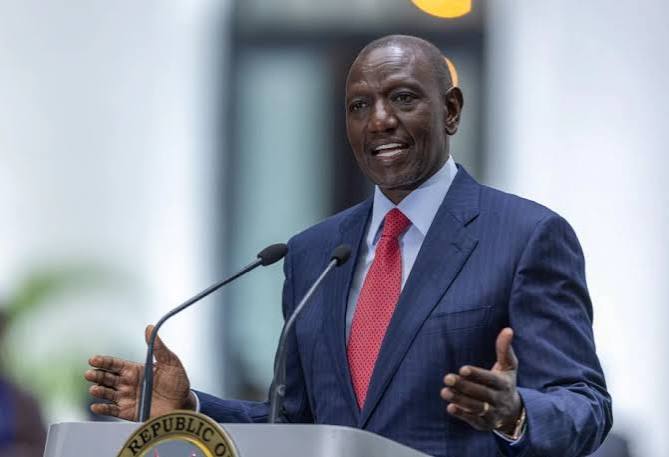
President Ruto Credits eCitizen With Curbing Pilferage in Tax Collection
The eCitizen platform has helped reduce pilferage in government revenue collection by strengthening transparency, improving accountability and limiting opportunities for the misappropriation of public funds. Through digital payment systems, Kenyans can access various government services and make payments electronically, reducing reliance on traditional cash-based transactions. The platform has also improved the recording and tracking of payments, making it easier for government institutions to monitor revenue collected and identify possible irregularities. The shift towards digital service delivery is part of Kenya's broader efforts to modernise public administration, improve efficiency and ensure that money collected from citizens is properly accounted for. By simplifying government transactions and providing electronic records, eCitizen has contributed to efforts aimed at strengthening public financial management and reducing revenue leakages. The development also highlights the growing role of technology in improving service delivery, making government services more accessible and promoting greater confidence in the management of public resources.
The eCitizen platform has been credited with helping reduce pilferage in government revenue collection by improving transparency, strengthening accountability and minimising opportunities for the misappropriation of public funds.
The digital government service has transformed how Kenyans access various public services and make payments, providing a centralised platform through which individuals and businesses can complete transactions without relying entirely on traditional manual payment systems.
The introduction and expansion of digital payment services have been part of Kenya's broader efforts to modernise public administration, improve revenue collection and strengthen the management of government resources.
For years, the collection of public revenue has been an important area of concern, particularly regarding accountability, efficiency and the possibility of financial irregularities in manual transactions. The movement towards digital systems has provided government institutions with additional tools to monitor payments, maintain transaction records and improve the visibility of funds collected.
Through eCitizen, citizens can access a wide range of government services and make payments electronically. The platform has helped simplify transactions by reducing the need for physical cash payments at various government offices and providing a more structured process for collecting service fees.
The shift towards electronic payments is significant because it creates digital records that can be used to track transactions and support financial accountability. Unlike systems that depend heavily on cash handling, digital platforms can make it easier to establish when payments are made, the amounts involved and the services for which the money is collected.
This can help reduce opportunities for unauthorised handling of public funds and make it easier for relevant authorities to identify irregularities.
The role of eCitizen in improving revenue collection is therefore closely connected to the government's wider digital transformation agenda, which seeks to make public services more accessible while strengthening the systems used to manage public resources.
One of the major advantages of digital revenue collection is the reduction of unnecessary physical interactions between service users and officials responsible for processing payments. When citizens can complete transactions electronically, the process becomes less dependent on direct cash exchanges.
This can reduce certain risks associated with manual payment systems, including the possibility of money being collected without proper documentation or payments failing to reach the intended government accounts.
Digital payment systems also provide an opportunity to improve the speed and convenience of public service delivery. Citizens can access services and make payments through electronic channels without necessarily travelling to government offices for every transaction.
For individuals living far from major administrative centres, the availability of online government services can be particularly beneficial. It can reduce travel expenses, save time and make essential services easier to access.
Businesses also stand to benefit from more efficient government payment systems. Entrepreneurs and companies frequently interact with public institutions when seeking licences, permits, registrations and other regulatory services.
A streamlined digital payment process can help reduce administrative delays and provide businesses with clearer procedures for completing government transactions.
The use of eCitizen has also contributed to the development of a more centralised approach to government service delivery. Instead of navigating different payment arrangements for various services, users can access multiple government services through a common digital platform.
Such centralisation can support better coordination among government institutions and provide opportunities to improve the management of public revenue.
However, the effectiveness of digital revenue collection depends on more than simply introducing electronic payment channels. Strong financial controls, regular audits, reliable technology and clear accountability procedures remain necessary to ensure that public funds are properly managed.
The government must continue strengthening oversight mechanisms to ensure that all payments made through the platform are accurately recorded, reconciled and transferred to the appropriate public accounts.
Digital records can support these processes by providing information that financial officers and auditors can use when examining government transactions. Properly managed records also make it easier to identify inconsistencies and investigate suspected financial irregularities.
The reduction of revenue pilferage is important because government resources are required to finance essential services and development programmes. Money collected through public fees, licences and other charges contributes to the resources available for implementing government priorities.
When public revenue is properly collected and accounted for, institutions can plan their activities more effectively and improve the management of available resources.
Revenue losses, on the other hand, can weaken the government's ability to finance development projects and provide services to citizens. Preventing the misappropriation of public funds is therefore an important part of strengthening national financial management.
The adoption of digital systems also reflects changing expectations among citizens, who increasingly want government services to be accessible, efficient and transparent.
People expect to know how much they are required to pay for a particular service, where the payment is being made and whether the transaction has been successfully completed. Digital platforms can help provide this information through electronic payment confirmations and transaction histories.
Such records can also assist citizens when following up on payments or resolving disputes involving government services.
Nevertheless, the continued success of eCitizen will depend on maintaining public trust. Users must have confidence that their personal information and financial transactions are handled securely.
Government institutions responsible for operating the platform must therefore prioritise data protection, cybersecurity and the reliability of payment systems.
As more services become accessible digitally, the potential risks associated with cybercrime and unauthorised access to personal information also require attention. Appropriate safeguards must be maintained to protect users and ensure that the platform remains dependable.
Another important consideration is digital accessibility. Although online government services can make transactions easier for many people, some citizens may face challenges accessing the internet or using digital devices.
People living in remote areas, individuals with limited digital skills and vulnerable members of society may require additional support to access services through electronic platforms.
The government should therefore continue investing in digital literacy programmes, reliable internet infrastructure and accessible service centres to ensure that the benefits of digital transformation reach all communities.
Providing assistance to people who are unfamiliar with online payments can help prevent exclusion while ensuring that citizens are able to access essential services without unnecessary difficulties.
The platform's contribution to revenue collection should also be considered alongside broader efforts to strengthen public financial management. Digital payments can improve the recording of transactions, but effective accountability requires institutions to follow established financial regulations and respond appropriately when irregularities are identified.
Public confidence is strengthened when citizens see that revenue is being collected properly and that government institutions are transparent about how public resources are managed.
The development of eCitizen has also created opportunities for government agencies to improve coordination and reduce administrative duplication. By providing a shared digital environment for accessing services, institutions can work towards more consistent payment procedures and better service delivery.
Such improvements can help reduce delays that previously affected some government transactions and make it easier for citizens to complete administrative processes.
For the government, the long-term objective is to ensure that digital transformation translates into measurable improvements in efficiency, accountability and the quality of public services.
The reduction of pilferage in revenue collection is one important aspect of this objective, but the wider benefits include improved access to services, better transaction records and more convenient payment arrangements.
As Kenya continues expanding its digital government infrastructure, the role of platforms such as eCitizen is likely to remain central to discussions about public sector reform and financial accountability.
The government will also need to regularly evaluate the platform's performance to identify weaknesses, address technical challenges and ensure that the system continues meeting the needs of citizens.
Transparent reporting on revenue collected through digital channels can further strengthen public confidence. Citizens should be able to understand how the system contributes to government revenue and what measures are being taken to safeguard public funds.

You Might Also Like
-
The reported Panga Boys attacks in Likoni have exposed the growing security concerns facing residents of Mombasa County. With more than six people reportedly injured, including boda boda operators and other members of the public, the incidents have left families distressed and residents demanding ur
-
President William Ruto has responded to criticism surrounding corruption and the World Bank report, questioning attempts by some individuals to hold him responsible for the construction of the Mombasa–Nairobi Standard Gauge Railway (SGR). The Head of State maintains that the railway was constructe
-
A Kenya National Examinations Council (KNEC) supervisor is recuperating after allegedly being abducted, brutally assaulted and abandoned for dead in Kinangop, Nyandarua County, in an incident linked to suspected examination cheating. The supervisor is reportedly believed to have been targeted by sus
-
Deputy Inspector General of Police Eliud Lagat has warned that the National Police Service will not tolerate goonism, political violence, intimidation or any other criminal activities as Kenya approaches the 2027 General Election. Lagat's remarks come amid growing political engagements and preparati
-
President William Ruto has congratulated Rt. Rev. Joseph Obanyi following his appointment by Pope Leo XIV as the first Archbishop of the newly established Archdiocese of Eldoret. The President described the appointment as an important milestone that ushers in a new chapter for the Catholic Church in
-
Jubilee Party leader Fred Matiang’i has criticised President William Ruto over his recent Gusii tour, accusing the Head of State of using money to mobilise crowds during public engagements. Matiang’i alleged that KSh2 million was discussed for mobilisation in Keroka, Nyamira County, raising ques