




Drive Responsibly, Speak Up: How Drivers and Passengers Can Prevent Accidents
Road safety is not the responsibility of drivers alone. Every person who uses the road has a role to play in preventing accidents and protecting lives. While drivers have the primary responsibility of ensuring that vehicles are operated safely and that traffic rules are followed, passengers also have an important duty to speak out whenever they notice reckless or dangerous driving.
Road safety is not the responsibility of drivers alone. Every person who uses the road has a role to play in preventing accidents and protecting lives. While drivers have the primary responsibility of ensuring that vehicles are operated safely and that traffic rules are followed, passengers also have an important duty to speak out whenever they notice reckless or dangerous driving.
Every day, thousands of people travel by public transport, private vehicles, motorcycles and other means. For many passengers, reaching their destination quickly has become a priority. Unfortunately, this desire to arrive early can sometimes contribute to dangerous decisions on the road. Some passengers encourage drivers to speed, overtake dangerously or make unnecessary stops because they are in a hurry. Others remain silent even when they clearly see that the driver is putting their lives at risk.
This culture must change.
Drivers are entrusted with the lives of everyone inside their vehicles. They must understand that driving is not simply about getting from one point to another. It is a responsibility that requires patience, concentration and respect for other road users. A driver who speeds, overtakes carelessly, drives while tired or ignores traffic rules is not only risking their own life but also the lives of passengers, pedestrians, cyclists and other motorists.
Speeding remains one of the major dangers on our roads. A driver may believe that saving a few minutes is important, but no destination is worth risking a human life. A journey that should take two hours does not need to be completed in one hour at the expense of safety. Drivers must resist pressure from passengers, employers or vehicle owners to drive beyond safe limits.
However, passengers should also understand that they are not powerless. When a driver is driving recklessly, passengers should have the courage to speak up. If the vehicle is moving at an unsafe speed, if the driver is overtaking dangerously or if the driver appears distracted, passengers should raise the concern instead of remaining silent.
Speaking up could save a life.
Passengers should not wait until an accident happens before asking why the driver was speeding. It is better to complain about dangerous driving and arrive safely than to remain silent and regret it later. A passenger who tells a driver to slow down is not being troublesome; they are helping protect everyone in the vehicle.
At the same time, drivers should listen to reasonable concerns from passengers. A professional driver should never become angry simply because a passenger has asked them to drive more carefully. Instead, such concerns should be taken seriously because they can help prevent tragedy.
Another challenge is the pressure to arrive at destinations early. People have appointments, jobs, school, business meetings and other responsibilities. This often creates a sense of urgency, particularly among public transport passengers. Some passengers may tell drivers, “We are late,” or ask them to increase their speed. Such pressure can encourage reckless driving.
But being late is better than never arriving.
Passengers must understand that they cannot demand speed from a driver and later blame that same driver when an accident occurs. Safety must always come before convenience. Whether someone is travelling to work, school, hospital, home or a business meeting, arriving safely should be the first priority.
Vehicle owners and transport companies also have a responsibility. They must ensure that drivers are properly trained, vehicles are mechanically sound and employees are not pressured to make unrealistic numbers of trips in a day. A driver who is forced to make too many trips may become fatigued and more likely to make dangerous decisions.
Drivers must also take responsibility for their own behaviour. They should avoid driving when extremely tired, using a phone while driving, driving under the influence of alcohol or drugs, or engaging in unnecessary competition with other motorists. A vehicle is a powerful machine, and careless decisions can have devastating consequences within seconds.
Passengers, meanwhile, should avoid distracting drivers unnecessarily. They should not engage the driver in arguments, encourage dangerous manoeuvres or create pressure to speed. They should also use seat belts whenever available and ensure that children are properly secured.
Road safety should become a shared culture rather than a responsibility placed on one group.
When drivers and passengers work together, many preventable accidents can be avoided. Drivers should drive responsibly, while passengers should remain alert and speak out against reckless behaviour. Neither group should encourage the other to take unnecessary risks.
There is also a need for greater public awareness. Road safety campaigns should not only target drivers. Passengers should also be educated about their rights and responsibilities. They should know that they have every reason to ask a driver to slow down or stop dangerous behaviour.
A passenger who remains silent while a driver speeds may think they are avoiding confrontation, but silence can sometimes have serious consequences. A simple statement such as, “Please slow down; we are not in a hurry to die,” can make a driver reconsider their actions.
The same applies to drivers. They should remember that passengers are people with families, dreams and responsibilities waiting for them at home. Every person sitting inside a vehicle has a life that deserves protection.
Ultimately, road safety requires a change in attitude. We must stop treating reckless driving as normal and stop celebrating drivers simply because they reach destinations quickly. The best driver is not necessarily the one who arrives first, but the one who gets everyone to their destination safely.
Time can be recovered. Money can be recovered. Missed appointments can sometimes be rescheduled. But a life lost in a road accident cannot be recovered.
Drivers must therefore take their responsibility seriously, and passengers must find the courage to speak out whenever they witness reckless driving. Together, they can help create safer roads and reduce unnecessary loss of life.
The message is simple: Do not rush to arrive. Take your time, follow the rules, speak up against reckless driving and make safety the first priority.

You Might Also Like
-
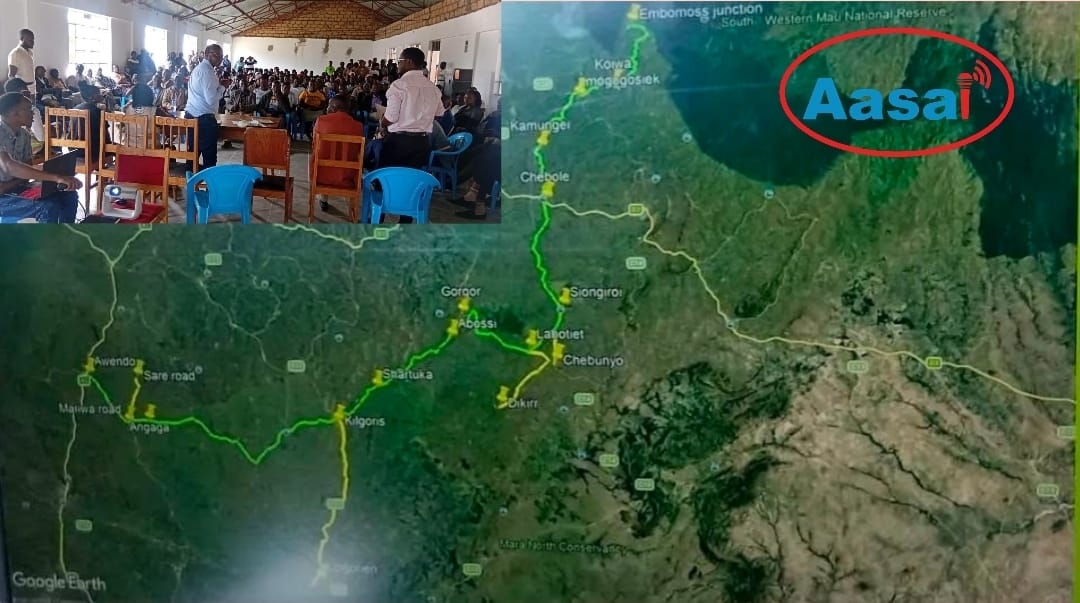
The proposed Chebole–Siongiroi–Labotiet–Kilgoris road upgrade has gained momentum following a public participation forum held yesterday at Siongiroi. The route, which connects the key centres of Chebole, Siongiroi, Labotiet and Kilgoris, was recently refilled with murram and is currently passa
-
President William Ruto has begun a two-day development tour of Narok County, with the visit expected to highlight the government’s efforts to accelerate development and address key priorities affecting residents. During the tour, the President is set to launch and inspect several projects focusing
-
IEBC Commissioner Ann Nderitu: University Degree Not Mandatory for Presidential, Gubernatorial or Parliamentary Candidates in 2027
-
Gachagua: Ruto’s Claim That He Cannot Work With Me Is Not About Willingness, But Because He Knows It Is Impossible.
-
Paul Ng’eno, the elder brother of the late Emurua Dikirr MP Johana Ng’eno, has died while receiving treatment at a hospital in Eldoret. He passed away on Friday evening, August 21, 2026, after his condition reportedly deteriorated.
-
Zambia’s President secures a second term in office with a decisive 61 percent majority vote

.png)