IEBC CHAIRPERSON ETHEKON QUESTIONS PRACTICALITY AND COST OF LIVESTREAMING RESULTS FROM 50,000 POLLING STATIONS
**HEADLINE:** IEBC CHAIRPERSON ETHEKON QUESTIONS PRACTICALITY AND COST OF LIVESTREAMING RESULTS FROM 50,000 POLLING STATIONS **NEWS ARTICLE:** Independent Electoral and Boundaries Commission (IEBC) Chairperson Erastus Ethekon has questioned the practicality of livestreaming electoral activities from every polling station in the country, arguing that the proposal would require substantial financial resources, equipment and additional personnel to implement successfully. Ethekon said that while the idea of livestreaming activities at polling stations may appear attractive as a way of strengthening transparency during elections, its implementation would present considerable logistical and financial challenges for the electoral commission. He questioned whether it would be realistic for IEBC to install cameras in approximately 50,000 polling stations and ensure that every recording is monitored throughout the voting and results management process. According to the IEBC chairperson, implementing such a proposal would go beyond simply purchasing cameras and placing them inside polling stations. The commission would also have to consider the additional infrastructure required to operate the equipment, monitor the footage and ensure that the system functions effectively throughout the electoral period. Ethekon explained that installing cameras in all polling stations would require a major procurement exercise involving thousands of devices. The commission would have to identify suitable cameras, acquire them, transport them to different parts of the country and ensure that they are properly installed before the elections. He observed that the process would involve significant expenditure, especially considering that the equipment would have to be deployed across the country. With approximately 50,000 polling stations to consider, the cost of acquiring and installing cameras could become a major financial undertaking for the electoral commission. The IEBC chairperson also pointed out that the cameras alone would not be sufficient to make the livestreaming proposal operational. A comprehensive monitoring system would be required to receive, manage and display the footage being transmitted from the various polling stations. He compared the proposed arrangement to a CCTV surveillance system, explaining that such an undertaking would require screens and other supporting equipment through which the recordings could be observed. The commission would need an appropriate monitoring arrangement capable of handling footage from thousands of locations at the same time. This, he argued, raises another important question about the human resources required to oversee the system. Even if the cameras were successfully installed and connected, there would still be a need for people to monitor what was happening at the polling stations. Ethekon questioned who would be responsible for watching the footage from thousands of cameras and how the commission would organise such an operation. He suggested that the scale of the proposed exercise would require the recruitment of additional personnel, further increasing the financial burden on IEBC. The commission would potentially need to employ thousands of workers to support the monitoring process, depending on how the system was designed and managed. These personnel would require training, supervision and the necessary equipment to carry out their responsibilities effectively. Beyond recruitment, the commission would also have to establish clear procedures for managing the footage, responding to technical problems and ensuring that the cameras remain operational. Such an arrangement would require careful planning and coordination, particularly because polling stations are spread across different geographical areas. Ethekon's remarks highlight the difficulties associated with introducing a nationwide livestreaming system that would cover every polling station. While technology can play an important role in strengthening electoral transparency, the commission must also consider whether the proposed measures can be implemented within the available resources and operational capacity. The debate surrounding livestreaming polling station activities is connected to wider public expectations about openness and accountability during elections. Many Kenyans want electoral processes to be conducted in a manner that allows citizens, political parties and other stakeholders to have confidence in the management and announcement of results. Technology has increasingly become part of discussions about how elections can be made more transparent. Livestreaming is one of the proposals that can be considered as a way of allowing members of the public to observe certain electoral activities without necessarily being physically present at polling stations. However, Ethekon's position is that adopting such a system across all polling stations would involve challenges that should not be underestimated. He maintained that the commission would have to consider the full cost of implementing the proposal rather than focusing only on the cameras themselves. The financial implications would include procurement, transportation, installation, connectivity, monitoring equipment and personnel. The commission would also have to make arrangements for maintaining the devices and dealing with technical failures that could interrupt the livestreaming process. The issue of connectivity would also be an important consideration in any nationwide digital monitoring arrangement. A system transmitting footage from thousands of polling stations would need reliable communication infrastructure to ensure that the recordings reach the designated monitoring centres. The commission would have to assess how such a system could operate across different locations and under varying technical conditions. In addition, the monitoring system would need sufficient capacity to handle the large volume of information generated by cameras operating simultaneously. Without proper arrangements, the commission could face difficulties managing the footage and ensuring that the intended transparency benefits are achieved. The human resource question is equally significant. Monitoring footage from approximately 50,000 polling stations would be a demanding responsibility. The commission would need to determine how many people would be required, how shifts would be organised and how monitoring teams would communicate with electoral officials in the field. Ethekon's argument is that these requirements could significantly increase the cost of conducting elections. He therefore challenged those supporting universal livestreaming to consider the practical realities involved in procuring equipment, employing additional workers and establishing the necessary monitoring infrastructure. His remarks also raise broader questions about how electoral transparency should be achieved while ensuring that public resources are used responsibly. The commission is expected to manage electoral activities across the country, and decisions about additional technology must take into account the resources available and the ability to operate the proposed systems effectively. The debate does not necessarily mean that technology has no role in improving electoral accountability. Instead, it highlights the need to examine whether a proposed technological solution is affordable, manageable and capable of delivering the intended results. For instance, any proposal to introduce cameras would need to establish exactly what activities should be recorded, who would have access to the footage and how the information would be used. It would also need to address the technical and operational arrangements required to ensure that the system does not interfere with the normal conduct of elections. There would also be a need to establish clear rules on the handling and storage of recordings. Such considerations would be important in determining how the proposed system could be implemented without creating additional complications for election officials. Ethekon maintained that setting up cameras in every polling station would be an enormous undertaking, particularly when the additional workforce and monitoring infrastructure are considered. He questioned the feasibility of expecting the commission to operate thousands of cameras and supervise the footage throughout the electoral process. He described some of the expectations surrounding universal livestreaming as impractical, insisting that the commission must assess what can realistically be achieved. His comments reflect the challenges faced by electoral management bodies when balancing public demands for greater transparency with the financial and logistical requirements of conducting national elections. The issue is likely to remain part of discussions about the future of election management in Kenya, particularly as stakeholders continue to examine ways of strengthening confidence in the electoral process. As the country considers approaches to improving transparency, the debate will involve determining which technological interventions can deliver meaningful benefits without placing an unsustainable burden on the electoral commission. For IEBC, the central question raised by Ethekon is whether livestreaming activities from every polling station is a practical solution, considering the number of cameras, monitoring screens, personnel and other resources that would be required. He insisted that the commission must confront these realities when evaluating proposals for electoral reforms, arguing that not every idea that appears desirable can easily be implemented on the ground. His position places the cost and practicality of nationwide livestreaming at the centre of the discussion, challenging stakeholders to consider the operational demands involved before expecting the commission to deploy cameras across approximately 50,000 polling stations. **DESCRIPTION:** IEBC Chairperson Erastus Ethekon has questioned the practicality of livestreaming electoral activities from all approximately 50,000 polling stations across Kenya, citing the huge financial, technological and logistical requirements involved. Ethekon argues that the proposal would require the commission to procure and install thousands of cameras, establish monitoring centres equipped with screens and recruit additional personnel to observe footage from the polling stations. He says the exercise would involve more than purchasing cameras, as IEBC would also need to provide the infrastructure and workforce necessary to operate the system effectively. His remarks come amid discussions on strengthening transparency and accountability in the country's electoral process, raising questions about the cost and feasibility of introducing nationwide livestreaming during elections. **NEWS ARTICLE:** Independent Electoral and Boundaries Commission (IEBC) Chairperson Erastus Ethekon has questioned the practicality of livestreaming electoral activities from every polling station in the country, arguing that the proposal would require substantial financial resources, equipment and additional personnel to implement successfully. Ethekon said that while the idea of livestreaming activities at polling stations may appear attractive as a way of strengthening transparency during elections, its implementation would present considerable logistical and financial challenges for the electoral commission. He questioned whether it would be realistic for IEBC to install cameras in approximately 50,000 polling stations and ensure that every recording is monitored throughout the voting and results management process. According to the IEBC chairperson, implementing such a proposal would go beyond simply purchasing cameras and placing them inside polling stations. The commission would also have to consider the additional infrastructure required to operate the equipment, monitor the footage and ensure that the system functions effectively throughout the electoral period. Ethekon explained that installing cameras in all polling stations would require a major procurement exercise involving thousands of devices. The commission would have to identify suitable cameras, acquire them, transport them to different parts of the country and ensure that they are properly installed before the elections. He observed that the process would involve significant expenditure, especially considering that the equipment would have to be deployed across the country. With approximately 50,000 polling stations to consider, the cost of acquiring and installing cameras could become a major financial undertaking for the electoral commission. The IEBC chairperson also pointed out that the cameras alone would not be sufficient to make the livestreaming proposal operational. A comprehensive monitoring system would be required to receive, manage and display the footage being transmitted from the various polling stations. He compared the proposed arrangement to a CCTV surveillance system, explaining that such an undertaking would require screens and other supporting equipment through which the recordings could be observed. The commission would need an appropriate monitoring arrangement capable of handling footage from thousands of locations at the same time. This, he argued, raises another important question about the human resources required to oversee the system. Even if the cameras were successfully installed and connected, there would still be a need for people to monitor what was happening at the polling stations. Ethekon questioned who would be responsible for watching the footage from thousands of cameras and how the commission would organise such an operation. He suggested that the scale of the proposed exercise would require the recruitment of additional personnel, further increasing the financial burden on IEBC. The commission would potentially need to employ thousands of workers to support the monitoring process, depending on how the system was designed and managed. These personnel would require training, supervision and the necessary equipment to carry out their responsibilities effectively. Beyond recruitment, the commission would also have to establish clear procedures for managing the footage, responding to technical problems and ensuring that the cameras remain operational. Such an arrangement would require careful planning and coordination, particularly because polling stations are spread across different geographical areas. Ethekon's remarks highlight the difficulties associated with introducing a nationwide livestreaming system that would cover every polling station. While technology can play an important role in strengthening electoral transparency, the commission must also consider whether the proposed measures can be implemented within the available resources and operational capacity. The debate surrounding livestreaming polling station activities is connected to wider public expectations about openness and accountability during elections. Many Kenyans want electoral processes to be conducted in a manner that allows citizens, political parties and other stakeholders to have confidence in the management and announcement of results. Technology has increasingly become part of discussions about how elections can be made more transparent. Livestreaming is one of the proposals that can be considered as a way of allowing members of the public to observe certain electoral activities without necessarily being physically present at polling stations. However, Ethekon's position is that adopting such a system across all polling stations would involve challenges that should not be underestimated. He maintained that the commission would have to consider the full cost of implementing the proposal rather than focusing only on the cameras themselves. The financial implications would include procurement, transportation, installation, connectivity, monitoring equipment and personnel. The commission would also have to make arrangements for maintaining the devices and dealing with technical failures that could interrupt the livestreaming process. The issue of connectivity would also be an important consideration in any nationwide digital monitoring arrangement. A system transmitting footage from thousands of polling stations would need reliable communication infrastructure to ensure that the recordings reach the designated monitoring centres. The commission would have to assess how such a system could operate across different locations and under varying technical conditions. In addition, the monitoring system would need sufficient capacity to handle the large volume of information generated by cameras operating simultaneously. Without proper arrangements, the commission could face difficulties managing the footage and ensuring that the intended transparency benefits are achieved. The human resource question is equally significant. Monitoring footage from approximately 50,000 polling stations would be a demanding responsibility. The commission would need to determine how many people would be required, how shifts would be organised and how monitoring teams would communicate with electoral officials in the field. Ethekon's argument is that these requirements could significantly increase the cost of conducting elections. He therefore challenged those supporting universal livestreaming to consider the practical realities involved in procuring equipment, employing additional workers and establishing the necessary monitoring infrastructure. His remarks also raise broader questions about how electoral transparency should be achieved while ensuring that public resources are used responsibly. The commission is expected to manage electoral activities across the country, and decisions about additional technology must take into account the resources available and the ability to operate the proposed systems effectively. The debate does not necessarily mean that technology has no role in improving electoral accountability. Instead, it highlights the need to examine whether a proposed technological solution is affordable, manageable and capable of delivering the intended results. For instance, any proposal to introduce cameras would need to establish exactly what activities should be recorded, who would have access to the footage and how the information would be used. It would also need to address the technical and operational arrangements required to ensure that the system does not interfere with the normal conduct of elections. There would also be a need to establish clear rules on the handling and storage of recordings. Such considerations would be important in determining how the proposed system could be implemented without creating additional complications for election officials. Ethekon maintained that setting up cameras in every polling station would be an enormous undertaking, particularly when the additional workforce and monitoring infrastructure are considered. He questioned the feasibility of expecting the commission to operate thousands of cameras and supervise the footage throughout the electoral process. He described some of the expectations surrounding universal livestreaming as impractical, insisting that the commission must assess what can realistically be achieved. His comments reflect the challenges faced by electoral management bodies when balancing public demands for greater transparency with the financial and logistical requirements of conducting national elections. The issue is likely to remain part of discussions about the future of election management in Kenya, particularly as stakeholders continue to examine ways of strengthening confidence in the electoral process. As the country considers approaches to improving transparency, the debate will involve determining which technological interventions can deliver meaningful benefits without placing an unsustainable burden on the electoral commission. For IEBC, the central question raised by Ethekon is whether livestreaming activities from every polling station is a practical solution, considering the number of cameras, monitoring screens, personnel and other resources that would be required. He insisted that the commission must confront these realities when evaluating proposals for electoral reforms, arguing that not every idea that appears desirable can easily be implemented on the ground. His position places the cost and practicality of nationwide livestreaming at the centre of the discussion, challenging stakeholders to consider the operational demands involved before expecting the commission to deploy cameras across approximately 50,000 polling stations. **DESCRIPTION:** IEBC Chairperson Erastus Ethekon has questioned the practicality of livestreaming electoral activities from all approximately 50,000 polling stations across Kenya, citing the huge financial, technological and logistical requirements involved. Ethekon argues that the proposal would require the commission to procure and install thousands of cameras, establish monitoring centres equipped with screens and recruit additional personnel to observe footage from the polling stations. He says the exercise would involve more than purchasing cameras, as IEBC would also need to provide the infrastructure and workforce necessary to operate the system effectively. His remarks come amid discussions on strengthening transparency and accountability in the country's electoral process, raising questions about the cost and feasibility of introducing nationwide livestreaming during elections.
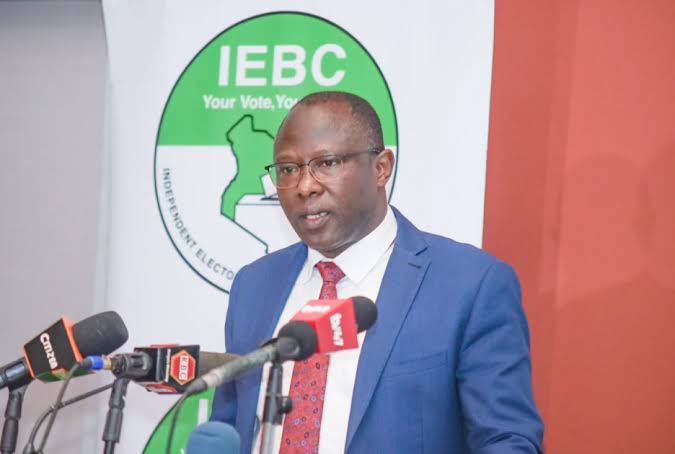
Independent Electoral and Boundaries Commission (IEBC) Chairperson Erastus Ethekon has questioned the practicality of livestreaming electoral activities from every polling station in the country, arguing that the proposal would require substantial financial resources, equipment and additional personnel to implement successfully.
Ethekon said that while the idea of livestreaming activities at polling stations may appear attractive as a way of strengthening transparency during elections, its implementation would present considerable logistical and financial challenges for the electoral commission. He questioned whether it would be realistic for IEBC to install cameras in approximately 50,000 polling stations and ensure that every recording is monitored throughout the voting and results management process.
According to the IEBC chairperson, implementing such a proposal would go beyond simply purchasing cameras and placing them inside polling stations. The commission would also have to consider the additional infrastructure required to operate the equipment, monitor the footage and ensure that the system functions effectively throughout the electoral period.
Ethekon explained that installing cameras in all polling stations would require a major procurement exercise involving thousands of devices. The commission would have to identify suitable cameras, acquire them, transport them to different parts of the country and ensure that they are properly installed before the elections.
He observed that the process would involve significant expenditure, especially considering that the equipment would have to be deployed across the country. With approximately 50,000 polling stations to consider, the cost of acquiring and installing cameras could become a major financial undertaking for the electoral commission.
The IEBC chairperson also pointed out that the cameras alone would not be sufficient to make the livestreaming proposal operational. A comprehensive monitoring system would be required to receive, manage and display the footage being transmitted from the various polling stations.
He compared the proposed arrangement to a CCTV surveillance system, explaining that such an undertaking would require screens and other supporting equipment through which the recordings could be observed. The commission would need an appropriate monitoring arrangement capable of handling footage from thousands of locations at the same time.
This, he argued, raises another important question about the human resources required to oversee the system. Even if the cameras were successfully installed and connected, there would still be a need for people to monitor what was happening at the polling stations.
Ethekon questioned who would be responsible for watching the footage from thousands of cameras and how the commission would organise such an operation. He suggested that the scale of the proposed exercise would require the recruitment of additional personnel, further increasing the financial burden on IEBC.
The commission would potentially need to employ thousands of workers to support the monitoring process, depending on how the system was designed and managed. These personnel would require training, supervision and the necessary equipment to carry out their responsibilities effectively.
Beyond recruitment, the commission would also have to establish clear procedures for managing the footage, responding to technical problems and ensuring that the cameras remain operational. Such an arrangement would require careful planning and coordination, particularly because polling stations are spread across different geographical areas.
Ethekon's remarks highlight the difficulties associated with introducing a nationwide livestreaming system that would cover every polling station. While technology can play an important role in strengthening electoral transparency, the commission must also consider whether the proposed measures can be implemented within the available resources and operational capacity.
The debate surrounding livestreaming polling station activities is connected to wider public expectations about openness and accountability during elections. Many Kenyans want electoral processes to be conducted in a manner that allows citizens, political parties and other stakeholders to have confidence in the management and announcement of results.
Technology has increasingly become part of discussions about how elections can be made more transparent. Livestreaming is one of the proposals that can be considered as a way of allowing members of the public to observe certain electoral activities without necessarily being physically present at polling stations.
However, Ethekon's position is that adopting such a system across all polling stations would involve challenges that should not be underestimated. He maintained that the commission would have to consider the full cost of implementing the proposal rather than focusing only on the cameras themselves.
The financial implications would include procurement, transportation, installation, connectivity, monitoring equipment and personnel. The commission would also have to make arrangements for maintaining the devices and dealing with technical failures that could interrupt the livestreaming process.
The issue of connectivity would also be an important consideration in any nationwide digital monitoring arrangement. A system transmitting footage from thousands of polling stations would need reliable communication infrastructure to ensure that the recordings reach the designated monitoring centres. The commission would have to assess how such a system could operate across different locations and under varying technical conditions.
In addition, the monitoring system would need sufficient capacity to handle the large volume of information generated by cameras operating simultaneously. Without proper arrangements, the commission could face difficulties managing the footage and ensuring that the intended transparency benefits are achieved.
The human resource question is equally significant. Monitoring footage from approximately 50,000 polling stations would be a demanding responsibility. The commission would need to determine how many people would be required, how shifts would be organised and how monitoring teams would communicate with electoral officials in the field.
Ethekon's argument is that these requirements could significantly increase the cost of conducting elections. He therefore challenged those supporting universal livestreaming to consider the practical realities involved in procuring equipment, employing additional workers and establishing the necessary monitoring infrastructure.
His remarks also raise broader questions about how electoral transparency should be achieved while ensuring that public resources are used responsibly. The commission is expected to manage electoral activities across the country, and decisions about additional technology must take into account the resources available and the ability to operate the proposed systems effectively.
The debate does not necessarily mean that technology has no role in improving electoral accountability. Instead, it highlights the need to examine whether a proposed technological solution is affordable, manageable and capable of delivering the intended results.
For instance, any proposal to introduce cameras would need to establish exactly what activities should be recorded, who would have access to the footage and how the information would be used. It would also need to address the technical and operational arrangements required to ensure that the system does not interfere with the normal conduct of elections.
There would also be a need to establish clear rules on the handling and storage of recordings. Such considerations would be important in determining how the proposed system could be implemented without creating additional complications for election officials.
Ethekon maintained that setting up cameras in every polling station would be an enormous undertaking, particularly when the additional workforce and monitoring infrastructure are considered. He questioned the feasibility of expecting the commission to operate thousands of cameras and supervise the footage throughout the electoral process.
He described some of the expectations surrounding universal livestreaming as impractical, insisting that the commission must assess what can realistically be achieved. His comments reflect the challenges faced by electoral management bodies when balancing public demands for greater transparency with the financial and logistical requirements of conducting national elections.
The issue is likely to remain part of discussions about the future of election management in Kenya, particularly as stakeholders continue to examine ways of strengthening confidence in the electoral process.
As the country considers approaches to improving transparency, the debate will involve determining which technological interventions can deliver meaningful benefits without placing an unsustainable burden on the electoral commission.
IEBC, the central question raised by Ethekon is whether livestreaming activities from every polling station is a practical solution, considering the number of cameras, monitoring screens, personnel and other resources that would be required.
He insisted that the commission must confront these realities when evaluating proposals for electoral reforms, arguing that not every idea that appears desirable can easily be implemented on the ground.
His position places the cost and practicality of nationwide livestreaming at the centre of the discussion, challenging stakeholders to consider the operational demands involved before expecting the commission to deploy cameras across approximately 50,000 polling stations.

You Might Also Like
-
The meeting convened by Interior Cabinet Secretary Kipchumba Murkomen, attended by PS Raymond Omollo, IG Douglas Kanja, DIG Eliud Lagat, DIG Gilbert Masengeli and leaders from Isiolo and Garissa, marks an important government intervention following the recent deadly inter-community clashes. The eig
-
Football Kenya Federation (FKF) has partnered with the Kenya Red Cross Society in an agreement valued at approximately KSh54 million aimed at strengthening medical preparedness and emergency response across Kenyan football. The collaboration seeks to improve the safety and welfare of players, coache
-
President William Ruto has announced an increase in Hustler Fund borrowing limits for approximately 4.5 million Kenyans who have demonstrated responsible repayment behaviour. The move is aimed at expanding access to affordable credit, supporting small-scale traders and entrepreneurs, and strengtheni
-
The 17th anniversary celebrations of Joyful Women Organization at State House on November 24, 2026, mark an important chapter in Kenya's efforts to promote women's economic independence. With President William Ruto leading the celebrations, the occasion recognises an organisation that began with app
-
By combining KIMC's expertise in media and communication with TSC's responsibility for teacher development, the initiative seeks to prepare educators for emerging learning areas under the Competency-Based Education curriculum. The training in Media Technology, Theatre and Film, Creative Arts, Music
-
The Kenya Defence Forces (KDF) has announced that candidates shortlisted for the December 2026 recruitment exercise will not be issued with physical calling letters. Instead, applicants will undergo biometric verification to confirm their identities when reporting for the recruitment process. The cl