CS Murkomen Sounds Security Alarm Over Isiolo–Garissa Clashes, Orders Crackdown on Illegal Guns as 10 People Are Killed
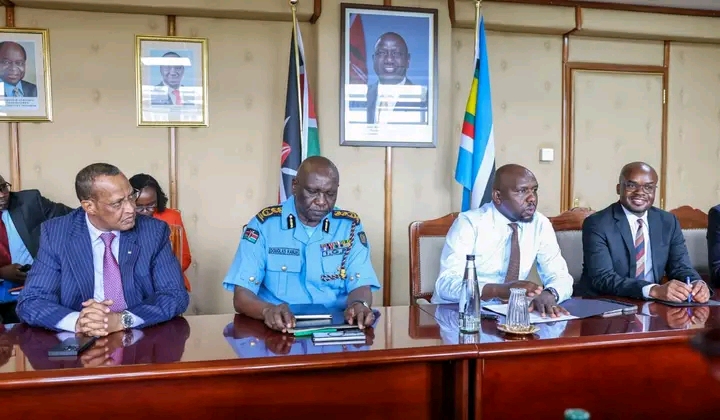
The meeting convened by Interior Cabinet Secretary Kipchumba Murkomen, attended by PS Raymond Omollo, IG Douglas Kanja, DIG Eliud Lagat, DIG Gilbert Masengeli and leaders from Isiolo and Garissa, marks an important government intervention following the recent deadly inter-community clashes. The eight key interventions agreed upon include recovering illegal firearms, increasing police deployment, providing additional police vehicles, reviewing National Police Reservists, strengthening peace committees, recovering stolen livestock, improving mobile network coverage and accelerating the construction of security roads. The planned return visit next month will also provide an opportunity to evaluate progress and engage directly with affected communities. Ultimately, the government wants to restore peace, protect lives and property, and ensure that residents of Isiolo and Garissa can continue with their daily activities without fear of attacks.
Interior and National Administration Cabinet Secretary Kipchumba Murkomen on Tuesday, November 24, 2026, convened a high-level security consultative meeting bringing together senior government officials, security chiefs and elected leaders from Isiolo and Garissa counties to address the growing insecurity along the Isiolo–Garissa border.The meeting brought together Principal Secretary for Internal Security and National Administration Dr Raymond Omollo, Inspector General of Police Douglas Kanja, Deputy Inspector General of the Kenya Police Service Eliud Lagat and Deputy Inspector General of the Administration Police Service Gilbert Masengeli. The discussions focused on finding lasting solutions to the recent inter-community clashes, which have resulted in deaths, destruction of property, livestock theft and growing tension among communities living along the two counties' border.
The meeting came at a time when residents of the affected areas were increasingly concerned about their safety following a series of deadly attacks. The government acknowledged that the situation required urgent intervention, stronger security operations and cooperation between national government officials, county leaders, community elders and religious leaders.
According to information shared after the meeting, approximately 10 people had been killed in clashes in the affected region over the preceding week, highlighting the seriousness of the security situation and the need for immediate action. During the meeting, Murkomen and the security leadership examined the underlying causes of the violence and discussed practical interventions that could prevent further loss of lives.
The Cabinet Secretary expressed concern over the recent escalation of tensions, noting that communities living along the Isiolo–Garissa border had historically maintained peaceful relationships through trade, cultural interactions, shared natural resources and traditional conflict-resolution mechanisms.
He condemned the killings and destruction of property, expressing condolences to families who had lost their loved ones.
Murkomen also assured residents that the government was committed to restoring normalcy and ensuring that those responsible for the attacks were identified, arrested and brought before the courts.
He emphasised that security agencies were already pursuing individuals suspected of participating in the violence and that the government would not allow criminals to continue threatening innocent residents.Murkomen directed Inspector General of Police Douglas Kanja to organise and implement an intensive, intelligence-led operation targeting illegal firearms in the two counties.
The government believes that the availability of unlicensed weapons has contributed significantly to the escalation of inter-community conflicts, making attacks more deadly and increasing the risk of retaliatory violence.
Under the planned operation, security agencies will intensify intelligence gathering, identify individuals possessing illegal weapons and conduct targeted operations to recover firearms.
The operation is expected to focus on areas experiencing heightened insecurity, particularly locations where armed attacks and livestock theft have been reported.Murkomen directed the Inspector General to conduct a comprehensive assessment of existing security deployments and installations in Isiolo and Garissa.
The assessment will establish whether the current number of officers is sufficient to protect residents and respond effectively to emergencies.
The government also plans to reposition security installations and increase police strength in areas considered vulnerable to attacks.
This intervention is intended to ensure that security officers can respond quickly whenever violence is reported.
Residents in remote areas have previously faced challenges accessing security assistance because of long distances between settlements and police facilities.
By increasing police deployment and strategically positioning security installations, the government hopes to improve surveillance, prevent attacks and strengthen public confidence.Police vehicles and improved mobility for security officers
The meeting also addressed the challenges faced by security officers when responding to incidents in remote parts of the two counties.
Some affected areas have difficult terrain and poor road networks, making it challenging for police officers to reach locations where attacks have occurred.
Murkomen directed IG Douglas Kanja to assess the mobility requirements of security personnel operating in the region.
The government announced that Isiolo and Garissa would be prioritised in the forthcoming allocation of police vehicles.
The move is expected to improve the ability of officers to conduct patrols, respond to emergencies, pursue criminals and transport security personnel to areas experiencing violence.Beyond security operations, the meeting recognised that lasting peace cannot be achieved through police enforcement alone.
Murkomen and the leaders agreed that peace committees in Isiolo and Garissa should be strengthened and adequately resourced.
These committees play an important role in bringing communities together, addressing disagreements and preventing minor disputes from escalating into violent confrontations.
Community elders, religious leaders and other respected individuals are expected to participate actively in the peace-building process.
The government also wants to establish a framework for sharing natural resources among communities living along the border.Livestock theft was another important issue addressed during the meeting.
Many families in Isiolo and Garissa depend on livestock for their livelihoods, making cattle, goats, sheep and camels important economic assets.
When livestock is stolen during attacks, affected families experience significant financial losses, while the incident can also trigger retaliatory attacks.
The meeting agreed that public meetings involving elected leaders, National Government Administrative Officers, community elders and religious leaders would be organised to address tensions.
These engagements will provide an opportunity for communities to discuss outstanding disputes, identify ways of recovering stolen animals and agree on peaceful solutions.
The government wants the recovery of stolen livestock to be handled through lawful and coordinated processes rather than revenge attacks.Poor mobile network coverage can make it difficult for residents to report emergencies, communicate with security officers and receive timely information.
The government announced plans to engage telecommunications companies to improve mobile network coverage in affected areas.
Improved connectivity is expected to help residents report suspicious activities and enable security agencies to coordinate their responses more effectively.
It will also improve communication between communities, local administrators and police officers.
Beyond security, better network coverage could support education, business activities, access to government services and economic development.
The government considers communication infrastructure an important part of improving security in remote communities.Murkomen announced that the government would fast-track the allocation of funds for constructing security roads in areas affected by insecurity.
The roads are expected to improve access to remote settlements and make it easier for security officers to move between different locations.
Poor road networks have previously affected the ability of officers to respond quickly to attacks, conduct patrols and reach communities facing security threats.
The construction of security roads is therefore expected to complement the planned increase in police deployments and allocation of additional vehicles.
Improved roads will also benefit residents by facilitating transportation, access to markets, healthcare facilities and other essential services.Leaders who attended the meeting
The meeting brought together several political leaders representing the interests of residents from the two counties.
Among those present were:
Garissa Governor Nathif Jama.
Isiolo Deputy Governor Dr James Lowasa.
Isiolo Senator Fatuma Dullo.
Garissa Senator Abdul Haji.
Isiolo Woman Representative Mumina Bonaya.
Garissa Woman Representative Amina Siyad.
Lagdera Member of Parliament Abdikadir Hussein.
Isiolo South Member of Parliament Mohamed Tubi.
Members of County Assemblies, community elders and religious leaders also attended the consultative meeting.This means the government intends to monitor the progress of the resolutions rather than simply announce measures without following up.
The planned engagement will also provide an opportunity for residents to raise concerns and assess whether the interventions are producing meaningful improvements.
Murkomen called on residents to remain calm as security agencies work to address the situation.
He further urged political leaders, community elders and religious leaders to promote peaceful coexistence and discourage actions that could lead to further violence.Communities living in the region have experienced recurring disagreements associated with competition over grazing land, water resources, livestock theft and access to pasture.
The situation is particularly challenging for pastoralist families whose livelihoods depend heavily on livestock and natural resources.
During periods of drought, competition over water and grazing areas can increase, creating tensions between communities.
The circulation of illegal firearms has also made some confrontations more dangerous, increasing the possibility of deaths and destruction of property.
The latest attacks have raised concerns about the safety of residents, particularly families living in remote settlements.

You Might Also Like
-
**HEADLINE:** IEBC CHAIRPERSON ETHEKON QUESTIONS PRACTICALITY AND COST OF LIVESTREAMING RESULTS FROM 50,000 POLLING STATIONS **NEWS ARTICLE:** Independent Electoral and Boundaries Commission (IEBC) Chairperson Erastus Ethekon has questioned the practicality of livestreaming electoral activi
-
Football Kenya Federation (FKF) has partnered with the Kenya Red Cross Society in an agreement valued at approximately KSh54 million aimed at strengthening medical preparedness and emergency response across Kenyan football. The collaboration seeks to improve the safety and welfare of players, coache
-
President William Ruto has announced an increase in Hustler Fund borrowing limits for approximately 4.5 million Kenyans who have demonstrated responsible repayment behaviour. The move is aimed at expanding access to affordable credit, supporting small-scale traders and entrepreneurs, and strengtheni
-
The 17th anniversary celebrations of Joyful Women Organization at State House on November 24, 2026, mark an important chapter in Kenya's efforts to promote women's economic independence. With President William Ruto leading the celebrations, the occasion recognises an organisation that began with app
-
By combining KIMC's expertise in media and communication with TSC's responsibility for teacher development, the initiative seeks to prepare educators for emerging learning areas under the Competency-Based Education curriculum. The training in Media Technology, Theatre and Film, Creative Arts, Music
-
The Kenya Defence Forces (KDF) has announced that candidates shortlisted for the December 2026 recruitment exercise will not be issued with physical calling letters. Instead, applicants will undergo biometric verification to confirm their identities when reporting for the recruitment process. The cl