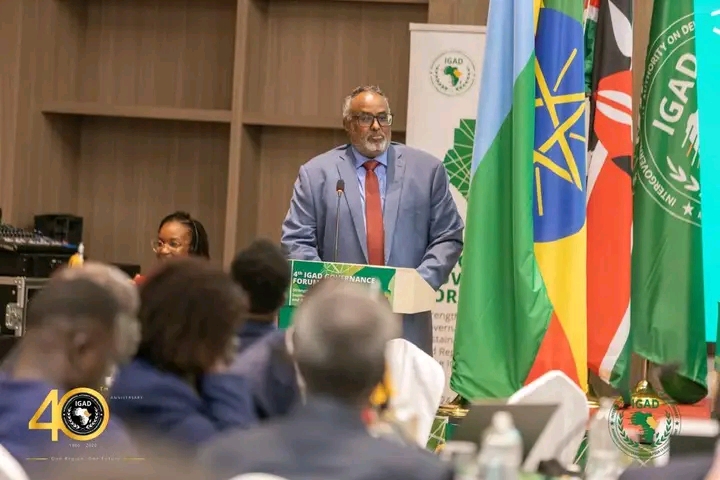
IGAD Sounds Warning Ahead of 2027 Polls, Demands Independent IEBC to Deliver Free, Fair and Credible Elections in Kenya
The regional organisation wants Kenya to conduct free, fair and peaceful elections while restoring public confidence in the electoral process, particularly among young people. Its message comes at a time when IEBC is facing pressure over voter registration, election technology, procurement, funding and demands for electoral reforms. As the country moves closer to the August 10, 2027 elections, the commission must demonstrate transparency, professionalism and impartiality in carrying out its responsibilities. Political leaders, government institutions, civil society organisations, the media and citizens must also play their part in protecting democracy and promoting peaceful political competition. Ultimately, the success of the 2027 General Election will not be measured only by the number of people who turn out to vote, but also by whether every eligible Kenyan is given an equal opportunity to participate and whether the final results reflect the freely expressed will of the electorate.
The Intergovernmental Authority on Development (IGAD) has called on Kenya's Independent Electoral and Boundaries Commission (IEBC) to uphold its independence and ensure that the country conducts free, fair, transparent and peaceful General Elections in August 2027. The regional organisation has emphasised the importance of strengthening public confidence in the electoral process, warning that the credibility of an election depends not only on voting day but also on the preparations and decisions made throughout the electoral period.
IGAD's message comes at a critical moment when Kenya is intensifying preparations for the 2027 General Election, with political parties, candidates, electoral stakeholders and citizens increasingly focusing on the commission's readiness. The organisation has particularly highlighted the need for IEBC to restore public trust in the electoral process, especially among young people, who represent an important section of Kenya's voting population.The organisation believes that an independent electoral commission is essential in ensuring that voters, political parties and candidates have confidence in the election results. An electoral body must be able to make decisions without interference, intimidation or pressure from political interests.
The commission is expected to treat all political parties and candidates equally, regardless of their popularity, political influence or position in government.
IGAD's message also highlights the importance of ensuring that electoral preparations are conducted transparently. This includes voter registration, verification of the voters' register, nomination of candidates, procurement of election materials, management of voting technology, counting of ballots and announcement of results.
These processes must be conducted according to the Constitution and relevant electoral laws to prevent unnecessary disputes and suspicion.This independence is important because elections involve competing political interests. Each candidate wants to win, and political parties expect the electoral process to provide a fair opportunity for their candidates.
If the commission is perceived to favour a particular political side, public confidence can quickly decline, even before voting begins.
IGAD's appeal therefore reinforces the need for IEBC to demonstrate impartiality in all its activities. The commission must communicate openly with stakeholders, address legitimate concerns and ensure that decisions are guided by the law rather than political pressure.However, confidence in electoral institutions is essential if young people are to participate actively in democratic processes.
The electoral commission must therefore ensure that young voters understand how elections are conducted, how to register as voters, how to verify their registration details and how to participate peacefully.
There is also a need to address concerns about voter identification, election technology and the transmission of results. These issues have attracted considerable public attention in previous elections.
IEBC must make deliberate efforts to communicate with young people through educational programmes, public forums and digital platforms. This would help reduce misinformation and encourage responsible political participation.
Young Kenyans should also be encouraged to participate in elections without fear, intimidation or discrimination.The commission also identified financial constraints as a major concern, with a funding shortfall estimated at approximately KSh12 billion.
Other challenges include staff shortages, incomplete voter registration, legal disputes, misinformation and gaps in geographical information systems.
These issues have raised questions about whether the commission will complete all the necessary preparations within the available time.
IEBC Chairperson Erastus Edung Ethekon has maintained that the commission is working towards delivering free, fair and credible elections despite the difficulties.
The commission has also outlined plans to strengthen its election operations, improve communication with stakeholders and address outstanding administrative challenges.Some opposition leaders have called for changes to aspects of the electoral management system, including the transmission of presidential results and the use of election technology.
On November 19, 2026, a section of opposition leaders walked out of an IEBC consultative meeting after disagreements over the issues they wanted addressed.
The leaders argued that they wanted discussions on electoral reforms rather than simply receiving updates about the commission's preparedness.
Among their concerns were an independent audit of the voters' register, changes to election technology and decentralisation of presidential results transmission.
IEBC subsequently urged the leaders to remain engaged in consultations, arguing that walking away from dialogue would not resolve their concerns.Transparent elections allow voters and other stakeholders to understand how votes are cast, counted, transmitted and declared.
Peaceful elections, on the other hand, require political leaders, their supporters and security agencies to respect the law and avoid actions that could cause violence.
Kenya has experienced the consequences of electoral tensions in the past, making peaceful political competition an important national priority.
The 2007–2008 post-election violence remains a painful reminder of what can happen when political disagreements escalate into widespread violence.
As the country approaches another competitive election, political leaders have a responsibility to encourage tolerance and respect for different political opinions.
Security agencies must also ensure that they protect citizens and maintain law and order without interfering with legitimate political activities.Elections in one country can have implications beyond its borders, particularly when political instability leads to violence, displacement or disruption of economic activities.
Kenya is an important regional partner in matters involving trade, security, diplomacy and economic integration. Maintaining political stability is therefore important not only for Kenyans but also for neighbouring countries.
IGAD has previously participated in election observation activities in the region and has encouraged member states to conduct inclusive and transparent elections.
In a communiqué following its 74th Extraordinary Session of the Council of Ministers, IGAD congratulated Djibouti, Ethiopia and Uganda on their peaceful elections in 2026. It also noted Kenya's scheduled August 2027 General Election and called for inclusive and transparent elections.Leaders from both government and opposition parties must respect electoral laws and avoid making statements that could encourage hostility among their supporters.
They should also encourage their supporters to register as voters, participate peacefully in political activities and respect the decisions of electoral institutions.
Political competition should be based on policies, development agendas and the ability of candidates to serve the public.
Leaders must also avoid spreading unverified information about election results, voter registration or the operations of the electoral commission.
Where disagreements arise, political parties should use established legal and institutional mechanisms to resolve them.Responsible journalism can help citizens understand the electoral process and make informed decisions.
However, media organisations must avoid spreading misinformation, hate speech, ethnic profiling and unverified election claims.
IEBC Chairperson Erastus Ethekon has previously challenged political reporters to ensure that media platforms do not become channels for incitement and political intolerance.
Journalists should provide balanced coverage of political parties and candidates while questioning statements that could threaten national cohesion.
The media should also give voters accurate information about registration deadlines, polling procedures and official election announcements.
What Kenyans expect from IEBC
As preparations continue, Kenyans expect IEBC to demonstrate its commitment to delivering an election that reflects the will of the people.
First, the commission is expected to complete voter registration activities and ensure that eligible citizens are given sufficient opportunities to register.
Second, it must address concerns surrounding the voters' register through transparent auditing and verification processes.
Third, the commission must ensure that election technology is reliable, secure and properly tested before voting day.
Fourth, it must communicate clearly with political parties and the public about its preparations, procurement processes and any challenges that could affect the election.
The commission must also ensure that polling stations are accessible to persons with disabilities, elderly citizens and other vulnerable groups.
Furthermore, voter education should be strengthened to help citizens understand their democratic rights and responsibilities.IEBC will also need to strengthen its capacity to manage the counting, tallying and announcement of election results.
The commission has acknowledged that funding limitations and procurement disputes could affect some of these activities.
It is therefore important for the government and relevant institutions to ensure that the electoral body receives the resources required to fulfil its constitutional responsibilities.
At the same time, the government must respect the commission's independence and avoid actions that could create the perception of political interference.

You Might Also Like
-
The Kenya National Highways Authority (KeNHA) has announced temporary traffic disruptions at the Lower Kabete–Ndumbuini–Kapenguria–Uthiru Road Interchange from November 26 to December 31, 2026, to facilitate reconstruction works on ramps, loops and slip roads. The planned works are expected to
-
South African President Cyril Ramaphosa has secured a significant legal victory after the Western Cape High Court overturned a parliamentary panel report linking him to the controversial theft of $580,000 (approximately KSh75.5 million) from his Phala Phala game farm in 2020. The court declared the
-
Veteran Nigerian actor Pete Edochie has passed away at the age of 79 following a prolonged battle with prostate cancer. His family confirmed that the legendary Nollywood star died at 12:30 a.m. on Wednesday, November 25, 2026, in Enugu, Nigeria. Born on March 7, 1947, in Zaria, Kaduna State, Edochie
-
German President Frank-Walter Steinmeier has arrived at State House, Nairobi, for an official state visit and high-level bilateral talks with President William Ruto aimed at strengthening diplomatic and economic relations between Kenya and Germany. The discussions are expected to focus on expanding
-
Roads and Transport Cabinet Secretary Davis Chirchir has raised concerns over a KSh255 billion funding shortfall facing the State Department for Roads in the 2027/28 financial year. Speaking before the National Assembly Transport Committee, Chirchir warned that failure by the National Treasury to br
-
One person has been confirmed dead, while four others sustained injuries following a horrific head-on collision involving two trucks along the Nairobi-Mombasa Highway in Makueni County. The accident occurred at a location known as Crasher, between Kiboko and Masimba. The circumstances leading to the