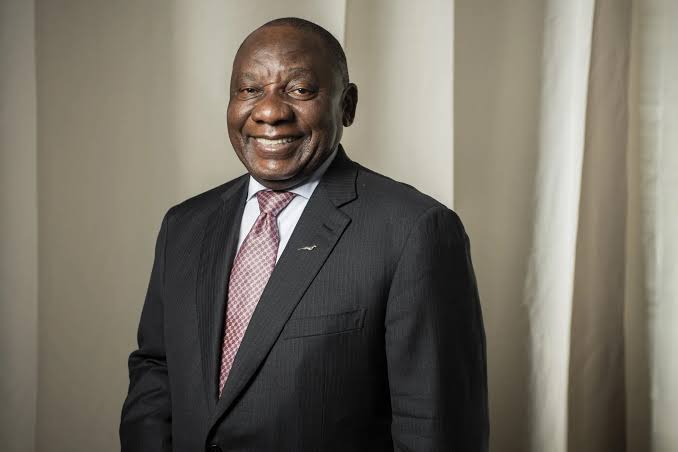
RAMAPHOSA WINS LEGAL BATTLE AS COURT OVERTURNS PHALA PHALA FARM THEFT REPORT
South African President Cyril Ramaphosa has secured a significant legal victory after the Western Cape High Court overturned a parliamentary panel report linking him to the controversial theft of $580,000 (approximately KSh75.5 million) from his Phala Phala game farm in 2020. The court declared the report unlawful and set it aside in its entirety, removing the legal basis for possible impeachment proceedings arising from its findings. The scandal, which became a major political controversy in South Africa, followed allegations that foreign currency had been stolen from the president's private farm and questions about how the incident was handled. Ramaphosa has consistently denied any wrongdoing, maintaining that the money was connected to legitimate business activities. The ruling is a major relief for the president, whose leadership has faced sustained scrutiny over the matter. However, the controversy may not be over, as opposition parties have indicated plans to challenge the court's decision, keeping the Phala Phala affair in the spotlight. The development has renewed debate about presidential accountability, parliamentary oversight, the independence of the judiciary and the importance of transparency in public leadership.
South African President Cyril Ramaphosa has secured a major legal victory after the Western Cape High Court overturned a parliamentary panel report that had linked him to the controversial theft of $580,000, equivalent to approximately KSh75.5 million, from his Phala Phala game farm in 2020.
The court declared the parliamentary report unlawful and set it aside in its entirety, dealing a significant blow to efforts that had sought to use its findings as a basis for possible impeachment proceedings against the president. The ruling represents an important development in a political controversy that has attracted national and international attention and raised questions about accountability, presidential conduct and the relationship between South Africa's executive and legislative institutions.
The Phala Phala scandal emerged after reports surfaced that a substantial amount of foreign currency had been stolen from Ramaphosa's private game farm in Limpopo Province. The incident attracted widespread attention because of questions surrounding the circumstances of the theft, how the money was kept at the property and the manner in which the matter was handled after the incident.
Although the president denied any wrongdoing, the controversy developed into a major political challenge for his administration. Opposition leaders demanded explanations and called for investigations into the circumstances surrounding the stolen money, arguing that the matter raised serious questions about transparency and the conduct expected of a sitting head of state.
The latest court decision has now changed the legal position surrounding the parliamentary panel's findings. By setting aside the report, the court removed the legal foundation on which certain impeachment efforts had been based. However, the ruling does not necessarily mean that every political question surrounding the Phala Phala incident has disappeared.
The controversy dates back to February 2020, when a group of individuals reportedly entered Ramaphosa's Phala Phala farm and stole a large amount of foreign currency concealed within furniture at the property. The money was reported to have been hidden inside a couch at the private residence.
The incident did not immediately become a major public issue. It gained national attention after former intelligence chief Arthur Fraser lodged a criminal complaint against Ramaphosa in June 2022, alleging that the president had failed to report the theft properly and had been involved in activities that required further investigation.
Fraser's complaint triggered a political storm and placed the president under intense scrutiny. The allegations raised questions about the source of the money, the circumstances under which it was kept at the farm and whether the authorities had been properly informed about the theft.
Ramaphosa denied the allegations of wrongdoing and maintained that the money was connected to legitimate business activities involving the sale of animals at his farm. He also disputed claims that he had attempted to conceal the incident or interfere with the investigation.
The president's position was that the theft had been reported and that he had no involvement in any criminal activity. His supporters argued that the allegations should be examined through established legal processes rather than being used as a political weapon against his administration.
However, opposition parties insisted that the incident required independent scrutiny, particularly because it involved the head of state and a substantial amount of foreign currency. They argued that South Africans deserved clear explanations about the circumstances surrounding the money and the handling of the theft.
The controversy eventually reached Parliament, where lawmakers considered whether the allegations raised questions about the president's constitutional responsibilities. Under South Africa's constitutional system, the National Assembly has the authority to hold the president accountable through established procedures, including impeachment under specific circumstances.
A parliamentary process was therefore initiated to examine the matter and determine whether there was sufficient evidence to justify further action against Ramaphosa.
An independent panel was appointed to assess the allegations and consider whether they could amount to a serious violation of the Constitution or misconduct by the president. Its findings became a central part of the political debate surrounding the Phala Phala affair.
The panel's report attracted considerable attention after it concluded that there was a basis for Parliament to consider further action. Its findings raised questions about the president's handling of the incident and whether his conduct required closer examination by lawmakers.
The report was particularly significant because it created a possible route towards impeachment proceedings. Although the findings did not automatically remove Ramaphosa from office, they provided political opponents with an opportunity to push for further parliamentary action.
The president rejected the implications of the report and challenged its findings, arguing that the process was flawed and that the conclusions reached against him could not stand.
The latest ruling by the Western Cape High Court has now dealt a major setback to the parliamentary report. By declaring it unlawful and setting it aside in full, the court effectively removed the report as a valid basis for the impeachment process that had been contemplated.
The decision highlights the importance of legality and fairness in parliamentary investigations, particularly when the actions being examined could have significant constitutional and political consequences.
In a constitutional democracy, Parliament has an important responsibility to scrutinise the conduct of the executive and ensure that public officials remain accountable. However, those processes must also comply with the law and respect the rights of the individuals involved.
The court's intervention therefore places renewed focus on the procedures followed during the parliamentary inquiry and the legal standards that must be observed when investigating allegations against a sitting president.
Ramaphosa, the ruling represents a significant political relief at a time when the Phala Phala affair has remained one of the most challenging controversies of his presidency.
Since the allegations emerged, the scandal has repeatedly placed his leadership under pressure, with opposition parties questioning his explanations and demanding greater transparency. The controversy also created difficulties for the governing African National Congress, which has had to respond to questions about the conduct of its most senior leader.
The ANC has traditionally presented itself as a party committed to constitutional governance and accountability. However, allegations involving a sitting president have created political challenges that extend beyond the individual at the centre of the controversy.
Ramaphosa's supporters have maintained that the president should be allowed to defend himself through the courts and other lawful institutions. They have also argued that political disagreements should not replace evidence-based investigations.
The opposition, on the other hand, has continued to demand accountability, insisting that the public has a right to understand how the theft occurred and how the matter was handled.
Some opposition parties have indicated plans to challenge the latest court ruling, meaning the legal and political debate surrounding Phala Phala may continue despite the president's victory.
Any further challenge could reopen questions about the legality of the parliamentary process and the extent to which lawmakers can rely on investigative findings when considering possible action against the president.
The outcome of such proceedings could have wider implications for South Africa's political institutions, particularly regarding the balance of power between Parliament, the judiciary and the executive.
The Phala Phala affair has also highlighted the complicated relationship between private business interests and public responsibilities. Ramaphosa entered the presidency with a background in business and political leadership, and questions about the money at his farm raised concerns about transparency and the standards expected of public officials.
For many South Africans, the central issue has been the need for clear and credible explanations about the origin of the foreign currency and the circumstances surrounding its storage at the farm.
The controversy has attracted attention partly because South Africa continues to face significant economic and social challenges, including unemployment, poverty, inequality and concerns about corruption in public institutions.
In such an environment, allegations involving senior political leaders often attract intense public scrutiny. Citizens expect those entrusted with public office to demonstrate integrity and provide clear answers when serious questions arise.
The Phala Phala case has therefore become more than a dispute about a reported theft. It has developed into a wider debate about presidential accountability, institutional independence and the ability of South Africa's democratic system to address allegations involving powerful individuals.
The judiciary has played a central role in the dispute by examining legal challenges connected to the parliamentary process. Its latest decision demonstrates that even investigations conducted by Parliament can be subjected to judicial scrutiny when their legality is challenged.
The ruling does not, by itself, settle every factual question surrounding the 2020 theft. Rather, its immediate significance concerns the legality of the parliamentary panel report and the consequences that had been attached to its findings.
This distinction is important because the setting aside of an investigative report should not automatically be interpreted as a determination that every allegation surrounding the underlying incident was false. The legal question addressed by the court concerns the report's validity, while other questions may remain part of separate political or investigative discussions.
The president, however, the judgment removes a major obstacle that had threatened to complicate his leadership and potentially expose him to an impeachment process based on the report.
It also provides his administration with an opportunity to shift attention towards other national priorities, although the continued interest of opposition parties means the controversy may remain part of the country's political conversation.
The development comes at a time when South African politics continues to experience intense competition and growing demands for accountability. Political parties are increasingly seeking to position themselves around questions of governance, economic management and public trust.
The Phala Phala scandal has provided opposition groups with an issue through which to challenge the president's credibility and question the conduct of the ruling establishment.
Ramaphosa's legal victory could therefore influence the political debate, particularly among supporters who view the ruling as confirmation that the parliamentary process should not have been used against him in the manner challenged before the court.
Nevertheless, opposition parties are expected to continue demanding answers about the theft and may pursue other lawful avenues to keep the matter under scrutiny.
The controversy has also demonstrated the importance of independent institutions in resolving disputes involving senior government officials. Courts, Parliament and investigative agencies each have different responsibilities, and their work must be guided by constitutional requirements.
For South Africa, maintaining public confidence in these institutions remains essential. Citizens must be able to trust that allegations are investigated fairly, that political leaders are held accountable where necessary and that legal procedures are followed regardless of an individual's position.
The latest judgment is therefore likely to remain an important reference point in discussions about the limits of parliamentary investigations and the standards required when considering possible impeachment proceedings.
As the political and legal debate continues, Ramaphosa's position has received a significant boost from the court's decision. The report that had threatened to provide a basis for further parliamentary action has been overturned, giving the president an important legal victory in a scandal that has followed his administration for several years.
With opposition parties indicating that they intend to challenge the ruling, the Phala Phala affair may not be over. Its political consequences and the questions surrounding the 2020 theft are likely to remain subjects of public discussion as South Africa continues to examine issues of accountability, transparency and constitutional leadership.

You Might Also Like
-
The Kenya National Highways Authority (KeNHA) has announced temporary traffic disruptions at the Lower Kabete–Ndumbuini–Kapenguria–Uthiru Road Interchange from November 26 to December 31, 2026, to facilitate reconstruction works on ramps, loops and slip roads. The planned works are expected to
-
Veteran Nigerian actor Pete Edochie has passed away at the age of 79 following a prolonged battle with prostate cancer. His family confirmed that the legendary Nollywood star died at 12:30 a.m. on Wednesday, November 25, 2026, in Enugu, Nigeria. Born on March 7, 1947, in Zaria, Kaduna State, Edochie
-
German President Frank-Walter Steinmeier has arrived at State House, Nairobi, for an official state visit and high-level bilateral talks with President William Ruto aimed at strengthening diplomatic and economic relations between Kenya and Germany. The discussions are expected to focus on expanding
-
Roads and Transport Cabinet Secretary Davis Chirchir has raised concerns over a KSh255 billion funding shortfall facing the State Department for Roads in the 2027/28 financial year. Speaking before the National Assembly Transport Committee, Chirchir warned that failure by the National Treasury to br
-
One person has been confirmed dead, while four others sustained injuries following a horrific head-on collision involving two trucks along the Nairobi-Mombasa Highway in Makueni County. The accident occurred at a location known as Crasher, between Kiboko and Masimba. The circumstances leading to the
-
The regional organisation wants Kenya to conduct free, fair and peaceful elections while restoring public confidence in the electoral process, particularly among young people. Its message comes at a time when IEBC is facing pressure over voter registration, election technology, procurement, funding