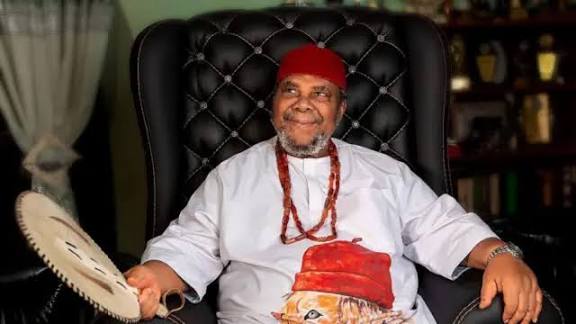
NOLLYWOOD LEGEND PETE EDOCHIE DIES AT 79 AFTER BATTLE WITH PROSTATE CANCER
Veteran Nigerian actor Pete Edochie has passed away at the age of 79 following a prolonged battle with prostate cancer. His family confirmed that the legendary Nollywood star died at 12:30 a.m. on Wednesday, November 25, 2026, in Enugu, Nigeria. Born on March 7, 1947, in Zaria, Kaduna State, Edochie built an extraordinary career that spanned nearly six decades, beginning in broadcasting before becoming one of Africa's most respected actors. He rose to international prominence through his unforgettable portrayal of Okonkwo in the television adaptation of Chinua Achebe's *Things Fall Apart*, a performance that established him as a household name. Throughout his career, he became famous for his commanding voice, powerful screen presence and memorable delivery of African proverbs, often portraying traditional rulers, elders, fathers and influential community figures. His appearances in numerous Nigerian productions helped shape the growth of Nollywood and introduced African storytelling to audiences across the world. Beyond acting, Edochie earned recognition for his contribution to broadcasting and received several honours, including the national award of Member of the Order of the Niger. His passing marks the loss of an iconic figure whose influence extended beyond entertainment into the preservation and promotion of African culture. His remarkable body of work, memorable performances and contribution to Nigerian cinema will continue to inspire generations of actors and filmmakers. May his soul rest in peace.
Veteran Nigerian actor Pete Edochie has died at the age of 79 following a battle with prostate cancer, bringing to an end a remarkable career that spanned several decades and earned him recognition as one of Africa's most respected entertainers.
His family announced his death in a statement, revealing that the legendary actor passed away at 12:30 a.m. on Wednesday, November 25, 2026, in Enugu, Nigeria. The announcement was made with deep sorrow, as relatives mourned a man whose contribution to Nigerian entertainment and broadcasting left a lasting impression on millions of people.
The family described his passing as a significant loss, not only to his immediate relatives but also to the Nigerian entertainment industry and the many fans who followed his work throughout his career. He was survived by his wife, children, siblings and other family members.
Born Peter Uwadiegwu Ogugua Edochie on March 7, 1947, in Zaria, Kaduna State, Nigeria, Pete Edochie grew up in a period when the country was experiencing major political, cultural and social changes. Although he was born in northern Nigeria, he maintained strong connections to his Igbo heritage and his ancestral home in Anambra State, southeastern Nigeria.
His background played an important role in shaping his understanding of Nigerian traditions, family values and community life. These cultural experiences would later become central to many of the characters he portrayed in films, particularly productions that explored African customs, traditional leadership, family relationships and the challenges associated with changing social values.
Edochie began his education at St Patrick's and St James Primary Schools in Zaria before proceeding to St John's College in Kaduna. His early education helped develop the discipline and communication skills that would later become important in his professional journey.
Rather than immediately pursuing a career in acting, Edochie developed an interest in journalism and broadcasting. He travelled to England, where he studied journalism and television, gaining professional knowledge that prepared him for a career in the media industry.
His professional journey began in 1967 when he joined the Eastern Nigerian Broadcasting Corporation as a junior programmes assistant. At the time, radio and television were important platforms for informing, educating and entertaining the public. Working in broadcasting provided him with an opportunity to develop his communication abilities and understand the technical and creative aspects of media production.
Through commitment and experience, he gradually rose through the ranks, taking on greater responsibilities within the broadcasting organisation. His career eventually placed him in senior management positions, where he became involved in programme development, production and administration.
He later served as Director of Programmes at the Anambra Broadcasting Service, a position that reflected his growing experience and influence in the broadcasting sector. His work involved overseeing programmes and contributing to the development of television and radio content.
In 1980, he further strengthened his professional skills through training at the British Broadcasting Corporation. The experience exposed him to international broadcasting standards and helped broaden his understanding of television production and media management.
His years in broadcasting played a significant role in preparing him for the acting profession. The ability to communicate clearly, control his voice, interpret scripts and engage audiences became some of the qualities that later distinguished his performances.
Although he had already established himself in broadcasting, it was his transition into acting that brought him widespread national and international recognition.
His major breakthrough came in 1987 when he was selected to portray Okonkwo, the central character in the television adaptation of Chinua Achebe's celebrated novel, Things Fall Apart. The production became one of the most memorable television projects in Nigerian history and introduced Edochie to a much wider audience.
The story follows the life of Okonkwo, a respected but deeply troubled man whose determination to maintain strength and authority eventually brings him into conflict with changing circumstances within his community. It explores traditional Igbo society, cultural identity, colonial influence and the consequences of social transformation.
Edochie's interpretation of Okonkwo became a defining moment in his career. His commanding voice, powerful expressions and ability to portray the character's complicated personality made the performance memorable.
He successfully presented a character who was both respected and feared, while also revealing the personal struggles and weaknesses that shaped his decisions. His performance demonstrated his ability to bring depth and emotional intensity to challenging roles.
The success of Things Fall Apart established him as a household name and opened doors to numerous opportunities in Nigerian film and television. The production also helped introduce African storytelling to audiences across the continent and beyond.
Following his breakthrough, Edochie became one of the most recognisable actors in Nigeria. He frequently portrayed traditional rulers, wealthy businessmen, family heads, elders and influential community leaders. His natural screen presence made him particularly convincing in roles that required authority, wisdom and strong personality.
His distinctive voice became one of his greatest trademarks. Whether delivering a warning, explaining a difficult situation or addressing members of a fictional community, he had a unique way of commanding attention.
He was also widely admired for his delivery of African proverbs and traditional expressions. His performances often reflected the importance of wisdom, respect, responsibility and cultural identity within African communities.
Over the years, he appeared in numerous Nigerian productions, becoming one of the familiar faces of Nollywood. Among the films associated with his career were Igodo and Rituals, which formed part of the development of Nigeria's home-video film industry.
His contribution came at a time when Nollywood was growing rapidly. During the 1990s and early 2000s, Nigerian filmmakers increasingly embraced home-video productions, allowing local stories to reach millions of viewers across Africa.
Edochie became one of the actors who helped establish the identity of this growing industry. His experience, acting style and ability to interpret culturally significant characters made him an important figure in Nigerian cinema.
Although he was often associated with traditional roles, his career was not limited to one type of character. He demonstrated versatility by appearing in different productions and working with actors and filmmakers from different generations.
In 2018, he featured in Lionheart, a Nigerian film directed by Genevieve Nnaji. The production attracted international attention and contributed to the growing visibility of Nigerian cinema on the global stage.
His participation in productions across different periods of Nollywood's development demonstrated his ability to remain relevant as filmmaking techniques, storytelling styles and audience expectations continued to change.
Beyond his professional achievements, Edochie also became a respected personality within the Nigerian entertainment community. His experience and longevity made him a reference point for younger performers seeking to understand the history and development of the industry.
His influence extended to his own family, particularly through his son Yul Edochie, who also pursued a career in acting and became a recognised personality in Nollywood. The family name therefore remained familiar to audiences through different generations.
Throughout his career, Pete Edochie received several honours in recognition of his contribution to entertainment and public life. In 2003, he was awarded the national honour of Member of the Order of the Niger by former Nigerian President Olusegun Obasanjo.
He also received recognition from the African entertainment industry, including the Africa Magic Viewers' Choice Awards Industry Merit Award and other honours celebrating his long-standing contribution to film and television.
However, his greatest achievement remained the impact of his performances on audiences. His portrayal of Okonkwo became closely associated with the television adaptation of Things Fall Apart, while his other roles helped establish a distinctive acting identity that viewers could easily recognise.
His work also contributed to the presentation of Nigerian culture through film and television. By portraying characters shaped by traditional beliefs, family responsibilities and community expectations, he helped communicate important aspects of African society to audiences across different generations.
His career demonstrated the power of storytelling in preserving cultural identity and introducing local experiences to international audiences. At a time when African entertainment was seeking greater recognition, he was among the performers whose work helped demonstrate the quality and potential of Nigerian productions.
The actor's death after a prolonged battle with prostate cancer marks the end of a remarkable journey that began in broadcasting before developing into an influential acting career. His professional life stretched from the early days of Nigerian television to the modern era of Nollywood, making him one of the personalities who witnessed and contributed to the industry's transformation.
For many Nigerians and fans across Africa, Pete Edochie will forever be remembered as the actor who brought Okonkwo to life. Others will remember him for his deep voice, memorable proverbs, commanding presence and ability to portray characters who represented authority and traditional values.
His death is a significant loss to the Nigerian entertainment industry, particularly to those who grew up watching his performances. His contribution will continue to be felt through the films and television productions that introduced his talent to millions of viewers.
As his family prepares to communicate further details about his funeral arrangements, tributes are expected from fellow actors, filmmakers, political leaders and fans across Nigeria and beyond.
Pete Edochie's journey from a young broadcasting professional in 1967 to one of Nollywood's most celebrated actors stands as a remarkable chapter in African entertainment history. His dedication, distinctive acting style and contribution to storytelling earned him a place among the industry's most respected figures.

You Might Also Like
-
The Kenya National Highways Authority (KeNHA) has announced temporary traffic disruptions at the Lower Kabete–Ndumbuini–Kapenguria–Uthiru Road Interchange from November 26 to December 31, 2026, to facilitate reconstruction works on ramps, loops and slip roads. The planned works are expected to
-
South African President Cyril Ramaphosa has secured a significant legal victory after the Western Cape High Court overturned a parliamentary panel report linking him to the controversial theft of $580,000 (approximately KSh75.5 million) from his Phala Phala game farm in 2020. The court declared the
-
German President Frank-Walter Steinmeier has arrived at State House, Nairobi, for an official state visit and high-level bilateral talks with President William Ruto aimed at strengthening diplomatic and economic relations between Kenya and Germany. The discussions are expected to focus on expanding
-
Roads and Transport Cabinet Secretary Davis Chirchir has raised concerns over a KSh255 billion funding shortfall facing the State Department for Roads in the 2027/28 financial year. Speaking before the National Assembly Transport Committee, Chirchir warned that failure by the National Treasury to br
-
One person has been confirmed dead, while four others sustained injuries following a horrific head-on collision involving two trucks along the Nairobi-Mombasa Highway in Makueni County. The accident occurred at a location known as Crasher, between Kiboko and Masimba. The circumstances leading to the
-
The regional organisation wants Kenya to conduct free, fair and peaceful elections while restoring public confidence in the electoral process, particularly among young people. Its message comes at a time when IEBC is facing pressure over voter registration, election technology, procurement, funding