KeNHA Chairperson Winfrida Ngumi Praises Ruto for Launching Kandwia–Kyuso and Kyuso–Tseikuru Road Projects
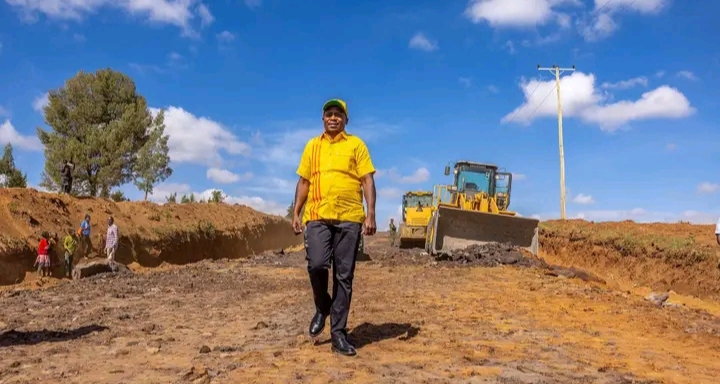
KeNHA Chairperson Winfrida Ngumi has praised President William Ruto for launching the Kandwia–Kyuso and Kyuso–Tseikuru B52 road projects.The projects are expected to improve connectivity and ease transportation across the region.Better roads could boost trade by making it easier for farmers and traders to transport goods to markets.The improved infrastructure is also expected to enhance access to essential services, including schools and healthcare facilities.The projects mark an important step towards promoting economic growth and improving the livelihoods of local communities.
Kenya National Highways Authority (KeNHA) Chairperson Winfrida Ngumi has praised President William Ruto for launching the Kandwia–Kyuso and Kyuso–Tseikuru B52 road projects, describing the developments as an important step towards improving connectivity and promoting economic growth in the region.
Ngumi welcomed the launch of the two road projects, noting that improved road infrastructure is essential for connecting communities, facilitating trade and opening up areas with economic potential. The projects are expected to improve movement between communities and support economic activities by making transport more accessible and efficient.
Road infrastructure remains a major component of Kenya's development agenda, with the government seeking to improve connectivity between rural communities, commercial centres and essential public services. In many parts of the country, the condition of roads directly affects how farmers transport produce, how traders move goods and how residents access healthcare, education and other services.
The launch of the Kandwia–Kyuso and Kyuso–Tseikuru B52 road projects is therefore expected to contribute to efforts to improve transport infrastructure and strengthen links between communities in the affected areas.
Ngumi's remarks highlight the importance of road development in supporting the government's broader infrastructure objectives. Improved roads can help reduce transport difficulties, increase the reliability of journeys and create better conditions for businesses to operate.
For residents who depend on road transport for their daily activities, better connectivity can make a significant difference. Poor road conditions often complicate travel, particularly during rainy seasons when some routes become difficult to navigate. Such challenges can delay deliveries, increase vehicle maintenance expenses and make access to essential services more difficult.
The development of the two road corridors is expected to help address some of these challenges by improving the movement of people and goods. Once completed, the projects could provide residents and businesses with more reliable transport links, depending on the final road specifications and the quality of implementation.
The Kandwia–Kyuso and Kyuso–Tseikuru routes are particularly important in the context of regional connectivity because roads provide the foundation upon which many rural economic activities depend. Farmers, small-scale traders, transport operators and other business owners rely on accessible roads to connect their products and services to customers.
Where road networks are improved, farmers may find it easier to transport agricultural produce to markets before it spoils. Traders can also move merchandise more efficiently, while transport operators may benefit from more dependable routes and reduced delays.
For households, improved roads can also make journeys to schools, hospitals, administrative offices and commercial centres easier. These benefits are especially important for residents who travel long distances to access services that may not be readily available within their immediate communities.
Ngumi's support for the projects underscores the role of road infrastructure agencies in implementing transport development programmes. KeNHA is responsible for the development, rehabilitation, management and maintenance of Kenya's national trunk road network, making it a key institution in the country's efforts to improve highway connectivity.
The successful implementation of road projects requires coordination between government agencies, contractors, local administrations and communities. Proper planning, quality construction and regular maintenance are important in ensuring that infrastructure investments deliver lasting benefits.
While launching a road project marks an important milestone, the ultimate value of the investment depends on the timely completion of construction and the long-term condition of the road. Maintaining high construction standards is essential to ensure that improved routes remain usable and continue serving residents and businesses for years.
The two projects are also expected to support commercial activities by strengthening connections between settlements and trading centres. Reliable transport infrastructure can help businesses plan deliveries, reach customers and manage operating costs more effectively.
In areas where transport difficulties have limited economic activity, improved roads can create opportunities for new businesses to emerge. Better access may encourage traders to expand their operations, improve the distribution of goods and services and attract investment in activities that depend on dependable transport.
Small and medium-sized enterprises could also benefit from improved movement along the road corridors. Businesses such as retail shops, agricultural suppliers and transport services depend on the ability to receive goods and serve customers without unnecessary delays.
However, the scale of these benefits will depend on several factors, including the quality of construction, the accessibility of connecting roads and the ability of local businesses to take advantage of the improved infrastructure.
The projects may also contribute to better access to social services. Roads are essential for the movement of patients, healthcare workers, teachers and other public service providers, particularly in communities located far from major towns.
Improved connectivity can make it easier for residents to seek medical attention, attend school and reach government offices. It can also support emergency transport by improving the reliability of journeys when residents require urgent assistance.
For students, better road access may ease transport to and from learning institutions, although the actual impact will depend on the routes served and the availability of transport services. Similarly, healthcare facilities may benefit from more dependable deliveries of medicines and medical supplies.
The road projects also bring attention to the broader relationship between infrastructure development and regional economic inclusion. Communities with reliable transport links are generally better positioned to participate in wider markets and access opportunities beyond their immediate surroundings.
Investing in rural and regional roads can help reduce transport barriers that affect residents and businesses. It can also strengthen links between agricultural production areas and market centres, supporting the movement of goods from producers to consumers.
For the government, the projects form part of the wider challenge of ensuring that infrastructure development translates into practical improvements in people's daily lives. Residents often measure the success of public investments through changes in travel time, transport costs, road safety and access to essential services.
This makes transparency and accountability important throughout the construction process. Clear information about project timelines, implementation progress and expected outcomes can help communities understand how the developments are progressing and what benefits they should anticipate.
Effective oversight is also necessary to ensure that public resources are used appropriately and that contractors deliver work according to the required standards. Regular monitoring can help identify construction challenges early and reduce the risk of delays or poor-quality work.
Road safety will remain another important consideration as the projects progress. Improved roads should be accompanied by appropriate safety measures, including road signs, markings and other features suited to the design and use of the routes. Motorists, pedestrians and other road users all stand to benefit when infrastructure development places safety at the centre of implementation.
Once the roads are completed, continued maintenance will be essential to protect the investment. Drainage systems, road surfaces and other infrastructure components require regular attention to prevent deterioration and preserve the usability of the routes.
The launch of the Kandwia–Kyuso and Kyuso–Tseikuru B52 road projects has consequently renewed attention on the importance of infrastructure in supporting regional development. Ngumi's praise for President Ruto reflects the significance attached to improving road networks as a means of strengthening connectivity and facilitating economic activity.
The projects' long-term contribution will ultimately be measured by how effectively they serve residents, businesses and other road users. Timely completion, quality construction, responsible use of public resources and sustained maintenance will be critical in determining whether the anticipated benefits are realised.
As implementation progresses, residents and businesses will be looking forward to improved travel conditions and more reliable connections between communities. If delivered to the required standards, the two road projects could support trade, improve access to services and provide a stronger foundation for economic activity in the region.
Ngumi's endorsement places the projects within the wider national conversation about the role of infrastructure in economic development. Better roads do more than connect locations; they can also connect people to markets, services and opportunities.
The launch therefore represents an important development in the ongoing effort to strengthen Kenya's road network. The focus now remains on ensuring that the projects move from launch to effective implementation and deliver practical, lasting improvements for the communities they are intended to serve.

You Might Also Like
-
The October 28–29 summit provides a platform for discussions on trade, investment, agriculture, technology, peace and security, while the accompanying economic and humanitarian engagements offer further opportunities to explore cooperation. Kenya’s immediate economic interests include expandin
-
The reported inspection by Deputy President Kithure Kindiki of the Njoro–Beeston–Lawina–Elburgon road on October 27, 2026, highlights an important infrastructure project in Nakuru County. Official records confirm that the wider road programme covers approximately 40 kilometres, has a listed c
-
Former President Uhuru Kenyatta has cautioned Kenyans against fake social media accounts claiming to represent him, his family or his political activities. He has urged the public to verify information before believing or sharing online posts attributed to him. The warning highlights growing concern
-
Kenya’s Ministry of Health has confirmed the release of 20 Ebola contacts from quarantine after completing the required monitoring period without developing symptoms. However, the ministry warns that the outbreak is not yet contained, with 98 other contacts still under observation and expected to
-
Kenya's latest published forecast available for this report points to rainfall across numerous counties, including areas in the Coast, North Eastern, Eastern, Central, Western, Nyanza and Rift Valley regions. Particular attention is warranted in Mandera, Wajir and parts of the coastal region, where
-
The commencement of post-mortem examinations for the 24 victims of the Mtito Andei road accident is a crucial step in the process of identifying the deceased, documenting the causes of death and facilitating burial arrangements. The tragedy occurred at Kanga along the Nairobi–Mombasa Highway on Oc