Kindiki Inspects Njoro–Beeston–Lawina–Elburgon Road as Government Faces Pressure to Accelerate Infrastructure Projects in Nakuru
The reported inspection by Deputy President Kithure Kindiki of the Njoro–Beeston–Lawina–Elburgon road on October 27, 2026, highlights an important infrastructure project in Nakuru County. Official records confirm that the wider road programme covers approximately 40 kilometres, has a listed contract value of about KSh2.012 billion and is being implemented by Henan Highway Engineering Group Co. Ltd. Its objective is to upgrade existing roads to bitumen standards. Successful completion could improve agricultural transport, access to public services, road safety and business connectivity for communities in the surrounding areas.
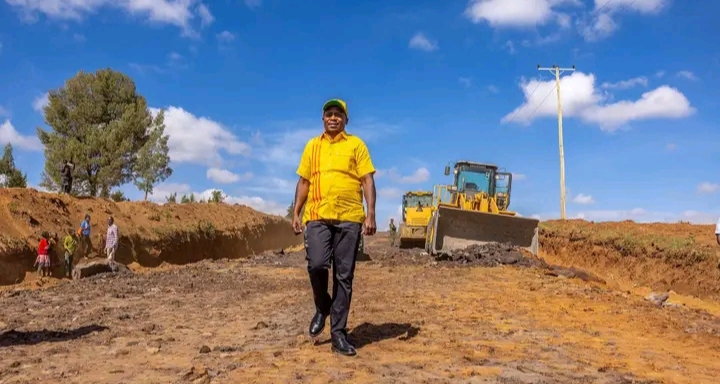
Deputy President Kithure Kindiki’s reported visit to Njoro in Nakuru County on Tuesday, October 27, 2026, focuses on road infrastructure, with the inspection of the Njoro–Beeston–Lawina–Elburgon road forming the central issue of the assignment. The road project is significant to residents who depend on reliable transport to access markets, schools, health facilities and other essential services.
The inspection comes as the government continues to emphasise the importance of monitoring development projects and ensuring that contractors deliver quality work within the agreed timelines. Road construction and upgrading are particularly important in rural communities, where poor transport infrastructure can increase the cost of doing business, delay the movement of agricultural produce and make access to public services difficult.
Available government project records confirm that the broader road programme includes the Njoro–Beeston–Nesuit, Beeston–Lawina–Elburgon and Mauche–Sururu roads. The Kenya Rural Roads Authority (KeRRA) lists the project under its road construction programme, with Henan Highway Engineering Group Co. Ltd. named as the contractor. The project is intended to upgrade existing gravel or earth roads to bitumen standards. The Njoro–Beeston–Nesuit, Beeston–Lawina–Elburgon and Mauche–Sururu road project is a major infrastructure undertaking in Nakuru County. According to KeRRA’s published construction records, the project covers approximately 40 kilometres and has a listed contract value of about KSh2.012 billion. The authority’s online project table records progress at 4 per cent, although the precise date of that progress assessment is not specified on the page.
The scale of the investment makes supervision particularly important. Residents need assurance that public funds are being translated into completed road sections that can be used safely and reliably.
The inspection attributed to Kindiki in Njoro therefore comes against the background of an ongoing infrastructure programme whose implementation, pace and eventual benefits matter to households and businesses across the region.Why the Njoro–Beeston–Lawina–Elburgon road matters
Njoro and its surrounding areas are important agricultural communities in Nakuru County. Better roads can make a difference to farmers, small-scale traders, transport operators, students and families who travel regularly between rural settlements and commercial centres.
For farmers, improved transport infrastructure can make it easier to move farm produce to markets. Where roads are in poor condition, vehicles may travel slowly, incur additional maintenance expenses or struggle to reach farms during wet weather.Students who depend on public transport may experience difficulties when roads become muddy, damaged or difficult to navigate. Better road conditions can support more dependable transport services and make journeys to schools and colleges easier.
Similarly, residents travelling to health facilities can benefit from improved connectivity, especially when seeking urgent medical attention or attending regular appointments.
Public service vehicles, motorcycles and other forms of local transport could also benefit from improved road conditions. Reduced vehicle wear and tear may help lower operating costs, although the actual effect on fares will depend on transport operators and other expenses.Government supervision and contractor accountability
The inspection comes at a time when Kindiki has publicly emphasised contractor accountability and the need to complete government projects on schedule.
On October 17, 2026, the Deputy President warned contractors against delays and substandard work while speaking in Marimanti, Tharaka Nithi County, during the launch of another road-upgrading project. He also called on government officers to strengthen their supervision of infrastructure works.
Those remarks provide relevant context for the government's wider approach to infrastructure implementation. However, they should not be interpreted as direct quotations from Kindiki's reported Njoro inspection today.An upgraded road needs more than a smooth surface. Depending on its design and the surrounding terrain, important features may include drainage systems, safe junctions, road markings, appropriate signage and measures to protect pedestrians.
Drainage is particularly important because heavy rainfall can damage road surfaces if water is not directed away effectively. Poor drainage may lead to erosion, standing water and deterioration of the finished road.
Pedestrians, cyclists, motorcycle riders and motorists also need to be considered during construction. Temporary diversions, construction machinery and unfinished road sections can create hazards if they are not properly managed.The road project could also support economic opportunities in the surrounding communities.
Road construction can generate employment directly and indirectly through activities such as transport, equipment operation, material supply and other support services. The scale and duration of these opportunities will depend on the contractor's workforce requirements and procurement arrangements.
Local businesses may benefit when construction workers purchase goods and services from nearby trading centres.
After completion, improved connectivity can also make it easier for businesses to reach customers and suppliers. Farmers may gain better access to markets, while traders and transport operators could benefit from more dependable movement between settlements.What residents will expect from Kindiki's inspection
A site inspection is most valuable when it leads to clear decisions and measurable progress.
Residents will want to know whether construction is progressing according to the contract, whether sufficient equipment and materials are available, and whether the contractor has the resources needed to complete the remaining work.
They will also expect the government to explain how the project will be monitored and what steps will be taken if construction falls behind schedule.Wider development significance for Nakuru County
The road project forms part of a broader effort to improve rural infrastructure and strengthen links between communities and economic centres.
Nakuru County contains agricultural areas, trading centres and growing towns whose development depends partly on dependable transport networks. Better roads can complement investments in education, healthcare, electricity, water and markets by making those services more accessible.
For rural communities, the value of infrastructure is often measured by practical changes in everyday life: whether farmers can transport produce more easily, whether vehicles can reach villages during rainy weather, and whether residents can travel to hospitals and schools with fewer difficulties.

You Might Also Like
-
The October 28–29 summit provides a platform for discussions on trade, investment, agriculture, technology, peace and security, while the accompanying economic and humanitarian engagements offer further opportunities to explore cooperation. Kenya’s immediate economic interests include expandin
-
Former President Uhuru Kenyatta has cautioned Kenyans against fake social media accounts claiming to represent him, his family or his political activities. He has urged the public to verify information before believing or sharing online posts attributed to him. The warning highlights growing concern
-
Kenya’s Ministry of Health has confirmed the release of 20 Ebola contacts from quarantine after completing the required monitoring period without developing symptoms. However, the ministry warns that the outbreak is not yet contained, with 98 other contacts still under observation and expected to
-
Kenya's latest published forecast available for this report points to rainfall across numerous counties, including areas in the Coast, North Eastern, Eastern, Central, Western, Nyanza and Rift Valley regions. Particular attention is warranted in Mandera, Wajir and parts of the coastal region, where
-
The commencement of post-mortem examinations for the 24 victims of the Mtito Andei road accident is a crucial step in the process of identifying the deceased, documenting the causes of death and facilitating burial arrangements. The tragedy occurred at Kanga along the Nairobi–Mombasa Highway on Oc
-
The discharge of 20 people from Ebola quarantine on 26 October 2026 marks an important step in Kenya’s efforts to contain the Bundibugyo virus disease outbreak. The individuals completed the mandatory 21-day monitoring period without symptoms and were released after health assessments. However, 9