Uhuru Kenyatta Warns Public Against Fake Social Media Accounts Impersonating Him and His Family
Former President Uhuru Kenyatta has cautioned Kenyans against fake social media accounts claiming to represent him, his family or his political activities. He has urged the public to verify information before believing or sharing online posts attributed to him. The warning highlights growing concerns over impersonation, misinformation and possible online fraud. Kenyans are encouraged to follow verified communication channels and report suspicious accounts to protect themselves from misleading information.The former President’s clarification seeks to prevent confusion and ensure that his genuine statements are not misrepresented online. Social media users are also urged to remain vigilant against fraudulent accounts that may exploit his name to solicit money or spread false information.
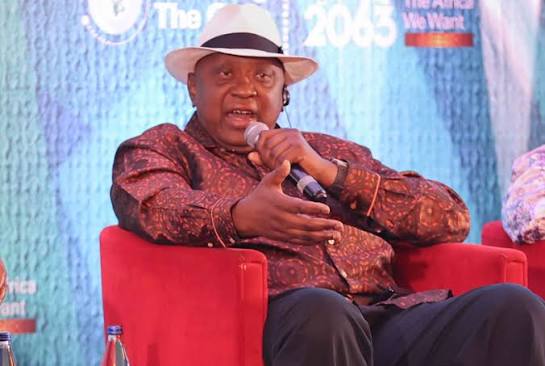
Former President Uhuru Kenyatta has clarified his presence on social media, warning members of the public against accounts purporting to represent him, his family or his political activities. The former Head of State has urged Kenyans to exercise caution when interacting with online platforms claiming to speak on his behalf, emphasising the importance of verifying information before sharing or acting on it.
The warning comes amid growing concerns over the spread of misleading information, impersonation and unauthorised accounts on social media platforms. Such accounts can create confusion among members of the public, particularly when they use the names, photographs and identities of prominent political leaders to attract followers or spread messages that appear authentic.
Kenyatta's clarification seeks to establish a clear distinction between his official online presence and accounts operated by individuals who may be using his identity without authorisation. By alerting the public, the former President is encouraging social media users to rely on verified communication channels when seeking information about his statements, engagements and political activities.
Social media has become an important platform for political leaders to communicate directly with citizens, share updates about public affairs and respond to national issues. However, the same platforms have also created opportunities for individuals to impersonate public figures, sometimes publishing statements that are falsely attributed to them.
For a former President whose political statements continue to attract public attention, the existence of misleading accounts can have significant consequences. A post falsely attributed to Kenyatta could be interpreted as an official position, influence public debate or trigger unnecessary political speculation.
The warning therefore highlights the importance of digital accountability and responsible communication, particularly in a country where social media plays a significant role in political discussions and the exchange of information.
Kenyatta served as Kenya's fourth President from 2013 to 2022. During his tenure, he maintained a prominent position in national affairs, and his statements on governance, national unity and political developments continue to draw attention from political leaders, commentators and ordinary citizens.
Following the end of his presidency, Kenyatta has continued to participate in public life, including engagements related to regional peace and political affairs. His public profile makes the authenticity of statements issued in his name particularly important.
The emergence of fake social media accounts is not limited to Kenya or to political leaders. Public figures across the world have faced similar challenges, with impersonators using their identities to circulate false announcements, solicit money, promote products or misrepresent their views.
In some cases, fake accounts imitate the appearance of genuine profiles by using similar usernames, photographs and descriptions. They may also copy previous posts from legitimate accounts to appear credible. Unsuspecting users can therefore find it difficult to distinguish between authentic communications and fabricated content.
Kenyatta's warning serves as a reminder that an account using a familiar name or photograph should not automatically be considered genuine. Social media users are encouraged to check the identity of the account owner, review the account's verification status where applicable and compare information with established communication channels.
The public is also advised to be cautious when encountering posts that claim to announce major political decisions, endorse particular individuals or parties, or communicate private messages supposedly issued by prominent leaders. Such content should be verified before being shared widely.
False information can spread rapidly on social media because users often forward messages without confirming their accuracy. A misleading statement posted by an impersonation account can be copied across multiple platforms, eventually creating the impression that it originated from a reliable source.
This can damage the reputation of the individual being impersonated while misleading members of the public who depend on online platforms for news and political information.
The problem becomes more serious when fraudulent accounts attempt to solicit money from followers. Impersonators may claim to be offering financial assistance, investment opportunities, employment or access to political leaders in exchange for payments. Members of the public should therefore be wary of accounts requesting money or sensitive personal information while claiming to represent Kenyatta, his family or his associates.
Users should avoid sharing passwords, identification details, banking information or other confidential data with unverified accounts. Anyone who suspects that an account is impersonating a public figure can report it through the relevant platform's reporting tools.
The former President's clarification also draws attention to the responsibility of social media companies to address impersonation and protect users from deceptive online activity. Although platforms provide verification features and reporting mechanisms, fake accounts can still emerge and remain visible until they are identified and removed.
Public awareness remains an important part of addressing the problem. Users who understand how impersonation works are better positioned to recognise suspicious profiles and avoid spreading fabricated information.
Political communication is particularly vulnerable to manipulation because statements by prominent leaders can generate strong reactions. An invented post attributed to a former President may be used to create divisions, suggest political alliances that do not exist or misrepresent a leader's position on a national issue.
In Kenya, where political discussions frequently take place online, the authenticity of statements attributed to political figures is essential to informed public debate. Citizens need reliable information to understand political developments, assess public statements and distinguish verified news from rumours.
The public should therefore consider the source of a political statement before accepting it as genuine. Where a controversial announcement appears on an unfamiliar account, users should look for confirmation from established news organisations or the leader's recognised official channels.
Journalists and media organisations also have a responsibility to verify statements before publishing them. Reproducing content from an impersonation account without checking its authenticity can give false information the appearance of credibility and increase its reach.
The warning is a timely reminder that digital literacy is increasingly important in the modern information environment. Social media users must be able to assess the credibility of information, identify suspicious accounts and understand that online popularity does not necessarily indicate authenticity.
For public figures, maintaining clear and recognisable communication channels can help reduce confusion and enable citizens to identify legitimate statements. At the same time, individuals who discover fake accounts should report them rather than engaging with or promoting their content.
Kenyatta's message underscores the need for vigilance when following political leaders online. Members of the public should avoid assuming that every account using a leader's name, photograph or family identity is authorised to speak on their behalf.
As social media continues to shape political communication in Kenya, the distinction between genuine statements and fabricated content will remain important. Reliable information helps protect public trust, supports meaningful debate and prevents individuals from being misled by unauthorised communications.

You Might Also Like
-
President William Ruto has called on Kenyans to prioritise locally produced goods, saying excessive reliance on imports denies the country opportunities to create jobs and grow its economy. He emphasised the need to strengthen local industries, support farmers and empower entrepreneurs to produce go
-
The October 28–29 summit provides a platform for discussions on trade, investment, agriculture, technology, peace and security, while the accompanying economic and humanitarian engagements offer further opportunities to explore cooperation. Kenya’s immediate economic interests include expandin
-
The reported inspection by Deputy President Kithure Kindiki of the Njoro–Beeston–Lawina–Elburgon road on October 27, 2026, highlights an important infrastructure project in Nakuru County. Official records confirm that the wider road programme covers approximately 40 kilometres, has a listed c
-
Kenya’s Ministry of Health has confirmed the release of 20 Ebola contacts from quarantine after completing the required monitoring period without developing symptoms. However, the ministry warns that the outbreak is not yet contained, with 98 other contacts still under observation and expected to
-
Kenya's latest published forecast available for this report points to rainfall across numerous counties, including areas in the Coast, North Eastern, Eastern, Central, Western, Nyanza and Rift Valley regions. Particular attention is warranted in Mandera, Wajir and parts of the coastal region, where
-
The commencement of post-mortem examinations for the 24 victims of the Mtito Andei road accident is a crucial step in the process of identifying the deceased, documenting the causes of death and facilitating burial arrangements. The tragedy occurred at Kanga along the Nairobi–Mombasa Highway on Oc