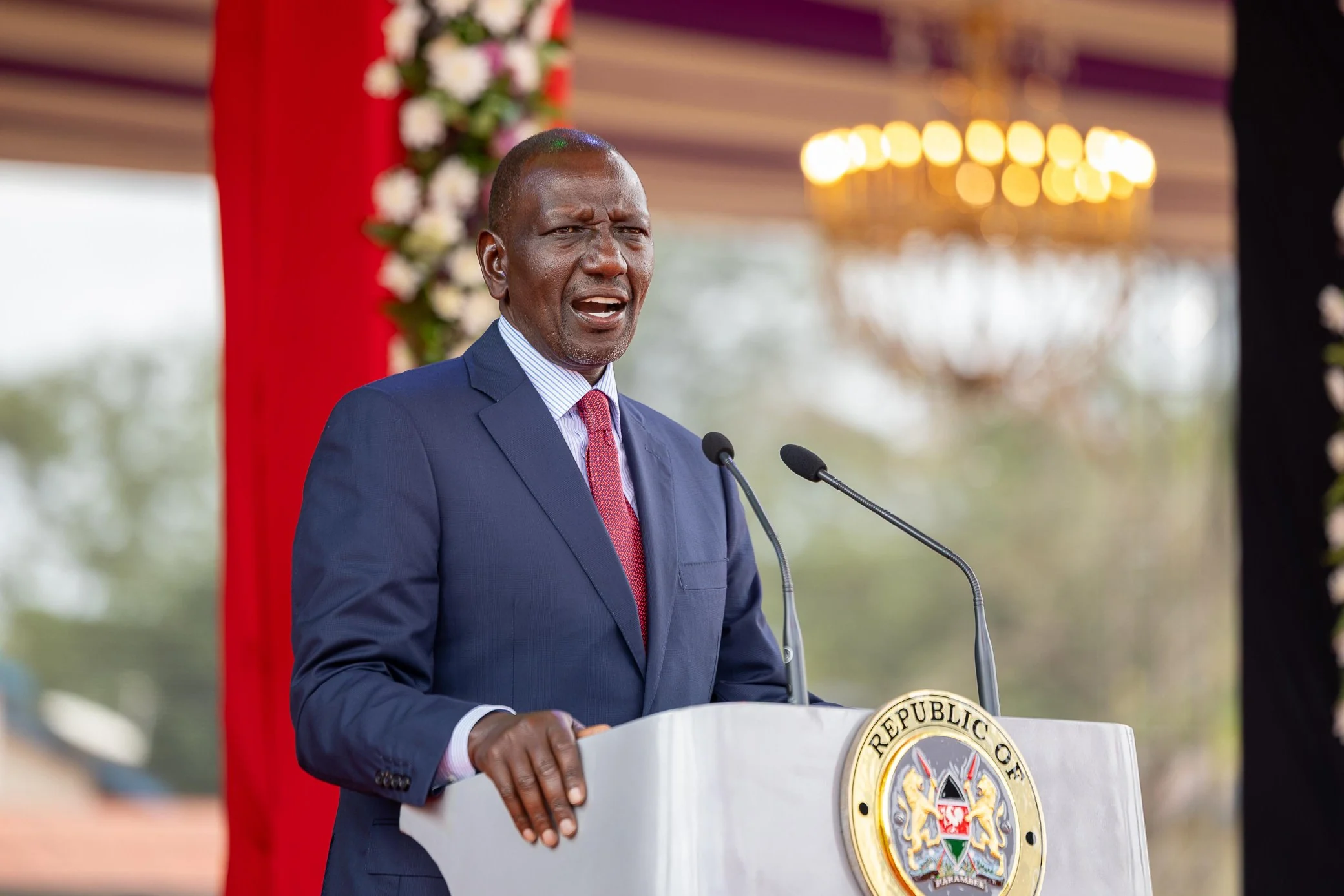
RUTO URGES KENYANS TO PRIORITISE LOCAL PRODUCTION TO CREATE JOBS AND BOOST ECONOMIC GROWTH
President William Ruto has called on Kenyans to prioritise locally produced goods, saying excessive reliance on imports denies the country opportunities to create jobs and grow its economy. He emphasised the need to strengthen local industries, support farmers and empower entrepreneurs to produce goods that can compete with imports. Ruto noted that increasing domestic production would help retain more money within Kenya, expand business opportunities and stimulate industrial growth. The government’s focus is on building a competitive economy that creates employment and delivers sustainable development for Kenyans.
President William Ruto has emphasised the importance of strengthening local production, saying that importing goods that Kenya has the capacity to manufacture competitively at home denies the country opportunities to create jobs, support businesses and grow its economy. He noted that when Kenyans rely on foreign markets for products that can be produced locally, the money spent on those imports helps create employment and expand economic opportunities in other countries instead of benefiting Kenyan workers and industries.
The President said Kenya must focus on building its domestic production capacity by supporting local manufacturers, farmers, entrepreneurs and other businesses capable of meeting the country's needs. According to him, producing more goods locally would allow the country to retain a greater share of its spending within the economy, creating opportunities for investment, employment and sustainable development.
Ruto's remarks highlight the government's emphasis on economic transformation through increased production, value addition and industrial growth. The President's position is that Kenya should identify goods it can produce efficiently and competitively, then create an environment in which local businesses can expand their operations and supply the domestic market.
Importing goods is an important part of international trade, particularly when a country needs products that cannot be produced locally in sufficient quantities or at competitive prices. However, importing products that local industries can manufacture may limit the growth of domestic enterprises if local producers are unable to compete with foreign suppliers. The challenge, therefore, is to strengthen local industries so they can deliver quality products at reasonable prices while creating jobs for Kenyans.
One of the major economic benefits of domestic production is employment creation. Manufacturing, agriculture, processing, packaging, transportation and distribution all require workers. When a Kenyan company expands production, it can employ more people directly while generating additional opportunities for suppliers, service providers and small businesses operating within its supply chain.
For example, increased local manufacturing can create jobs for technicians, machine operators, engineers, accountants, sales representatives and transport workers. Agricultural production can also benefit from stronger local processing industries that purchase crops from farmers and turn them into finished products for consumers. These connections demonstrate how investment in domestic production can spread economic benefits across several sectors.
The President's remarks also draw attention to the role of small and medium-sized enterprises in Kenya's economic development. Many local businesses have the potential to supply products and services to households, institutions and larger companies. However, their ability to grow often depends on access to affordable financing, reliable electricity, suitable infrastructure, modern technology and dependable markets.
Supporting these enterprises could help Kenya increase the number of locally manufactured products available to consumers. It could also enable businesses to move beyond small-scale operations and establish production systems capable of meeting larger orders. As these companies grow, they may employ additional workers, invest in equipment and contribute more revenue through taxes and other economic activities.
Agriculture remains another important area in which local production can reduce dependence on imported goods. Kenyan farmers produce a wide range of crops and livestock products, but the benefits can be limited when processing and storage facilities are insufficient. Investing in food processing, cold storage, packaging and distribution could help reduce post-harvest losses while allowing farmers to earn more from their produce.
Local value addition is particularly important because it enables the country to capture more value from its natural resources and agricultural products. Instead of selling raw materials and importing finished goods, Kenya can invest in processing facilities that transform locally available resources into products ready for the market. Such an approach can create employment while supporting farmers, manufacturers and traders.
Ruto's comments also point to the importance of improving the competitiveness of Kenyan industries. Encouraging people to buy locally manufactured products may support domestic businesses, but local production must also meet consumers' expectations regarding quality, price, reliability and availability. Businesses need the right conditions to produce goods that can compete with imported alternatives.
This requires continued investment in technology, skills development, research and innovation. Modern production equipment can improve efficiency, reduce waste and lower manufacturing costs. Training programmes can help workers acquire the technical skills needed in increasingly competitive industries, while partnerships between universities, training institutions and businesses can encourage innovation and practical problem-solving.
Reliable infrastructure is equally important. Manufacturers depend on dependable electricity, efficient transport networks and accessible markets to keep their operations running smoothly. High production and distribution costs can make locally manufactured goods more expensive, reducing their competitiveness against imported products. Addressing these challenges would help businesses operate more efficiently and expand their reach.
Access to financing is another factor that can determine whether local enterprises grow or struggle. Many businesses require capital to purchase machinery, obtain raw materials, employ workers and increase production. If financing is too expensive or difficult to access, even promising enterprises may find it challenging to compete. Affordable credit and suitable financial products could help businesses invest in expansion and improve productivity.
The government also has a role in establishing policies that encourage investment without undermining competition. Predictable regulations, efficient public services and transparent procurement processes can help businesses plan for the future. Where appropriate, public institutions can consider locally produced goods that meet established quality, pricing and procurement requirements, creating opportunities for Kenyan manufacturers to expand their customer base.
However, increasing local production does not necessarily mean eliminating imports. International trade allows countries to access specialised products, technology, machinery and raw materials that may not be readily available at home. Kenyan manufacturers themselves may depend on imported inputs to produce finished goods. The objective is therefore to reduce unnecessary dependence on imported finished products where competitive domestic alternatives can be developed.
The country must also ensure that efforts to promote local production benefit consumers. If domestic producers face limited competition, prices may rise or product quality may stagnate. Encouraging competition, maintaining appropriate quality standards and protecting consumers are therefore important parts of building a strong local manufacturing sector.
A competitive domestic economy can also improve Kenya's ability to participate in regional and international markets. Once local companies develop the capacity to produce quality goods consistently, they may expand beyond the domestic market and export their products to neighbouring countries and other destinations. Exports can generate foreign exchange, attract investment and create additional employment opportunities.
Regional trade presents opportunities for Kenyan businesses in sectors such as food processing, textiles, construction materials, pharmaceuticals and consumer goods. To benefit from these markets, companies need to meet applicable standards, maintain reliable supply chains and understand the needs of customers in different countries. Greater production capacity at home can provide a foundation for this expansion.
The issue of imports is also connected to Kenya's balance of trade and demand for foreign currency. When businesses and consumers purchase goods from abroad, payments may require foreign currency, depending on the transaction. Developing competitive domestic alternatives can reduce some import expenditure and allow local businesses to retain more economic activity within the country. The overall impact, however, depends on production costs, imported inputs, export performance and wider economic conditions.
For ordinary Kenyans, stronger domestic production could create opportunities through employment, farming, small businesses and the supply of goods and services. Young people may find work in factories, workshops, technology-driven enterprises and agricultural value chains. Entrepreneurs may also identify opportunities to manufacture products that are currently sourced from abroad, provided they can meet market demand at competitive prices.
Turning this vision into reality will require cooperation among the government, private sector, financial institutions, training organisations, farmers and consumers. Public policy can establish favourable conditions for investment, but businesses must also innovate, improve productivity and maintain high standards. Consumers, meanwhile, need access to locally produced goods that offer genuine value for money.
Ruto's message centres on the economic opportunities Kenya could gain by producing more of the goods it can competitively manufacture at home. His remarks underscore the need to strengthen local industries, support enterprise growth and expand employment opportunities rather than unnecessarily relying on foreign suppliers.
By investing in domestic production and improving the competitiveness of Kenyan businesses, the country could retain more economic value within its borders while building industries capable of serving both local and international markets. The broader challenge is to ensure that this shift delivers practical benefits to workers, entrepreneurs, farmers and consumers through sustainable growth, better-quality products and increased economic opportunities.

You Might Also Like
-
Kenya's university lecturers' strike continues after repeated negotiations with the government failed to resolve the dispute over the 2025–2029 Collective Bargaining Agreement. The rejection of the latest verbal counter-offer of approximately KSh11.96 billion on October 26 has demonstrated that th
-
The October 28–29 summit provides a platform for discussions on trade, investment, agriculture, technology, peace and security, while the accompanying economic and humanitarian engagements offer further opportunities to explore cooperation. Kenya’s immediate economic interests include expandin
-
The reported inspection by Deputy President Kithure Kindiki of the Njoro–Beeston–Lawina–Elburgon road on October 27, 2026, highlights an important infrastructure project in Nakuru County. Official records confirm that the wider road programme covers approximately 40 kilometres, has a listed c
-
Former President Uhuru Kenyatta has cautioned Kenyans against fake social media accounts claiming to represent him, his family or his political activities. He has urged the public to verify information before believing or sharing online posts attributed to him. The warning highlights growing concern
-
Kenya’s Ministry of Health has confirmed the release of 20 Ebola contacts from quarantine after completing the required monitoring period without developing symptoms. However, the ministry warns that the outbreak is not yet contained, with 98 other contacts still under observation and expected to
-
Kenya's latest published forecast available for this report points to rainfall across numerous counties, including areas in the Coast, North Eastern, Eastern, Central, Western, Nyanza and Rift Valley regions. Particular attention is warranted in Mandera, Wajir and parts of the coastal region, where