Kenya and Brazil Strengthen Cooperation on Food Security, Biodiversity and Indigenous Knowledge
Kenya has strengthened its bilateral ties with Brazil through discussions focused on food security, sustainable food systems and biodiversity conservation. Principal Secretary for Agriculture Dr. Paul Kipronoh Rono represented the African region during the presentation of a statement highlighting the importance of Indigenous Peoples’ knowledge in promoting sustainable agriculture and protecting biodiversity. The PS later met with Kenyans living in the diaspora, urging them to pursue global employment opportunities, showcase their skills and expertise, and represent Kenya positively through innovation, professionalism and practical solutions. The engagements underscore the importance of international cooperation, indigenous knowledge and diaspora participation in advancing Kenya’s agricultural sector and sustainable development.
Kenya has held bilateral discussions with Brazil aimed at strengthening cooperation in food systems, food security and biodiversity conservation, in a move that highlights the importance of international partnerships in addressing agricultural challenges and promoting sustainable development.
The engagement brought together representatives from both countries to explore areas of mutual interest, including sustainable agricultural practices, protection of biodiversity, preservation of indigenous knowledge and the development of resilient food systems capable of supporting growing populations.
Kenya's participation reflects its continued efforts to strengthen international relations and seek practical solutions to challenges affecting agriculture, food production and environmental sustainability. Through partnerships with other countries, Kenya seeks to exchange expertise, learn from successful agricultural initiatives and promote policies that can improve food availability, increase productivity and support livelihoods.
Brazil remains an important partner for discussions on agriculture and biodiversity because of its extensive agricultural sector, diverse ecosystems and experience in food production. Cooperation between the two countries offers opportunities to share knowledge on sustainable farming, agricultural innovation, conservation and the responsible management of natural resources.
The discussions also provided an opportunity for Kenya to highlight the importance of indigenous communities in protecting biodiversity and maintaining traditional food systems that have supported generations.
Kenya Highlights Indigenous Peoples' Food Systems
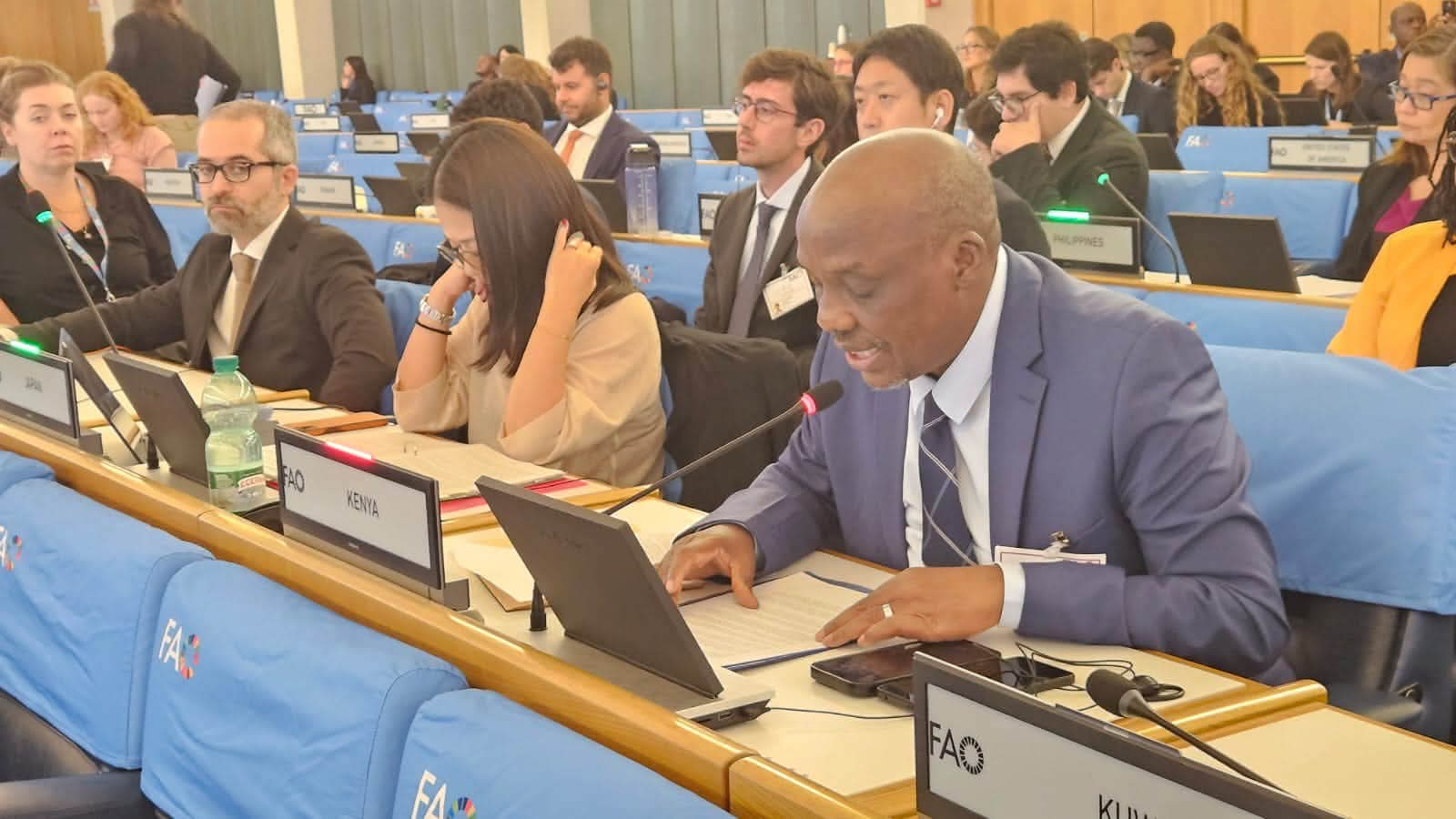
During the engagement, Kenya, through Principal Secretary for Agriculture Dr. Paul Kipronoh Rono, represented the African region during the presentation of a statement on Indigenous Peoples' food systems and biodiversity.
The statement highlighted the importance of indigenous knowledge in promoting sustainable food production, conserving natural resources and protecting biodiversity.
Indigenous communities across Africa have developed farming practices, food preservation methods and natural resource management systems that have enabled them to adapt to different environmental conditions over generations. These practices often rely on a deep understanding of local ecosystems, seasonal weather patterns, soil conditions, water resources and the characteristics of indigenous crops.
Such knowledge can contribute to modern efforts to improve agricultural productivity while reducing environmental damage. It can also help communities respond to the effects of climate change, including prolonged droughts, unpredictable rainfall, soil degradation and changing growing seasons.
Kenya's representation of the African region provided an opportunity to draw attention to the experiences and contributions of indigenous communities in sustaining food production and protecting the continent's natural heritage.
The discussions underscored the need to recognise traditional knowledge as an important resource in agricultural planning and biodiversity conservation.
Indigenous food systems frequently incorporate a variety of crops, livestock and locally available food resources. This diversity can help communities maintain food supplies when particular crops fail or when weather conditions become unfavourable.
Traditional farming systems may also support soil fertility, conserve water and protect local plant varieties that could otherwise disappear as agricultural practices change.
Recognising these contributions is important at a time when countries are seeking ways to strengthen food security and develop agricultural systems that can withstand environmental and economic pressures.
Strengthening Food Security Through International Cooperation
Food security remains a major development priority for Kenya and many other African countries. Population growth, changing weather patterns, rising production costs and disruptions to agricultural supply chains have increased the importance of policies that support reliable food production and distribution.
The bilateral engagement with Brazil provided a platform for discussions on how international cooperation can contribute to addressing these challenges.
Collaboration between countries can support the exchange of agricultural research, improved farming technologies and practical approaches to managing resources more efficiently. It can also create opportunities for partnerships involving agricultural institutions, researchers, farmers and policymakers.
For Kenya, strengthening agricultural cooperation is particularly important because farming supports millions of livelihoods and contributes significantly to the country's economy.
Small-scale farmers remain central to food production, making access to quality seeds, affordable inputs, reliable markets, irrigation and agricultural information essential for improving productivity.
International partnerships can help expand access to technical knowledge and innovative practices that enable farmers to increase production while managing environmental risks.
The exchange of expertise can also support the development of crops suited to different climatic conditions, improved post-harvest handling and more effective systems for storing and transporting agricultural products.
Reducing post-harvest losses is particularly important because food security depends not only on how much food is produced but also on how effectively it is preserved, distributed and made available to consumers.
Stronger cooperation can therefore contribute to a more comprehensive approach to food security, bringing together production, conservation, research and market development.
Biodiversity Conservation and Sustainable Agriculture
Biodiversity was another key issue highlighted during the engagement, reflecting its importance in maintaining healthy ecosystems and supporting agricultural production.
Biodiversity includes the variety of plants, animals and microorganisms that contribute to the functioning of natural environments. In agriculture, it supports pollination, soil health, natural pest control and the maintenance of genetic resources used in crop and livestock production.
The protection of biodiversity is particularly important as agricultural expansion, deforestation, pollution and climate change continue to place pressure on natural ecosystems.
For Kenya, biodiversity conservation is closely connected to food security, water availability and the livelihoods of communities that depend on natural resources.
Sustainable agricultural practices can help address these concerns by promoting responsible land use, protecting water sources, maintaining soil fertility and encouraging the cultivation of diverse crops.
Indigenous knowledge can complement scientific research by providing valuable information about local plants, traditional seed varieties and farming techniques adapted to specific environmental conditions.
Combining traditional expertise with modern agricultural research can help develop approaches that are both environmentally responsible and economically beneficial.
The discussions also highlighted the importance of ensuring that biodiversity conservation efforts recognise the role played by local and indigenous communities.
These communities often possess valuable knowledge about the plants and animals found in their surroundings and the practices required to maintain ecological balance.
Supporting their participation in conservation programmes can strengthen local ownership and improve the long-term sustainability of environmental initiatives.
Preserving Indigenous Knowledge for Future Generations
The emphasis on indigenous food systems also draws attention to the importance of preserving traditional knowledge for future generations.
Across Africa, communities have developed unique ways of growing, preparing and preserving food. These practices are shaped by local cultures, climatic conditions and the natural resources available in different regions.
Traditional food systems may include drought-resistant crops, indigenous vegetables, local grains and livestock breeds adapted to challenging environments.
Preserving these resources can contribute to dietary diversity and provide additional options for communities facing changing climatic conditions.
However, traditional knowledge and indigenous food varieties can be threatened by changing consumption patterns, the loss of agricultural land and the gradual disappearance of practices passed down through generations.
Documenting and supporting indigenous knowledge can help ensure that valuable agricultural information remains available to future generations.
It is equally important to respect the rights of indigenous communities over their knowledge and resources, ensuring that any research or commercial use recognises their contributions and interests.
The statement presented by Kenya on behalf of the African region brought these considerations into the broader international conversation about food systems and biodiversity.
It highlighted the need for development strategies that value local experience while embracing scientific innovation and international collaboration.
PS Agriculture Engages Kenyans in the Diaspora
Following the bilateral engagement, Principal Secretary Dr. Paul Kipronoh Rono met with Kenyans living in the diaspora and encouraged them to remain proactive in pursuing global employment opportunities.
The meeting provided an opportunity to engage members of the Kenyan community abroad on professional development, international opportunities and their potential contribution to the country's development.
The Principal Secretary encouraged Kenyans in the diaspora to showcase their talents, professional expertise and innovative ideas as they pursue opportunities in different parts of the world.
He also emphasised the importance of representing Kenya positively through practical solutions, professionalism and meaningful contributions to the communities and organisations where they work.
Kenyans living abroad contribute to the country's development in various ways, including through professional expertise, remittances, entrepreneurship, investment and the transfer of knowledge and technology.
Many work in sectors such as agriculture, healthcare, information technology, engineering, education, business and research. Their experience in international markets can provide valuable lessons that may be applied to development initiatives at home.
Engagement between government representatives and diaspora communities can help strengthen these connections and identify opportunities for cooperation.
Such interactions can also help communicate the skills and expertise available among Kenyans abroad while encouraging stronger links between professionals overseas and institutions within the country.
Global Employment Opportunities for Kenyan Professionals
The encouragement to pursue international employment reflects the importance of preparing Kenyan professionals to compete in an increasingly interconnected global labour market.
International employment can provide opportunities for individuals to develop new skills, gain professional experience and work with advanced technologies and systems.
However, pursuing opportunities abroad requires preparation, including acquiring relevant qualifications, improving communication skills, understanding international workplace standards and identifying legitimate recruitment channels.
Kenyans seeking overseas employment also need to exercise caution when dealing with recruitment agencies and employment offers to avoid fraudulent schemes and exploitation.
Access to reliable information about vacancies, professional requirements and destination-country regulations can help jobseekers make informed decisions.
For skilled professionals, international experience can create opportunities to build networks, develop specialised knowledge and contribute to projects that address challenges across different industries.
The diaspora can also play a role in mentoring young professionals, supporting entrepreneurship and facilitating partnerships between Kenyan institutions and international organisations.
Encouraging Kenyans abroad to remain proactive is therefore not only about securing employment but also about strengthening their capacity to contribute to economic development through knowledge, innovation and professional collaboration.
Diaspora Engagement and National Development
Kenyans living abroad represent an important connection between the country and international markets, institutions and professional networks.
Their contributions extend beyond financial remittances to include investment, technology transfer, research collaboration and the promotion of Kenyan products and expertise.
Professionals in the diaspora may also help establish partnerships that create opportunities for Kenyan businesses, universities, research institutions and agricultural organisations.
In agriculture, for example, international experience can contribute to improved farming technologies, value addition, food processing, storage and access to export markets.
Stronger links between diaspora professionals and local agricultural stakeholders could help identify innovative solutions to challenges facing farmers and agribusinesses.
The meeting with the Principal Secretary offered an opportunity to reinforce the message that Kenyans abroad can contribute to national development while pursuing their own professional goals.
Positive engagement between the government and diaspora communities can also support the exchange of ideas, identify barriers affecting overseas workers and encourage collaboration in areas of shared interest.
A Broader Agenda for Sustainable Development
Kenya's engagement with Brazil and its subsequent interaction with Kenyans in the diaspora reflect complementary aspects of international cooperation.
The discussions on food systems, food security and biodiversity focused on strengthening partnerships that can support sustainable agriculture and environmental conservation.
Meanwhile, the engagement with Kenyans abroad emphasised the importance of professional development, global employment opportunities and the contribution of talent and innovation to national progress.
Both engagements highlight the value of knowledge exchange, international networks and practical collaboration in addressing development challenges.
For Kenya, stronger partnerships can help expand agricultural opportunities, improve food production, protect biodiversity and encourage the application of indigenous knowledge in modern development strategies.

You Might Also Like
-
The arrest of 76 suspects in Kitale over alleged criminal activities has brought renewed attention to security in Trans Nzoia County and to the troubling disappearance of Lilly Cherono Kimutai, wife of retired police officer Michael Kimutai. The reported arrest of two suspects linked to the case of
-
The Anti-Counterfeit Authority's push for stronger regional cooperation and more consistent legal frameworks reflects the reality that counterfeit trade crosses borders and cannot be defeated by isolated national action. Kenya's engagements with Tanzania, Uganda, WIPO and other African partners dem
-
France's announcement on October 22, 2026, of the first documented human infection with Shamonda virus is a significant development in infectious disease research. The virus, previously associated primarily with livestock, was detected in a severely immunocompromised patient receiving treatment in L
-
Rescue operations are underway following a deadly quarry collapse at Mutonga in Imenti South, Meru County, that left one person dead and several others feared trapped beneath the rubble. Emergency teams and local residents are working to locate the missing individuals as concerns grow over quarr
-
President William Ruto, speaking at the COMESA Summit in Zimbabwe on October 22, 2026, calls for African countries to be treated as equal partners in global affairs, emphasising fairness, mutual respect and equal opportunities in international trade, investment and decision-making. He urges COMESA m
-
President William Ruto's remarks at the 25th COMESA Summit in Harare highlighted the importance of stronger African economic cooperation, increased production, greater investment and expanded trade within the region. His message that African countries should produce more, invest more and trade more