Rescue operations are ongoing following a deadly quarry collapse at Mutonga in Imenti South, Meru County
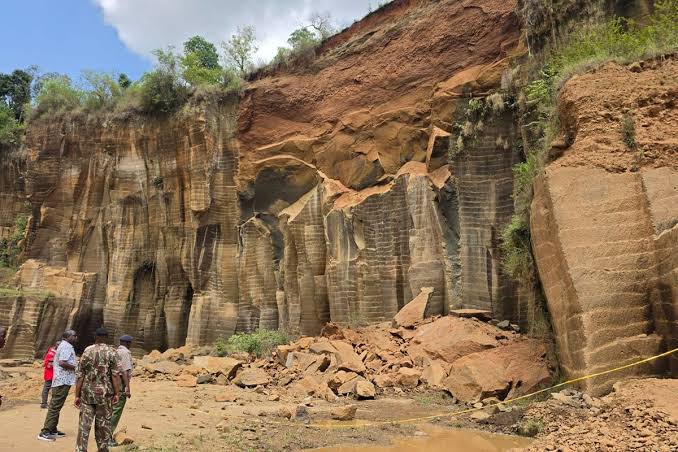
Rescue operations are underway following a deadly quarry collapse at Mutonga in Imenti South, Meru County, that left one person dead and several others feared trapped beneath the rubble. Emergency teams and local residents are working to locate the missing individuals as concerns grow over quarry safety and the need for stronger measures to protect workers.
Rescue operations are ongoing following a deadly quarry collapse at Mutonga in Imenti South, Meru County, where one person has been confirmed dead and several others are feared trapped beneath the rubble. Emergency responders, local authorities and residents are working to locate those believed to have been caught in the collapse as efforts continue to establish the full extent of the tragedy.
The incident has caused concern among residents, with families anxiously awaiting information about their loved ones who may have been at the quarry when the ground gave way. The immediate priority remains reaching anyone trapped beneath the rocks and soil, assisting survivors and ensuring that the rescue operation proceeds as safely and efficiently as possible.
The collapse has once again drawn attention to the dangers associated with quarrying activities, particularly where excavation sites are vulnerable to unstable ground, falling rocks and sudden structural failures. Quarries provide essential building materials for construction projects, but the work can expose employees to serious risks when appropriate safety measures are not observed.
At Mutonga, the reported death has brought a sombre mood to the surrounding community as the search continues for those who may still be buried beneath the debris. The number of people affected and the precise circumstances surrounding the collapse will need to be established as authorities gather information from witnesses and assess the scene.
Quarry collapses can be especially dangerous because workers may have little time to escape when a section of rock or soil suddenly gives way. Heavy debris can bury people within seconds, making rescue operations difficult and time-sensitive. The instability of the remaining excavation may also complicate efforts to reach those trapped, requiring careful coordination between rescuers and technical personnel.
Residents and other people at the scene may be able to provide important information about the incident, including the number of workers present before the collapse and the areas where people were last seen. Such information can help rescue teams identify priority search locations and organise their efforts more effectively.
However, the operation must be conducted with caution. Attempting to remove heavy rocks without assessing the stability of the surrounding ground can trigger additional collapses and put rescuers at risk. The use of appropriate equipment, technical expertise and coordinated search procedures is therefore essential.
Heavy machinery may be needed to clear large rocks and other materials obstructing access to the affected area. Excavators and other specialised equipment can help move debris that would be difficult to remove manually. Their use must be carefully controlled to avoid disturbing unstable sections of the quarry or causing further injuries.
Medical personnel should also be available to assess and treat anyone rescued from the rubble. People who survive such incidents may suffer serious injuries, including fractures, crush injuries and breathing difficulties. Prompt medical assessment and appropriate treatment can be critical to their recovery.
The incident in Imenti South highlights the importance of occupational safety in quarry operations across Meru County and other parts of Kenya. Quarrying supports the construction industry by supplying stones, ballast and other materials used in buildings, roads and infrastructure projects. It also provides employment and income for workers and their families.
Despite these economic benefits, quarrying must be conducted under conditions that protect human life. Operators have a responsibility to identify potential hazards, ensure that excavation activities are properly managed and provide workers with safe working conditions. Failure to address dangerous conditions can expose workers to preventable accidents.
One of the major risks associated with quarrying is the instability of rock faces and excavated slopes. When material is removed without proper planning, the remaining ground may lose its stability and collapse unexpectedly. The risk can increase when excavation methods are unsuitable for the geology of the site or when warning signs are ignored.
Drainage and weather conditions can also affect the stability of some excavation sites. Water may weaken soil, seep into cracks or contribute to the movement of loose material. However, the specific cause of the Mutonga collapse has not been established, and investigators will need to examine the site before determining what led to the incident.
A thorough investigation should establish the sequence of events leading to the collapse and examine whether the quarry was operating in accordance with applicable safety requirements. Investigators may need to assess the excavation methods used, the condition of the rock formations, the availability of safety equipment and the procedures followed by those managing the site.
The findings could help determine whether the collapse resulted from natural ground instability, unsafe excavation practices, inadequate supervision or a combination of factors. Establishing the cause is important not only for accountability but also for preventing similar incidents at other quarries.
Government agencies responsible for regulating quarrying and workplace safety have an important role in ensuring that operators comply with relevant laws and standards. Regular inspections can help identify hazardous conditions before they lead to accidents. Where serious risks are found, authorities should take appropriate action to protect workers and members of the public.
Quarry workers also need adequate safety training so they can recognise warning signs and understand the procedures to follow when conditions become dangerous. Cracks in rock faces, unusual movement of soil, falling stones and other signs of instability should be taken seriously and reported immediately.
Workers should have clear instructions on when to stop operations and move to a safe location. Emergency plans should identify evacuation routes, communication procedures and the steps to take when an accident occurs. These measures can help reduce confusion and improve response times during a crisis.
The Mutonga incident also highlights the importance of ensuring that quarry operators have appropriate emergency arrangements in place. Such arrangements should include procedures for alerting emergency services, accounting for workers, providing first aid and facilitating access for rescue teams.
Where quarrying activities take place near residential areas or community access routes, public safety must also be considered. Operators should take reasonable precautions to prevent people from entering dangerous sections of a site and ensure that hazardous areas are clearly identified.
Local communities can contribute to prevention efforts by reporting visible safety concerns to the relevant authorities. However, responsibility for maintaining a safe quarry environment rests primarily with those managing the operations, supported by effective regulation and enforcement.
For families affected by the Mutonga collapse, the uncertainty surrounding the missing workers is likely to be particularly distressing. They will be looking for reliable information as rescue teams continue their work. Authorities should provide timely updates as confirmed information becomes available, while avoiding speculation about the identities, conditions or number of people affected.
The death already reported is a reminder of the human cost of workplace accidents. Such incidents affect not only the people directly involved but also their relatives, friends and wider communities. Families may face emotional distress and financial difficulties when a worker dies or suffers serious injuries.
Support for affected families should therefore be considered alongside the rescue and recovery operation. Depending on the circumstances, this may include assistance with information, access to relevant services and guidance on the procedures that follow a fatal workplace incident.
Once the emergency response has been completed, attention will turn to establishing the full circumstances of the collapse and determining what measures are necessary. If investigators identify breaches of safety requirements or evidence of negligence, the relevant authorities should take appropriate action in accordance with the law.
The incident may also provide an opportunity to review safety practices at other quarry sites in Meru County. Inspections, worker training and improvements in excavation management could help identify risks before they result in further loss of life.
Effective quarry safety requires cooperation between operators, workers, regulators and local authorities. Operators must provide safe working conditions, workers must be equipped to recognise and report hazards, and regulators must ensure that safety standards are followed. Each of these responsibilities is important in reducing preventable accidents.
The construction sector depends on a reliable supply of materials, but that supply should not come at the expense of workers' lives. Proper planning, suitable equipment and consistent safety oversight can help ensure that quarrying activities support economic development while minimising risks to those involved.
As rescue operations continue at Mutonga in Imenti South, the priority remains locating anyone trapped beneath the rubble and assisting those affected by the collapse. The confirmed death has already made the incident a tragedy, while the fate of the missing workers remains a matter of urgent concern.
Authorities will need to establish the number of people involved, determine the cause of the collapse and communicate verified findings to the public. A careful investigation will be essential in identifying any failures and informing measures to prevent a recurrence.

You Might Also Like
-
President William Ruto, speaking at the COMESA Summit in Zimbabwe on October 22, 2026, calls for African countries to be treated as equal partners in global affairs, emphasising fairness, mutual respect and equal opportunities in international trade, investment and decision-making. He urges COMESA m
-
President William Ruto's remarks at the 25th COMESA Summit in Harare highlighted the importance of stronger African economic cooperation, increased production, greater investment and expanded trade within the region. His message that African countries should produce more, invest more and trade more
-
Deputy President Kithure Kindiki witnesses the commencement of construction works on the new Nithi Bridge in Tharaka Nithi County, a major infrastructure initiative aimed at improving road safety, enhancing regional connectivity and facilitating the movement of people and goods. The project is expec
-
Health Director General Patrick Amoth has confirmed that the first group of contacts linked to Ebola patients is expected to leave quarantine facilities on Sunday after completing the required monitoring period. The development marks a significant step in Kenya’s efforts to contain the outbreak th
-
Prime Cabinet Secretary Musalia Mudavadi has called for stronger accountability, inclusive governance and reforms to global institutions, emphasising that restoring public confidence requires integrity, fairness, transparency and tangible results. He urged leaders to prioritise the needs of citizens
-
A family in Gatanga, Murang’a County, is demanding a thorough investigation after three children were found dead in an abandoned dam under circumstances that have raised suspicions of foul play. The children, identified as Natalia, 10, Jamal, 9, and four-year-old Asaph, reportedly attended church