Mudavadi Calls for Accountability, Inclusive Governance and Global Institutional Reforms
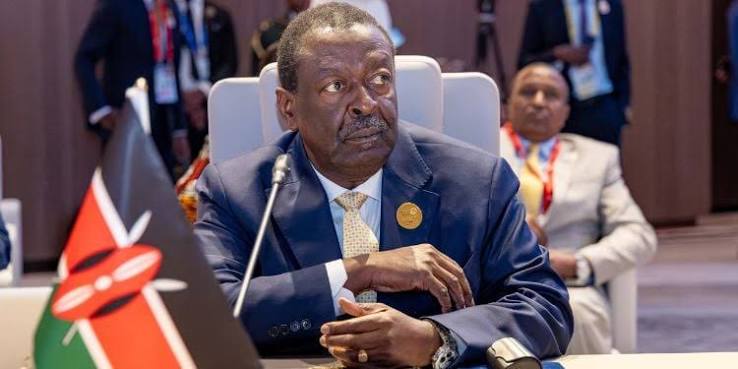
Prime Cabinet Secretary Musalia Mudavadi has called for stronger accountability, inclusive governance and reforms to global institutions, emphasising that restoring public confidence requires integrity, fairness, transparency and tangible results. He urged leaders to prioritise the needs of citizens, strengthen public institutions and ensure that decisions translate into meaningful improvements in people's lives. Mudavadi also stressed the importance of making international institutions more representative, transparent and responsive to the needs of developing countries.
Prime Cabinet Secretary Musalia Mudavadi has called for stronger accountability, inclusive governance and comprehensive reforms to global institutions, arguing that restoring public confidence in leadership requires integrity, fairness, transparency and measurable results that improve the lives of ordinary citizens.
Mudavadi said public trust in governments and international institutions can only be strengthened when leaders demonstrate a genuine commitment to serving the people, respecting the rule of law and delivering on promises made to citizens. He emphasised that leadership should not be judged solely by speeches, declarations or policy documents, but by the actual impact of decisions on communities and the country at large.
The Prime Cabinet Secretary noted that accountability remains a fundamental pillar of effective governance, stressing that public officials must be prepared to explain their decisions, account for resources entrusted to them and accept responsibility for their actions. He observed that when leaders operate without adequate oversight, public confidence is likely to weaken, creating room for corruption, abuse of office and the misuse of public resources.
Mudavadi's remarks highlight the growing importance of strengthening governance systems at a time when citizens across the world are demanding greater transparency, better public services and leadership that responds to their everyday challenges. From the rising cost of living to unemployment, inadequate healthcare and limited economic opportunities, many communities expect governments to demonstrate that public resources are being used to address pressing needs.
He maintained that rebuilding confidence requires more than political commitments, noting that citizens must be able to see tangible improvements in their lives. According to this approach, governments should prioritise policies that expand economic opportunities, improve infrastructure, strengthen public institutions and ensure that essential services are accessible to all sections of society.
Accountability, he indicated, should be embedded in the daily operations of public institutions rather than treated as an occasional exercise undertaken when concerns emerge. Public agencies need effective monitoring systems, transparent procurement procedures and clear mechanisms for investigating allegations of wrongdoing. Such measures can help ensure that public funds are directed towards their intended purposes and that officials responsible for delivering services are held to established standards.
The Prime Cabinet Secretary also stressed the importance of integrity in leadership, describing it as an essential ingredient in building lasting relationships between governments and the people they represent. Leaders who demonstrate honesty, consistency and fairness are better positioned to earn public confidence, particularly when their decisions involve difficult choices or competing interests.
He noted that trust is difficult to establish when there is a gap between what leaders promise and what they ultimately deliver. Political leaders may present ambitious development plans and make commitments during public engagements, but citizens ultimately assess their performance based on whether those promises translate into meaningful improvements.
For this reason, Mudavadi's call places emphasis on practical outcomes, suggesting that governments must develop policies that are realistic, properly funded and responsive to the needs of the population. Effective implementation, regular evaluation and open communication with the public are important in ensuring that development programmes achieve their intended objectives.
His remarks also placed inclusive governance at the centre of efforts to strengthen public confidence. Inclusive governance involves creating opportunities for different groups within society to participate in decision-making processes and ensuring that their concerns are considered when public policies are formulated.
Mudavadi emphasised the importance of leadership that recognises the diversity of communities and provides space for different perspectives. He indicated that governance should not be limited to the interests of a small group of people but should reflect the aspirations of the wider population, including young people, women, persons with disabilities, minority communities and other groups that may face barriers to participation.
Inclusive decision-making can help governments identify challenges that might otherwise be overlooked and develop solutions that reflect the realities experienced by citizens. When communities are consulted and their views are taken seriously, they are more likely to understand government priorities and participate in programmes designed to improve their welfare.
Public participation is particularly important in decisions involving taxation, public expenditure, infrastructure development and the delivery of essential services. Citizens need clear information about proposed policies, their expected benefits and the potential consequences for households and businesses.
The Prime Cabinet Secretary's position underscores the need for governments to strengthen communication with the public and establish reliable channels through which citizens can raise concerns, offer suggestions and seek explanations. Such engagement can reduce misunderstandings, encourage constructive dialogue and help public institutions respond more effectively to emerging challenges.
He further called for reforms to global institutions, arguing that international systems must evolve to reflect changing global realities and the needs of a wider range of countries. His remarks point to continuing debates about the effectiveness, fairness and representation of institutions responsible for international cooperation, economic stability, development financing and global security.
Global institutions play a significant role in shaping decisions that affect countries across different regions. Through international agreements, financial assistance, development programmes and diplomatic engagement, these bodies influence how nations respond to economic challenges, conflicts, climate change and other shared concerns.
However, questions have continued to emerge about whether existing global governance structures adequately represent the interests of developing countries. Many nations in Africa and other parts of the Global South have called for reforms that would give them a stronger voice in international decision-making and ensure that global policies take account of their development priorities.
Mudavadi's call for institutional reforms reflects the broader argument that international organisations must remain responsive, representative and effective if they are to maintain the confidence of their members and the populations affected by their decisions.
Reforming global institutions may involve strengthening representation, improving transparency in decision-making, enhancing accountability and ensuring that the interests of developing economies receive appropriate consideration. It may also require reviewing existing financial and administrative arrangements to make international cooperation more equitable and effective.
For African countries, these discussions are particularly important because international financial decisions, trade arrangements and development policies can have a direct impact on national economies. Access to affordable financing, fair trading opportunities, investment and technology can influence the ability of governments to create jobs, expand infrastructure and improve living standards.
African leaders have increasingly called for a global system that recognises the continent's economic potential, natural resources and growing population while addressing longstanding inequalities in international representation. They have also advocated for stronger partnerships that support industrialisation, value addition, regional trade and sustainable development.
Mudavadi's emphasis on fairness and accountability therefore raises important questions about how both national governments and international institutions can ensure that their decisions produce meaningful benefits for the people they serve.
He noted that fairness should be reflected in the way policies are designed and implemented, with governments ensuring that opportunities and public services are distributed according to transparent and equitable principles. Decisions affecting citizens should be guided by established laws and procedures rather than favouritism, discrimination or personal interests.
Fair governance also requires public institutions to treat citizens equally and provide effective mechanisms for addressing grievances. When people believe that decisions are influenced by political connections, financial influence or other forms of favouritism, confidence in public institutions can deteriorate.
Strengthening the rule of law is therefore essential in building systems where public officials are subject to the same legal standards as other citizens. Independent oversight bodies, professional public service institutions and accessible justice systems can help protect citizens' rights while ensuring that allegations of misconduct are addressed through established procedures.
The Prime Cabinet Secretary's remarks also come against the backdrop of growing public expectations regarding the performance of governments. Citizens increasingly demand clear explanations of policy decisions, efficient service delivery and responsible management of public finances.
In Kenya, these expectations are closely linked to concerns about employment opportunities, the cost of living, access to healthcare, education and the quality of infrastructure. Many households want to see development policies translate into practical improvements, while businesses require predictable regulations, reliable services and an environment that supports investment and job creation.
Restoring public confidence requires government institutions to demonstrate that they understand these concerns and are taking concrete steps to address them. This includes ensuring that development projects are completed within reasonable timelines, public funds are properly managed and services reach the intended beneficiaries.
Transparency is also critical because citizens cannot effectively assess government performance without access to reliable information. Publishing clear budget information, explaining expenditure decisions and providing regular updates on development projects can help the public understand how resources are being used.
At the same time, accountability should not be limited to identifying wrongdoing after it occurs. Effective institutions must also establish safeguards that prevent misconduct, detect weaknesses early and promote responsible decision-making. Training public officials, strengthening internal controls and protecting lawful reporting of misconduct can contribute to a culture of integrity.
Mudavadi's call for stronger accountability and inclusive governance also highlights the importance of cooperation among different institutions and stakeholders. Governments cannot address every social and economic challenge independently, making collaboration with the private sector, civil society, professional organisations and local communities essential.
Such partnerships can help mobilise expertise, encourage innovation and improve the implementation of development programmes. However, they must operate within clear rules that protect the public interest and ensure that private or political interests do not override the needs of citizens.
Internationally, cooperation between countries remains important in addressing challenges that cross national borders. Issues such as climate change, public health emergencies, terrorism, economic instability and regional conflicts require coordinated responses that no single country can effectively manage alone.
Mudavadi's emphasis on reforming global institutions suggests that international cooperation must be supported by systems that are trusted by participating countries. Institutions that demonstrate fairness, transparency and responsiveness are better placed to secure cooperation and implement collective decisions.
Nevertheless, reforms at both national and international levels often require sustained political commitment, consultation and agreement among stakeholders with different priorities. Institutional change can be difficult where existing arrangements benefit influential interests or where countries disagree over how authority and resources should be distributed.
The challenge, therefore, lies in translating calls for reform into practical measures that can be implemented, monitored and evaluated. Clear objectives, realistic timelines and measurable indicators can help determine whether proposed changes are producing the intended results.
Ultimately, Mudavadi's message centres on the relationship between responsible leadership, effective institutions and public trust. His position is that confidence cannot be demanded from citizens; it must be earned through consistent action, ethical conduct and decisions that serve the wider public interest.
For governments, this means demonstrating accountability in the management of public resources, ensuring that policies are inclusive and delivering services that respond to citizens' needs. For global institutions, it means strengthening representation, improving transparency and ensuring that international decisions reflect the interests of a broader range of countries.
As debates over governance and institutional reform continue, the effectiveness of these proposals will depend on the willingness of leaders to move beyond declarations and implement meaningful changes. Citizens will ultimately judge these efforts by whether they experience fair treatment, improved services, greater economic opportunities and institutions that operate in their best interests.

You Might Also Like
-
Rescue operations are underway following a deadly quarry collapse at Mutonga in Imenti South, Meru County, that left one person dead and several others feared trapped beneath the rubble. Emergency teams and local residents are working to locate the missing individuals as concerns grow over quarr
-
President William Ruto, speaking at the COMESA Summit in Zimbabwe on October 22, 2026, calls for African countries to be treated as equal partners in global affairs, emphasising fairness, mutual respect and equal opportunities in international trade, investment and decision-making. He urges COMESA m
-
President William Ruto's remarks at the 25th COMESA Summit in Harare highlighted the importance of stronger African economic cooperation, increased production, greater investment and expanded trade within the region. His message that African countries should produce more, invest more and trade more
-
Deputy President Kithure Kindiki witnesses the commencement of construction works on the new Nithi Bridge in Tharaka Nithi County, a major infrastructure initiative aimed at improving road safety, enhancing regional connectivity and facilitating the movement of people and goods. The project is expec
-
Health Director General Patrick Amoth has confirmed that the first group of contacts linked to Ebola patients is expected to leave quarantine facilities on Sunday after completing the required monitoring period. The development marks a significant step in Kenya’s efforts to contain the outbreak th
-
A family in Gatanga, Murang’a County, is demanding a thorough investigation after three children were found dead in an abandoned dam under circumstances that have raised suspicions of foul play. The children, identified as Natalia, 10, Jamal, 9, and four-year-old Asaph, reportedly attended church