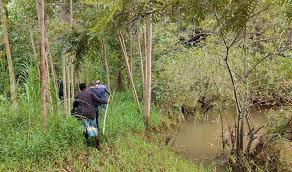
Family Suspects Foul Play After Three Children Are Found Dead in Gatanga,Muranga
A family in Gatanga, Murang’a County, is demanding a thorough investigation after three children were found dead in an abandoned dam under circumstances that have raised suspicions of foul play. The children, identified as Natalia, 10, Jamal, 9, and four-year-old Asaph, reportedly attended church earlier on Sunday before their bodies were discovered. The heartbreaking incident has left relatives and residents seeking answers as questions emerge about what happened before the children were found in the water. The family is urging authorities to establish the exact cause of death and determine whether any criminal activity was involved. As investigations are called for, the tragedy has also renewed concerns about the dangers posed by abandoned water bodies and the need to protect children from similar incidents
A family in Gatanga, Murang’a County, is calling for a thorough investigation into the deaths of three children whose bodies were discovered floating in an abandoned dam on Sunday, in a heartbreaking incident that has left relatives and residents searching for answers.
The children, identified as Natalia, 10, Jamal, 9, and four-year-old Asaph, reportedly attended church earlier that day before the tragic discovery. Natalia was a Grade Four pupil, while Jamal was in Grade Three. The youngest, Asaph, was only four years old.
The circumstances surrounding the deaths have raised serious concerns among family members, who suspect that there could be more to the incident than an accidental drowning. The relatives are appealing to the authorities to establish what happened to the children and determine whether any criminal activity was involved.
The discovery has plunged the family into grief, with the deaths of the three young children raising questions about the events that unfolded between their church attendance and the moment their bodies were found in the abandoned dam.
According to information provided by the family, the three children were discovered in the dam in Gatanga on Sunday. The circumstances surrounding how they ended up in the water remain unclear, leaving relatives desperate for answers.
The fact that three children from the same family were found dead in one location has intensified concerns among their relatives. The family is seeking clarity on whether the children entered the dam accidentally or whether there were other circumstances that led to their deaths.
Abandoned water bodies can pose serious dangers, particularly to young children who may not fully understand the risks associated with deep water. However, the family believes that the circumstances of this particular incident require careful examination before any conclusions can be reached.
The discovery has also raised questions about what the children were doing before they were found in the dam, whether anyone saw them near the water, and whether there are witnesses who could help reconstruct the events leading to their deaths.
Investigators will need to establish the timeline of events, including when the children were last seen alive, who they were with, and how they reached the location where their bodies were discovered.
For the grieving family, these questions are central to understanding the loss of three young lives.
The family has expressed suspicion over the circumstances surrounding the deaths, calling on relevant authorities to conduct a comprehensive investigation.
Although the children were found in the dam, the family is not convinced that the discovery alone explains how they died. Their concerns have prompted calls for investigators to examine all possible explanations and establish the facts surrounding the incident.
The relatives want authorities to determine whether the deaths resulted from accidental drowning or whether there is evidence pointing to possible foul play.
Such concerns require careful handling because the cause and circumstances of death cannot be established through speculation. Investigators must rely on physical evidence, witness statements, medical findings and other relevant information to determine what happened.
A thorough investigation could help establish whether the children entered the water on their own, whether another person was present, or whether any events occurred before they reached the dam.
The family is also seeking answers about the condition of the scene, the location where the children were found and any information that could explain how all three ended up in the same water body.
For relatives struggling to comprehend the loss, an official account of the events could be an important step towards understanding what happened.
The family's suspicions, however, should not be interpreted as proof of criminal involvement. The investigation will be expected to establish the facts independently and ensure that any conclusions are supported by evidence.
The deaths of Natalia, Jamal and Asaph have highlighted the devastating impact that sudden loss can have on families and communities.
At 10 years old, Natalia was still in primary school, building friendships and learning new things as she looked towards the future. Jamal, aged nine, was also at a formative stage of his education, while four-year-old Asaph was just beginning to explore the world around him.
Their deaths have brought an abrupt end to three young lives and left their family facing an unimaginable loss.
For parents, guardians and relatives, the death of a child is among the most painful experiences imaginable. Losing three children in the same incident compounds that grief and leaves families struggling to process what has happened.
The circumstances surrounding the incident may make the mourning period even more difficult, particularly as the family awaits answers about the events that led to the deaths.
When a tragedy involves young children, questions often extend beyond the immediate family to the wider community. Residents may seek to understand whether the incident could have been prevented and whether similar dangers exist in their neighbourhoods.
In Gatanga, the discovery has drawn attention to the need for a clear account of what happened and the importance of ensuring that the children's deaths are properly investigated.
One of the central issues in the investigation will be establishing the children's movements on the day they died.
The family said the children had attended church earlier on Sunday. Investigators may need to establish when they left the church, where they went afterwards and when they were last seen by people who knew them.
A clear timeline could help authorities determine how the children came to be at the abandoned dam.
Witness accounts may be particularly important in establishing whether the children were seen walking towards the water, playing nearby or accompanied by anyone else.
Investigators may also seek information from people living near the dam, as well as anyone who might have been in the area around the time of the incident.
The physical condition of the location could also be relevant. Authorities may need to examine access points, the depth of the water, the surrounding terrain and whether any barriers or warning signs were present.
These details could help establish whether the dam presented an obvious danger to children and whether circumstances at the scene are consistent with the explanations being considered.
Medical examinations may also be necessary to determine the cause of death and identify any findings that could assist investigators in understanding what happened.
Until the relevant findings are available, it would be premature to attribute the deaths to a particular cause or accuse any individual of responsibility.
The incident has also drawn attention to the risks posed by abandoned dams, open pits and other water-filled areas that may be accessible to children.
In many communities, water bodies serve important purposes, including irrigation, livestock watering and other domestic or agricultural activities. However, when such areas are left without adequate protection, they can become dangerous, particularly for young children.
Children may be attracted to water without fully appreciating its depth, the condition of the surrounding ground or the difficulty of getting out once they fall in.
Even water that appears calm can conceal serious dangers. Slippery banks, steep sides, mud and sudden changes in depth can make it difficult for someone who falls in to reach safety.
The danger can be greater for younger children, who may lack swimming skills and the strength needed to escape from deep water.
The deaths in Gatanga may therefore prompt renewed calls for property owners, local authorities and community leaders to assess abandoned water bodies and take appropriate measures to reduce the risk of similar tragedies.
Possible safety measures include installing secure barriers where necessary, placing visible warning signs, restricting unsupervised access and ensuring that dangerous sites are regularly inspected.
Parents and guardians can also help protect children by explaining the dangers of open water and ensuring that young children are supervised around dams, ponds and other potentially hazardous areas.
However, prevention efforts should complement, rather than replace, the investigation into the specific circumstances of the Gatanga incident.
The deaths of the three children have left the family seeking answers at a time when relatives are also trying to cope with their grief.
For the wider community, the incident serves as a reminder of how quickly an ordinary day can turn into a devastating tragedy. It also underscores the importance of responding carefully to incidents involving unexplained deaths, particularly when families raise concerns about possible foul play.
Community members may be able to assist investigators by sharing credible information about what they saw or heard on Sunday. Anyone with relevant information can report it to the police rather than relying on rumours or unverified claims circulating within the community.
Responsible reporting is equally important. The children were minors, and their family is dealing with a deeply painful loss. Information about the incident should therefore be shared with sensitivity, while avoiding speculation that could cause additional distress or interfere with the investigation.
Authorities will need to establish the facts and communicate verified findings through the appropriate channels.
At this stage, the family's suspicions remain concerns that require investigation, not a confirmed conclusion about how the children died.
The family's appeal for investigations reflects the need to establish the circumstances surrounding the deaths of Natalia, Jamal and Asaph.
A comprehensive inquiry should seek to determine the cause of death, reconstruct the children's movements before the incident and establish whether there is any evidence of criminal involvement.
If evidence of an offence emerges, the authorities will be expected to pursue the matter in accordance with the law. If the deaths resulted from an accident, the findings could also help identify safety failures and measures that might prevent similar incidents.
The investigation should be guided by evidence and conducted without prematurely ruling out possibilities or assigning blame.
For the bereaved family, the priority remains understanding how three children who attended church earlier that day ended up dead in an abandoned dam.
Their deaths have left painful questions that only a careful investigation can answer.
As the family mourns the loss of Natalia, Jamal and Asaph, attention remains focused on the circumstances surrounding the tragedy in Gatanga, Murang’a County. The relatives are seeking clarity, accountability where warranted and answers that could help them understand the events that led to the deaths of the three children.

You Might Also Like
-
Rescue operations are underway following a deadly quarry collapse at Mutonga in Imenti South, Meru County, that left one person dead and several others feared trapped beneath the rubble. Emergency teams and local residents are working to locate the missing individuals as concerns grow over quarr
-
President William Ruto, speaking at the COMESA Summit in Zimbabwe on October 22, 2026, calls for African countries to be treated as equal partners in global affairs, emphasising fairness, mutual respect and equal opportunities in international trade, investment and decision-making. He urges COMESA m
-
President William Ruto's remarks at the 25th COMESA Summit in Harare highlighted the importance of stronger African economic cooperation, increased production, greater investment and expanded trade within the region. His message that African countries should produce more, invest more and trade more
-
Deputy President Kithure Kindiki witnesses the commencement of construction works on the new Nithi Bridge in Tharaka Nithi County, a major infrastructure initiative aimed at improving road safety, enhancing regional connectivity and facilitating the movement of people and goods. The project is expec
-
Health Director General Patrick Amoth has confirmed that the first group of contacts linked to Ebola patients is expected to leave quarantine facilities on Sunday after completing the required monitoring period. The development marks a significant step in Kenya’s efforts to contain the outbreak th
-
Prime Cabinet Secretary Musalia Mudavadi has called for stronger accountability, inclusive governance and reforms to global institutions, emphasising that restoring public confidence requires integrity, fairness, transparency and tangible results. He urged leaders to prioritise the needs of citizens