Kenya Records Major Victory Against Ebola as Aden Duale Announces Discharge of Last Patient, 42-Day Countdown Begins
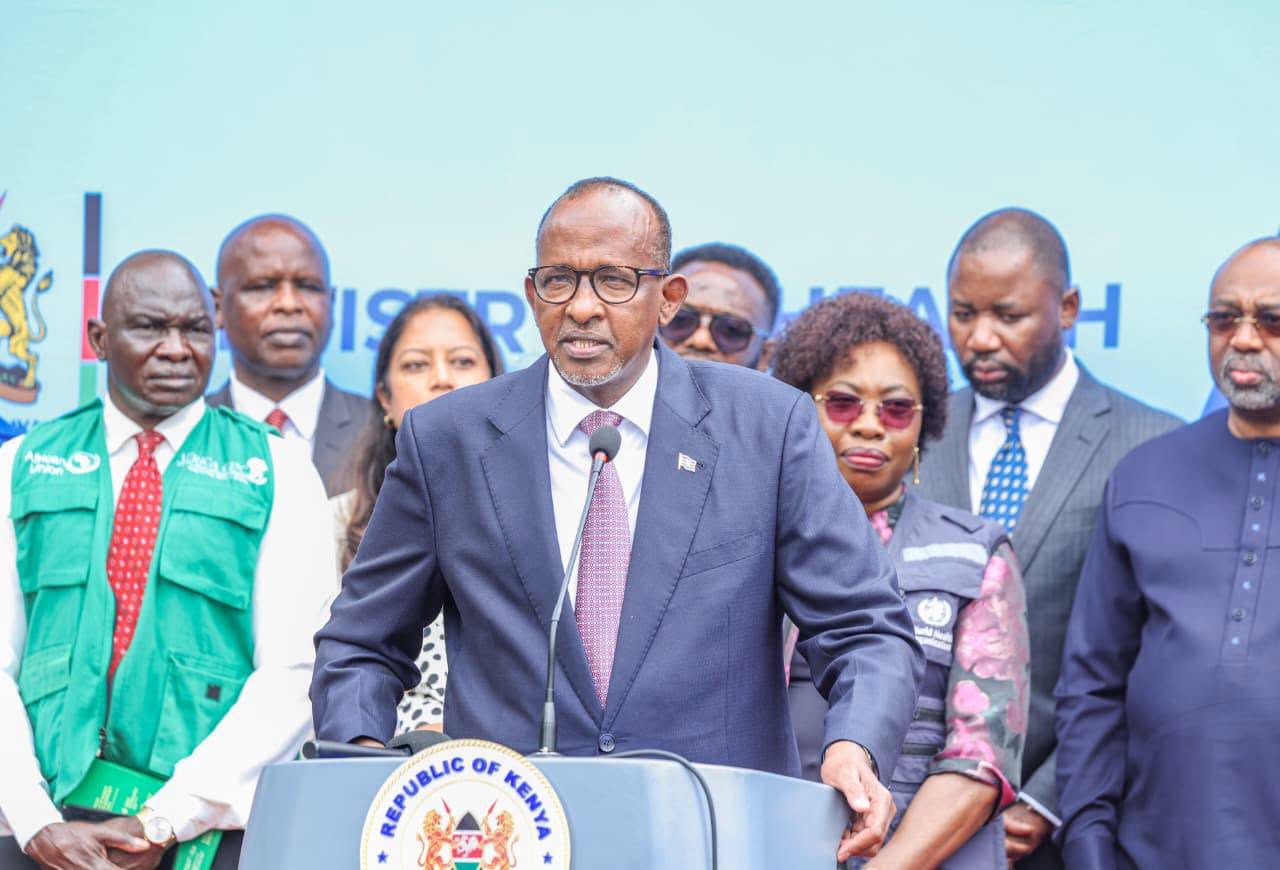
Kenya has made a major breakthrough in its fight against the Ebola virus after Health Cabinet Secretary Aden Duale announced that the last patient receiving treatment for the disease had been discharged from hospital. The announcement marks an important milestone in the country's efforts to contain the outbreak, which raised public health concerns after the confirmation of an imported case in October 2026. He said that as of today, Kenya has no Ebola case.Travel restrictions to Kenyans must be reviewed.Transparency should not be punished.
Kenya has made a major breakthrough in its fight against the Ebola virus after Health Cabinet Secretary Aden Duale announced that the last patient receiving treatment for the disease had been discharged from hospital. The announcement marks an important milestone in the country's efforts to contain the outbreak, which raised public health concerns after the confirmation of an imported case in October 2026.Speaking during the latest Ebola situation update, Duale confirmed that the country had successfully managed to bring the outbreak under control through coordinated efforts involving the Ministry of Health, healthcare workers, surveillance teams, laboratory experts, development partners and international health organisations.
The discharge of the last patient means Kenya can now begin the mandatory 42-day monitoring countdown. If no new confirmed infections are reported during this period, the country will be eligible to be officially declared free of the Ebola outbreak.
The announcement is particularly significant because the government has been working to prevent the disease from spreading beyond the initial transmission cluster. Health authorities have repeatedly maintained that there was no evidence of widespread community transmission in Kenya.The countdown is an internationally recognised public health requirement used to establish whether an Ebola outbreak has been successfully contained. The period begins after the last confirmed patient has recovered and been discharged or otherwise ceased to be infectious under the required criteria.
Kenya must maintain close surveillance throughout these 42 days. Health officials will continue monitoring people who may have been exposed to the virus, investigating suspected cases and strengthening infection prevention measures.
If no new cases emerge before the countdown ends, Kenya could be declared Ebola-free on December 23, 2026.
However, the government has emphasised that the discharge of the last patient does not mean that all prevention measures should immediately stop. The monitoring period is an important part of the response because health authorities must remain alert to any possible new infection.The Ministry of Health explained that the infections were associated with a single transmission cluster. This was an important factor in the country's containment strategy because health officials were able to identify the people who had been in contact with infected individuals and follow them up.
The government also reported that there was no evidence of transmission beyond the identified cluster. This suggested that the containment measures, including quarantine, contact tracing, isolation and laboratory testing, had played an important role in preventing further spread.
The last patient has now been discharged, marking the end of active treatment for confirmed Ebola patients in Kenya at this stage. Nevertheless, the government must continue monitoring the situation until the required countdown is completed.According to the World Health Organization's November 6 situation report, eight of the identified contacts subsequently became confirmed cases, while nine contacts left Kenya and the relevant international health authorities were notified.
Of the remaining 118 contacts, 66 had completed the mandatory 21-day monitoring period, while 52 were still under observation as of November 3.
The Ministry of Health has been working with surveillance officers and other response teams to ensure that individuals who may have been exposed to the virus are properly monitored.
Contact tracing is important because Ebola can spread through direct contact with the blood and other body fluids of an infected person, particularly after symptoms begin.
People identified as contacts are therefore advised to follow instructions from health professionals, report any unusual symptoms immediately and avoid exposing others if they develop signs of infection.In the government's efforts to contain the outbreak, the Ministry of Health has continued working closely with the World Health Organization.
On November 9, CS Aden Duale held discussions with a WHO delegation led by the organisation's Regional Director for Africa, Professor Yakub Janabi.
The discussions focused on reviewing Kenya's Ebola response, strengthening surveillance and improving the country's ability to respond to future public health emergencies.
Duale acknowledged the technical and operational support provided by WHO, including the supply of essential response materials, personal protective equipment and assistance in strengthening laboratory and treatment capacity.
He also welcomed the donation of 12 portable polymerase chain reaction (PCR) systems, which are designed to strengthen the country's ability to test samples and identify infections.The screening exercise has been important because Kenya shares borders and maintains regular travel connections with countries in the region.
Health surveillance teams have been checking travellers for possible symptoms and gathering relevant health information to support early detection.
The government has also continued cooperating with neighbouring countries to strengthen cross-border surveillance.
Screening at airports and land border crossings is particularly important because people may travel between countries during the incubation period without immediately showing symptoms.
The Ministry has therefore encouraged travellers to provide accurate information during health screening and cooperate with officials carrying out public health checks.Medical professionals need to understand how to identify symptoms, isolate suspected cases, collect samples safely, use protective equipment and prevent infections within healthcare facilities.
The government has also strengthened infection prevention and control measures in hospitals and other healthcare facilities.
Personal protective equipment is particularly important in protecting doctors, nurses, laboratory technicians, ambulance workers and other frontline personnel.
Kenya's response has demonstrated the importance of preparing healthcare workers before emergencies occur rather than waiting until hospitals are overwhelmed.
The Ministry has also been working with development partners to strengthen the country's emergency response systems and ensure that health facilities can respond quickly whenever suspected cases are reported. The Ministry of Health reported that 736 samples had been tested across five designated laboratories as of its November 9 update.
The country has also been strengthening mobile laboratory capacity to improve access to testing, particularly in areas near international borders.
The 12 portable PCR systems donated through WHO cooperation are expected to further improve diagnostic capacity.
Laboratory testing helps health professionals establish whether a person has contracted the virus instead of relying only on symptoms.
The government has emphasised that suspected cases should be investigated quickly to avoid delays that could increase the risk of transmission.
The strengthening of laboratory facilities is also expected to improve Kenya's preparedness for other infectious disease emergencies. The discussions focused on improving emergency preparedness, protecting vulnerable communities and supporting healthcare workers.
UNICEF had supplied more than 43,000 items of personal protective equipment valued at approximately US$462,994. Additional protective equipment and water, sanitation and hygiene supplies were expected, bringing the total contribution to approximately US$716,625.
The organisation had also supported the deployment of 25 public health personnel and targeted interventions in vulnerable border counties.
During the meeting, Duale reaffirmed the government's commitment to working with UNICEF, WHO, Africa CDC and other partners to protect Kenyans against infectious diseases.
Principal Secretary for Public Health and Professional Standards Mary Muthoni and Director General for Health Dr Patrick Amoth were among the officials involved in the discussions. Bundibugyo Ebola virus disease is a serious illness caused by the Bundibugyo virus. It can spread through direct contact with the blood, body fluids and contaminated materials of an infected person.
According to WHO, the incubation period ranges from two to 21 days. An infected person is generally not infectious before symptoms begin.
Some of the symptoms that members of the public should watch out for include:
Fever and severe weakness.
Headaches and muscle pain.
Vomiting and diarrhoea.
Abdominal pain.
Unexplained bleeding in some cases.
Anyone experiencing symptoms and concerned about possible exposure should seek medical attention immediately.
The Ministry of Health has encouraged members of the public to use the toll-free health information number 719 for guidance. Alerts can also be sent through WhatsApp on 0700 719 719.The Ebola outbreak also raised concerns among some international partners, with certain countries introducing travel and visa restrictions affecting Kenyan travellers.
The government has expressed concern over blanket travel restrictions, arguing that such measures should reflect the actual public health situation.
During his November 9 engagement with WHO, Duale called for international cooperation to ensure that responses to public health emergencies are guided by scientific evidence and the International Health Regulations.
Kenya has maintained that the infections were contained within one transmission cluster and that there was no evidence of widespread community transmission.
The government has also urged international partners to distinguish between countries experiencing widespread transmission and those managing limited imported transmission chains.The discharge of the final Ebola patient is an important achievement, but the government still has work to do before officially declaring the country Ebola-free.
The 42-day countdown will require continued surveillance, monitoring of contacts, laboratory investigations and rapid response to any suspected infection.
The government will also need to evaluate the effectiveness of the measures implemented during the outbreak.
An after-action review will help identify areas where the country performed well and where improvements are necessary.
This will be particularly important in strengthening emergency preparedness, improving the availability of medical supplies and ensuring that counties have sufficient resources to respond to future outbreaks.

You Might Also Like
-
Kenya is moving closer to being declared Ebola-free following the recovery and discharge of all nine confirmed patients who tested positive for Bundibugyo Virus Disease. Health Cabinet Secretary Aden Duale has confirmed that the final 11 contacts also completed their mandatory 21-day monitoring peri
-
Kenyan tea farmers and exporters are expected to benefit from renewed business opportunities following Sudan’s decision to lift its ban on tea imports from Kenya. The move paves the way for the resumption of tea shipments to the Sudanese market, which has traditionally been an important destinatio
-
The destruction of two classrooms at the school in Tilito village, Kipkelion East Constituency, following heavy rainfall and strong winds has left residents concerned about the future of learning facilities in their community. The incident, which occurred on November 9, 2026, also affected the schoo
-
Prime cabinet secretary Musalia Mudavadi opens national forum on county public service boards.His call for merit-based recruitment, performance-based promotions, independent public service boards and proper wage-bill management highlights the need for stronger human resource systems across all 47 co
-
Deputy President Kithure Kindiki has officially commissioned the Sh52 million Rabai Huduma Centre in Kilifi County, in a move aimed at bringing essential government services closer to residents while creating new opportunities for young people. During the launch, Kindiki announced plans to equip the
-
A new report by the National Council on the Administration of Justice (NCAJ) has revealed that nearly one in three convicted inmates in Kenya's prisons is serving a sentence for a sexual offence. Data from the State Department for Correctional Services indicates that 11,108 out of approximately 37,0