



MTRH CONFIRMS OIL TANKER TRAGEDY: 3 DEAD, 22 INJURED AS 11 FIGHT FOR THEIR LIVES IN ICU
The MTRH update has provided a clearer picture of the devastating oil tanker explosion along the Eldoret-Turbo Road. As of September 18, 2026, 22 injured people were receiving treatment at MTRH, with 11 in intensive care and seven suffering burns covering more than 25 per cent of their bodies. The hospital also confirmed that another victim died while receiving treatment, bringing the reported death toll to three. The tragedy began after a petroleum tanker overturned near Paul Boit Secondary School and reportedly attracted people attempting to collect fuel before the tanker caught fire. Investigations into the exact cause of the fire are continuing. Meanwhile, MTRH is providing specialised burn care, authorities are supporting affected families, and police are warning the public to keep away from overturned fuel tankers. The incident is likely to renew discussions about road safety, emergency response and the routing of petroleum tankers through populated areas.
The Moi Teaching and Referral Hospital (MTRH) in Eldoret has provided an update on victims of the devastating oil tanker explosion that occurred along the Eldoret-Turbo Road in Uasin Gishu County on Thursday night, September 17, 2026. The incident happened near Paul Boit Secondary School in the Turbo area after a petroleum tanker overturned and caught fire, sending flames through an area where members of the public had reportedly gathered around the vehicle. MTRH confirmed that it had received a large number of casualties, with some victims suffering serious and extensive burns. By Friday, September 18, the hospital was treating 22 injured people, while the death toll linked to the incident had risen to three after one of the injured victims died while undergoing treatment.
The tragedy has once again highlighted the dangers associated with approaching overturned fuel tankers, particularly when members of the public attempt to collect fuel following road accidents. Police and county officials have urged residents to stay away from such scenes because petroleum products can ignite or explode without warning. The circumstances surrounding the Eldoret-Turbo incident remain under investigation, including what exactly triggered the fire after the tanker overturned.
MTRH confirms 22 injured victims
According to information released by MTRH medical officials, 22 injured victims were taken to the hospital following the tanker explosion. The hospital mobilised medical teams to attend to the casualties, particularly those with severe burns.
Dr Andrew Wandera, a senior clinical services doctor at MTRH, said 11 of the victims had been admitted to the Intensive Care Unit. Seven of those patients had burns covering more than 25 per cent of their bodies, placing them among the most seriously injured. Other patients were reported to have facial and body burns of varying severity.
The hospital's medical teams were therefore dealing with a mass-casualty situation requiring specialised burn treatment, monitoring and, in some cases, intensive care.
The severity of the injuries has made the incident particularly serious. Burn victims can require specialised treatment, close monitoring and, depending on the extent of their injuries, procedures to manage wounds and prevent complications.
Death toll rises to three
Initial reports from the scene indicated that two people had died after the tanker caught fire. MTRH later confirmed that another victim died while receiving treatment at the hospital, bringing the confirmed death toll to three.
Nation reported that MTRH had received 23 casualties together with two bodies and that another victim subsequently succumbed to injuries in the ICU. This brought the reported number of deaths associated with the incident to three.
The changing casualty figures demonstrate the seriousness of the incident and the difficulty of establishing the full impact immediately after a major fire. Rescue teams had to search the scene while hospitals simultaneously assessed and treated survivors.
Police initially warned that the number of casualties could change as rescue and assessment operations continued.
Majority of severely injured victims were young men
Dr Wandera said many of the victims receiving treatment at MTRH were young male adults, with reports indicating that most were aged between about 20 and 40 years.
According to the hospital, several of those injured were apparently caught in the fire while attempting to siphon or collect fuel from the tanker after it overturned.
This detail has become one of the most important aspects of the tragedy because it illustrates how quickly a road accident involving petroleum products can become a major disaster.
When a tanker carrying petrol or diesel overturns, people approaching the scene may not immediately appreciate the danger. Fuel vapour can spread around an accident site, while ignition can occur from several potential sources. Consequently, emergency officials routinely advise members of the public to maintain a safe distance from overturned fuel tankers.
How the accident happened
The accident occurred on the Eldoret-Webuye highway near Paul Boit Secondary School in Turbo, Uasin Gishu County.
According to Uasin Gishu County Police Commander Wilberforce Sicharani, a tanker carrying petrol and diesel collided with another vehicle before losing control and overturning. Members of the public then reportedly moved towards the tanker, with some attempting to collect fuel.
During the ensuing activity, the tanker burst into flames.
The exact cause of ignition remains subject to investigation. Police have indicated that preliminary investigations were looking at the possibility that contact with the tanker's battery may have triggered the fire. The authorities have not presented that explanation as a final determination, meaning investigations remain important in establishing precisely what happened.
Massive fire created a dangerous scene
The resulting fire created an extremely dangerous environment for people who had gathered around the tanker.
Reports from the scene described a large fire that engulfed people who had moved towards the tanker. Emergency responders subsequently worked to rescue the injured and secure the area.
The presence of petroleum products significantly complicated the emergency response. Fire and fuel-related accidents require responders to consider the risk of additional ignition, explosions and further injuries.
The accident also temporarily affected traffic along the Eldoret-Webuye corridor as security officers and emergency teams worked at the scene.
MTRH mobilises specialised burn care
MTRH said it had mobilised specialised medical personnel to care for the injured.
The hospital has a specialised burn unit with more than 50 beds, according to Dr Wandera. This capacity was important because the tanker explosion resulted in multiple burn casualties arriving at the facility within a short period.
The hospital also indicated that it had adequate medical personnel and supplies to handle the casualties.
Burn injuries can be particularly demanding for hospitals because patients may require prolonged treatment. Severe burns can affect large areas of the body and may require specialised wound management, intensive monitoring, pain control, infection prevention and other forms of medical support.
For the victims admitted to ICU, the situation is especially serious because extensive burns can result in significant complications.
Hospital appeals for blood donations
MTRH management also appealed to well-wishers to donate blood for the injured victims.
The appeal came as several patients were being treated in intensive care and some required blood transfusions. �
Nation Africa
Blood availability is particularly important during mass-casualty incidents because multiple patients may require transfusions simultaneously.
The appeal also provides an opportunity for members of the public to support survivors through a practical humanitarian response rather than approaching accident scenes where they may put themselves and emergency workers at risk.
Governor Jonathan Bii visits victims
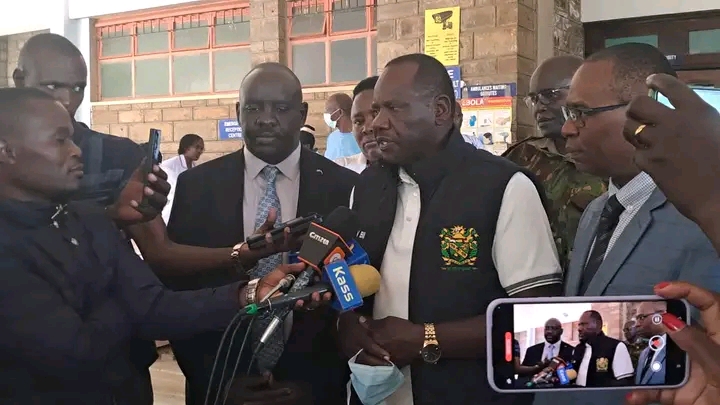
Uasin Gishu Governor Jonathan Bii visited injured victims at MTRH following the accident.
The governor expressed condolences to families who had lost loved ones and acknowledged the seriousness of the injuries suffered by survivors. He also said county authorities were coordinating assistance for families affected by the tragedy.
Governor Bii also raised concerns about the movement of heavy trucks and oil tankers through Eldoret city.
He said the county would work with the Kenya National Highways Authority and traffic authorities to address the movement of oil tankers through the Eldoret Central Business District. One proposal mentioned was directing lorries to use the Eldoret Southern Bypass rather than passing through the city centre.
The discussion could become part of a wider debate about road safety, truck routing and emergency preparedness in urban areas.
Police warn public against approaching tanker accidents
The tragedy has renewed warnings from police and county authorities about the dangers of approaching overturned fuel tankers.
Police commander Wilberforce Sicharani described the incident as devastating and advised residents to avoid accident scenes involving fuel tankers because such vehicles can be highly explosive.
This warning is particularly significant in Kenya, where there have been previous cases of people gathering around overturned fuel tankers to collect fuel before fires or explosions occurred.
The Eldoret-Turbo incident demonstrates how quickly such a situation can turn deadly.
Even when there is no visible fire immediately after a tanker overturns, fuel may already have leaked onto the road or surrounding ground. Vapour can also accumulate, creating another hazard.
Families face difficult moments
While medical teams concentrate on treating survivors, families of the victims are dealing with the consequences of the accident.
Relatives were reported to have visited MTRH as they sought information about their loved ones. Some families are mourning those who died, while others are waiting anxiously as relatives with severe burns continue treatment.
For patients who survive major burns, recovery can take considerable time. Families may therefore face prolonged emotional and financial challenges depending on the severity of the injuries and the duration of hospitalisation.
MTRH has indicated that psychosocial support can also be provided to victims and family members who need counselling.
Questions about tanker safety
The incident has also raised questions about how petroleum tankers operate on busy highways and through populated areas.
Governor Bii's comments about rerouting heavy trucks through the Eldoret Southern Bypass highlight concerns about reducing interaction between heavy petroleum transport vehicles and dense urban traffic.
However, the investigation into the immediate cause of the fire remains important. Authorities will need to establish the circumstances of the collision, the condition of the tanker, how fuel leaked, what happened immediately before ignition and whether any safety regulations were breached.
A clear investigation can help determine what measures may prevent similar incidents in the future.
MTRH's role in the emergency
MTRH remains a major referral facility serving western Kenya and neighbouring regions. The hospital says it serves a population of more than 25 million people across Kenya and parts of Eastern Uganda, South Sudan, Northern Tanzania and the Democratic Republic of Congo.
Its specialised facilities and medical personnel make it an important centre for managing serious trauma cases in the region.
The response to the tanker accident has therefore involved not only emergency treatment but also coordination between the hospital, county authorities, police, rescue teams and other responders.
The hospital's handling of the casualties illustrates the importance of having specialised referral facilities capable of responding to sudden mass-casualty incidents.
The wider road-safety message
Beyond the immediate tragedy, the Eldoret-Turbo tanker explosion carries a broader road-safety message.
Members of the public should avoid gathering around overturned fuel tankers. Attempting to collect spilled fuel can expose people to fire, explosions and toxic fumes. It can also interfere with emergency responders trying to secure the scene and evacuate casualties.
Drivers and transport companies also have a responsibility to observe road-safety requirements, while authorities have a role in enforcing regulations governing the transportation of petroleum products.
Emergency agencies, meanwhile, need adequate resources and clear procedures for responding to tanker crashes, particularly on busy highways.

You Might Also Like
-
Deputy President Kithure Kindiki's September 18, 2026 visit to Mwea brought together development, agriculture and politics. He officially opened the Mwea Huduma Centre, which will also host a Jitume ICT Hub, inspected the nearly completed Kangiciri-Karira Hospital-Ngurubani Road, highlighted the Sh5
-
Kenya is heading into the weekend with mixed weather conditions: rain is possible in several western, Rift Valley, central, Nairobi and coastal areas, while much of the north and northeast is likely to remain warmer and relatively drier. Residents should remain alert to localized showers and thunder
-
Uhuru Kenyatta's appearance at the burial of Christine Waruguru Kariuki in Gikuu, Kiharu, was primarily a condolence event, but his closing words transformed the occasion into a major political talking point. After delivering a prepared message focused on the life of the deceased, Uhuru ended with t
-
President William Ruto's message today focused heavily on the responsibility of the police to protect Kenya's democratic space without becoming involved in partisan politics. Speaking during the passing-out parade of 1,273 GSU officers in Embakasi, he warned political leaders against involving secur
-
The fatal aircraft crash in Kipeto, Kajiado West, has left two people—a student pilot and a flight instructor—dead after the training aircraft went down near the Kipeto Wind Power Project. Preliminary reports have pointed to heavy morning mist and poor visibility as possible contributing factors
-
The inauguration of Kenya's counter-terrorism hotline on September 18, 2026, represents an effort to strengthen the connection between members of the public and security authorities. The new 0800 900 900 reporting line and accompanying online portal are intended to make it easier for Kenyans to shar