



Before You Call Us ‘Kasongo’ or ‘Soprano’, Tell Kenyans What You Did!” — Kindiki Fires Back at Opposition in Mwea
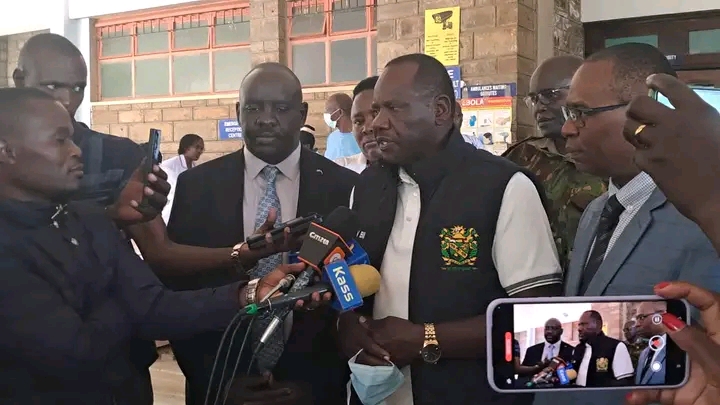
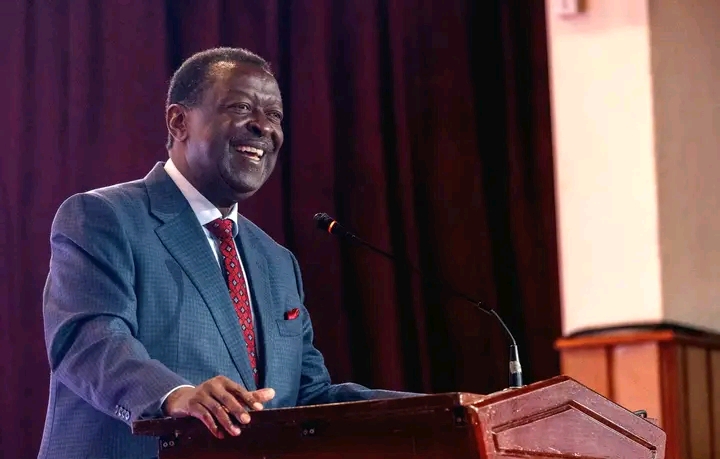
Deputy President Kithure Kindiki's September 18, 2026 visit to Mwea brought together development, agriculture and politics. He officially opened the Mwea Huduma Centre, which will also host a Jitume ICT Hub, inspected the nearly completed Kangiciri-Karira Hospital-Ngurubani Road, highlighted the Sh500 million County Aggregation and Industrial Park, pledged Sh300 million for electricity connectivity and discussed the planned expansion of the Makutano-Mwea-Embu-Chuka-Meru-Maua highway. The most significant agricultural announcement was the proposed Sh1 billion allocation to KNTC to purchase locally produced rice before imports are considered. Politically, Kindiki challenged opposition leaders to move away from insults and instead present their records of what they achieved while in government. His central message in Mwea was that the political debate should include concrete development records and that both sides should be prepared to account to Kenyans for their time in office.
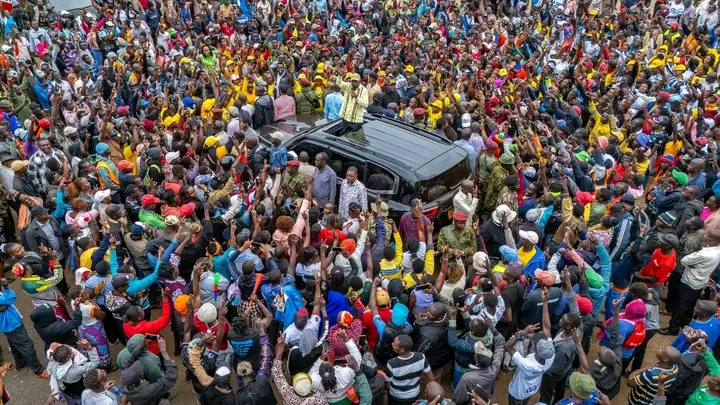
Deputy President Kithure Kindiki toured Mwea Constituency in Kirinyaga County on Friday, September 18, 2026, where he inspected and commissioned several development projects while outlining the government’s plans for infrastructure, digital services, electricity connectivity and agricultural production. His visit also carried a strong political message, as he challenged opposition leaders to focus on their development records rather than personal attacks and political name-calling.
The Deputy President’s Mwea tour came at a time when political activity is increasingly intensifying ahead of Kenya’s 2027 General Election. However, in his remarks, Kindiki sought to frame the government’s case around projects and development rather than engaging in direct personal attacks against its opponents.
Mwea Huduma Centre officially opened
One of the key highlights of Kindiki’s visit was the official opening of the Mwea Huduma Centre. The facility is expected to bring government services closer to residents who would otherwise have to travel longer distances to access various public services.
The Huduma Centre will also host a Jitume ICT Hub, giving young people an opportunity to acquire digital skills and explore online employment opportunities. This is particularly significant as Kenya continues to promote digital work as an avenue for young people to earn income without necessarily having to relocate to major urban centres.
Kindiki said the government wanted residents of Mwea to benefit from development projects in the same way as people in other parts of the country. He also emphasized that ongoing projects would be completed while new ones are initiated.
The opening of the centre therefore represents more than the provision of administrative services. It is also connected to the government's wider digital-economy agenda, particularly through the Jitume component, which is designed to expose young people to digital skills and online work.
Kangiciri-Karira Hospital-Ngurubani Road
Another major project highlighted during Kindiki's visit was the ongoing tarmacking of the Kangiciri-Karira Hospital-Ngurubani Road.
The road is part of a wider approximately 65-kilometre transport corridor serving parts of Kirinyaga Central, Ndia and Mwea constituencies. According to reports from the visit, the project is nearing completion.
Improved roads are particularly important in Mwea because the area is heavily dependent on agriculture. Farmers require reliable roads to transport rice and other agricultural products from farms to markets, collection centres and processing facilities.
The road network can also improve access to hospitals, schools, markets and administrative centres. For residents, the significance of the project is therefore not limited to transport; it can affect the cost and speed of moving agricultural produce and accessing essential services.
Kindiki said Kirinyaga County had been allocated about Sh37 billion for construction of approximately 500 kilometres of roads, with different projects at various stages of implementation.
Sh500 million County Aggregation and Industrial Park
Kindiki also highlighted the construction of a County Aggregation and Industrial Park, estimated at Sh500 million.
The project involves cooperation between the national and county governments and is intended to strengthen agricultural value addition and industrial activity.
For an agricultural region such as Mwea, aggregation and value addition can potentially help farmers move beyond simply producing raw commodities. Instead, agricultural products can be collected, processed and marketed through more organised systems.
This is particularly relevant to rice farming, which forms a major part of Mwea's economy. Better aggregation and processing infrastructure could help connect farmers to markets while supporting other businesses involved in transport, storage, processing and distribution.
Sh300 million electricity connectivity pledge
Electricity connectivity was another important issue during the Deputy President's visit.
Kindiki pledged an additional Sh300 million to expand electricity connections to more residents in Mwea Constituency. The pledge comes as local leaders continue to call for greater investment in electricity infrastructure.
Mwea MP Mary Maingi said the constituency's electricity connection rate stood at approximately 61.3 per cent, and she called for additional resources to connect areas that remain without electricity. She said an additional Sh500 million could increase the connection rate further.
Electricity access has implications for households, businesses, schools, health facilities and agricultural enterprises. In farming areas, reliable electricity can also support irrigation, storage, processing and other agricultural activities.
Makutano-Mwea-Embu-Chuka-Meru-Maua highway
Kindiki also spoke about plans to expand the Makutano-Mwea-Embu-Chuka-Meru-Maua highway.
The proposed expansion is expected to improve connectivity between several important towns and agricultural areas in central and eastern Kenya.
Such a highway would also be significant for trade because Mwea sits within a wider agricultural and commercial network. Better connectivity can facilitate movement of agricultural commodities while linking producers to larger markets.
Major focus on Mwea rice farmers
Perhaps the biggest economic announcement during Kindiki's visit concerned rice farmers.
The Deputy President pledged that the government would allocate Sh1 billion to the Kenya National Trading Corporation (KNTC) to purchase locally produced cereals when harvesting begins later in the year.
Kindiki specifically assured Mwea farmers that the government would prioritise locally produced rice before allowing imported rice into the market.
He said the government would not allow rice imports until locally produced rice had been purchased from farmers in Mwea, Kirinyaga and other rice-growing parts of Kenya.
The announcement addresses one of the biggest concerns facing agricultural producers: market access.
Farmers can invest heavily in production but still face difficulties when they cannot secure reliable buyers or when market prices fall. A government purchasing programme through KNTC could therefore provide an institutional buyer for some of the locally produced grain.
Kindiki said the government's intention was to purchase rice from Mwea farmers to strengthen national food reserves before considering imports.
Government's wider agricultural agenda
The Deputy President also linked the Mwea rice programme to broader government efforts to improve returns to farmers.
He referred to agricultural commodities including coffee, milk and tea, saying the government would continue policies aimed at improving the earnings of farmers.
For Mwea residents, however, rice remains especially important because the Mwea Irrigation Scheme is one of the country's major rice-producing areas.
The promise to prioritise local rice therefore has the potential to become a significant issue in discussions about agricultural policy, food security and farmer incomes.
Mary Maingi's concerns about development
Mwea MP Mary Maingi also used the occasion to raise several issues affecting her constituents.
She urged political leaders not to use development projects as political tools. According to her, residents had heard promises about roads and infrastructure for many years, but some projects had taken a long time to materialise.
She cited the construction of roads and bridges, including the Karira Bridge, as projects that residents had been waiting for.
Maingi also raised concerns about water availability and called for the construction of Nyamindi Dam as a complementary water source for Mwea. She said inadequate rainfall and limitations in the capacity of Thiba Dam had affected water availability for farmers.
Her remarks demonstrate that, alongside the government's development announcements, local leaders continue to push for additional infrastructure and agricultural support.
Kindiki's message to the opposition
The political part of Kindiki's Mwea speech was particularly notable.
Rather than responding to opposition criticism through personal attacks, the Deputy President said he would prefer to compete on the basis of development.
Kindiki said he would not engage in a contest of insults, arguing that his focus would remain on development projects.
He challenged opposition leaders who had previously occupied senior government positions to explain what they had achieved while in office.
In remarks reported from the Mwea tour, Kindiki told his political opponents that before giving government leaders political nicknames such as “Kasongo” or “Soprano”, they should first explain what they had done for Kenyans when they were in powerful positions.
This was effectively a challenge for political debate to move from personal attacks to records of governance.
Kindiki also said he was prepared to account for the government's development record at the appropriate time. His argument was that the administration should be judged by what it has built and delivered rather than by political rhetoric.
Development versus political insults
Kindiki's remarks reflect an increasingly prominent theme in Kenya's political discourse as the country moves closer to the 2027 elections: whether political competition should focus on personalities and accusations or on records of government performance.
His position in Mwea was that development provides the basis on which the government should engage its critics.
Rather than spending his visit responding to every political criticism, Kindiki highlighted roads, electricity, digital services, industrial infrastructure and agricultural support.
He said his administration's focus would remain on delivering projects and that opponents would have an opportunity to present their own records to voters.
What the Mwea visit means for residents
For residents of Mwea, the most immediate issues arising from Kindiki's visit are infrastructure, agricultural markets, electricity and access to government services.
The Mwea Huduma Centre is expected to make government services more accessible. The Jitume ICT Hub could give young people opportunities to develop digital skills. The ongoing road construction could improve transportation, while the planned electricity expansion could extend power to households and businesses that remain unconnected.
For farmers, however, the proposed Sh1 billion KNTC allocation is arguably the most closely watched announcement because it directly addresses the question of where farmers will sell their rice.
The effectiveness of these commitments will ultimately depend on implementation, financing, timelines and the ability of the relevant government agencies to deliver the projects as promised.
Political significance of the visit
Kindiki's visit also had political significance because it took place less than a year before the 2027 General Election.
The Deputy President used the occasion to present the government's development agenda while challenging opposition figures to account for their own records.
Importantly, his remarks did not amount simply to a call for political support; they were also an argument about what should form the basis of political debate.
His message was essentially that government performance should be placed at the centre of the conversation, with both the administration and its opponents expected to explain their records to Kenyans.

You Might Also Like
-
The MTRH update has provided a clearer picture of the devastating oil tanker explosion along the Eldoret-Turbo Road. As of September 18, 2026, 22 injured people were receiving treatment at MTRH, with 11 in intensive care and seven suffering burns covering more than 25 per cent of their bodies. The h
-
Kenya is heading into the weekend with mixed weather conditions: rain is possible in several western, Rift Valley, central, Nairobi and coastal areas, while much of the north and northeast is likely to remain warmer and relatively drier. Residents should remain alert to localized showers and thunder
-
Uhuru Kenyatta's appearance at the burial of Christine Waruguru Kariuki in Gikuu, Kiharu, was primarily a condolence event, but his closing words transformed the occasion into a major political talking point. After delivering a prepared message focused on the life of the deceased, Uhuru ended with t
-
President William Ruto's message today focused heavily on the responsibility of the police to protect Kenya's democratic space without becoming involved in partisan politics. Speaking during the passing-out parade of 1,273 GSU officers in Embakasi, he warned political leaders against involving secur
-
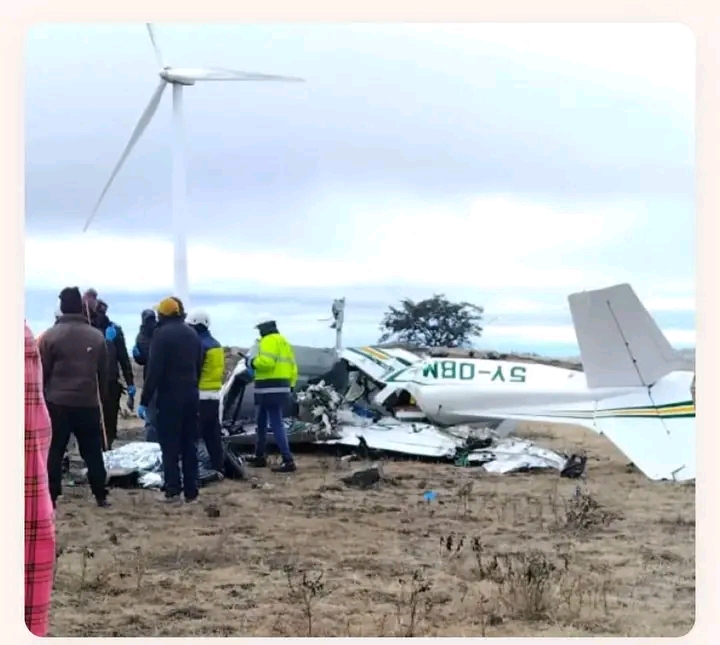
The fatal aircraft crash in Kipeto, Kajiado West, has left two people—a student pilot and a flight instructor—dead after the training aircraft went down near the Kipeto Wind Power Project. Preliminary reports have pointed to heavy morning mist and poor visibility as possible contributing factors
-
The inauguration of Kenya's counter-terrorism hotline on September 18, 2026, represents an effort to strengthen the connection between members of the public and security authorities. The new 0800 900 900 reporting line and accompanying online portal are intended to make it easier for Kenyans to shar