MURKOMEN URGES OPPOSITION TO RESPECT IEBC AND OTHER INDEPENDENT INSTITUTIONS AHEAD OF 2027 ELECTIONS
Interior Cabinet Secretary Kipchumba Murkomen has urged opposition leaders to respect the Independent Electoral and Boundaries Commission (IEBC) and other independent institutions as Kenya prepares for the 2027 General Election. Murkomen has cautioned political leaders against making statements and engaging in actions that could undermine public confidence in constitutional institutions, insisting that the electoral commission should be allowed to discharge its mandate independently and in accordance with the law. His remarks come amid growing disagreements between opposition leaders and the IEBC over electoral preparedness, transparency, presidential vote tallying and the management of the forthcoming elections. He has also called for responsible political engagement, warning against incitement, violence and activities that could threaten national stability as political campaigns gather momentum.
Interior Cabinet Secretary Kipchumba Murkomen has called on opposition leaders to respect the Independent Electoral and Boundaries Commission (IEBC) and other independent institutions, warning against actions and statements that could undermine public confidence in the country's democratic processes ahead of the 2027 General Election.
Murkomen accused some opposition leaders of making statements that could weaken confidence in the electoral commission, insisting that political actors must allow independent institutions to carry out their constitutional responsibilities without interference.
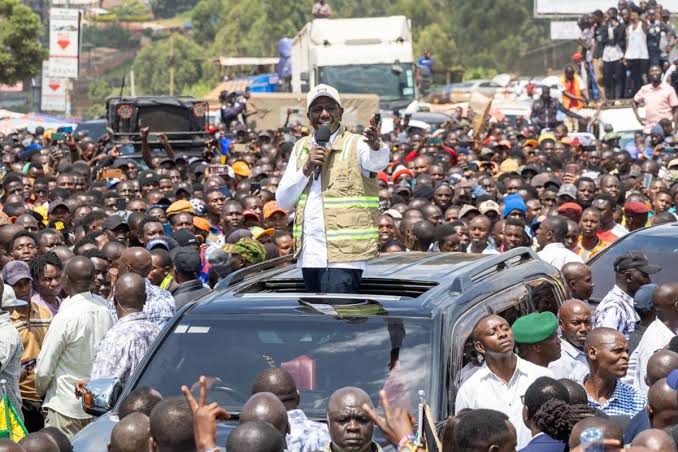
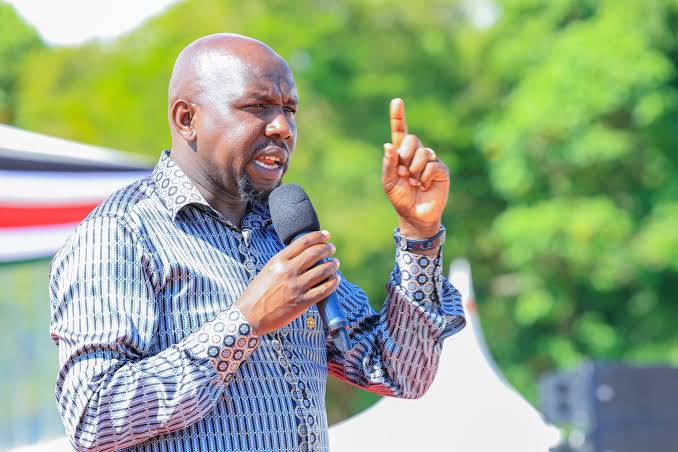
Speaking during an interdenominational church service in Marioshoni, Molo, Nakuru County, on Sunday, November 22, 2026, the Cabinet Secretary expressed concern over the growing political disagreements surrounding the management of the forthcoming General Election.
He maintained that the electoral process must be conducted in accordance with the Constitution and existing electoral laws, arguing that political leaders should avoid making demands that could compromise transparency in the counting, transmission and declaration of election results.
According to Murkomen, the IEBC must be allowed to undertake its responsibilities independently while ensuring that all stakeholders are given an opportunity to observe and participate in the electoral process as provided for by law.
His remarks come at a time when opposition leaders have intensified their criticism of the electoral commission, raising concerns about its preparedness, independence and ability to oversee a credible election in 2027.
The disagreement between the opposition and the electoral body has increasingly dominated political discussions following a consultative meeting held in Nairobi on Thursday, November 19, 2026.
The meeting brought together representatives of different political parties to discuss preparations for the next General Election and address concerns surrounding the electoral process.
However, the discussions ended without a full engagement after a section of opposition leaders walked out of the meeting, citing disagreements over their concerns and the manner in which the discussions were being conducted.
The opposition has continued to demand assurances that the electoral commission will operate independently and provide a transparent framework for managing the elections.
Among the issues raised by opposition leaders are the transmission and verification of election results, the credibility of the voter register, electoral technology and the need to strengthen public confidence in the commission.
The opposition has also called for safeguards to ensure that the electoral process is free from manipulation and that all political parties and candidates compete on a level playing field.
However, Murkomen has maintained that political leaders should respect the legal framework governing elections and allow the commission to execute its mandate without undue political pressure.
He questioned the opposition's position on the presidential tallying process, arguing that transparency requires an organised verification exercise involving relevant electoral stakeholders.
The Cabinet Secretary insisted that the counting and verification of presidential results must follow the procedures established under the Constitution and electoral laws.
He further maintained that results announced at individual polling stations form the foundation of the presidential election results, with the national tallying process providing the framework for verification and declaration.
The electoral process is governed by constitutional provisions that outline the responsibilities of election officials at different stages of voting, counting, transmission and declaration.
Under Kenya's electoral framework, votes are counted at polling stations, where candidates' agents and observers are allowed to witness the process.
The results are then transmitted through the established electoral systems and presented at the relevant tallying centres for verification and compilation.
The Constitution also gives the IEBC chairperson the responsibility of declaring the final results of a presidential election.
Murkomen has argued that these procedures must be respected by all political actors to avoid confusion and disagreements that could affect the credibility of the electoral process.
His comments also come against the backdrop of Kenya's history of disputed elections, which have at different times resulted in political tensions, legal challenges and concerns about national stability.
The 2007 General Election remains one of the most difficult periods in the country's political history, following widespread violence that claimed lives, displaced families and disrupted economic activities.
The 2017 presidential election also attracted significant attention after the Supreme Court nullified the initial presidential results over irregularities and illegalities in the electoral process.
These experiences have continued to influence discussions about electoral reforms, transparency and the importance of strengthening independent institutions.
As the country prepares for another General Election, political leaders have increasingly focused on the credibility of the electoral commission and the mechanisms that will be used to manage the presidential contest.
Murkomen has warned that disagreements surrounding electoral institutions should be addressed through established constitutional and legal channels rather than public statements or actions that could create unnecessary tension.
He also cautioned political leaders against exploiting ethnic differences for political advantage, warning that individuals found encouraging violence or inciting communities against one another would face legal consequences.
The Cabinet Secretary maintained that the government would not tolerate political activities that threaten peaceful coexistence or encourage hostility among different communities.
He urged security agencies to remain alert and take appropriate action against individuals involved in incitement, violence and activities that could threaten public order.
The warning comes as political mobilisation ahead of the 2027 General Election continues to intensify, with leaders from different political formations increasingly engaging in public campaigns and consultations.
Murkomen emphasised that political competition should take place within the boundaries of the law and that disagreements should not be allowed to threaten the country's stability.
He further called on leaders to exercise responsibility in their public statements, particularly when addressing issues involving electoral institutions and the security of the country.
Apart from the electoral concerns, the Cabinet Secretary addressed other security challenges affecting communities in Nakuru County and other parts of the country.
He announced that the government would intensify security operations targeting drug and substance abuse, criminal gangs and fraudulent land transactions.
Murkomen indicated that the government was concerned about criminal activities that continue to affect residents and undermine peaceful coexistence in different communities.
He maintained that security agencies would strengthen their operations to deal with individuals involved in criminal activities while ensuring that innocent members of the public are protected.
The Cabinet Secretary also warned against illegal land transactions and fraudulent activities that have left some residents exposed to financial losses and property disputes.
He urged Kenyans to exercise caution when engaging in land transactions and avoid selling their property under pressure or through questionable arrangements.
On police recruitment, Murkomen assured Kenyans that the forthcoming exercise would be conducted transparently and fairly, without favouritism or demands for money.
He said the recruitment process would be based on merit and that qualified applicants would be given an opportunity to join the National Police Service.
The Cabinet Secretary also indicated that minority communities would receive special consideration as part of efforts to promote inclusivity and equitable representation within the security sector.
His remarks come as thousands of young Kenyans prepare to participate in the upcoming police recruitment exercise, which is expected to attract applicants from different parts of the country.
The government has repeatedly faced concerns over corruption and irregularities during recruitment exercises, making transparency an important issue for prospective candidates.
Murkomen's assurance is therefore expected to attract attention from young people seeking employment opportunities within the National Police Service.
Meanwhile, the disagreement between the opposition and the IEBC is expected to remain a major issue in the country's political discussions as preparations for the 2027 General Election continue.
The electoral commission faces the responsibility of addressing concerns raised by political parties while demonstrating its readiness to conduct an election that meets constitutional requirements.
For the opposition, continued engagement with the commission remains important in seeking assurances about the credibility and transparency of the electoral process.
The government, on the other hand, has maintained that independent institutions should be allowed to perform their duties within the law without political interference.
The challenge will be finding common ground between the different stakeholders while ensuring that legitimate concerns about electoral preparedness are addressed through meaningful consultations.
Public confidence in the electoral process will also depend on the commission's ability to demonstrate transparency, accountability and fairness in the execution of its responsibilities.
As the 2027 General Election approaches, the conduct of political leaders, security agencies and electoral officials will remain under close public scrutiny.
Murkomen's latest remarks have therefore added to the growing debate over the relationship between political actors and independent institutions, with the Cabinet Secretary insisting that respect for constitutional offices and adherence to the law are essential for maintaining stability.

You Might Also Like
-
A heartbreaking incident has been reported in Morogo, Chemaner, Bomet East, where a middle-aged man identified as Nicholas Rop has been arrested over allegations that he killed his two children, aged four and seven, before attempting to take his own life. The suspect is accused of slitting the throa
-
Police have arrested a suspect accused of assaulting officers during Mashujaa Day celebrations at Githongo Stadium in Imenti Central, Meru County. The arrest follows an incident that reportedly disrupted the national celebrations, prompting security agencies to investigate the circumstances surround
-
People's Liberation Party (PLP) leader Martha Karua has called for mutual respect, unity and political tolerance among leaders within the United Opposition as preparations for the 2027 General Election gather momentum. Karua has insisted that every leader in the coalition has an equal opportunity to
-
President William Ruto has arrived in Oyo, Republic of the Congo, ahead of a high-level four-nation summit expected to bring together key African leaders, including Democratic Republic of Congo President Félix Tshisekedi. The meeting comes amid strained diplomatic relations between Nairobi and Kins
-
German Federal President Frank-Walter Steinmeier is expected to arrive in Kenya on November 25–26, 2026, for a two-day official visit that will include high-level bilateral talks with President William Ruto at State House. The visit is expected to strengthen diplomatic relations between Kenya and
-
President William Ruto has renewed his criticism of opposition leaders who walked out of a consultative meeting with the Independent Electoral and Boundaries Commission (IEBC), accusing them of transferring their frustrations over disagreements on who should lead their presidential campaign to the e