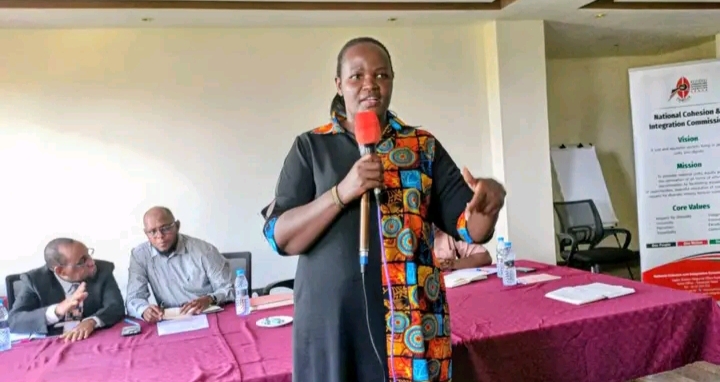
NCIC Calls on Kenyans to Unite for Peaceful 2027 Elections as Isiolo Stakeholders Discuss National Action Plan Against Hate Speech
The National Cohesion and Integration Commission's engagement with stakeholders in Isiolo County on the implementation of the National Action Plan Against Hate Speech is part of wider efforts to safeguard national unity ahead of the 2027 General Election. By bringing stakeholders together, NCIC is emphasising the need for cooperation in fighting hate speech, political intolerance, ethnic discrimination and misinformation. The commission wants Kenyans to understand that peaceful elections require collective responsibility from political leaders, government institutions, religious organisations, young people, women, the media and ordinary citizens. As the country prepares for another general election, the message remains that political differences should never destroy relationships among communities. Kenyans should exercise their democratic rights peacefully, respect one another and reject messages that encourage hatred or violence.
The National Cohesion and Integration Commission (NCIC) has called on Kenyans to work together in promoting national unity, peaceful coexistence and responsible political participation ahead of the 2027 General Election. The commission is intensifying its efforts to prevent hate speech, ethnic discrimination, political intolerance and election-related violence by engaging communities and different stakeholders across the country.
As part of these efforts, NCIC engaged stakeholders in Isiolo County on the implementation of Kenya's National Action Plan Against Hate Speech. The engagement brought attention to the importance of involving communities, government institutions, religious leaders, youth representatives, civil society organisations and other relevant groups in preventing messages and actions that could threaten peace during the coming election period.The commission's message is that peaceful elections cannot be achieved through the efforts of one institution alone. Political leaders, government agencies, community elders, religious organisations, the media and ordinary citizens all have a responsibility to ensure that political competition does not create divisions among Kenyans.
With the 2027 General Election approaching, NCIC is encouraging Kenyans to exercise their democratic rights while respecting people with different political opinions, ethnic backgrounds and religious beliefs. The commission wants citizens to understand that elections should provide an opportunity for people to choose their leaders peacefully rather than become a source of hatred, hostility and conflict.Isiolo is an important location for such discussions because the county brings together people from different ethnic, cultural and religious backgrounds. Promoting understanding and cooperation among these communities is essential in maintaining peaceful relationships.
NCIC wants community representatives to appreciate that political differences should not interfere with relationships between neighbours, families, business partners and people living in the same communities.
The commission is also encouraging stakeholders to establish strong communication channels through which concerns can be reported and addressed before they develop into serious disputes.Tackling Hate Speech Ahead of the 2027 General Election
One of the major issues receiving attention from NCIC is the increasing danger of hate speech during political activities.
Hate speech can take different forms, including statements that attack people because of their ethnic identity, racial background, religion or community. Such statements can create suspicion, encourage discrimination and contribute to hostility between groups.
During election periods, inflammatory political language can become particularly dangerous when politicians or their supporters use community identities to mobilise voters against others.NCIC is therefore encouraging political leaders to focus on development agendas, policies and leadership priorities instead of using divisive language.
The commission wants candidates and their supporters to understand that they can compete for political positions without insulting, threatening or discriminating against people supporting other political parties.
The National Action Plan Against Hate Speech provides a framework for coordinating efforts among different institutions to address the problem.
According to the published action plan, its priorities include supporting victims of hate speech, strengthening law enforcement, improving access to justice, promoting responsible media engagement and empowering social media users to communicate responsibly.
The plan also recognises the importance of involving women and young people in efforts to prevent hate speech and discrimination. Government administrators, security agencies and other public institutions have important responsibilities in identifying emerging tensions and responding to concerns raised by residents.
Community elders and religious leaders also play an important role because they have opportunities to interact with residents and influence discussions within their communities.
They can encourage peaceful dialogue, discourage inflammatory statements and help resolve misunderstandings before they develop into conflicts.
NCIC wants these leaders to become active partners in promoting unity and educating residents about the dangers of hate speech.
The commission's approach recognises that peacebuilding must begin within communities rather than waiting until violence or serious disagreements occur.Platforms such as Facebook, TikTok, WhatsApp, X and other digital communication channels have become important spaces for political discussions.
Although these platforms allow citizens to express their opinions and participate in public debates, they can also be misused to spread misleading information and messages that encourage hostility.
NCIC is encouraging Kenyans, particularly young people, bloggers, digital influencers and administrators of online groups, to use social media responsibly.
Citizens are being encouraged to verify information before sharing it, avoid circulating messages that attack particular communities and report content that appears to promote violence or discrimination.
The commission's wider election peace strategy also recognises digital communication as an important area requiring attention.Youth and Women Participation in Peacebuilding
Young people are among the important groups NCIC wants to involve in promoting peaceful elections.
The youth form a significant part of Kenya's population and participate actively in political discussions, campaigns and community activities.
However, political tensions can expose young people to manipulation, especially when individuals use financial incentives, misinformation or inflammatory messages to encourage hostility.
NCIC wants young people to understand that their future should not be placed at risk because of political disagreements.
They should participate in democratic activities peacefully, express their opinions freely and reject attempts to use them to promote violence.By involving these groups in community discussions, NCIC hopes to strengthen public participation and ensure that peace initiatives reflect the concerns of different sections of society.
NCIC's Uchaguzi Bila Noma Initiative
The Isiolo engagement also fits into the commission's wider preparations for the 2027 General Election under its second edition of the Roadmap to a Violence-Free 2027 General Election, known as Uchaguzi Bila Noma.
NCIC launched the roadmap on August 25, 2026, with the objective of preventing electoral violence, hate speech and political intolerance.
The initiative seeks to strengthen early warning and response mechanisms, promote responsible political leadership and improve cooperation among government agencies, security institutions, electoral bodies, political parties, civil society organisations and communities.The roadmap also identifies several factors that can contribute to election-related conflict, including ethnic mobilisation, political intolerance, misinformation, unemployment, historical grievances and organised criminal activities.
NCIC plans to strengthen community mediation, identify potential conflict hotspots, engage political leaders and increase monitoring of hate speech in public spaces and on social media.
The commission has also emphasised the importance of involving young people through dialogue forums, peace campaigns, sports activities and digital peacebuilding initiatives.
Through this initiative, NCIC wants Kenya to approach the next general election with stronger mechanisms for preventing conflict and addressing disagreements peacefully.Political intolerance remains an important concern as political parties and aspirants prepare for the 2027 elections.
NCIC wants political leaders to recognise that democracy allows citizens to support different candidates and parties without becoming enemies.
The commission is encouraging leaders to respect one another, avoid inflammatory statements and ensure their political activities do not threaten peaceful coexistence.
Political rallies, public meetings, funerals and other gatherings should not become platforms for spreading messages that divide communities.
Citizens should also be careful about the information they receive from political leaders and online platforms.
The commission's message is that political competition should be based on ideas, development priorities and the ability of candidates to present their agendas to voters.NCIC is calling on every Kenyan to take personal responsibility for protecting peace and national unity.
Peace should not be viewed as the responsibility of government officials and security agencies alone. Every citizen has a role to play in ensuring that disagreements are addressed through dialogue and lawful processes.
Community members should avoid spreading rumours, sharing inflammatory messages or encouraging hostility against people from different backgrounds.
Religious institutions, civil society organisations, community-based organisations and the media can also contribute by educating the public and promoting messages of tolerance.
The media, in particular, has an important responsibility during election periods. Responsible reporting can help citizens understand political developments without unnecessarily creating tension between communities.Looking Ahead to the 2027 General Election
As Kenya moves closer to the 2027 General Election, NCIC's engagement with stakeholders in Isiolo demonstrates the importance of taking early action against hate speech and political intolerance.
The commission wants the discussions on the National Action Plan to translate into practical activities at the community level.This includes strengthening public awareness, improving cooperation between institutions, encouraging peaceful political participation and ensuring that reports of hate speech are addressed through appropriate mechanisms.
The success of the initiative will depend on the willingness of stakeholders to work together and implement the commitments discussed during their engagements.
Isiolo residents and other Kenyans are being encouraged to maintain peaceful relationships regardless of their political, ethnic and religious differences.
The commission's wider strategy is to ensure that peacebuilding continues before, during and after the elections rather than being treated as an activity that only becomes important when political tensions emerge.

You Might Also Like
-
Kenya is moving closer to being declared Ebola-free following the recovery and discharge of all nine confirmed patients who tested positive for Bundibugyo Virus Disease. Health Cabinet Secretary Aden Duale has confirmed that the final 11 contacts also completed their mandatory 21-day monitoring peri
-
Kenyan tea farmers and exporters are expected to benefit from renewed business opportunities following Sudan’s decision to lift its ban on tea imports from Kenya. The move paves the way for the resumption of tea shipments to the Sudanese market, which has traditionally been an important destinatio
-
Kenya has made a major breakthrough in its fight against the Ebola virus after Health Cabinet Secretary Aden Duale announced that the last patient receiving treatment for the disease had been discharged from hospital. The announcement marks an important milestone in the country's efforts to contain
-
The destruction of two classrooms at the school in Tilito village, Kipkelion East Constituency, following heavy rainfall and strong winds has left residents concerned about the future of learning facilities in their community. The incident, which occurred on November 9, 2026, also affected the schoo
-
Prime cabinet secretary Musalia Mudavadi opens national forum on county public service boards.His call for merit-based recruitment, performance-based promotions, independent public service boards and proper wage-bill management highlights the need for stronger human resource systems across all 47 co
-
Deputy President Kithure Kindiki has officially commissioned the Sh52 million Rabai Huduma Centre in Kilifi County, in a move aimed at bringing essential government services closer to residents while creating new opportunities for young people. During the launch, Kindiki announced plans to equip the