PRESIDENT RUTO CALLS FOR REVIEW OF UNIVERSITY COURSES TO ENSURE RELEVANCE AND SOCIETAL IMPACT
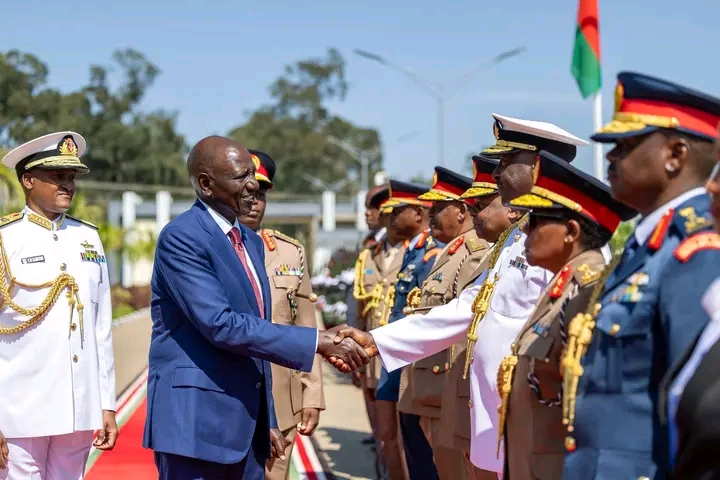
President William Ruto has called for regular reviews of academic programmes offered by universities in Kenya to ensure they remain relevant, effective and responsive to the country's changing needs. Speaking during the National Defence University-Kenya graduation ceremony in Lanet, Nakuru County, the President urged the Commission for University Education (CUE) to assess approved courses and establish their actual impact on society. He emphasised that universities should not focus solely on awarding degrees and certificates but must equip graduates with practical skills, knowledge and innovative abilities to address real-world challenges. Ruto noted that higher education institutions must continuously adapt their programmes to developments in technology, changing labour market demands and national development priorities. He further stressed the importance of strengthening research, innovation and practical learning to ensure that graduates can contribute meaningfully to Kenya's economic and social transformation. The proposed review is expected to place greater emphasis on the quality of university education, graduate employability and the relevance of academic qualifications in addressing the country's development needs.
President William Ruto has called for regular reviews of academic programmes offered by universities in Kenya, saying institutions must continuously assess whether their approved courses remain relevant, effective and responsive to the country’s changing needs. He said the review process should go beyond confirming that programmes have been accredited.
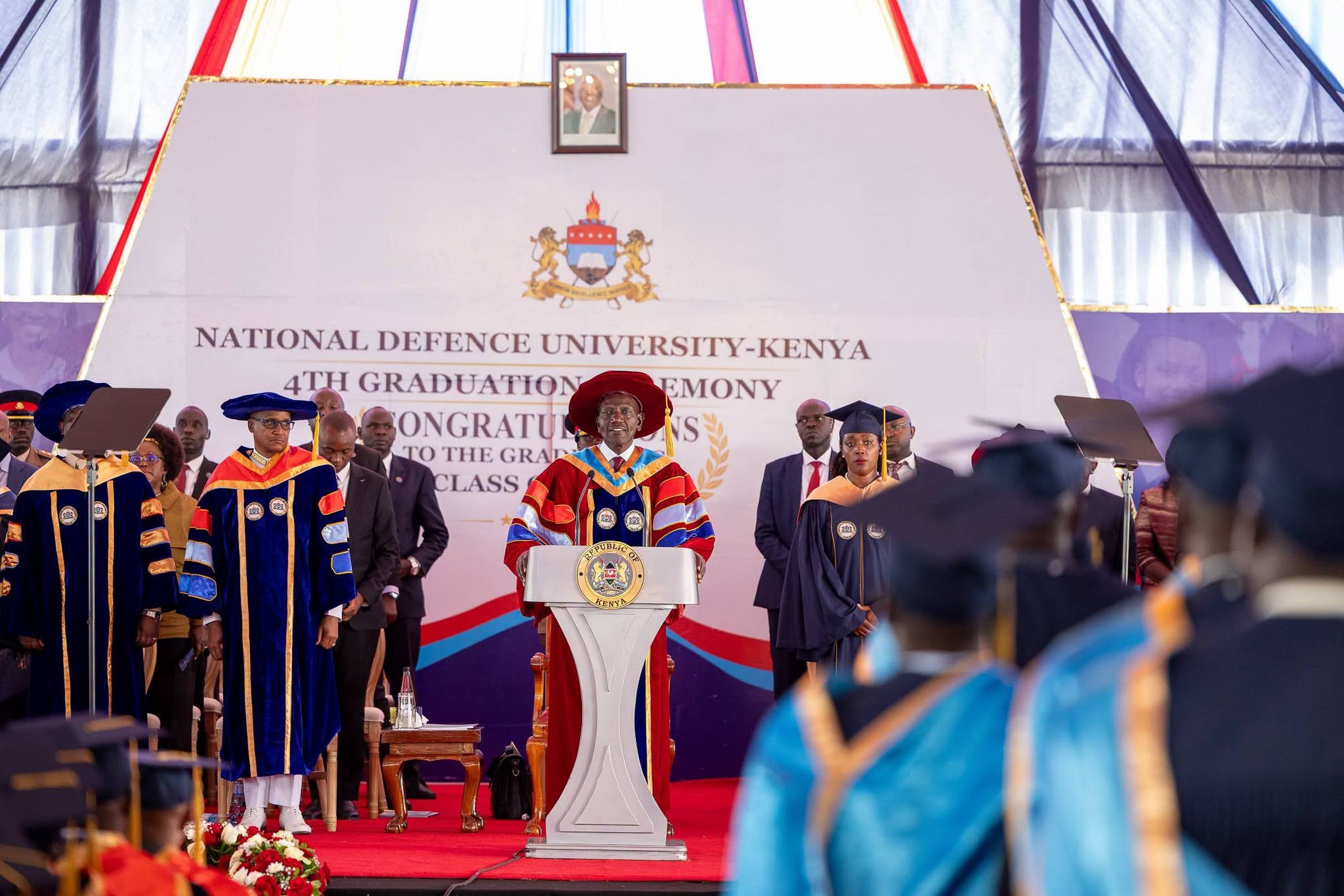
The President made the remarks on Thursday, November 26, 2026, during the fourth graduation ceremony of the National Defence University-Kenya at its campus in Lanet, Nakuru County. He challenged universities to examine the content and outcomes of their courses, noting that education institutions must keep pace with developments in technology, the labour market and the wider society.
Ruto said universities should regularly establish whether the programmes they offer are equipping students with knowledge and skills that can be applied to real challenges. He emphasised the need for more detailed assessments of approved courses so that the country can understand whether they are producing meaningful results beyond the awarding of academic qualifications.
During the ceremony, the Head of State directed the Commission for University Education (CUE) to undertake an immediate review of academic programmes offered by universities across the country. The commission is responsible for regulating university education and overseeing the accreditation of institutions and their academic programmes. The proposed exercise is expected to examine whether courses remain aligned with national development priorities, emerging technologies and the changing needs of employers.
The President’s remarks place renewed attention on the quality and relevance of university education at a time when Kenya’s higher education sector continues to expand. The country has 36 public and 33 private chartered universities, according to the commission’s latest register. The growth of the sector has widened opportunities for students to pursue degree programmes, but it has also increased the importance of ensuring that institutions maintain appropriate standards and offer courses that respond to current realities.
The review is also expected to raise questions about how universities measure the effectiveness of their programmes. The number of students enrolled, the qualifications awarded and the completion rates provide some indication of institutional performance, but they do not on their own show whether graduates can apply what they have learned. Assessments of a course may also need to consider practical competence, research output, innovation, professional readiness and the contribution graduates make in their workplaces and communities.
Graduate employability is among the issues adding urgency to the debate. A study by the Commission for University Education published in September 2026 found that graduates took an average of 11.6 months to secure their first job. Only 25.3 per cent found employment within six months of completing their studies, while 34.7 per cent took between six and 12 months. About four in every ten graduates spent more than a year looking for work.
The findings do not mean that university courses alone account for unemployment, since the availability of jobs and wider economic conditions also influence how quickly graduates enter employment. However, the study identified skills mismatch, limited work experience and a shortage of job opportunities among the challenges facing graduates. Employers also pointed to gaps in practical experience, communication, problem-solving and adaptability.
The findings underline the importance of ensuring that students do not leave university with theoretical knowledge alone. Graduates need opportunities to apply what they learn, develop professional judgement and understand the expectations of workplaces in their chosen fields. A course may cover important concepts, but students also need practical exercises, supervised placements, laboratory sessions, fieldwork or projects that demonstrate how those concepts are used.
The commission’s study recommended stronger internships, industrial attachments, work-integrated learning, laboratory training and project-based learning. It also called for such opportunities to be adequately supervised, sufficiently long and designed with input from employers. Closer links between universities and industry can help institutions understand the skills needed in different sectors and adjust their teaching accordingly.
The President also pointed to the speed at which knowledge and technology are changing. Developments in artificial intelligence, digital services, automation, cybersecurity and other fields are changing how people work and how organisations deliver services. Programmes that do not keep up with such changes risk preparing students for conditions that may no longer exist by the time they graduate.
Continuous curriculum improvement can help universities respond to these changes while preserving the academic foundations of their disciplines. The objective is not simply to add new subjects whenever a technology becomes popular, but to determine which developments are likely to have lasting significance and how students should be prepared to work with them responsibly.
The review is also connected to the government’s planned transition towards Competency-Based Education and Training in universities. The approach places emphasis on what learners can demonstrate they know and are able to do, rather than relying only on the completion of prescribed academic content. It places greater attention on applied skills, learning outcomes and the ability to use knowledge in practical settings.
In September 2026, the Ministry of Education invited consultants to assess the progress made by public and private universities in adopting the framework. One assessment is expected to examine whether courses have appropriate learning outcomes, practical training components and skills relevant to industry, as well as identify changes needed to support the transition. Another is intended to review implementation, including lecturers’ preparedness and the infrastructure available to support the approach.
The new review directed by the President is expected to add to scrutiny of university programmes, although the precise scope, implementation arrangements and timetable had not been announced at the time of his remarks. The Commission for University Education will be central to the process because of its regulatory role, but the practical impact will depend on how the findings are translated into decisions by universities and other education stakeholders.
For students and parents, the relevance of a course is an important consideration when choosing where and what to study. They invest time and resources in the expectation that higher education will provide knowledge, professional opportunities and the ability to contribute to society. Transparent information about programme content, accreditation, practical training and graduate outcomes can help them make informed decisions.
Universities, meanwhile, face the responsibility of balancing academic depth with practical relevance. Higher education should not be reduced to short-term job training alone. Institutions also have a role in developing critical thinking, research skills, ethical judgement, creativity and the ability to understand complex social and economic issues. These capabilities are important across professions, including fields where the exact jobs of the future may not yet be clear.
The assessment of programmes should therefore consider both immediate labour-market requirements and the broader role of universities in national development. Courses in agriculture, health, engineering, education, security, business and the sciences, for example, can contribute to solving challenges when students are equipped to apply their knowledge and when research is connected to the needs of communities and industries.
The broader challenge is to ensure that all universities, regardless of their size or specialisation, maintain strong academic standards while responding to the needs of the people they serve. A meaningful review should be able to identify programmes that are working well, those that need improvement and areas where institutions may need additional teaching staff, facilities, laboratories or partnerships.
It should also provide clarity on how quality will be measured and how universities will be supported to make necessary changes. If reviews identify gaps in practical training, for instance, institutions may need stronger links with employers and access to facilities where students can gain relevant experience. If course content is outdated, departments may need to revise curricula and ensure lecturers receive appropriate professional development.
Ruto’s directive has placed the relevance and impact of university programmes firmly on the national education agenda. The central issue is whether the courses offered by higher education institutions are equipping graduates to respond to changing professional demands while contributing to Kenya’s social and economic development.

You Might Also Like
-
A Nakuru court has found two Kenya Wildlife Service (KWS) officers guilty of abducting fisherman Brian Odhiambo, who went missing on January 18, 2025, near Lake Nakuru National Park. The ruling marks a significant development in a case that has raised concerns about the conduct of security officers,
-
Democracy for the Citizens Party (DCP) Leader Rigathi Gachagua has warned IEBC Chairperson Erastus Ethekon against presiding over an election marred by irregularities, insisting that Kenyans are determined to have a transparent, free and fair 2027 General Election. Gachagua maintained that there wou
-
President William Ruto on Thursday, November 26, 2026, presided over the fourth graduation ceremony at the National Defence University-Kenya in Lanet, Nakuru County, where he announced major initiatives aimed at strengthening national security, research and higher education. The President committed
-
The National Transport and Safety Authority (NTSA) has announced plans to suspend approximately 300,000 driving licences within seven days over unpaid traffic fines, giving affected motorists a limited period to clear their outstanding penalties and avoid losing their driving privileges. The planned
-
Energy and Petroleum Cabinet Secretary Opiyo Wandayi's appearance at the KenGen Sustainable Energy Conference in Olkaria on November 26, 2026, has highlighted the government's ambition to expand Kenya's energy industry. His announcement that KenGen could participate in oil drilling in the South Loki
-
Deputy President Kithure Kindiki has chaired a meeting of the United Democratic Alliance (UDA) National Steering Committee at Hustler Plaza in Nairobi to assess the party's preparedness for the 2027 General Election. The Thursday, November 26, 2026, meeting focused on strengthening party structures,