



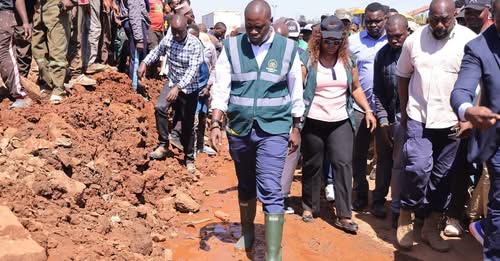
Sakaja Gives Contractors 14 Days to Complete Nairobi Flood-Control Works
Nairobi Governor Johnson Sakaja has given contractors 14 days to complete flood-control projects, as the county steps up efforts to improve drainage and tackle flooding across the city.
Nairobi Governor Johnson Sakaja has given contractors 14 days to complete ongoing flood-control works across the capital, as the county government intensifies efforts to improve drainage and reduce the impact of flooding in different parts of the city.
The directive places contractors working on the ongoing projects under a strict deadline, with the county administration expected to monitor progress and ensure that the works are completed within the set period.
Flooding remains a recurring challenge in Nairobi, particularly during periods of heavy rainfall. Blocked drainage channels, inadequate storm-water infrastructure, construction activities and the rapid expansion of built-up areas have contributed to water accumulation in several parts of the city.
The county government has therefore been implementing various measures aimed at improving drainage and managing storm water.
Governor Sakaja's latest directive is intended to accelerate those efforts and ensure that ongoing works are not delayed.
Contractors Given Two Weeks
Under the directive, contractors have been given 14 days to complete the flood-control works assigned to them.
The deadline is expected to push contractors to increase the pace of construction and address outstanding works without further delays.
The county government is also expected to monitor the projects to determine whether contractors are meeting the required standards and timelines.
The governor's directive places emphasis on timely completion, particularly for projects considered important in areas vulnerable to flooding.
For residents, the completion of the works is expected to improve drainage and reduce the disruption caused by flooding during heavy rains.
Nairobi's Flooding Challenge
Nairobi has experienced repeated flooding during periods of intense rainfall, affecting homes, businesses, roads and public facilities.
In some cases, floodwaters have disrupted transport and made it difficult for residents to move around the city.
Businesses located in flood-prone areas have also faced losses when water enters commercial premises or damages goods and equipment.
Residential areas have similarly experienced challenges where drainage systems are unable to handle large volumes of storm water.
The problem is not limited to one part of the city, with different neighbourhoods experiencing flooding depending on rainfall levels, drainage capacity and the condition of local infrastructure.
Importance of Drainage Infrastructure
Effective drainage infrastructure plays an important role in managing rainwater in a growing city such as Nairobi.
Drainage channels, culverts, storm-water drains and other flood-control structures help direct water away from roads, homes and commercial areas.
When such infrastructure is blocked, damaged or insufficient, rainwater can quickly accumulate and cause flooding.
The county government's ongoing works are therefore intended to strengthen the city's ability to manage storm water.
Completing the projects on time will be important, particularly as the city continues to experience periods of heavy rainfall.
Governor Sakaja's Directive
Governor Sakaja's 14-day deadline signals increased pressure on contractors to deliver the projects within the agreed timelines.
The county administration has previously faced public pressure over the condition of roads, drainage systems and other urban infrastructure.
By setting a specific deadline, the governor is seeking to ensure that contractors remain focused on completing the works rather than allowing projects to continue indefinitely.
The effectiveness of the directive will depend on whether the contractors are able to complete the works within the 14-day period and whether the completed infrastructure performs as intended.
Impact on Residents
Residents in flood-prone areas are among those expected to benefit from improved flood-control infrastructure.
Better drainage could reduce the amount of water accumulating on roads and residential areas during heavy rains.
For motorists, improved drainage could also reduce disruptions caused by flooded roads.
Pedestrians and public transport users may similarly benefit from safer and more accessible roads and walkways.
Businesses could also benefit if flooding incidents become less frequent or less severe.
However, the extent of the impact will depend on the quality, location and capacity of the completed projects.
Need for Proper Maintenance
While construction and rehabilitation of drainage infrastructure are important, regular maintenance is also essential.
Drainage systems can become blocked by garbage, soil and other materials, reducing their ability to carry storm water.
The county government has repeatedly urged residents to avoid dumping waste in drainage channels and other public spaces.
Keeping drainage systems clear can help improve their effectiveness during heavy rainfall.
Residents also have a role to play by reporting blocked drains and other drainage problems to the relevant authorities.
Contractors and Accountability
The 14-day deadline also raises questions about accountability in the implementation of county projects.
Contractors are expected to complete projects according to agreed specifications and timelines.
Where projects are delayed, authorities can face pressure from residents who expect public resources to deliver visible results.
Monitoring construction work is therefore important to ensure that projects are completed properly and that public funds are used for their intended purposes.
The county government will need to assess both the speed and quality of the works before declaring them complete.
Managing Urban Growth
Nairobi's rapid population growth and expansion have increased pressure on urban infrastructure.
More buildings, roads and paved surfaces mean that less rainwater can naturally soak into the ground.
During heavy rainfall, large volumes of water can therefore flow quickly into drainage systems.
Where drainage infrastructure has not expanded at the same pace as development, flooding can become more frequent.
Long-term flood management therefore requires a combination of infrastructure development, proper urban planning, environmental protection and regular maintenance.
Beyond the 14-Day Deadline
Although the governor has given contractors 14 days, flood management is unlikely to be solved through a single round of construction works.
Nairobi will continue to require investment in drainage infrastructure as the city expands.
Existing drainage systems will also need regular inspection, maintenance and rehabilitation.
The county government may also need to identify areas that require larger flood-control projects, particularly locations that repeatedly experience flooding.
Coordination between county agencies, national government institutions, contractors and residents can also help improve the city's response to flooding.
Public Cooperation
Residents can contribute to flood prevention by keeping drainage channels free from waste.
Improper disposal of plastic bags, bottles, construction debris and other materials can block drains and prevent water from flowing freely.
Public awareness and enforcement against illegal dumping can therefore complement infrastructure projects.
Residents in flood-prone areas can also take precautions during heavy rainfall and follow official safety guidance where necessary.
Looking Ahead
The next 14 days will provide an important test for the contractors handling the ongoing flood-control projects.
The county government will be expected to monitor progress and ensure that the deadline is respected.
Residents will also be watching to see whether the completed works lead to noticeable improvements in areas that have experienced repeated flooding.
The success of the projects will ultimately depend not only on completing them within the deadline but also on whether they are properly designed, constructed and maintained.
For Nairobi, improving flood management remains an important part of strengthening urban infrastructure and protecting residents, businesses and public facilities.
Conclusion
Nairobi Governor Johnson Sakaja has given contractors 14 days to complete ongoing flood-control works across the city, as the county government seeks to improve drainage and reduce the effects of flooding.
The directive is aimed at accelerating projects intended to improve storm-water management and protect vulnerable areas.
With flooding continuing to pose challenges during periods of heavy rainfall, the completion and maintenance of drainage infrastructure will remain important to Nairobi's development.
The focus will now shift to the contractors and the county government to ensure that the works are delivered within the set timeframe and meet the required standards.

You Might Also Like
-
Public Service Cabinet Secretary Geoffrey Ruku represented President William Ruto at the NYS passing-out parade at the Paramilitary Academy in Gilgil on October 2, 2026, where 15,363 recruits from the 01/2026 cohort graduated after six months of intensive training. The class included 11,527 men, 3,8
-
Rigathi Gachagua has arrived in Boston, Massachusetts, as he enters the final phase of his extensive United States tour, where he is engaging Kenyans in the diaspora on matters of national development, investment, leadership and Kenya’s political future. Accompanied by his wife, Pastor Dorcas Riga
-
Deputy President Kithure Kindiki's announcement in Kiambu on October 2, 2026, signals a renewed phase in the government's campaign against illicit and harmful alcoholic drinks. The fresh inspections will target alcohol manufacturing premises to determine whether they comply with health, safety, qual
-
Kenya has begun preparations to host the 2029 World Athletics Championships, with World Athletics official Pierce O’Callaghan inspecting Kasarani, Nyayo and Ulinzi Sports Complex to guide infrastructure upgrades ahead of the global event.
-
President William Ruto on October 2, 2026, presided over the issuance of about 5,000 title deeds to residents of Mombasa County at the Mama Ngina Drive Grounds, as part of a wider government programme aimed at resolving longstanding land ownership and squatter problems at the Coast. The Mombasa issu
-
Counter-protests erupted outside Standard Group headquarters after pro-government supporters demonstrated over the media house’s coverage of President Ruto’s administration, drawing a response from human rights activists.