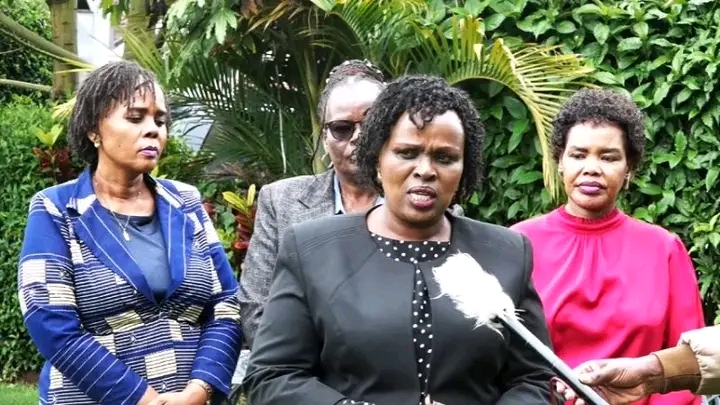
Women Deputy Governors Demand Urgent Security Protection as Female Aspirants Face Political Intimidation Ahead of 2027 Elections
They want the government, security agencies, political parties and civil society organisations to work together to protect female aspirants and ensure that women have equal opportunities to compete for leadership positions. Their concerns, alongside complaints raised by women aspirants in Kisumu and other parts of the country, have placed the safety and representation of women at the centre of discussions about the next general election. As the country prepares for 2027, the key question is whether the relevant institutions will translate constitutional guarantees into practical protection for women seeking leadership.
The women leaders argue that political intimidation is becoming a major obstacle to women's participation in leadership, with some female aspirants allegedly facing threats and hostility from individuals who oppose their political ambitions. They have warned that unless urgent measures are taken, the situation could discourage qualified women from contesting various political seats in the next general election.
The concerns were raised during a two-day Leadership Legacy Workshop held in Nanyuki, Laikipia County, where women deputy governors discussed challenges affecting their participation in leadership and the need to strengthen women's representation in government.
Among those who participated in the discussions were Elgeyo Marakwet Deputy Governor Professor Grace Cheserek, Kilifi Deputy Governor Flora Mbetsa, Bungoma Deputy Governor Janepher Chemutai and Trans Nzoia Deputy Governor Bineah Kapkory.
The leaders called upon the government, security agencies, political parties, civil society organisations and other stakeholders to work together to create a safe political environment for women.According to her, women should not be forced to choose between pursuing their leadership ambitions and protecting their personal safety.
She emphasised that security agencies and other relevant institutions must take threats against female politicians seriously and respond before situations escalate into physical violence.
Her concerns reflect a wider discussion about the safety of women in Kenyan politics, particularly as political parties and potential candidates begin preparing for the next general election.The incident highlighted concerns about the working relationships between governors and their deputies, particularly where women occupy the deputy governor's office.
Cheserek's concerns went beyond disagreements within county leadership. She argued that women holding political offices and those seeking elective positions deserve dignity, respect and protection.
She maintained that political leadership should not become an environment where women are subjected to humiliation or intimidation simply because they want to exercise their constitutional rights.
Her appeal for security protection also comes at a time when women are increasingly expressing interest in competing for gubernatorial, parliamentary, senatorial, woman representative and county assembly positions.Mbetsa explained that deputy governors are not competitors to governors but constitutional partners who should work together to promote development and improve service delivery.
She emphasised that governors and their deputies should concentrate on fulfilling the responsibilities given to them by residents instead of engaging in unnecessary disagreements.
According to Mbetsa, cooperation between the two offices is important because county governments have responsibilities involving healthcare, roads, water, education-related programmes and other development priorities.
She called for an environment where deputy governors are allowed to contribute their ideas, experience and leadership abilities.Bineah Kapkory Condemns Intimidation Against Women
Trans Nzoia Deputy Governor Bineah Kapkory also raised concerns about the treatment of women in political leadership.
She urged governors and other political leaders to recognise the abilities of their deputies and give them opportunities to contribute meaningfully to county development.Kapkory warned that strained relationships between governors and their deputies could deny residents the benefits of having experienced leaders working together.
She also appealed to individuals involved in violence against women seeking elective positions to stop the practice.
According to her, women already face several challenges when entering competitive political environments, and additional intimidation makes it even harder for them to participate.
She maintained that political leaders should encourage women to seek elective positions instead of allowing threats and violence to undermine their ambitions.
The deputy governor's message was that women deserve an equal opportunity to demonstrate their leadership abilities and contribute to decision-making processes.Bungoma Deputy Governor Janepher Chemutai also emphasised the importance of respect between governors and their deputies.
She argued that public disagreements and personal attacks between leaders occupying constitutional offices can undermine the dignity of those institutions.
Chemutai observed that residents elect leaders with expectations that they will work together to deliver development and improve people's lives.
She expressed concern that unnecessary disagreements among county leaders can shift attention away from service delivery.
Her remarks reinforced the position that governors and their deputies should work as one leadership team.
The women leaders collectively called for an environment where political disagreements are handled through dialogue rather than humiliation, intimidation or hostility.These included physical and verbal abuse, sexual violence, voter-related intimidation and attempts to undermine women candidates by questioning their leadership abilities.
Such experiences have raised concerns about whether women can participate in elections on equal terms with men.
The challenge is not limited to physical attacks. Online platforms have also become spaces where female politicians face insults, threats, harassment and attacks targeting their personal lives.
In some cases, women candidates are subjected to comments about their marital status, appearance, family backgrounds and personal relationships instead of having their political ideas and development agendas discussed.
These practices can affect their confidence, public engagement and ability to communicate with voters.Similar concerns have recently emerged in Kisumu County, where women seeking elective positions have raised alarm over alleged political violence, intimidation, voter bribery and sexual harassment.
On November 12, 2026, women aspirants led by Kisumu Woman Representative aspirant Linda Ogweno issued concerns about the political environment ahead of the 2027 General Election.
They alleged that groups operating under names such as Mbogis, Chude Chude, Sangwenya and Security Boys were contributing to fear and intimidation during political activities.
The aspirants also raised concerns about the alleged use of organised groups to threaten political opponents, particularly women expressing different political opinions.
They further highlighted the growing problem of online harassment, including doxxing, coordinated attacks and the non-consensual sharing of images.According to the aspirants, some women are allegedly promised alternative appointments if they abandon their ambitions.
They want political parties to introduce transparent nomination procedures that provide women with equal opportunities to compete.
Representatives of FIDA-Kenya, the Independent Electoral and Boundaries Commission (IEBC), the Office of the Registrar of Political Parties, the National Cohesion and Integration Commission (NCIC) and the National Gender and Equality Commission were among stakeholders involved in the engagement.
These developments demonstrate that concerns about women's political participation extend beyond individual counties.The Two-Thirds Gender Principle
Another major issue raised by the women deputy governors is the implementation of the constitutional two-thirds gender principle.
Article 27(8) of the Constitution of Kenya provides that the State shall take legislative and other measures to ensure that no more than two-thirds of members of elective or appointive bodies are of the same gender. The principle is intended to promote equality and ensure that women have meaningful opportunities to participate in leadership and decision-making.
However, its implementation in elective political positions has remained a major challenge.
Women leaders argue that encouraging women to contest elections is not enough if the political environment does not protect them from intimidation and discrimination.
They want the government to take practical steps to ensure that women can participate in elections without facing threats, violence or unfair treatment.
The leaders believe that stronger implementation of gender equality provisions would help increase women's participation in Parliament, county assemblies and other leadership positions.Women should not be forced to withdraw from political contests because of threats or pressure from influential individuals.
The parties should also ensure that their members respect political opponents and avoid using abusive language or organised groups to disrupt political activities.
Fair nominations would allow voters to choose candidates based on their leadership records, development agendas and ability to represent communities.
The leaders believe that political competition should be based on ideas and policies rather than intimidation and personal attacks.They argue that the responsibility of protecting candidates should not be left to individuals who may lack the financial resources to hire private security teams.
Police officers and other relevant institutions should respond to reports of threats, investigate allegations of violence and ensure that individuals found responsible are held accountable under the law.
There should also be accessible reporting mechanisms through which female candidates can report harassment without fear of retaliation.
The leaders want security agencies to work closely with electoral institutions and organisations supporting women's rights to monitor emerging threats.
Preventive measures are particularly important because political violence can escalate when complaints are ignored.Campaigning requires resources for transport, communication, mobilisation, meetings and other activities.
When women are forced to spend additional money on personal security, their campaign budgets can become even more difficult to manage.
Women also face negative stereotypes that question their ability to occupy senior leadership positions.
Some are judged based on their personal lives rather than their professional experience, leadership records and development plans.
Such attitudes can discourage qualified women from seeking public office.
A March 2026 report highlighted the experiences of female aspirants Faith Lukosi and Julia Chege, who described receiving online abuse and threats connected to their political ambitions.They argue that a democratic election should allow every qualified citizen to exercise their constitutional rights regardless of gender.
They also want women to have opportunities to participate in political discussions, campaign meetings, nominations and other electoral activities without fear.
The debate is not only about the safety of women candidates but also about the quality of democratic participation and representation in the country.
When women are intimidated out of political contests, communities may lose the opportunity to benefit from their leadership experience and ideas.
The deputy governors have therefore called on all stakeholders to take responsibility for ensuring that political activities remain peaceful and inclusive.

You Might Also Like
-
The appearance of lawyer Abshir Ahmedsadak Abdi before the Milimani High Court on November 13, 2026, marks a significant development following his 11-day disappearance and subsequent discovery in Marsabit County. His return alive has brought relief to his family, colleagues and Kenyans who had foll
-
The presence of Principal Secretary John Ololtuaa during the distribution of KNEC examination materials in Narok Central Sub-County highlighted the government's continued involvement in ensuring the smooth administration of national examinations. Ololtuaa expressed satisfaction with the increase in
-
The collapse of the eight-storey building near the SGR terminus in Mlolongo along the Nairobi-Mombasa highway is another painful tragedy for Kenya, with six people confirmed dead and survivors rushed to hospital. The incident has renewed concerns about construction safety, regulatory supervision an
-
The warning against political incitement during the Maa Cultural and Tourism Festival in Narok is an important message as Kenya approaches the 2027 General Election. Governor Patrick Ole Ntutu has called on politicians and other participants to put aside their political differences and focus on cel
-
The call for more promotion opportunities was among the major issues surrounding the gathering, with school heads highlighting the importance of recognising teachers' experience, dedication and professional contributions. President William Ruto's announcement that 50,000 teachers would be promoted
-
The Catholic bishops' decision to prohibit politicians from making political addresses in Catholic churches marks an important intervention in Kenya's preparations for the 2027 General Election. Through the Kenya Conference of Catholic Bishops, the religious leaders have directed priests nationwide