Six People Killed as Eight-Storey Building Collapses Along Mombasa Road, Raising Fresh Concerns Over Construction Safety
The collapse of the eight-storey building near the SGR terminus in Mlolongo along the Nairobi-Mombasa highway is another painful tragedy for Kenya, with six people confirmed dead and survivors rushed to hospital. The incident has renewed concerns about construction safety, regulatory supervision and the responsibility of developers to ensure that buildings are structurally sound. As rescue and recovery efforts continue, the immediate priority remains accounting for everyone who may have been affected and supporting the victims and their families. Authorities must also establish the exact cause of the collapse and take appropriate action based on the findings.
Tragedy has struck the Mombasa Road corridor after an eight-storey building under construction collapsed near the Standard Gauge Railway (SGR) terminus in Mlolongo, leaving at least six people dead and several others injured. The incident, which occurred on Friday, November 13, 2026, has renewed concerns about construction safety, supervision of building projects and the enforcement of regulations governing the construction industry in Kenya.
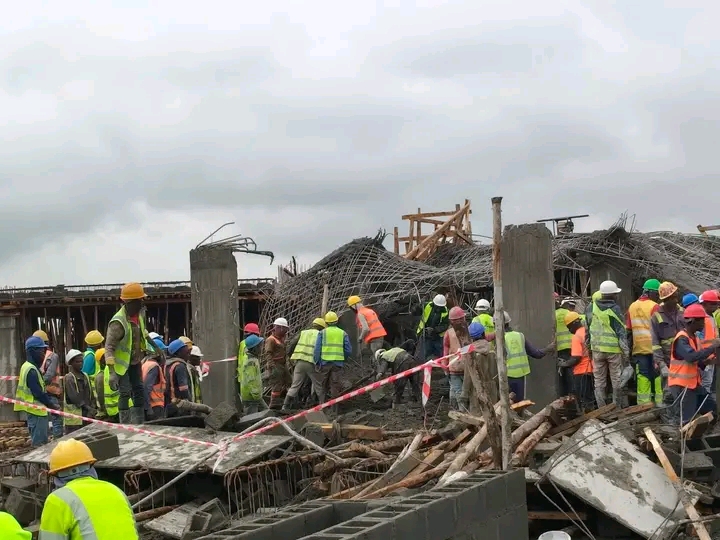
The heartbreaking incident happened in the morning at approximately 9:52 a.m., when the building suddenly came crashing down, trapping workers and other people beneath tonnes of concrete, steel and construction materials. The collapse triggered an emergency response, with rescue teams rushing to the scene to search for survivors and assist those who had been caught in the disaster.
According to reports , six people lost their lives following the collapse. The Kenya Red Cross also confirmed that survivors had been rescued and taken to hospital for medical attention. The incident happened during normal working hours, raising fears that several construction workers and other people could have been inside or around the building when it collapsed.
The exact circumstances leading to the disaster had not been established in the initial reports. However, the sudden nature of the collapse created an urgent need for emergency responders to establish whether anyone remained trapped beneath the debris.
Witnesses and members of the public were left shocked as the rescue operation began, with emergency personnel working to access sections of the collapsed structure.The victims were caught up in the disaster, with the falling structure leaving little opportunity for people inside the affected area to escape.
The loss of six lives has also raised concerns about the safety of construction workers, who often operate in environments where heavy machinery, unfinished structures and construction materials can present serious risks.
Families and relatives of those affected are facing an extremely difficult period as they come to terms with the loss of their loved ones.
At the same time, authorities and emergency responders have been required to coordinate rescue and recovery activities while establishing the full extent of the tragedy.Following the collapse, emergency response teams were deployed to the scene to conduct search-and-rescue operations.
The Kenya Red Cross was among the organisations involved in responding to the emergency. Its teams worked to support the rescue effort and provide assistance to people affected by the incident.
According to the information reported by Reuters, at least three people were rescued from the collapsed building and rushed to hospital for treatment. Other reports indicated that additional workers had been pulled from the rubble.
The rescue operation involved dealing with a dangerous environment because the collapsed structure left behind heavy concrete slabs, steel bars and other construction materials.
Rescuers had to work carefully to avoid exposing themselves and other trapped individuals to further danger. Removing debris without causing additional structural movement is particularly important during building-collapse emergencies.For families receiving news of a building collapse, the first concern is usually whether their loved ones managed to escape or were trapped beneath the debris.
The situation becomes even more painful when communication is difficult and information about the people who were at the site is incomplete.
Relatives of workers may have to contact colleagues, hospitals and emergency response agencies to establish whether their loved ones are among those rescued or victims of the tragedy.
The loss of six lives has also created an urgent need for proper identification procedures and communication with affected families.
Authorities should ensure that families receive accurate information and appropriate support during the difficult period.These incidents have raised questions about whether construction projects are being properly supervised and whether developers comply with approved building plans.
A building is expected to meet established engineering standards before and during construction. Its foundation, columns, beams, reinforcement materials and other structural components must be designed to support the expected weight and forces.
Construction work also requires qualified professionals who understand structural engineering and the technical requirements of safe building development.
When these requirements are ignored, the consequences can be devastating.
The National Construction Authority (NCA) plays an important role in regulating the construction industry, including registering contractors and overseeing compliance with applicable construction standards.The incident triggered a prolonged rescue and recovery operation involving several emergency response agencies, including the Kenya Defence Forces, the National Disaster Management Unit, Nairobi County officials and the Kenya Red Cross.
On November 5, authorities confirmed that the death toll from the Eastleigh tragedy had reached eight after additional bodies were recovered from the rubble. Four people had been rescued alive.
The Eastleigh tragedy raised serious concerns about construction approvals, structural safety and the enforcement of building regulations.
Nairobi Governor Johnson Sakaja had questioned the legality of the collapsed development, saying that the building lacked the necessary county construction approvals.
The incident also attracted attention because businesses were operating on some of the completed floors while construction continued on the upper sections.They will also need to establish whether the project had the necessary approvals and whether qualified professionals were responsible for supervising the work.
Possible structural issues that investigators may examine include:
Whether the foundation was designed to support the building's weight.
Whether the concrete and steel reinforcement met the required standards.
Whether the structural columns and beams were properly constructed.
Whether the construction followed the approved architectural and engineering plans.
Whether there were warning signs of structural weakness before the collapse.
Whether appropriate safety measures were maintained at the construction site.The government should strengthen inspections at construction sites and ensure that developers follow approved building designs.
The National Construction Authority and county governments should also ensure that construction projects are monitored throughout the building process rather than relying entirely on approvals issued before construction begins.
There is also a need to ensure that contractors and professionals responsible for construction projects meet the required qualifications.Construction workers who survive such incidents may suffer injuries that affect their ability to continue working. Some may require prolonged medical treatment, rehabilitation and financial assistance.
Families who depended on the deceased for their daily needs may also experience serious financial difficulties.
The tragedy could affect businesses and other activities around the affected location, particularly if authorities restrict access while rescue operations and investigations continue.
Mombasa Road is an important transport corridor, connecting Nairobi with the coastal region and serving thousands of motorists and commercial transport operators.
Any emergency operation that requires traffic restrictions or road diversions could therefore affect movement around the affected area.
Authorities and motorists should follow instructions from emergency personnel to ensure that rescue teams have sufficient space to operate.The latest disaster has also highlighted the importance of protecting people working in the construction industry.
Construction workers contribute significantly to Kenya's development through the construction of homes, roads, commercial buildings and other important infrastructure.
However, their work exposes them to various occupational hazards, including falling objects, structural failures, machinery accidents and unsafe working conditions.
Employers and contractors have a responsibility to provide safe working environments and ensure that workers receive appropriate training and protective equipment.
Construction sites should also have emergency preparedness plans to guide workers in case of unexpected incidents.
Workers should be encouraged to report visible cracks, unusual structural movements and other warning signs without fear of losing their jobs.What Kenyans Expect Following the Collapse
Following the deaths of six people, Kenyans will be looking to the relevant authorities for answers.
The public expects a transparent investigation that establishes what happened, identifies any regulatory failures and determines whether negligence contributed to the disaster.
There are also calls for authorities to examine other buildings under construction to establish whether they comply with the required safety standards.
Such inspections could help identify dangerous structures before they collapse and put more lives at risk.
The government should also ensure that affected families receive the necessary assistance and that survivors are provided with appropriate medical attention.

You Might Also Like
-
The appearance of lawyer Abshir Ahmedsadak Abdi before the Milimani High Court on November 13, 2026, marks a significant development following his 11-day disappearance and subsequent discovery in Marsabit County. His return alive has brought relief to his family, colleagues and Kenyans who had foll
-
The presence of Principal Secretary John Ololtuaa during the distribution of KNEC examination materials in Narok Central Sub-County highlighted the government's continued involvement in ensuring the smooth administration of national examinations. Ololtuaa expressed satisfaction with the increase in
-
The warning against political incitement during the Maa Cultural and Tourism Festival in Narok is an important message as Kenya approaches the 2027 General Election. Governor Patrick Ole Ntutu has called on politicians and other participants to put aside their political differences and focus on cel
-
The call for more promotion opportunities was among the major issues surrounding the gathering, with school heads highlighting the importance of recognising teachers' experience, dedication and professional contributions. President William Ruto's announcement that 50,000 teachers would be promoted
-
The Catholic bishops' decision to prohibit politicians from making political addresses in Catholic churches marks an important intervention in Kenya's preparations for the 2027 General Election. Through the Kenya Conference of Catholic Bishops, the religious leaders have directed priests nationwide
-
They want the government, security agencies, political parties and civil society organisations to work together to protect female aspirants and ensure that women have equal opportunities to compete for leadership positions. Their concerns, alongside complaints raised by women aspirants in Kisumu an