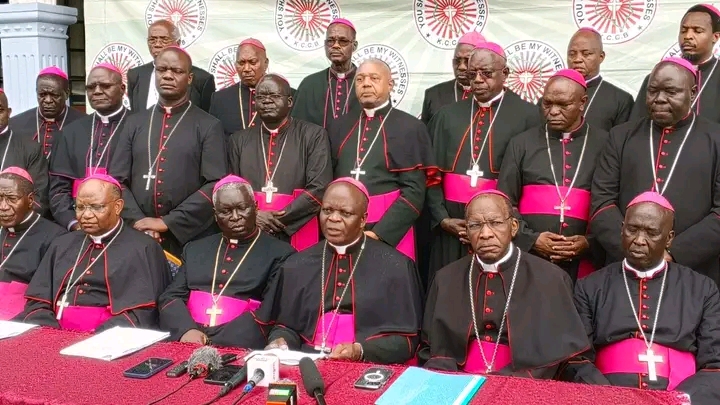
Catholic Bishops Ban Politicians from Addressing Congregants Ahead of 2027 Elections, Warn Parliament Against Undermining Electoral Confidence
The Catholic bishops' decision to prohibit politicians from making political addresses in Catholic churches marks an important intervention in Kenya's preparations for the 2027 General Election. Through the Kenya Conference of Catholic Bishops, the religious leaders have directed priests nationwide to enforce the ban and ensure that churches remain places of prayer, peace, worship and spiritual guidance. They have also cautioned Parliament against introducing divisive electoral amendment bills, particularly proposals seeking to restrict livestreaming of presidential vote tallying, warning that such changes could undermine public confidence in the electoral process. Additionally, the bishops have challenged the IEBC to strengthen election preparations, the Judiciary to handle disputes impartially and politicians to conduct peaceful campaigns.
Kenya's Catholic bishops have raised concerns over the growing involvement of politicians in church activities ahead of the 2027 General Election. The bishops have called for churches to remain places of worship, spiritual guidance and moral development rather than political platforms where leaders use religious gatherings to advance their political ambitions.The Catholic Church has also cautioned Parliament against making decisions or engaging in activities that could weaken public confidence in the country's electoral process. The bishops believe that protecting the independence and credibility of electoral institutions is essential to ensuring peaceful, transparent and democratic elections.
Their position comes at a time when political activities are gradually increasing across the country as politicians begin preparing for the 2027 elections. Churches have traditionally attracted large congregations and provided opportunities for leaders to interact with communities. However, the bishops are concerned that some politicians may take advantage of these gatherings to promote their political interests.
The bishops' message is therefore a call for religious institutions, political leaders and elected representatives to respect their respective responsibilities as Kenya approaches another important election period.The Kenya Conference of Catholic Bishops (KCCB) announced that politicians will not be allowed to deliver political speeches in Catholic churches across the country. The directive was communicated during a press conference held at the John Cardinal Njue Pastoral Centre in Embu on November 12, 2026.
The bishops expressed disappointment over the increasing tendency of politicians to use church services and fundraising events to communicate political messages, promote their ambitions and seek support from congregants.
Speaking during the announcement, Archbishop of Nyeri Anthony Muheria made it clear that Catholic churches would not provide platforms for politicians to campaign or solicit votes.
He explained that churches are places where people gather to pray, worship, seek spiritual guidance and strengthen their relationship with God. They should not become political arenas where leaders compete for popularity or attempt to influence the political opinions of worshippers.Churches should remain places of unity and spiritual guidance
The Catholic bishops emphasised that churches bring together people from different political parties, ethnic communities, economic backgrounds and social groups.
During Sunday services, congregants attend for a common purpose: worshipping God and receiving spiritual nourishment. Some may support the government, while others may belong to opposition political parties. Despite their political differences, they share the same religious space.
The bishops are concerned that allowing politicians to address congregations could create divisions among worshippers and make some people feel uncomfortable attending church.
For instance, when a politician uses a church service to criticise political opponents, praise a particular administration or ask congregants to support a candidate, the gathering risks losing its spiritual purpose.Some worshippers may feel pressured to agree with political messages simply because they are being delivered from a religious platform.
The bishops want to protect the church from becoming an environment where political competition determines how people interact with one another.
Their position is that every Kenyan should feel welcome in a Catholic church regardless of political affiliation. Religious institutions should promote love, forgiveness, peace, respect and understanding rather than political disagreements.
The announcement also sends a message to politicians that religious institutions have their own responsibilities and should not be treated as convenient campaign venues.Political activities are expected to intensify as different political formations begin positioning themselves, building alliances and seeking support from voters.
The Catholic bishops warned politicians against allowing the approaching election to interfere with national peace and social cohesion.
They called on presidential aspirants, Members of Parliament, governors, senators, women representatives and other political leaders to exercise responsibility when addressing the public.
The bishops specifically cautioned against inflammatory, tribal, hateful, insulting and demeaning statements.
They observed that careless political statements can create hostility among communities and weaken the peaceful coexistence that Kenya needs.
Political leaders were encouraged to use language that promotes national unity rather than encouraging citizens to view one another as enemies because of their political choices.The bishops warned that electoral reforms should strengthen transparency, accountability and public confidence rather than introduce restrictions that could raise questions about the credibility of election results.
They urged the Speakers of both Houses of Parliament to ensure that divisive legislative proposals are not introduced and advanced without carefully considering their implications for the country.
The religious leaders also challenged lawmakers to prioritise the common good when debating electoral reforms.
They maintained that Parliament should support legislation that improves the Electoral Act and strengthens democratic institutions instead of considering proposals that could weaken public trust.The Catholic bishops also directed their attention to the Independent Electoral and Boundaries Commission (IEBC), which is responsible for managing elections in Kenya.
They called on the commission to strengthen preparations to ensure that the 2027 General Election is free, fair, transparent and credible.
The bishops identified several important areas that require attention, including voter registration, election logistics, training of electoral officials, verification of results and the management of electoral complaints.
They emphasised that the IEBC should provide clear information about the electoral process so that citizens understand the procedures and have confidence in the commission's work.
Voter registration was highlighted as an important part of election preparedness. Kenyans who have attained the required voting age should be encouraged to register and participate in the democratic process.The bishops further stressed the importance of protecting election results and ensuring that the verification process is conducted transparently.
They called on the commission to establish effective procedures for managing political party agents and resolving complaints that may arise during the electoral process.
Another concern was the independence of the IEBC. The bishops insisted that the electoral body must resist intimidation, manipulation and interference from politicians or powerful individuals seeking to influence its operations.
They believe that an independent electoral commission is essential for protecting the democratic rights of Kenyans.
The bishops also warned that mistakes made during previous elections should not be repeated because disputed electoral processes have contributed to political tensions, loss of lives and destruction of property in the country. Electoral disputes are sometimes unavoidable, especially when candidates or political parties disagree over the conduct of elections, vote counting or the declaration of results.
However, the bishops believe that such disagreements should be resolved through established legal procedures rather than violence, intimidation or destruction of property.
They urged the Judiciary to ensure that electoral petitions and other disputes are handled within the law and without favouring particular political interests.
The bishops noted that Kenya has experienced difficult moments during previous election periods, with some disagreements resulting in loss of lives and destruction of property.
They therefore want all institutions involved in the electoral process to work together to prevent a repeat of such experiences in 2027.They expressed concern that journalists, human rights activists and civil society organisations could face intimidation as the country approaches the next General Election.
The religious leaders insisted that freedom of expression and association must be protected because these freedoms are important pillars of democracy.
They condemned incidents involving the harassment of individuals who express their opinions or participate in legitimate civic activities.
The bishops also called on security agencies to remain professional and impartial when enforcing the law.
They emphasised that law enforcement officers should not favour particular political parties, candidates or individuals.
At the same time, they reminded Kenyans that freedom of expression comes with responsibility. Citizens should avoid hate speech, tribal insults, incitement and statements that could encourage violence.They encouraged voters to carefully examine the manifestos, leadership records, integrity and development plans of candidates before making their decisions.
The bishops urged citizens not to be influenced by tribal loyalty, political excitement, financial inducements or personal attacks against competing candidates.
They believe voters should focus on electing leaders who can deliver on their responsibilities and address the challenges affecting ordinary Kenyans.
They also encouraged young people to participate in the electoral process by obtaining identification documents and registering as voters.
The bishops warned that the future of the country should not be placed in the hands of individuals who encourage violence or exploit young people for political purposes.The announcement by the Catholic bishops is significant because religious institutions play an important role in Kenyan society.
Churches attract large numbers of people every week and have traditionally provided platforms for discussing social challenges, national development and moral responsibility.
However, the bishops are drawing a clear distinction between offering guidance on national issues and allowing politicians to use religious gatherings for partisan campaigning.
Their directive also comes at a time when the country is beginning to experience increased political competition ahead of the 2027 elections.
By banning political addresses in Catholic churches, the bishops are seeking to protect the independence of religious institutions and ensure that worshippers are not subjected to political pressure.

You Might Also Like
-
The appearance of lawyer Abshir Ahmedsadak Abdi before the Milimani High Court on November 13, 2026, marks a significant development following his 11-day disappearance and subsequent discovery in Marsabit County. His return alive has brought relief to his family, colleagues and Kenyans who had foll
-
The presence of Principal Secretary John Ololtuaa during the distribution of KNEC examination materials in Narok Central Sub-County highlighted the government's continued involvement in ensuring the smooth administration of national examinations. Ololtuaa expressed satisfaction with the increase in
-
The collapse of the eight-storey building near the SGR terminus in Mlolongo along the Nairobi-Mombasa highway is another painful tragedy for Kenya, with six people confirmed dead and survivors rushed to hospital. The incident has renewed concerns about construction safety, regulatory supervision an
-
The warning against political incitement during the Maa Cultural and Tourism Festival in Narok is an important message as Kenya approaches the 2027 General Election. Governor Patrick Ole Ntutu has called on politicians and other participants to put aside their political differences and focus on cel
-
The call for more promotion opportunities was among the major issues surrounding the gathering, with school heads highlighting the importance of recognising teachers' experience, dedication and professional contributions. President William Ruto's announcement that 50,000 teachers would be promoted
-
They want the government, security agencies, political parties and civil society organisations to work together to protect female aspirants and ensure that women have equal opportunities to compete for leadership positions. Their concerns, alongside complaints raised by women aspirants in Kisumu an