Kenya Meteorological Department Forecast: Counties Likely to Receive Rainfall Between October 25 and November 1, 2026
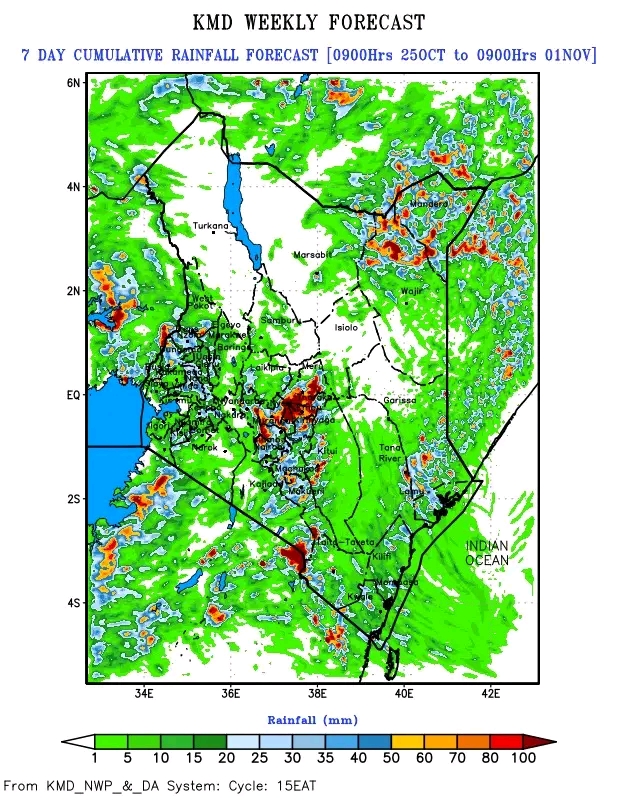
Kenya's latest published forecast available for this report points to rainfall across numerous counties, including areas in the Coast, North Eastern, Eastern, Central, Western, Nyanza and Rift Valley regions. Particular attention is warranted in Mandera, Wajir and parts of the coastal region, where isolated storms may cause flash flooding, as well as in western and Rift Valley counties where afternoon showers and thunderstorms are expected.
Kenya is entering a period when rainfall forecasts are particularly important for farmers, livestock keepers, transport operators, schools, and households preparing for the effects of the October–December short rains. The Kenya Meteorological Department (KMD) provides weather outlooks to help the public understand where rain is expected, when conditions may change, and how to prepare for possible heavy downpours.
The forecast period of Sunday, October 25, to Sunday, November 1, 2026, falls within Kenya’s short-rains season. However, rainfall is not usually distributed evenly across the country. Some counties may experience frequent showers and thunderstorms, while others receive light or scattered rainfall, and some remain predominantly dry.According to a report published on October 23, 2026, Kenya’s meteorological service forecast rainfall in parts of 44 counties during the period from October 22 to October 29, with isolated storms potentially causing flash floods. This is the closest published forecast I could verify for your requested period. It does not cover November 1 in full, so conditions for October 30–November 1 should be checked against a newer official update.
The counties identified in the published report include:
Coast: Mombasa, Kilifi, Kwale, Lamu and Tana River.
North Eastern: Mandera, Wajir and Garissa.
Eastern: Meru, Embu, Kitui, Machakos, Makueni and Tharaka-Nithi.
Central and Nairobi: Kiambu, Murang’a, Nyeri, Nyandarua, Kirinyaga and Nairobi.
Western: Kakamega, Bungoma, Busia, Vihiga and Trans Nzoia.
Nyanza: Kisumu, Siaya, Homa Bay, Migori, Kisii and Nyamira.
Rift Valley: Baringo, Bomet, Elgeyo Marakwet, Kericho, Kajiado, Laikipia, Nakuru, Nandi, Narok, Uasin Gishu and West Pokot.
Other areas: Turkana, Taita Taveta and parts of Marsabit. Mombasa, Kilifi, Kwale, Lamu and Tana River are among the coastal counties included in the forecast. The published report indicated that showers were expected along the coast from Sunday, October 25, with moderate rainfall anticipated in parts of Mombasa, Kilifi and Lamu on Monday, October 26.
Rainfall in these counties could benefit farmers, improve water availability and support pasture regeneration in some areas. However, heavy showers may also disrupt road transport, fishing activities, outdoor businesses and other economic activities.
Residents should be cautious where drainage systems are blocked or where homes and businesses are located in low-lying areas. Fishermen and other marine users should also pay attention to official sea-condition advisories, since strong winds and rough seas may create dangerous conditions even when rainfall is limited.Rainfall in this region is important because many households depend on agriculture, including maize, beans, vegetables and other food crops. Adequate soil moisture can help crops establish and grow, particularly where farmers have already planted.
However, farmers should monitor their fields rather than assume that all areas will receive the same amount of rain. Excessive rainfall can cause waterlogging, soil erosion and damage to young crops. Where fields are on slopes, farmers should maintain drainage channels and use soil-conservation practices.
Thunderstorms can also bring lightning, strong winds and brief periods of poor visibility. Residents should seek shelter in safe buildings during storms and avoid standing beneath isolated trees.Kericho and Bomet are particularly important agricultural areas, where rainfall supports tea farming, dairy production, food crops and pasture. Nandi and Uasin Gishu also rely heavily on rainfall for agricultural production.
The forecast report identified Kericho as one of the counties likely to experience afternoon showers and thunderstorms. Nandi was also expected to receive showers and thunderstorms during part of the period, while Bungoma and other neighbouring counties were forecast to experience rain on selected days.
For farmers, the rainfall could improve soil moisture and provide favourable conditions for crop growth. Dairy farmers may also benefit if pasture improves and water becomes more readily available.Nairobi, Kiambu, Murang’a, Nyeri, Nyandarua and Kirinyaga are included in the broader rainfall forecast.
The October 23 report indicated that Nairobi could experience sunny intervals in the morning, with light rain expected on October 27 and showers possible on some evenings. These details apply to the earlier published forecast window and should not be treated as a verified daily prediction through November 1.
In Nairobi, sudden showers can cause traffic congestion, reduce visibility and overwhelm drainage systems in locations prone to flooding. Motorists should slow down on wet roads, while pedestrians should avoid walking through fast-moving floodwater.
In the agricultural areas of Central Kenya, rainfall can support horticulture, coffee farming, dairy production and other farming activities. However, farmers should avoid excessive irrigation when sufficient rain has already fallen and should maintain drainage around crops.Kisumu, Siaya, Homa Bay, Migori, Kisii and Nyamira are among the counties listed in the rainfall outlook.
The region's weather is important for crop farming, livestock production, fishing and transport around Lake Victoria. Rainfall may improve water availability and support agricultural activities, although intense downpours can also increase runoff into rivers and drainage channels.
The October 23 report indicated that Kisumu, Siaya, Homa Bay and Migori could receive rainfall at different times, while Kisii and Nyamira were also expected to experience showers during parts of the forecast period. Meru, Embu, Kitui, Machakos, Makueni, Tharaka-Nithi, Turkana, Taita Taveta and parts of Marsabit are also covered by the wider forecast.
Rainfall in the drier areas of Kitui, Machakos and Makueni could provide relief to farmers and pastoralists, particularly where water sources and pasture have been depleted. In Meru, Embu and Tharaka-Nithi, rain may support crop production and improve soil moisture.
Turkana and Marsabit, meanwhile, experience considerable variation in rainfall and temperature. Even where showers are forecast, residents should continue conserving water and monitoring local conditions.
Heavy rainfall in dry landscapes can produce rapid runoff because the ground may not absorb water quickly. Communities should therefore remain alert to flash floods, particularly around seasonal rivers and drainage channels.What residents should do during the forecast period
The Kenya Meteorological Department's warning about isolated storms highlights the need for preparation even in locations where rainfall is not expected every day.
Residents are encouraged to:Follow updated forecasts and official weather advisories for their particular counties.
Avoid walking or driving through flooded roads, bridges, rivers and seasonal waterways.
Stay indoors during thunderstorms and avoid sheltering beneath isolated trees.
Clear blocked drainage channels around homes, schools, markets and business premises.
Farmers should monitor soil moisture, protect young crops from waterlogging and plan harvesting around expected showers.
Livestock keepers should identify safe grazing areas and reliable water sources while monitoring changing weather conditions.
Fishermen and boat operators should check marine advisories before going onto the ocean or lake.
Drivers should reduce speed and use extra caution when rain reduces visibility.

You Might Also Like
-
The October 28–29 summit provides a platform for discussions on trade, investment, agriculture, technology, peace and security, while the accompanying economic and humanitarian engagements offer further opportunities to explore cooperation. Kenya’s immediate economic interests include expandin
-
The reported inspection by Deputy President Kithure Kindiki of the Njoro–Beeston–Lawina–Elburgon road on October 27, 2026, highlights an important infrastructure project in Nakuru County. Official records confirm that the wider road programme covers approximately 40 kilometres, has a listed c
-
Former President Uhuru Kenyatta has cautioned Kenyans against fake social media accounts claiming to represent him, his family or his political activities. He has urged the public to verify information before believing or sharing online posts attributed to him. The warning highlights growing concern
-
Kenya’s Ministry of Health has confirmed the release of 20 Ebola contacts from quarantine after completing the required monitoring period without developing symptoms. However, the ministry warns that the outbreak is not yet contained, with 98 other contacts still under observation and expected to
-
The commencement of post-mortem examinations for the 24 victims of the Mtito Andei road accident is a crucial step in the process of identifying the deceased, documenting the causes of death and facilitating burial arrangements. The tragedy occurred at Kanga along the Nairobi–Mombasa Highway on Oc
-
The discharge of 20 people from Ebola quarantine on 26 October 2026 marks an important step in Kenya’s efforts to contain the Bundibugyo virus disease outbreak. The individuals completed the mandatory 21-day monitoring period without symptoms and were released after health assessments. However, 9