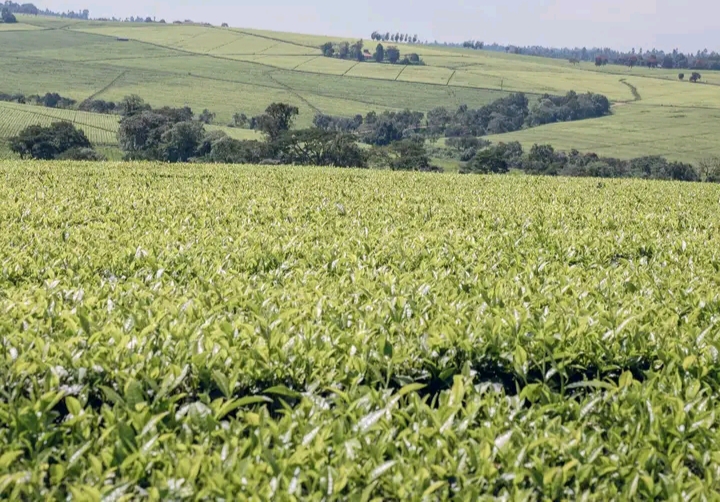
Angry Kapkoros Farmers Uproot Tea Bushes Over Low Bonuses as Tea Farming Crisis Deepens in Bomet County
The decision by some farmers in Kapkoros, Bomet Central, to begin uprooting tea bushes has brought renewed attention to the challenges facing smallholder tea growers in Kenya. The reported KSh17-per-kilogramme bonus at Kapkoros for the 2025/2026 financial year has added to concerns about rising production costs, differences in factory earnings and the financial difficulties experienced by farming households. For affected farmers, the issue goes beyond the amount deposited into their accounts. It concerns whether years of investment, hard work and dependence on tea farming can continue to provide a reliable livelihood. The government, KTDA, factory directors and other industry stakeholders face growing pressure to explain the payment calculations, improve operational efficiency and identify ways of increasing farmer earnings.
Tea farmers in Kapkoros, Bomet Central Sub-County, have begun uprooting their tea plantations in protest against disappointing bonus payments, raising fresh concerns about the future of small-scale tea farming in Kenya's South Rift region. The farmers say the low returns from their produce, coupled with rising production costs, are making it increasingly difficult to sustain their livelihoods through tea farming.The growing frustration among farmers reflects a wider dispute over the earnings of smallholder tea growers affiliated with the Kenya Tea Development Agency (KTDA). Reports published in October 2026 indicate that farmers in several tea-growing counties, including Bomet, Kericho, Nandi and Nakuru, have been angered by bonus payments that they consider too low compared with the money and labour invested in producing green tea leaves.
For many households in Kapkoros, tea is more than an agricultural crop. It is a primary source of income used to pay school fees, purchase food, meet medical expenses and support other family responsibilities. The decision by some farmers to remove their tea bushes therefore signals the depth of their dissatisfaction and the difficult choices facing households that have depended on the crop for years.
The development is also putting pressure on agricultural authorities, factory management and government leaders to address the factors behind declining farmer earnings and restore confidence in the tea industry.The main concern among the affected farmers is the amount they receive through the annual second payment, commonly known as the tea bonus. This payment supplements the regular payments made for green tea leaves delivered throughout the year and is particularly important to smallholder farmers who rely on it for major household expenses.
According to a report published on October 2, 2026, Kapkoros declared a bonus of KSh17 per kilogramme for the 2025/2026 financial year, while some other factories in the region announced payments ranging from KSh16 to KSh34 per kilogramme. The differences have intensified questions about why farmers supplying different factories receive substantially different returns.
For farmers who have invested in tea seedlings, fertiliser, labour and land preparation, a disappointing bonus can undermine their ability to recover production costs. Some growers may find themselves working throughout the year without receiving enough money at the end of the payment period to meet the expenses they had anticipated.The anger is particularly understandable among households that had expected the bonus to provide a financial cushion after months of supplying tea leaves to their factories.
When the final payment falls short of expectations, farmers must reconsider how they use their limited resources. Some may reduce spending, borrow money, seek alternative sources of income or consider switching to other crops that they believe could generate better returns.
For farmers in Kapkoros who have started uprooting their tea bushes, the situation has reached a point where continuing with the crop appears less attractive than exploring other agricultural opportunities.
However, the reported uprooting should not automatically be interpreted as a decision by every farmer in the area to abandon tea farming. The scale of the activity and the number of affected households have not been independently established in the available reports.Kapkoros farmers face rising costs of tea production
Tea farming requires continuous investment, including labour for plucking, fertiliser, farm maintenance, transportation and other expenses. Although tea bushes can provide regular harvests over many years, the financial benefits depend on the quantity and quality of leaves produced and the prices obtained through the market.
For farmers in Kapkoros, low bonus payments are particularly troubling because production expenses continue even when the final earnings fall below expectations.
Farmers who employ casual workers to pluck tea must pay them regardless of whether the bonus is satisfactory. Those who manage their own plantations also spend time and energy tending the crop, making the low returns frustrating for families that depend on agriculture for their survival.The second payment is not a uniform national rate. It depends on factors such as the revenue earned from tea sales, factory operating costs, the volume of green leaves supplied and the performance of the factory during the financial year.
Tea processing expenses may include electricity, fuel, workers' salaries, transportation, equipment maintenance, management costs and loan repayments. The amount available for distribution to farmers is affected by these expenses and the revenue generated from selling processed tea.
Nevertheless, farmers have demanded greater transparency in the calculation of bonuses. They want factory management to provide clear financial information showing how tea sales translate into the payments they receive.Uprooting tea bushes signals a serious crisis
The decision to uproot tea bushes is significant because tea is a long-term crop. Unlike some annual crops that can be planted and harvested within a single season, tea requires considerable time and investment before it becomes productive.
Once established, healthy tea bushes can provide harvests for many years if properly maintained. Farmers who remove mature bushes risk losing a source of regular income while they establish alternative crops.
The uprooting of tea plants is therefore not simply an expression of anger. It can also be a sign that farmers believe the financial returns from their land no longer justify the costs of maintaining the crop.Impact on families and children's education
Tea income plays an important role in financing education in many farming households across Bomet County.
Parents often depend on their annual bonuses to clear outstanding school fees, purchase learning materials and prepare their children for a new school term. When the expected payment is reduced, families may be forced to postpone these expenses or seek loans.Beyond education, low earnings can affect access to healthcare, food security and the ability of families to invest in their farms. Farmers who cannot afford fertiliser or adequate labour may produce less tea in subsequent seasons, potentially worsening their financial position.
This creates a difficult cycle in which low earnings reduce investment, reduced investment affects productivity, and lower productivity makes it harder for farmers to improve their income.The latest developments are likely to intensify pressure on the management of Kapkoros Tea Factory and the institutions responsible for supporting smallholder tea growers.
Farmers need clear explanations of the factory's financial performance, the prices obtained from tea sales and the deductions made before bonuses are calculated.
They may also seek information about operating costs, management expenses, outstanding loans and the steps being taken to improve profitability.
Greater accountability would help growers understand whether low payments are primarily the result of market conditions, factory inefficiencies or other financial challenges.Government urged to protect tea farmers
The government has an important role in addressing the challenges facing tea growers. This includes supporting access to better markets, strengthening oversight of factory management and encouraging value addition to increase the amount of revenue retained within Kenya's tea industry.
Tea farmers and their representatives have also called for reforms to address alleged inefficiencies and improve the transparency of payments.
In October 2025, the government directed the release of KSh2.7 billion recovered from two collapsed banks for distribution to smallholder tea farmers as an additional refund following concerns over low bonuses. The intervention was intended to cushion growers whose annual payments had fallen below expectations. If the current dissatisfaction continues, more farmers could consider replacing tea with other crops or alternative income-generating activities.
A substantial reduction in tea production could affect factory operations, employment and the livelihoods of people involved in transporting, processing and marketing the crop.
Tea factories depend on regular supplies of green leaves to operate efficiently. If deliveries fall, fixed operating costs may become harder to cover, potentially creating further pressure on factory finances and farmer payments.
A sustained decline in tea farming could also affect Kenya's broader agricultural economy because tea is an important export commodity and a source of foreign exchange.At household level, abandoning tea without a reliable alternative could expose farmers to further financial difficulties. This makes it essential for agricultural officers and industry stakeholders to provide practical advice before growers make irreversible decisions.
Farmers should be able to compare the expected costs and returns of alternative crops, assess available markets and receive guidance on how to diversify their agricultural activities without unnecessarily jeopardising their livelihoods.

You Might Also Like
-
Self-proclaimed preacher Paul Mackenzie and 29 co-accused have been found guilty on all 191 murder counts in the Shakahola case, marking a major development in one of Kenya’s most disturbing criminal investigations. The case is linked to the deaths of followers associated with Mackenzie’s Good N
-
President William Ruto has received the APSCA 2026 Continental Leadership Award for Visionary Governance and Human Capital Transformation, with Deputy Head of Public Service Amos Gathecha accepting the honour on his behalf. The recognition highlights the importance of leadership, effective governanc
-
Kenya is expected to experience varied weather conditions during this week's forecast period, with rainfall anticipated across western Kenya, the Lake Victoria Basin, the Rift Valley, Central Kenya, Nairobi and selected eastern and coastal areas. Thunderstorms are possible in some locations, while o
-
Siaya Governor James Orengo has condemned attacks and alleged propaganda directed at the Odinga family, describing them as a betrayal of the political struggles and sacrifices associated with the late former Prime Minister Raila Odinga. His remarks come amid growing political tensions over Raila’s
-
Over 6,000 widows meet in Kericho.Led by Governor Eric Mutai, Woman Representative Beatrice Kemei and Principal Secretary Ann Wangombe, the initiative brought attention to the need for sustainable programmes that enable widows to support their families and participate meaningfully in community devel
-
Democracy for the Citizens Party (DCP) leaders have accused President William Ruto’s administration of deliberately frustrating counties perceived to support the opposition, raising concerns over equitable resource allocation, development projects and service delivery. The leaders insist that poli