



BREAKING: Kenya Confirms First Ebola Case as Patient Dies in Nairobi, Duale Announces
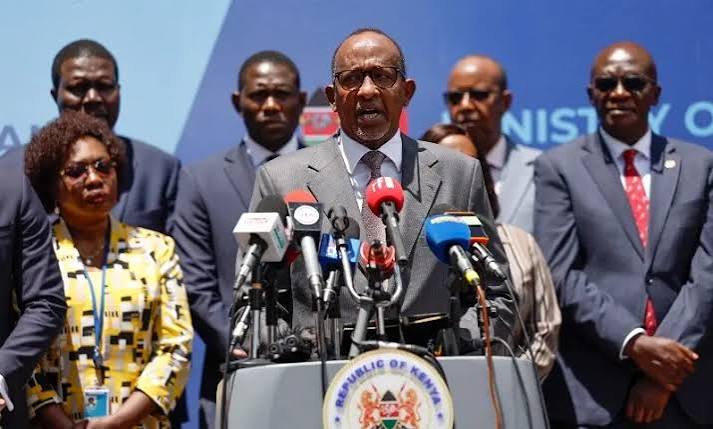
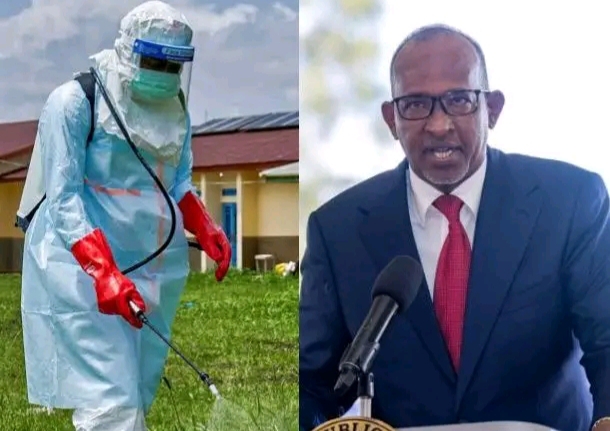
Kenya has confirmed its first case of Ebola Virus Disease after a patient who had travelled from the Democratic Republic of Congo through Uganda tested positive for the Ebola virus in Nairobi. Health Cabinet Secretary Aden Duale announced that the patient, who had reportedly been ill for several weeks, was admitted and isolated at Nairobi Hospital after developing symptoms associated with viral haemorrhagic fever but later died on Monday night. Health authorities have launched an urgent contact-tracing and surveillance operation, with 28 contacts already identified, including relatives and healthcare workers, while passengers and crew members who travelled with the patient from Uganda to Nairobi are also being traced. The Ministry of Health is monitoring those who may have been exposed as Kenya moves to prevent further transmission and contain the virus.
Kenya has recorded its first confirmed case of Ebola Virus Disease, with Health Cabinet Secretary Aden Duale announcing that the patient has died in Nairobi.
The confirmation marks a significant development in Kenya's public-health situation, particularly because the country had spent months strengthening surveillance and preparedness measures following the Ebola outbreak in the Democratic Republic of Congo and the earlier outbreak in Uganda.
According to Duale, the patient was a Kenyan citizen who had been living in the Democratic Republic of Congo for approximately seven years. The individual arrived in Kenya on October 3 after travelling from the Democratic Republic of Congo through Uganda.
The patient had reportedly fallen ill about a month earlier while in the Democratic Republic of Congo and had received treatment at several health facilities before travelling. From the DRC, the patient travelled by road to Kampala, Uganda, before taking a Jambojet flight to Nairobi.
Upon arrival at Jomo Kenyatta International Airport, the patient underwent the normal public-health screening procedures. After leaving the airport, the individual was transported by a relative and a friend to Nairobi Hospital, where the patient was isolated after developing symptoms consistent with a viral haemorrhagic fever.
Health authorities said the patient presented with several symptoms that raised concern among medical personnel. These included fever, severe fatigue and weakness, muscle pain, painful swallowing, a sore throat and bleeding under the skin around an injection site.
Doctors subsequently considered the possibility of viral haemorrhagic fever and collected samples for laboratory testing. The samples later returned positive for Ebola.
The patient was moved to an isolation facility at Nairobi Hospital, where medical personnel provided supportive treatment. The facility's East Wing isolation unit had previously been used during the COVID-19 pandemic and had been equipped to handle infectious diseases.
Despite the medical intervention and supportive treatment, the patient died at approximately 11:30 p.m. on Monday, October 5, according to information provided by Duale. The death means that Kenya's first confirmed Ebola case has also become the country's first recorded Ebola death.
The Ministry of Health has since moved to identify and monitor people who may have come into contact with the patient.
Duale said 28 contacts had been identified so far. The group includes members of the deceased person's family as well as healthcare workers who attended to the patient.
Authorities are also tracing passengers and crew members who may have travelled with the patient from Uganda to Nairobi. Reports indicate that 23 passengers and four crew members from the flight are being pursued as part of the contact-tracing exercise.
Health authorities are preparing quarantine and monitoring arrangements for people considered to have been exposed to the virus. Contacts will be monitored for 21 days, which is an important period for identifying people who may develop symptoms after exposure.
The government has also emphasized the importance of surveillance as it seeks to determine whether there has been any further transmission inside Kenya.
The development comes after months of preparations by the Ministry of Health. Earlier in 2026, Duale had told Parliament that Kenya had no confirmed Ebola case but that the government had activated its national Ebola incident-management structures.
The Ministry had increased screening at airports and land-border crossing points and strengthened surveillance following the Ebola outbreak in the region. More than 71,000 travellers had been screened by June, while several alerts investigated in Kenya had tested negative at the time.
The government had also been working to strengthen isolation facilities, laboratory capacity, rapid-response teams and border surveillance because of the risk of Ebola spreading across national borders.
The current case demonstrates why those preparedness measures were considered necessary.
The patient's travel route from the Democratic Republic of Congo through Uganda and eventually to Nairobi has also raised the importance of regional coordination in controlling the disease.
The current Ebola outbreak in the Democratic Republic of Congo has been linked to the Bundibugyo species of the Ebola virus. The outbreak has caused serious concern among health authorities because of its rapid growth and the difficulties involved in tracing infections and preventing further transmission.
According to reports, the DRC has recorded more than 8,000 cases and over 4,000 deaths during the current outbreak. Uganda also experienced an outbreak, recording 20 cases and two deaths before the World Health Organization declared the country Ebola-free in August.
The confirmation of a case in Kenya therefore makes the country part of the current regional Ebola situation and places additional pressure on health authorities to prevent community transmission.
Ebola is a severe viral disease that can spread through direct contact with the bodily fluids of an infected person. Transmission can occur through contact with an infected person who is alive or through contact with the body of someone who has died from the disease.
Common symptoms can include fever, weakness, intense fatigue, muscle pain, vomiting and diarrhoea. In severe cases, patients can develop bleeding and other serious complications.
Health authorities have therefore urged people to rely on official information and avoid unnecessary panic. The identification of contacts and their continued monitoring are among the key measures required to determine whether the virus has spread beyond the initial patient.
The Ministry of Health is also expected to continue surveillance at points of entry, health facilities and communities where there could be a risk of exposure.
Another major public-health measure concerns the handling and burial of the deceased patient. Authorities have indicated that the burial will be conducted under Ebola public-health protocols designed to reduce the risk of transmission during handling of the body.
The government has placed significant emphasis on contact tracing because early identification of exposed individuals is critical in preventing Ebola from spreading.
Healthcare workers who came into contact with the patient are among those being monitored because medical personnel can face increased exposure when caring for people suffering from infectious diseases.
At the same time, authorities are working to trace passengers who travelled on the same flight as the patient. Identifying these individuals will allow health officials to assess their risk, monitor them for symptoms and intervene quickly if anyone becomes unwell.
The confirmation has also highlighted the importance of Kenya's regional health-security systems. Kenya shares extensive travel, trade and transport links with Uganda and other countries in the region, meaning infectious diseases can cross borders through ordinary movement of people.
For now, health officials are focusing on containing the imported case and determining whether any secondary infections have occurred.
The announcement by Aden Duale is therefore expected to usher in an intensified phase of Kenya's Ebola response, involving surveillance, laboratory testing, contact tracing, quarantine where necessary, public communication and infection-prevention measures.
The first confirmed case does not automatically mean that Kenya is facing widespread community transmission. Authorities have identified contacts linked to the patient and are monitoring them as investigations continue.
However, the death of the patient serves as a reminder of the seriousness of Ebola and the need for vigilance.
Kenya's health authorities are now racing against time to establish the full chain of contact surrounding the patient, monitor everyone at risk and prevent the virus from gaining a foothold in the country.
The government is expected to continue providing updates as laboratory investigations and contact tracing progress. The immediate priority remains protecting healthcare workers, identifying potentially exposed people, ensuring safe handling of the deceased and preventing further infections.
The development also demonstrates the importance of the preparedness measures Kenya had put in place before the first confirmed case was reported. For months, the Ministry of Health had been warning about the regional Ebola threat and strengthening the country's surveillance and response systems.
With the first confirmed case now recorded and the patient deceased, the effectiveness of those systems will be tested as Kenya works to ensure that the infection remains contained and does not develop into a wider outbreak.

You Might Also Like
-
Dr. Oburu Oginga’s Secretariat has dismissed reports on his health, saying the ODM Party Leader is safe, in good spirits and recovering while following doctors’ advice.
-
President William Ruto will lead the dedication and official commissioning of the late Raila Odinga’s mausoleum at Kang’o Ka Jaramogi in Bondo, Siaya County.
-
Kenya's first confirmed Ebola case and the death of the patient at Nairobi Hospital have triggered an urgent response from KMPDU, which is demanding stronger protection for frontline healthcare workers and greater preparedness across health facilities. The union wants exposed healthcare workers to
-
 Deputy President Kithure Kindiki toured Kiambu County today, October 6, 2026, where he inspected development projects and announced plans to invest Sh290 million in student hostels at the KMTC Kiambaa Campus, alongside the expansion of the institution's tuition facilities. Kindiki said the governmen
 -
President William Ruto's witnessing of the signing of the US$3 billion, approximately KSh390 billion, electric mobility MoU marks an important development in Kenya's push for manufacturing, technology and green transportation. The proposed project includes electric vehicle assembly, production of tw
-
Kenya has confirmed its first Ebola case after a patient who had travelled from the Democratic Republic of Congo died while undergoing treatment in Nairobi. Health authorities are tracing and monitoring people who may have been exposed.