



Kenya Confirms First Ebola Case as Patient Dies in Nairobi
Kenya has confirmed its first Ebola case after a patient who had travelled from the Democratic Republic of Congo died while undergoing treatment in Nairobi. Health authorities are tracing and monitoring people who may have been exposed.
Kenya has confirmed its first imported case of Ebola Virus Disease after a Kenyan citizen who had been living in the Democratic Republic of Congo (DRC) tested positive for the virus and later died while receiving treatment in Nairobi.
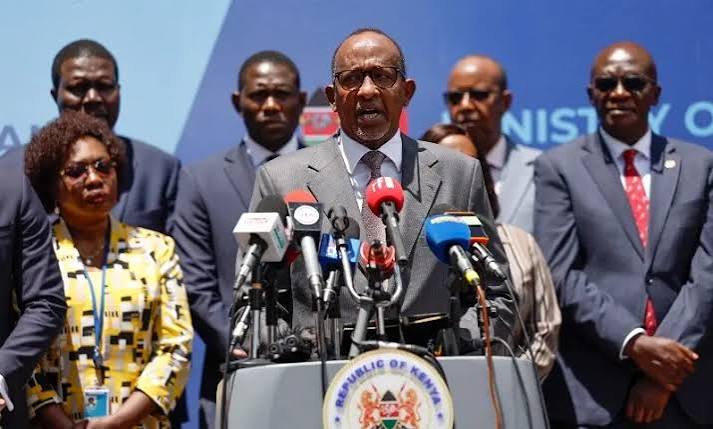
Health Cabinet Secretary Aden Duale confirmed the development on Tuesday, October 6, 2026, saying the patient had travelled from the DRC through Uganda before arriving in Kenya. The confirmation has prompted the Ministry of Health to intensify surveillance, contact tracing and other measures aimed at preventing further transmission of the virus.
According to the Ministry of Health, the patient had lived in the DRC for about seven years and had fallen ill approximately one month before returning to Kenya. He had reportedly received treatment at several health facilities in the DRC before travelling by road to Kampala, Uganda.
From Kampala, he boarded a Jambojet flight to Nairobi, arriving at Jomo Kenyatta International Airport on Saturday, October 3. The patient underwent routine public health screening at the airport before proceeding through immigration.
After leaving the airport, he was taken directly to Nairobi Hospital by a relative and a friend. At the hospital, medical staff quickly isolated him after he presented with symptoms that raised concern of a viral haemorrhagic fever. He was later transferred to the hospital’s East Wing Isolation Facility, which had previously been used during the COVID-19 pandemic.
Patient Tested Positive
Duale said the patient presented with several symptoms, including fever, chills, extreme fatigue, weakness, muscle pain, painful swallowing, a sore throat and bleeding beneath the skin at an injection site.
Doctors suspected a viral haemorrhagic fever and collected samples for laboratory testing. The results subsequently confirmed that the patient had Ebola.
Despite receiving supportive treatment, the patient died at approximately 11:30 p.m. on Monday night.
The Health CS expressed condolences to the family of the deceased and said arrangements were being made for a safe and dignified burial in accordance with public health protocols for Ebola cases.
The confirmation marks a significant development for Kenya, which had previously not recorded a confirmed Ebola case despite heightened surveillance over the past several months because of outbreaks in neighbouring countries.
Contact Tracing Underway
Following confirmation of the case, health authorities immediately began tracing people who may have come into contact with the deceased.
Duale said 28 contacts had been identified, including family members and healthcare workers who interacted with the patient. These individuals are being monitored as health officials assess their level of exposure and determine whether additional measures are necessary.
Authorities are also working to trace passengers and crew members who travelled on the same flight as the patient.
Reports indicate that 23 passengers and four crew members from the flight are being pursued as part of the contact-tracing exercise. The government has prepared quarantine arrangements for people considered to be at risk while surveillance continues.
The tracing exercise is considered critical because Ebola can spread through direct contact with the blood or other bodily fluids of an infected person, including after death.
Health authorities are therefore working to establish the patient's movements after arriving in Kenya and identify everyone who may have had close contact with him.
Government Urges Kenyans Not to Panic
Despite confirming the country's first case, health authorities have urged Kenyans to remain calm and avoid unnecessary panic.
Duale said the government has systems in place to respond to the situation and prevent the disease from spreading further.
The Ministry of Health had already heightened Ebola preparedness earlier in the year because of the outbreak in the DRC and Uganda. Measures included enhanced screening at airports and land border crossings, contact tracing, laboratory preparedness, healthcare worker training and the establishment of isolation facilities.
The government has also been working with health partners to strengthen Kenya's ability to detect and respond to suspected Ebola cases.
The latest case demonstrates the importance of those preparedness measures, particularly because Kenya serves as a major regional transport and aviation hub connecting East and Central Africa.
Regional Ebola Outbreak
The case in Kenya comes amid a major Ebola outbreak in the DRC involving the Bundibugyo strain of the virus.
The outbreak has already affected thousands of people and prompted increased surveillance across the region. Uganda also reported Ebola cases earlier in the year but was subsequently declared free of the disease in August after completing the required monitoring period.
The regional situation has raised concerns because of the extensive movement of people between the DRC, Uganda, Kenya and other countries.
Kenya had therefore maintained enhanced surveillance at points of entry, particularly airports and border crossings, to identify people who might arrive with symptoms associated with Ebola.
The government had also repeatedly emphasized that preparedness facilities established in various parts of the country were precautionary measures and did not necessarily indicate the presence of an Ebola outbreak.
What Ebola Means for the Public
Ebola is a serious viral disease that can cause fever, weakness, muscle pain, vomiting, diarrhoea and, in severe cases, internal and external bleeding.
Transmission generally occurs through direct contact with the bodily fluids of an infected person. People caring for infected patients, family members and healthcare workers can face increased exposure if appropriate protective measures are not followed.
For this reason, health authorities have emphasized the importance of early identification, isolation and contact tracing.
Members of the public have also been encouraged to seek medical attention if they develop symptoms associated with Ebola, particularly if they have recently travelled from an area experiencing an outbreak or had contact with someone suspected or confirmed to have the disease.
Health officials are expected to continue providing updates as contact tracing progresses and laboratory tests are conducted on individuals considered to have been exposed.
Focus Now on Containment
The immediate priority for the government is to establish whether the deceased patient infected anyone after entering Kenya.
The identification and monitoring of contacts will therefore remain central to the response. Those considered at risk can be monitored for symptoms during the incubation period, allowing health officials to respond quickly if another case emerges.
Healthcare workers who attended to the patient are also being monitored because of the nature of their work and the potential risk associated with caring for a person infected with Ebola.
Authorities are expected to continue strengthening surveillance in Nairobi and at major points of entry while coordinating with regional and international health agencies.
The government has also emphasized that the confirmation of one imported case does not automatically mean that Kenya is experiencing widespread community transmission.
Instead, the effectiveness of the response will depend largely on how quickly contacts are identified, monitored and tested where necessary.
Public Health Response
The development is likely to place renewed focus on Kenya's preparedness for infectious disease emergencies.
Earlier in the year, the Ministry of Health had already activated preparedness measures in response to the regional Ebola outbreak. The government increased surveillance, strengthened laboratory capacity and prepared isolation and treatment facilities.
Those preparations are now being tested following the confirmation of Kenya's first case.
Health authorities will also have to maintain clear communication with the public to prevent misinformation and unnecessary fear.
As contact tracing continues, Kenyans are expected to rely on official information from the Ministry of Health and other authorized health agencies.
The government has reiterated that preparedness, early detection and rapid response remain the most important tools in preventing further spread.
For now, the country is closely watching the 28 identified contacts, while efforts continue to trace additional passengers and crew members who travelled on the same flight as the deceased.
The death of the patient marks a serious moment for Kenya's public health system, but authorities say the focus remains on containment, surveillance and protecting the wider population.
As health officials continue their investigations, the public is being urged to remain vigilant, follow medical advice and avoid spreading unverified information about the outbreak.

You Might Also Like
-
Dr. Oburu Oginga’s Secretariat has dismissed reports on his health, saying the ODM Party Leader is safe, in good spirits and recovering while following doctors’ advice.
-
President William Ruto will lead the dedication and official commissioning of the late Raila Odinga’s mausoleum at Kang’o Ka Jaramogi in Bondo, Siaya County.
-
Kenya's first confirmed Ebola case and the death of the patient at Nairobi Hospital have triggered an urgent response from KMPDU, which is demanding stronger protection for frontline healthcare workers and greater preparedness across health facilities. The union wants exposed healthcare workers to
-
 Deputy President Kithure Kindiki toured Kiambu County today, October 6, 2026, where he inspected development projects and announced plans to invest Sh290 million in student hostels at the KMTC Kiambaa Campus, alongside the expansion of the institution's tuition facilities. Kindiki said the governmen
 -
President William Ruto's witnessing of the signing of the US$3 billion, approximately KSh390 billion, electric mobility MoU marks an important development in Kenya's push for manufacturing, technology and green transportation. The proposed project includes electric vehicle assembly, production of tw
-
The Interior Ministry has identified 109 organised criminal gangs and groups across Kenya, with Western leading at 38, followed by Rift Valley with 22 and Nairobi with 20. The government says it is intensifying efforts to curb organised crime ahead of the 2027 General Election.