



Ruto Witnesses Historic KSh390 Billion Green Mobility Deal as Kenya Eyes 150,000 Electric Vehicles Annually
President William Ruto's witnessing of the signing of the US$3 billion, approximately KSh390 billion, electric mobility MoU marks an important development in Kenya's push for manufacturing, technology and green transportation. The proposed project includes electric vehicle assembly, production of two-wheelers and light mobility vehicles, 1,000 solar-powered charging hubs and a digital platform supporting green vehicles. With proposed production capacity of 50,000 four-wheelers and 100,000 two-wheelers and light mobility vehicles annually, the project could significantly transform Kenya's automotive sector. It could also generate thousands of direct and indirect jobs while creating new opportunities for engineers, technicians, entrepreneurs and young people. For the Ruto administration, the agreement represents an attempt to put local value addition at the centre of Kenya's industrialisation agenda. For Kenyans, its ultimate significance will depend on whether the proposed investment moves from the signing ceremony to actual factories, charging stations, jobs and affordable electric vehicles on the roads. If successfully implemented, the project could position Kenya as one of Africa's emerging centres for electric vehicle manufacturing and green mobility, while supporting the country's broader transition towards a cleaner and more technology-driven economy.
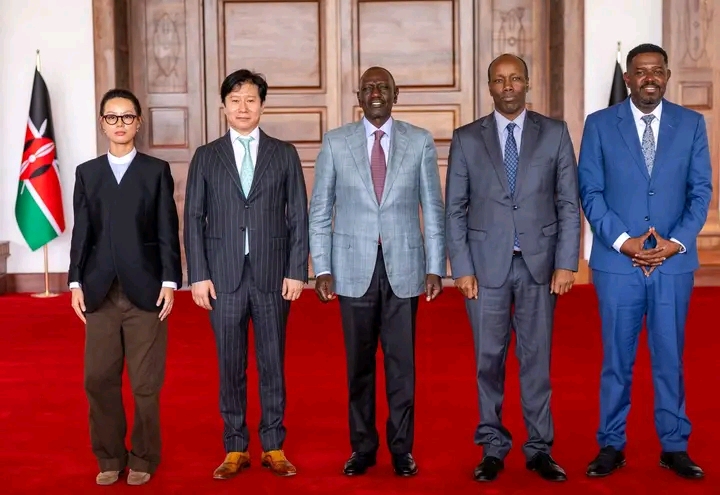
President William Ruto on Tuesday, October 6, 2026, witnessed the signing of a major Memorandum of Understanding (MoU) for a proposed US$3 billion (approximately KSh390 billion) integrated green mobility project, marking a significant step in Kenya's ambition to expand electric vehicle manufacturing, create jobs and reduce reliance on imported vehicles.
The agreement, signed in Nairobi, is expected to establish an extensive electric mobility ecosystem in Kenya that will bring together vehicle assembly and manufacturing, solar-powered charging infrastructure and digital technology. The development comes as the government continues to promote local manufacturing and value addition as key drivers of economic growth.
The MoU is particularly significant because it goes beyond the importation and sale of electric vehicles. The proposed project seeks to position Kenya as a regional manufacturing and green-mobility hub, with production facilities capable of supplying both the domestic market and potentially other African markets.
KSh390 billion proposed investment
At the centre of the agreement is a proposed investment of US$3 billion, equivalent to about KSh390 billion. President Ruto described the commitment as one of the largest electric mobility investments proposed in the region.
The President said the agreement provides a framework for developing an integrated green mobility ecosystem, reflecting his administration's emphasis on attracting investment while ensuring that more economic activity takes place within Kenya.
The government has increasingly argued that Kenya cannot achieve sustainable economic transformation by continuing to export raw materials and import finished products. Instead, the administration wants investors to establish manufacturing facilities locally so that Kenyans can benefit through employment, skills development, technology transfer and opportunities for local businesses.
Ruto used the signing ceremony to reiterate this position, saying Kenya must move towards adding value locally rather than depending heavily on imported finished products.
Electric vehicle assembly plants
One of the most important components of the proposed project is the establishment of an electric vehicle assembly plant with an annual production capacity of 50,000 four-wheeled vehicles.
The project will also include a second manufacturing facility capable of producing up to 100,000 two-wheelers and light mobility vehicles annually.
If implemented as proposed, the two facilities could give Kenya an annual production capacity of approximately 150,000 vehicles and light mobility units.
The development would represent a major expansion of Kenya's automotive manufacturing ambitions. Instead of relying primarily on imported electric cars, motorcycles and other mobility products, the country would have the capacity to manufacture and assemble a significant number of them locally.
This could also create opportunities for Kenyan companies involved in components, logistics, maintenance, software development, charging infrastructure and other services connected to electric mobility.
1,000 solar-powered charging hubs
Another major component of the agreement is the proposed construction of 1,000 solar-powered charging hubs across the country.
Charging infrastructure is one of the major requirements for the expansion of electric vehicles. While electric vehicles have gained popularity globally, inadequate charging networks can discourage consumers from switching from conventional petrol and diesel vehicles.
The proposed solar-powered charging network could therefore help address one of the challenges facing Kenya's electric mobility sector.
Using solar energy would also connect the transport project to Kenya's renewable-energy advantage. Kenya already has significant geothermal, solar, wind and hydropower resources, and the integration of renewable energy into electric transport could help reduce the environmental impact of mobility.
The project is therefore being positioned not simply as an automobile manufacturing programme, but as part of a wider transition towards cleaner transportation.
Digital platform for green mobility
The proposed investment will also include a digital platform designed to support and manage up to 100,000 green vehicles.
The digital component could provide an important link between vehicles, charging infrastructure, operators and customers.
As electric mobility develops, digital systems can play a role in areas such as vehicle monitoring, charging management, fleet management and mobility services. The inclusion of a digital platform therefore demonstrates the broader technological ambitions of the proposed investment.
It also fits into Kenya's wider efforts to strengthen its digital economy and use technology to support emerging industries.
Thousands of jobs expected
Employment is another major issue surrounding the agreement.
According to details released about the project, it is expected to create approximately 2,000 direct jobs, more than 20,000 indirect jobs through suppliers, logistics companies and service providers, and potentially up to 80,000 additional opportunities in areas such as fleet management and operations.
The potential employment impact is particularly important because Kenya has a large youthful population seeking opportunities in the formal economy.
The electric mobility industry could create jobs for engineers, technicians, mechanics, software developers, electricians, assembly workers, designers, logistics professionals and other specialists.
There could also be opportunities for small businesses supplying parts and services to the manufacturing facilities.
President Ruto emphasised that the figures attached to the project should ultimately be understood in terms of the people who stand to benefit.
He pointed to examples including young technicians working on assembly lines, Kenyan engineers developing products and motorcycle riders who could potentially benefit from lower operating costs associated with electric mobility.
Ruto pushes local value addition
The President used the occasion to reinforce his administration's local manufacturing agenda.
According to Ruto, Africa cannot achieve meaningful prosperity if it continues exporting raw materials while importing finished goods.
He argued that value should be added within African countries, while skills and jobs should also be developed locally.
The electric vehicle project therefore fits into a broader government strategy focused on manufacturing, industrialisation and employment creation.
For Kenya, local electric vehicle production could also reduce the country's exposure to international supply chains for finished vehicles. Local production could eventually help businesses and consumers access vehicles manufactured closer to the market.
Opportunities for young Kenyans
The project could have a wider impact on technical and vocational education.
As electric vehicles become more common, the skills required by mechanics and technicians are changing. Electric vehicles rely heavily on batteries, electronics, software and electrical systems, meaning technicians require specialised training.
The proposed investment could therefore increase demand for training programmes in electric vehicle maintenance, battery technology, charging systems and automotive electronics.
Universities, technical and vocational education and training institutions could potentially play a role in supplying the skilled workforce needed by the industry.
This could create a new generation of Kenyan technicians and engineers equipped to work in an emerging global industry.
Environmental significance
The agreement also carries environmental implications.
Transport is traditionally heavily dependent on fossil fuels, particularly petrol and diesel. Increasing the use of electric vehicles could help reduce emissions from road transport, especially when vehicles are charged using renewable energy.
The proposed solar-powered charging hubs could strengthen this environmental benefit by connecting electric mobility to clean energy.
Kenya's relatively strong renewable-energy base provides an opportunity to develop a transport system that increasingly relies on domestically generated clean electricity.
The project could consequently contribute to the country's climate and environmental objectives while supporting economic development.
Kenya seeks regional green mobility leadership
The proposed investment could also strengthen Kenya's position as a regional centre for electric mobility.
With the African Continental Free Trade Area creating opportunities for increased trade between African countries, locally manufactured electric vehicles could potentially serve markets beyond Kenya.
The combination of manufacturing, charging infrastructure and digital services could give Kenya a broader electric mobility ecosystem than simply importing finished vehicles.
This would also support the government's ambition to make Kenya a manufacturing and investment hub in East Africa.
A major test will be implementation
Despite the scale of the announcement, the MoU represents a framework for the proposed investment, meaning implementation will be crucial.
The success of the project will depend on financing, construction of manufacturing facilities, development of charging infrastructure, availability of skilled workers and sustained demand for electric vehicles.
Government policies will also play an important role in determining whether electric mobility becomes affordable and accessible to ordinary Kenyans.
Issues such as taxation, electricity costs, charging infrastructure, financing and availability of spare parts will influence consumer adoption.
The government and investors will therefore face the task of turning the commitments contained in the MoU into operational projects.

You Might Also Like
-
Dr. Oburu Oginga’s Secretariat has dismissed reports on his health, saying the ODM Party Leader is safe, in good spirits and recovering while following doctors’ advice.
-
President William Ruto will lead the dedication and official commissioning of the late Raila Odinga’s mausoleum at Kang’o Ka Jaramogi in Bondo, Siaya County.
-
Kenya's first confirmed Ebola case and the death of the patient at Nairobi Hospital have triggered an urgent response from KMPDU, which is demanding stronger protection for frontline healthcare workers and greater preparedness across health facilities. The union wants exposed healthcare workers to
-
 Deputy President Kithure Kindiki toured Kiambu County today, October 6, 2026, where he inspected development projects and announced plans to invest Sh290 million in student hostels at the KMTC Kiambaa Campus, alongside the expansion of the institution's tuition facilities. Kindiki said the governmen
 -
Kenya has confirmed its first Ebola case after a patient who had travelled from the Democratic Republic of Congo died while undergoing treatment in Nairobi. Health authorities are tracing and monitoring people who may have been exposed.
-
The Interior Ministry has identified 109 organised criminal gangs and groups across Kenya, with Western leading at 38, followed by Rift Valley with 22 and Nairobi with 20. The government says it is intensifying efforts to curb organised crime ahead of the 2027 General Election.