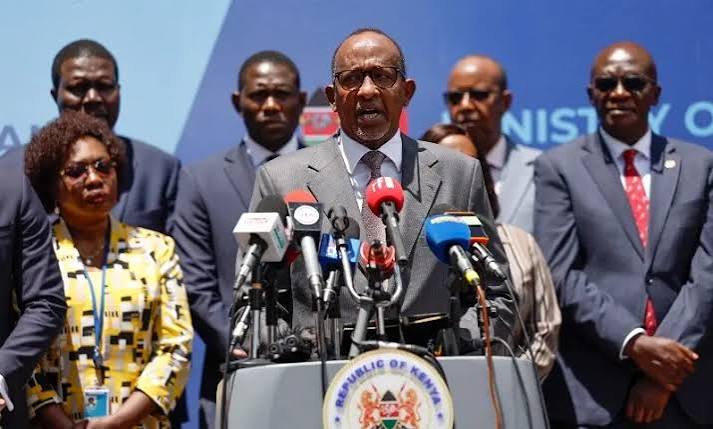




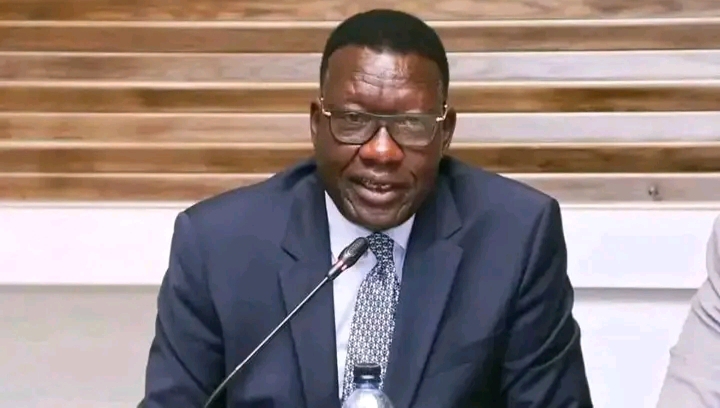
CS Davis Chirchir Announces Major Nairobi–Mombasa Road Redesign in Bold Move to Boost Safety and Ease Traffic
Roads and Transport Cabinet Secretary Davis Chirchir has said the government is moving to redesign and expand key sections of the Nairobi–Mombasa Road as part of broader efforts to address road accidents, improve safety and enhance the movement of people and goods. The announcement comes amid renewed concern over accidents along major highways, including the Nairobi–Mombasa route. The government says expansion and redesign of major roads will help address dangerous sections, improve traffic flow and support Kenya’s growing transport and economic needs
Roads and Transport Cabinet Secretary Davis Chirchir has announced that the government is moving towards redesigning and expanding the Nairobi–Mombasa Road as part of measures aimed at improving road safety and reducing accidents along one of Kenya's most important transport corridors.
The announcement comes at a time when road safety has become a major concern in Kenya, following a series of serious crashes reported on major highways. Chirchir said the government is looking at ways of improving roads that have experienced repeated accidents, with expansion of major highways forming part of the long-term solution.
According to information reported after Chirchir's latest remarks, the government is seeking funds to rehabilitate and improve roads that have been identified as experiencing high numbers of accidents. The Nairobi–Mombasa Road is among the major highways being considered for expansion and redesign.
Why the Nairobi–Mombasa Road is important
The Nairobi–Mombasa highway is one of Kenya's most strategically important roads. It connects the capital city, Nairobi, with the Port of Mombasa and serves as a major route for the transportation of goods to different parts of Kenya and neighbouring countries.
Thousands of vehicles use the corridor every day, including passenger buses, matatus, private vehicles, trucks and other commercial vehicles.
The road also forms an important part of the Northern Corridor, which links the Port of Mombasa to Nairobi and onward to other parts of East Africa. Any disruption along the highway can therefore have consequences beyond Kenya's borders.
For businesses, the road is particularly important because trucks use it to transport imported and exported goods between the port and inland markets. Improving the highway could therefore have an impact on the cost and speed of transporting goods.
Government focuses on road safety
Chirchir's announcement comes amid increased attention on road safety in Kenya.
A number of major highways have experienced fatal crashes, raising questions about road design, traffic management, vehicle conditions and driver behaviour.
A recent deadly crash on the highway towards Mombasa in the Salama area of Makueni County claimed at least 17 lives, according to the Associated Press. The accident involved several vehicles and highlighted continuing concerns about safety on Kenya's major highways.
Following such incidents, attention has increasingly turned to whether some sections of major roads require redesign rather than simply routine maintenance.
Chirchir has indicated that the government is considering long-term infrastructure improvements, including expanding major highways and addressing sections that have repeatedly been associated with accidents.
Plan to expand the highway
The proposed changes are not entirely new. Earlier government plans had already pointed towards transforming the existing Nairobi–Mombasa corridor into a wider highway.
A July 2026 report indicated that the government had abandoned an earlier plan involving a US investor to construct a new expressway and instead intended to upgrade the existing Nairobi–Mombasa highway.
The proposal involved expanding the existing corridor to at least four lanes and using a tolling model to help finance the project. The Treasury's Public-Private Partnerships Directorate had received bids for a transaction adviser to help restructure the project and review its technical and financial feasibility.
This approach would mean that instead of completely abandoning the existing road and constructing an entirely separate highway, the government would seek to improve the road already being heavily used by motorists.
Such an upgrade could involve widening the road, improving junctions, strengthening road surfaces, redesigning dangerous sections and introducing other safety measures.
Reducing congestion
One of the expected benefits of redesigning the Nairobi–Mombasa Road is reduction of congestion.
Traffic congestion has become a major challenge on several sections of the corridor, particularly around major urban and industrial centres.
Areas around Nairobi, Athi River, Machakos Junction, Emali, Mtito Andei and other busy locations can experience heavy traffic, especially during weekends, holidays and periods of increased commercial activity.
A wider and better-designed highway could allow vehicles to move more efficiently and reduce delays.
For truck operators, this could be particularly important because delays increase fuel consumption, operating costs and delivery times.
For passengers, better traffic flow could mean shorter journey times between Nairobi and Mombasa.
Improving the movement of goods
The Nairobi–Mombasa corridor is also crucial to Kenya's economy because of its connection to the Port of Mombasa.
The port handles goods destined for Kenya as well as neighbouring countries. Trucks transporting cargo from the coast rely heavily on the highway.
An improved road would therefore support trade by making the movement of cargo faster and more predictable.
Reducing traffic congestion and improving road conditions could also lower vehicle operating costs.
For manufacturers, retailers and importers, more efficient transportation could eventually contribute to lower logistics costs.
Safety redesign
The government's plan also puts emphasis on safety.
Redesigning a highway is different from simply resurfacing it. A redesign can involve changing road geometry, improving intersections, adding pedestrian facilities, installing better signs and markings, improving drainage and introducing measures to separate different types of traffic.
Dangerous sections can also be redesigned to reduce head-on collisions and other serious crashes.
The government has previously acknowledged the importance of improving major transport corridors. In February 2026, Chirchir inspected works along the James Gichuru Road junction–JKIA section of the Mombasa–Malaba corridor. The project includes capacity enhancement, landscaping and improvements to access roads, with the aim of reducing congestion and improving traffic flow.
This demonstrates the broader government approach of improving road capacity around major transport and economic centres.
Funding remains important
One of the biggest questions surrounding the Nairobi–Mombasa Road redesign is financing.
Chirchir has said the government is seeking funding for the rehabilitation and expansion of accident-prone roads.
Large highway projects require significant amounts of money, particularly when they involve land acquisition, construction of additional lanes, bridges, interchanges, drainage systems and other infrastructure.
The proposed public-private partnership approach for the Nairobi–Mombasa corridor is therefore significant because it could provide an alternative source of financing.
The government will, however, need to balance the need for investment with affordability for motorists if tolling becomes part of the financing model.
Government's wider road expansion programme
The Nairobi–Mombasa Road proposal comes as the government continues with several major road expansion projects across the country.
One example is the Rironi–Mau Summit corridor, where Chirchir has said the Rironi–Naivasha section is expected to be completed and opened to traffic by October 30, 2026. The wider project is intended to improve the Nairobi–Nakuru transport corridor and reduce congestion.
The Rironi–Naivasha section is being upgraded into a dual carriageway, while subsequent sections will provide additional capacity where traffic volumes are high.
The projects demonstrate the government's strategy of increasing road capacity on major economic corridors.
Economic impact
If successfully implemented, the redesign of the Nairobi–Mombasa Road could have significant economic benefits.
A safer and more efficient highway could encourage investment along the corridor. Industrial areas and commercial centres located close to the highway could benefit from better access to markets.
Farmers could also benefit from improved transportation of agricultural produce to urban markets.
Tourism could gain from better road connectivity between Nairobi, the Coast and destinations along the route.
The road could also support regional trade by making it easier for goods entering through Mombasa to reach inland destinations.
Challenges ahead
Despite the potential benefits, the project could face several challenges.
Financing will be one of the biggest issues. Construction costs for major highways are high, and the government will have to identify sustainable funding arrangements.
Land acquisition could also become a challenge in sections where widening the existing road requires additional space.
There may also be disruption during construction because the Nairobi–Mombasa corridor cannot simply be closed while works are undertaken. Contractors will have to maintain traffic flow while carrying out major improvements.
If tolling is adopted, the government will also need to explain the system clearly to motorists and demonstrate that the additional cost is justified by improved road quality and safety.
A long-term transport vision
Chirchir's announcement points to a broader government effort to modernise Kenya's transport infrastructure.
Rather than focusing only on repairing damaged roads after problems occur, the government is increasingly looking at expanding capacity and redesigning infrastructure to accommodate future traffic.
For the Nairobi–Mombasa Road, this is particularly important because traffic volumes are expected to continue increasing as Kenya's population, economy and regional trade grow.
The ultimate objective is to create a highway that is safer, faster and capable of handling increasing passenger and commercial traffic.
The government will now face the task of translating the proposed redesign into a fully financed and implemented project. The success of the plan will depend on funding, planning, engineering, procurement and effective project management.
For millions of Kenyans and businesses that depend on the Nairobi–Mombasa corridor, however, the announcement offers the prospect of significant improvements to one of the country's most important transport routes.
In conclusion, CS Davis Chirchir's announcement that the government is moving to redesign and expand the Nairobi–Mombasa Road marks a renewed focus on improving safety and transport efficiency along the busy corridor. The plan comes amid concerns over deadly road accidents and congestion on major highways. With the government considering expansion of the existing road to at least four lanes and exploring financing options, the proposed redesign could improve the movement of people and goods, strengthen trade and reduce travel delays.

You Might Also Like
-
Dr. Oburu Oginga’s Secretariat has dismissed reports on his health, saying the ODM Party Leader is safe, in good spirits and recovering while following doctors’ advice.
-
President William Ruto will lead the dedication and official commissioning of the late Raila Odinga’s mausoleum at Kang’o Ka Jaramogi in Bondo, Siaya County.
-
Kenya's first confirmed Ebola case and the death of the patient at Nairobi Hospital have triggered an urgent response from KMPDU, which is demanding stronger protection for frontline healthcare workers and greater preparedness across health facilities. The union wants exposed healthcare workers to
-
 Deputy President Kithure Kindiki toured Kiambu County today, October 6, 2026, where he inspected development projects and announced plans to invest Sh290 million in student hostels at the KMTC Kiambaa Campus, alongside the expansion of the institution's tuition facilities. Kindiki said the governmen
 -
President William Ruto's witnessing of the signing of the US$3 billion, approximately KSh390 billion, electric mobility MoU marks an important development in Kenya's push for manufacturing, technology and green transportation. The proposed project includes electric vehicle assembly, production of tw
-
Kenya has confirmed its first Ebola case after a patient who had travelled from the Democratic Republic of Congo died while undergoing treatment in Nairobi. Health authorities are tracing and monitoring people who may have been exposed.