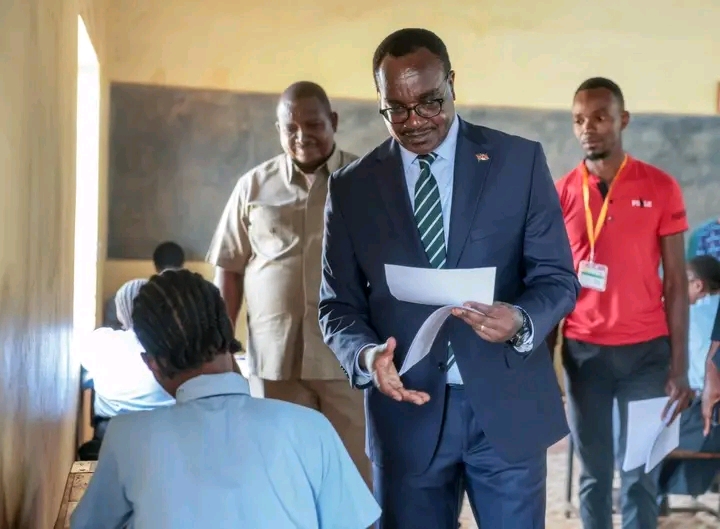
Education CS Julius Ogamba Witnesses Opening of KNEC Examination Container in Makueni as KPSEA and KJSEA Assessments Begin
Education Cabinet Secretary Julius Migos Ogamba on Monday, October 26, 2026, witnessed the opening of the KNEC examination container at the Makindu Sub-County Deputy County Commissioner's Office in Makueni County and oversaw the distribution of KPSEA and KJSEA assessment materials to designated centres. He assured parents and learners that the government had strengthened examination security, prepared assessment officials and established contingency measures to address flooding and transport challenges. The CS warned against examination malpractice and fraudsters claiming to possess leaked papers, while urging parents to encourage candidates and support them throughout the assessment period.
Education Cabinet Secretary Julius Migos Ogamba on Monday, October 26, 2026, witnessed the opening of a Kenya National Examinations Council (KNEC) examination container at the Makindu Sub-County Deputy County Commissioner’s Office in Makueni County, marking the beginning of the distribution of examination materials for the 2026 Kenya Primary School Education Assessment (KPSEA) and Kenya Junior School Education Assessment (KJSEA).
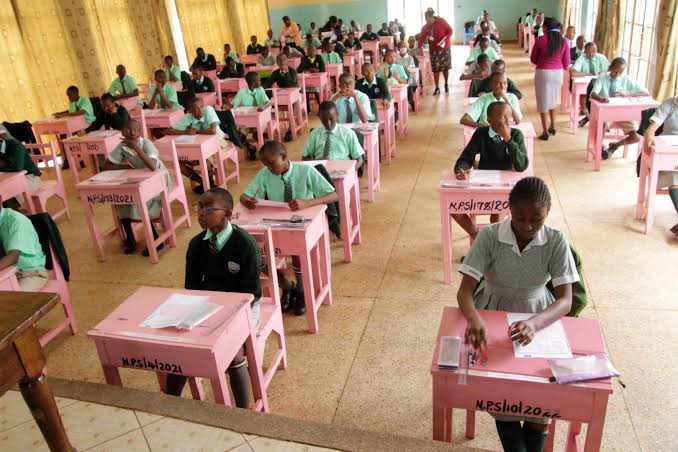
The Cabinet Secretary also oversaw the release and distribution of assessment materials to designated examination centres, as thousands of learners across the country began their national assessments under heightened security and close supervision by education and government officials. The exercise was part of the government's efforts to ensure that examination papers reach schools on time and that every eligible candidate has an opportunity to complete the assessments under fair and well-organised conditions. Opening of the KNEC examination container in Makindu
The opening of the examination container took place at approximately 6:00 a.m., in accordance with the established procedures for the collection and distribution of KPSEA and KJSEA examination materials.
The secure containers serve as designated distribution points where examination papers are stored before being collected by authorised officials and transported to assessment centres. Their controlled opening is an important part of the national examination security system because it helps prevent unauthorised access to confidential materials before the scheduled start of each paper.The 2026 KPSEA and KJSEA assessments involve millions of learners across Kenya, making the exercise a major undertaking for the country's education system.
According to reports published on the opening day, KNEC had registered 1,298,089 candidates for KPSEA and 1,130,669 candidates for KJSEA in the figures cited by the reports. Combined, these numbers represent approximately 2.43 million learners. Other reports have used updated registration figures, so the precise national total depends on the figures being reported. KPSEA is taken by learners completing Grade 6, while KJSEA is undertaken by learners completing Grade 9 under Kenya's Competency-Based Education (CBE) system.
The assessments are important milestones because they help evaluate learners' progress and support decisions about their subsequent educational pathways. For Grade 6 learners, KPSEA provides information about achievement at the end of primary school. For Grade 9 learners, KJSEA plays an important role in the transition to senior school.
The national assessments also require substantial logistical preparation. Examination papers must be printed, packaged, secured, transported and delivered to the correct centres. Officials must ensure that the right materials are supplied to each school and that candidates sit the assessments according to the approved timetable.What Education CS Julius Ogamba said about examination preparedness
During the exercise in Makindu, Ogamba assured parents, learners and the public that the government had put measures in place to support the smooth administration of the 2026 assessments.
He said preparations had involved securing examination materials, preparing supervisors and invigilators, and coordinating the relevant government agencies to ensure the assessments proceeded according to schedule.The Cabinet Secretary also emphasised the importance of protecting the credibility of national assessments. Examination results must provide a fair picture of each learner's knowledge and competencies, rather than being influenced by cheating, impersonation or the unauthorised release of examination papers.
Ogamba warned candidates, parents and examination officials against examination malpractice. He also cautioned members of the public not to pay fraudsters who claim to have access to examination papers before they are officially administered.
Such schemes can exploit anxious parents who want their children to perform well. The government's position is that candidates should rely on their preparation and that anyone involved in examination fraud should be reported to the relevant authorities.Bad weather can complicate the delivery of examination papers, particularly in remote areas where roads may become impassable. It can also affect learners travelling to assessment centres and create challenges for officials responsible for distributing and collecting materials.
Ogamba said the government had worked with the Kenya Red Cross, the Ministry of Interior and other agencies to identify flood-prone areas where weather conditions could disrupt the assessments.
The arrangements include coordinating transport, preparing alternative delivery plans and considering aerial delivery where necessary. Education officials and local administrators are expected to work together to respond to emerging logistical challenges.
These preparations are significant because candidates should not be disadvantaged simply because they live in areas affected by difficult weather conditions.The Kenya Primary School Education Assessment (KPSEA) is administered to Grade 6 learners. It helps establish how learners are progressing at the end of primary school and provides information about their achievement of the expected competencies.
The Kenya Junior School Education Assessment (KJSEA) is administered to Grade 9 learners. It assesses competencies acquired during junior school and contributes to decisions concerning progression to senior school.
The introduction of these assessments reflects the country's transition away from an education system that relied heavily on high-stakes examinations at the end of particular school levels.According to the published timetable, KPSEA is scheduled to run until Wednesday, October 28, while KJSEA continues until Friday, October 30. The first papers were scheduled to begin at 8:30 a.m.
The early opening of the examination container allows authorised officials to collect the day's materials and distribute them to the relevant centres before the assessments begin.
Centre managers, supervisors and invigilators have important responsibilities throughout the process. They must confirm that the correct materials are delivered, follow the official timetable, supervise candidates appropriately and observe all examination regulations.
Candidates are expected to arrive at their assessment centres on time, listen to instructions and complete their papers independently.KNEC is responsible for coordinating and administering the assessments, including the handling of examination materials and the procedures used to protect their integrity. The Ministry of Education provides policy direction and oversees the broader implementation of the education system.
The Teachers Service Commission and teachers also have an important role in ensuring that candidates are adequately prepared and that assessment centres have the required personnel.
Meanwhile, the Ministry of Interior and National Administration, security agencies and local administrators support the protection and movement of examination materials and help address logistical challenges.
The exercise witnessed by Ogamba in Makindu illustrated the importance of these coordinated responsibilities.What the exercise means for parents, learners and schools in Makueni
For parents and learners in Makueni County, the opening of the examination container signalled the start of an important period in the academic calendar.Parents want assurance that their children will receive the correct examination papers, be assessed fairly and have their performance accurately recorded. The security measures and monitoring exercises are intended to protect those expectations.
Learners, meanwhile, need to concentrate on the tasks before them rather than become distracted by rumours about leaked papers or claims that examination outcomes can be manipulated.
Teachers and school administrators must ensure that assessment centres follow the official rules and that any problems are communicated promptly to the responsible officials.
The government has also urged families to provide emotional support. Young learners may experience anxiety during national assessments, particularly when they understand that the results contribute to their educational progression.
Encouragement, adequate rest and reassurance can help candidates approach the papers with greater confidence.

You Might Also Like
-
Kenya's 2026 national assessments have officially begun, with 1,298,089 learners sitting the Kenya Primary School Education Assessment (KPSEA) and 1,130,669 undertaking the Kenya Junior School Education Assessment (KJSEA). The exercise marks an important milestone in the implementation of the Compet
-
Nairobi Water is set to interrupt water supply for three days in several parts of the capital, including Ngong Road, Lang’ata, Westlands, Gigiri and Karen, to facilitate maintenance on a major pipeline. Residents, businesses and institutions are urged to prepare by storing sufficient water and fol
-
Health Cabinet Secretary Aden Duale has reassured Kenyans and the international community that Kenya has not imposed any travel, trade or tourism restrictions. He says the government is following World Health Organization (WHO) guidance, which advises against closing borders or imposing restrictions
-
CS Kipchumba Murkomen together with other leaders attended and interdenominational church service and held a meeting with local leaders in Kongasis,Eburi ward in Nakuru County. He updated the residents on ongoing and upcoming development projects in the county including roads,stadiums,water, housi
-
The death toll from the tragic road accident at Kanga area along the Mtito Andei–Mombasa Highway has risen to 24 after two more victims succumbed to injuries sustained in the crash. The incident has left families grieving and renewed concerns over road safety on one of Kenya’s major transport ro
-
President William Ruto has ordered the inspection of all public service vehicles to ensure compliance with road safety regulations following a tragic accident along the Nairobi–Mombasa Highway in Makueni County that claimed 24 lives. The directive aims to improve vehicle safety, strengthen enforce