



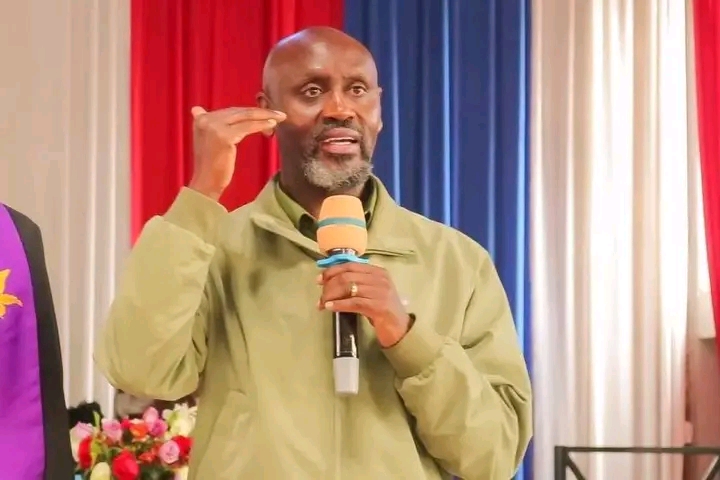
Former IPOA Chair Macharia Njeru Enters 2027 Race, Unveils Bold Plan to Take on Ruto
Macharia Njeru’s entry into the 2027 presidential race has added a new dimension to Kenya’s increasingly competitive succession contest. The former IPOA chairperson is presenting himself as an experienced lawyer and public-sector reformer who understands both government and private enterprise. His campaign is expected to focus on reducing government wastage, strengthening institutions, improving accountability, creating opportunities for young people, protecting constitutional rights, ending abductions and advancing governance reforms. Whether Njeru can translate his professional and public-service record into nationwide political support remains to be seen. However, his declaration ensures that the 2027 presidential contest now has another candidate promising Kenyans a different style of leadership and a stronger focus on governance reform.
Former Independent Policing Oversight Authority (IPOA) chairperson Macharia Njeru has officially entered Kenya’s 2027 presidential race, adding another prominent name to an increasingly crowded contest to succeed President William Ruto.
Njeru announced his presidential bid on Monday, October 5, 2026, saying his decision was driven by the need for Kenyans to have credible leadership choices and a different approach to governance. He will seek the presidency on the Mwongozo Mpya Party ticket.
His entry into the race comes at a time when political activity is intensifying across the country, with several leaders already positioning themselves for the 2027 General Election. Among those who have expressed presidential ambitions are Ruto, former Deputy President Rigathi Gachagua, Wiper leader Kalonzo Musyoka, former Interior Cabinet Secretary Fred Matiang’i, Nairobi Senator Edwin Sifuna, former Cabinet Secretary Eugene Wamalwa, Martha Karua and businessman Jimi Wanjigi, among others.
Njeru officially declares his bid
Making his announcement, Njeru described the declaration as the beginning of a new political journey.
“The journey begins. Today, I officially announce my bid for the Presidency of the Republic of Kenya,” he said, according to reports on his declaration.
The former IPOA chairperson said he had spent considerable time considering whether to enter active politics, particularly because many professionals with experience in public institutions and the private sector have traditionally avoided politics.
Njeru argued that the reluctance of competent professionals to participate in politics has contributed to the limited choices available to voters.
He questioned why people who have built careers defending public institutions and promoting accountability should remain outside the political arena when decisions made by politicians have a direct impact on the lives of ordinary Kenyans.
According to Njeru, Kenyans should not continue choosing between candidates they consider unsatisfactory simply because more qualified professionals are unwilling to seek elective positions.
His experience in public and private sectors
A major part of Njeru’s presidential pitch is his professional experience.
He has presented himself as a candidate who understands both government institutions and the private sector. During his declaration, he argued that this background would distinguish him from previous Kenyan presidents.
Njeru said that if elected, he would be the first Kenyan president with extensive experience in both the private and public sectors.
His professional background includes many years in legal practice and corporate governance. He is a lawyer and founding partner of Macharia-Mwangi & Njeru Advocates, where he has practised commercial law, banking and financial services, corporate governance and other areas.
He has also held leadership positions in financial institutions and served on several boards.
The former IPOA chairperson therefore hopes to use his private-sector experience as part of his argument that Kenya requires stronger financial management, accountability and efficiency in government.
Former IPOA chairperson
Njeru is perhaps best known nationally for his role as the founding chairperson of IPOA.
He served at the helm of the police oversight authority after its establishment as part of Kenya’s post-reform efforts to strengthen civilian oversight of the National Police Service.
IPOA was established to provide independent oversight over policing and investigate complaints involving police conduct. Njeru was part of the broader police-reform process before taking leadership of the authority.
An official IPOA report describes him as an advocate of the High Court who had participated in the National Task Force on Police Reforms and the Police Reforms Implementation Committee. He was also involved in drafting legislation related to policing reforms.
His experience at IPOA is likely to form an important part of his campaign message, particularly on issues of constitutionalism, police accountability, human rights and the independence of public institutions.
Promise to reduce government wastage
One of Njeru’s major campaign messages is the need to reduce wastage in government.
He has criticised what he considers unnecessary public expenditure, particularly the continued use of supplementary budgets.
Njeru argued that government can significantly reduce its expenditure without compromising the delivery of essential services.
He claimed that government wastage is so substantial that supplementary budgets could be reduced by more than 60 per cent while government operations continue normally.
His position places public finances at the centre of his emerging campaign.
Kenya has been facing pressure over public debt, government expenditure, taxation and the cost of servicing loans. Njeru is therefore presenting himself as a leader who would prioritise efficiency and accountability in the management of public resources.
He has also warned about the gap between government revenue and expenditure, arguing that the country needs a different approach to economic management.
Concern over unemployment and the youth
Njeru has also focused on the challenges facing young Kenyans.
He has pointed to the large number of young people working in informal employment despite having university and postgraduate qualifications.
He cited the 2026 African Youth Outlook report, saying a significant proportion of young people are engaged in informal economic activities.
For Njeru, the situation demonstrates a disconnect between education, economic opportunities and employment.
He has argued that Kenya has enough talented and educated people to transform the economy, but poor leadership and governance have prevented the country from fully benefiting from its human capital.
His campaign is therefore expected to focus heavily on employment creation, economic opportunities and better utilisation of Kenya’s educated workforce.
Criticism of political leadership
Njeru has been a vocal critic of aspects of President William Ruto’s administration even before formally entering the presidential contest.
In July 2026, he criticised what he described as a growing culture of lawlessness and argued that leadership at the highest level sets the tone for the rest of government. He also raised concerns about the independence of constitutional institutions and the enforcement of the law.
His previous public statements suggest that governance, rule of law and institutional independence will be important themes in his presidential campaign.
Njeru has argued that public officials should be prepared to defend the constitutional institutions they lead instead of surrendering to political pressure.
His experience at IPOA could give him an opportunity to speak directly about the importance of independent oversight institutions.
Ending abductions and strengthening rights
Reports on Njeru’s declaration indicate that his proposed administration would also pursue reforms aimed at addressing abductions and strengthening human rights protections.
He has previously expressed strong concern about the safety of citizens and the conduct of security agencies.
His political message is therefore likely to appeal to voters who want stronger accountability within the security sector and greater protection of constitutional rights.
The issue of police conduct and state accountability has remained politically significant in Kenya, particularly as the country approaches the 2027 election.
Gender representation
Njeru has also pledged to support the implementation of the constitutional two-thirds gender principle.
The provision requiring measures to ensure that no more than two-thirds of members of elective or appointive bodies are of the same gender has remained one of Kenya’s longstanding constitutional and political debates.
His commitment to the issue could form part of his broader governance reform agenda as he seeks support from women voters and political leaders advocating for greater representation.
A crowded 2027 race
Njeru’s declaration further expands an already crowded presidential field.
The 2027 election is shaping up to be a major contest, with President Ruto expected to seek another term while several opposition and independent political figures seek to challenge him.
Recent political developments have included Edwin Sifuna formally positioning himself through The Equitable Party, while other aspirants have been building alliances and exploratory teams.
An Infotrak poll reported in July 2026 placed Ruto ahead of the named presidential contenders, with Kalonzo Musyoka, Fred Matiang’i and Edwin Sifuna among those registering significant support. However, Njeru was not among the leading candidates in that poll, meaning he will have to build national recognition and political structures if his campaign is to become competitive.
The challenge ahead
Although Njeru has extensive experience in law, governance and public institutions, transforming that experience into a successful presidential campaign will be a major challenge.
Kenyan presidential elections require extensive national mobilisation, strong party structures, significant financial resources and the ability to build alliances across different regions and voter groups.
Njeru will therefore need to introduce himself to millions of voters who may know him primarily through his previous work at IPOA and the legal profession.
He will also need to develop a detailed manifesto addressing the economy, unemployment, healthcare, education, agriculture, infrastructure, security, public debt and the cost of living.
His decision to run under the Mwongozo Mpya Party will also require him to establish strong grassroots structures capable of competing with established political parties and coalitions.
2027 campaign begins to take shape
Njeru’s announcement comes as preparations for the 2027 General Election accelerate.
The Independent Electoral and Boundaries Commission has already issued important timelines for political parties and public officers preparing to participate in the election. Public officers intending to contest elective positions are required to resign by February 10, 2027, while parties face deadlines concerning nomination rules and candidate preparations.
This means aspiring presidential candidates now have a relatively limited period to build their political organisations and convince voters.
For Njeru, the immediate task will be transforming his governance credentials into a nationwide political movement.
His campaign will likely be closely watched because he is entering politics with a background different from that of many traditional presidential contenders

You Might Also Like
-
Dr. Oburu Oginga’s Secretariat has dismissed reports on his health, saying the ODM Party Leader is safe, in good spirits and recovering while following doctors’ advice.
-
President William Ruto will lead the dedication and official commissioning of the late Raila Odinga’s mausoleum at Kang’o Ka Jaramogi in Bondo, Siaya County.
-
Kenya's first confirmed Ebola case and the death of the patient at Nairobi Hospital have triggered an urgent response from KMPDU, which is demanding stronger protection for frontline healthcare workers and greater preparedness across health facilities. The union wants exposed healthcare workers to
-
 Deputy President Kithure Kindiki toured Kiambu County today, October 6, 2026, where he inspected development projects and announced plans to invest Sh290 million in student hostels at the KMTC Kiambaa Campus, alongside the expansion of the institution's tuition facilities. Kindiki said the governmen
 -
President William Ruto's witnessing of the signing of the US$3 billion, approximately KSh390 billion, electric mobility MoU marks an important development in Kenya's push for manufacturing, technology and green transportation. The proposed project includes electric vehicle assembly, production of tw
-
Kenya has confirmed its first Ebola case after a patient who had travelled from the Democratic Republic of Congo died while undergoing treatment in Nairobi. Health authorities are tracing and monitoring people who may have been exposed.