



Government Urged to Boost Education Funding for Persons with Visual Impairments
The Mount Longonot charity hike has once again placed the education needs of persons with visual impairments in the spotlight. The event brought together supporters, organizations and disability advocates for a common cause: raising awareness and resources for learners who require specialized support to access education. The call for increased government funding reflects the additional costs associated with inclusive education, including Braille materials, assistive technology, specialized teaching, scholarships and accessible learning environments. While fundraising activities such as the Mount Longonot hike can provide valuable support, stakeholders argue that sustainable progress requires long-term investment. Government institutions, private organizations, schools, communities and individuals all have a role to play in ensuring that visual impairment does not prevent a learner from receiving quality education. The climb therefore represented more than reaching the top of Mount Longonot. It provided a public reminder that inclusion requires deliberate action and resources, and that supporting education for learners with visual impairments can help create greater opportunities for independence, employment and participation in society.
The government has been urged to increase funding for the education and empowerment of persons with visual impairments, as stakeholders, partners and supporters came together for a charity hike at Mount Longonot aimed at raising awareness and supporting learners living with visual impairment.
The initiative brought together people from different backgrounds for a day that combined physical activity, inclusion and fundraising. The Kenya Society for the Blind (KSB), which organizes programmes aimed at improving the welfare, education, training and rehabilitation of people with visual impairments, used the event to highlight the importance of giving learners the resources they need to access education and participate fully in society.
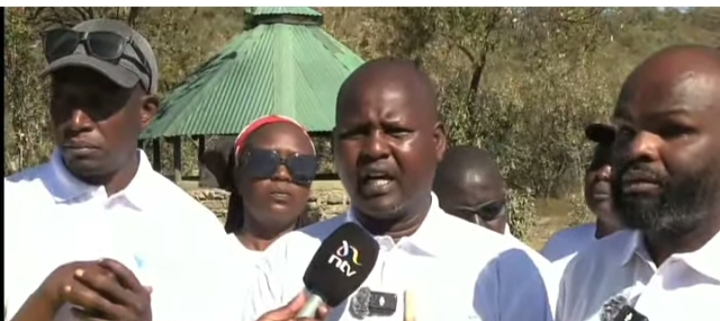
The latest Mount Longonot Hike and Fun Day was officially flagged off by KSB Executive Director Samson Waweru and National Fund for the Disabled of Kenya (NFDK) Chief Executive Officer Benson Kiptum. According to KSB, the event was not simply about climbing the mountain but about creating hope and opportunities for students with visual impairment.
A hike with a bigger purpose
Mount Longonot, located in Kenya's Great Rift Valley, is well known for its challenging volcanic terrain and panoramic views. But for participants in the charity event, the mountain represented something beyond adventure.
The hike provided an opportunity for participants to physically demonstrate solidarity with people living with visual impairments while also mobilising resources for education and other support programmes.
KSB described the event as an opportunity to create hope and opportunities for students with visual impairment, with the organization thanking individuals, partners and supporters who participated in the climb.
The charity aspect of the hike is important because learners with visual impairments often require specialized resources that are not normally needed by other learners.
These include Braille textbooks, Braille machines and paper, screen-reading software, accessible electronic materials, tactile learning materials, white canes and other assistive technologies.
At universities such as Egerton University, disability support programmes include Braille machines, Braille paper, embossers, screen-reading software, electronic resources and transcription services. These examples demonstrate the additional resources required to make education accessible to visually impaired learners.
Call for increased government funding
The fundraising event has also renewed attention on the need for greater government investment in special-needs education.
Stakeholders argue that government funding should not only focus on the number of learners enrolled in schools but should also take into account the additional costs involved in providing accessible education.
A learner who uses Braille, for example, requires learning materials to be converted from ordinary print into Braille. A visually impaired student may also require assistive technology to access computers and online learning platforms.
This means that achieving equal educational opportunities requires additional investment.
The Kenya Society for the Blind's mandate includes promoting the welfare, education, training, rehabilitation and employment of people who are blind or visually impaired. The organization also seeks to encourage inclusion of visually impaired persons in society.
Government support is therefore important in ensuring that organizations working in this area have the resources required to deliver their programmes.
Why education funding matters
Education is particularly important for persons with visual impairments because it can provide a pathway towards independence and employment.
When learners receive appropriate support from an early age, they can develop literacy, professional skills and confidence to participate in economic and social activities.
However, when accessible learning materials are unavailable or unaffordable, visually impaired learners can face significant disadvantages.
The problem can begin in primary school and continue through secondary school, college and university.
A shortage of Braille textbooks, inadequate assistive technology and limited access to specialized teachers can make it difficult for students to keep up with their peers.
For this reason, advocates want the government to consider special-needs education as an important component of the country's wider education agenda.
Fundraising has supported the cause before
The Mount Longonot charity climb is not a new concept.
The Kenya Society for the Blind has used the annual event over the years to create awareness about visual impairment and mobilise support.
A 2019 report by the Standard Group noted that the organization had used activities including charity golf, a blind walk and the Mount Longonot climb to raise awareness and support for people with disabilities. The report also highlighted the high cost of Braille materials and the need for partnerships.
Historical records also show that the Mount Longonot charity climb has attracted support from institutions and organizations.
An Auditor-General report documented the participation of the Kenya Institute of Special Education in a Mount Longonot initiative organized by the Kenya Society for the Blind, with the institute contributing funding towards the activity.
Another parliamentary report described a partnership involving the Insurance Regulatory Authority and KSB in which the annual Mount Longonot Charity Climb was used to support education, eye care and awareness creation.
This demonstrates that the climb has for years served as more than a sporting event.
Supporting students with visual impairment
The fundraising effort is particularly important for students who come from financially disadvantaged families.
Parents of children with visual impairments can face additional expenses when purchasing assistive devices, paying for specialized educational services or accessing suitable learning materials.
In some cases, families may also need to meet transportation and accommodation costs when specialized services are available only in particular locations.
Financial support can therefore make the difference between a learner remaining in school and dropping out.
The National Council for Persons with Disabilities also has programmes supporting education for learners with disabilities, including scholarships and other forms of assistance. These interventions are intended to reduce financial barriers and improve participation in education.
However, stakeholders argue that government programmes should continue to expand as demand increases.
Assistive technology is becoming increasingly important
Technology has transformed education for visually impaired learners.
A student can use a screen reader to access documents, websites and educational applications. Braille displays can convert digital information into readable Braille, while audio resources can make educational content accessible.
However, assistive technologies can be expensive.
For this reason, increased government funding could help schools and institutions acquire equipment and make it available to learners who cannot afford it.
Education institutions also need trained personnel who understand how to use and maintain the technology.
Funding is therefore required not only for buying equipment but also for training teachers, producing accessible materials and providing technical support.
The importance of Braille
Braille remains an important tool for many learners who are blind.
It allows students to read and write independently and is particularly important in developing literacy and numeracy skills.
However, producing Braille books requires specialized equipment and trained personnel.
A 2019 Standard Group report highlighted the high cost of Braille compared with ordinary learning materials, pointing to the financial burden involved in providing accessible educational resources.
The situation illustrates why stakeholders believe ordinary education funding allocations may not always be sufficient to address the needs of learners with visual impairments.
Inclusion beyond the classroom
The Mount Longonot event also highlighted the importance of inclusion beyond education.
Participants were encouraged to interact with people with visual impairments and appreciate their abilities rather than focusing on their disabilities.
A similar Mount Longonot charity climb in 2025 organized by KSB involved participants being paired with people with visual impairment during the climb. One participating organization described the experience as an exercise in inclusion, teamwork and solidarity.
Such activities can challenge misconceptions about disability.
They also demonstrate that persons with visual impairments can participate in sporting, recreational and social activities when appropriate support and accessibility measures are provided.
Partnerships remain important
The call for increased government funding does not mean that responsibility should rest entirely with the government.
Private companies, charitable organizations, schools, universities and members of the public can also contribute.
Previous Mount Longonot initiatives have attracted schools, corporate organizations, government institutions and individual supporters.
The Kenya Society for the Blind has also continued to seek partnerships in its programmes, including activities focused on education, eye care and awareness.
The combination of government funding and private-sector support can help expand the reach of programmes serving visually impaired learners.
Raising awareness about disability
The hike also served an awareness-creation purpose.
Many people may understand disability only from a theoretical perspective. Participating in an activity alongside people with visual impairments can provide a more direct understanding of the challenges they face.
The event therefore encouraged conversations about accessibility, education and equal opportunities.
The Kenya Society for the Blind says its work includes awakening public interest in the welfare of blind people and matters relating to blindness.
This makes public events such as the Mount Longonot hike an important avenue for bringing disability issues into the national conversation.
Government, schools and communities
Stakeholders seeking more government funding want education institutions to receive resources that allow visually impaired students to participate on an equal basis.
This could include increasing the supply of Braille materials, improving access to assistive technology, supporting specialized teachers and strengthening programmes that provide scholarships and other financial assistance.
Schools and universities can also play a role by ensuring that their buildings, digital platforms and learning resources are accessible.
Communities, meanwhile, can help by supporting inclusive activities and challenging stigma surrounding disability.
A message beyond fundraising
The Mount Longonot hike demonstrated that fundraising can also become a platform for advocacy.
Every participant who joined the climb contributed to raising visibility for the needs of people with visual impairments.
The event's message was particularly focused on students because education can have a lasting impact on their future.
Providing a learner with a Braille book, assistive device, scholarship or accessible digital resource can help that learner participate more effectively in school and develop skills needed later in life.
The Kenya Society for the Blind's latest communication on the event emphasized that the climb was about creating hope and opportunities for students with visual impairment.
You Might Also Like
-
The High Court in Kibra has denied bail to eight minors facing charges linked to the Untumishi Girls fire tragedy, which claimed the lives of 16 girls on May 28. The suspects will remain in custody as the case proceeds.
-
The recovery of 241.5 kilogrammes of bhang valued at approximately KSh7.245 million following an accident along the Nakuru–Nairobi Highway has turned a highway crash into a major narcotics investigation. The six sacks discovered inside the damaged Mazda CX-5 have been secured by police, while dete
-
The drama witnessed in Nairobi CBD on September 21, 2026, has once again pushed Kizza Besigye’s prolonged detention into the spotlight in Kenya. Several activists were arrested after police broke up a demonstration demanding his release and calling for answers over how he was transferred from Keny
-
The Mau evictees' return to the forest has brought renewed attention to a dispute that has remained unresolved for years. While the affected families say they returned because they had not received compensation, Narok authorities have warned them against reoccupying the protected forest and instruct
-
Kithure Kindiki's September 21 visit to Tharaka Nithi combined development inspections, public engagement and political messaging. He inspected road construction works, addressed residents at Gaciongo Market and defended the decision by Mount Kenya elders to endorse him as their spokesperson and rep
-
Azimio la Umoja has officially rebranded as the Ukombozi Alliance, with Wiper leader Kalonzo Musyoka announcing the new political identity ahead of the 2027 General Election.