



Kithure Kindiki Storms Tharaka Nithi: DP Speaks on Mount Kenya Leadership, Development and His Message to Critics
Kithure Kindiki's September 21 visit to Tharaka Nithi combined development inspections, public engagement and political messaging. He inspected road construction works, addressed residents at Gaciongo Market and defended the decision by Mount Kenya elders to endorse him as their spokesperson and representative. He also spoke about Kalonzo Musyoka and urged political leaders to focus on development rather than personal attacks. As infrastructure projects continue and political activity intensifies ahead of 2027, Kindiki's activities in Tharaka Nithi place both development and the question of Mount Kenya unity at the centre of his current public engagements.
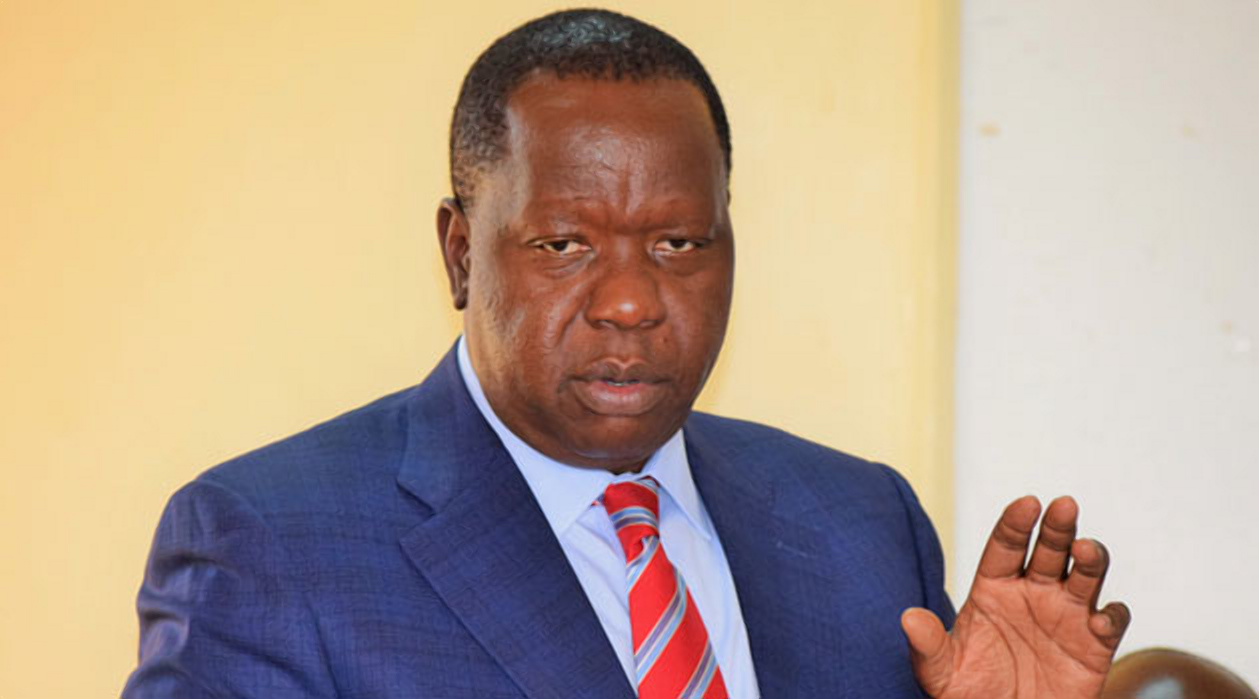
Deputy President Kithure Kindiki was in Tharaka Nithi County on Monday, September 21, 2026, where he inspected ongoing road construction projects and addressed residents as part of a government development and public sensitisation tour.
Kindiki's visit came at a politically significant moment, only two days after a gathering of elders from different communities in the wider Mount Kenya region endorsed him as their spokesperson and representative. During his Tharaka Nithi engagements, the Deputy President defended the elders' decision and challenged those opposed to it to raise their concerns directly with the elders who made the decision.
The Deputy President's programme in Tharaka Constituency combined development activities with public engagement. According to reports, he began by inspecting works on the Mukothima-Gaciongo-Gatunga Road before proceeding to Gaciongo Market, where he addressed residents. He was also scheduled to inspect the Kithaga-Matiri Road and later hold another public sensitisation meeting at Matiri Market.
Inspection of road projects
Infrastructure development was one of the main components of Kindiki's visit to Tharaka Nithi.
The Deputy President inspected ongoing construction works on the Mukothima-Gaciongo-Gatunga Road. The project is expected to improve connectivity between communities in the area and facilitate movement of people, agricultural products and other goods.
Road infrastructure remains an important issue for rural communities because roads provide links between homes, markets, schools, health facilities and administrative centres. Improved roads can also reduce transportation difficulties for farmers and traders who depend on reliable access to markets.
Kindiki's inspection therefore provided an opportunity for the national government to assess the progress of the works while interacting directly with residents who use the roads.
Another project on the Deputy President's programme was the Kithaga-Matiri Road. Reports indicated that the road is intended to strengthen connections between communities and improve access to important services and economic centres.
The road inspections also formed part of the government's wider emphasis on infrastructure development as it seeks to demonstrate projects being implemented in different parts of the country.
Kindiki addresses residents at Gaciongo Market
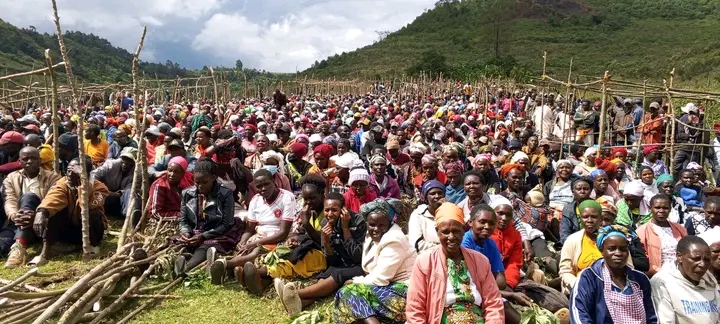
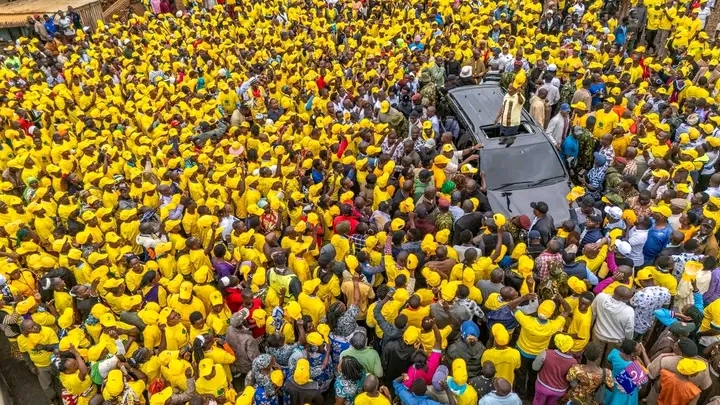
After inspecting the road works, Kindiki proceeded to Gaciongo Market, where he addressed residents during a public sensitisation meeting.
His remarks covered both development and politics. The Deputy President spoke about the importance of infrastructure while also responding to the ongoing debate surrounding his recent endorsement by Mount Kenya elders.
The Gaciongo meeting was particularly significant because Tharaka Nithi is part of Mount Kenya East and has been at the centre of discussions about the political and cultural representation of the wider Mount Kenya region.
Kindiki told those attending the meeting that his focus was on bringing communities together and pursuing development.
His comments came after the September 19 gathering at Kirigiti Stadium in Kiambu County, where elders representing different communities from Mount Kenya endorsed him as spokesperson and representative of the region.
Kindiki defends endorsement by Mount Kenya elders
One of the most prominent issues raised by Kindiki in Tharaka Nithi was the criticism surrounding his endorsement by elders.
The Deputy President said the decision was made by elders representing several traditional institutions and argued that political leaders who disagreed with the decision should address their concerns to those elders.
According to reports, Kindiki said that if anyone had an issue with the decision, that person should approach the elders directly. He also challenged critics who considered themselves popular or influential to contradict the elders' decision.
The remarks followed a ceremony at Kirigiti Stadium on September 19 in which elders from communities in the wider Mount Kenya region presented Kindiki with traditional regalia.
The gathering involved elders associated with several traditional institutions, including Kiama Kia Ma, the Kikuyu Council of Elders, Kiama Kia Muembu, Nyangi Ndiriri and the Njuri Ncheke Supreme Council of Ameru Elders, according to reports.
The declaration from the elders described Kindiki as their spokesperson and representative in advancing the interests and aspirations of the Mount Kenya region.
Call for unity in Mount Kenya
Kindiki's remarks in Tharaka Nithi also focused on unity.
He argued that communities should not allow political competition to create divisions among them. He said traditional elders have a role in maintaining peace and cohesion because they are concerned with the welfare of communities across generations.
Kindiki contrasted the role of elders with that of politicians, arguing that politicians compete for elective positions while elders are concerned with broader community interests.
He said his responsibility was to unite communities and pursue development for Kenya as a whole while also seeking development for the Mount Kenya region.
The unity question has become increasingly prominent within Mount Kenya politics, particularly because of discussions involving Mount Kenya East and Mount Kenya West.
Earlier this month, National Assembly Majority Leader Kimani Ichung'wah called for concerns raised by communities in Meru, Embu and Tharaka Nithi to be listened to rather than dismissed. He said grievances involving the eastern bloc of Mount Kenya should be addressed before they develop into deeper divisions.
Kindiki speaks about Kalonzo Musyoka
During the Gaciongo engagement, Kindiki also commented on Wiper Patriotic Front leader Kalonzo Musyoka.
The Deputy President referred to Kalonzo as his brother and described him as a respectable person while simultaneously questioning the development record in his home area.
Kindiki particularly focused on road infrastructure, asking why some roads associated with Kalonzo's home area remained in poor condition despite Kalonzo having held senior government positions, including serving as Vice President.
He contrasted Kalonzo's past government positions with the condition of roads in the area and said the current administration would assist with development.
At the same time, Kindiki urged Kalonzo not to engage in insults. He said he considered the Wiper leader to be a dignified politician and encouraged him not to be influenced into using abusive language in political exchanges.
The comments illustrate how Kindiki's current public engagements combine development messaging with political responses as the country moves closer to the 2027 General Election.
Political significance of the Tharaka Nithi visit
Kindiki's appearance in Tharaka Nithi comes against the backdrop of increasing political activity across the Mount Kenya region.
The region is an important political constituency, comprising communities from Mount Kenya East and Mount Kenya West. The September 19 elders' gathering at Kirigiti added another layer to the ongoing discussions about regional unity and political representation.
Reports from the Kirigiti gathering said elders from different parts of the region agreed to work together and endorsed Kindiki as their spokesperson. The event also generated political reactions from leaders who either supported or questioned the significance of the endorsement.
Kindiki's response in Tharaka Nithi was that the decision should be understood in the context of the elders who participated in the process.
He maintained that his responsibility was not to engage in endless arguments with political opponents but to focus on unity and development.
Development remains central to Kindiki's message
Despite the political discussions surrounding his visit, the physical inspection of roads remained an important component of Kindiki's programme.
The Mukothima-Gaciongo-Gatunga and Kithaga-Matiri roads are significant to residents because roads determine how easily communities access markets, schools, hospitals and government services.
For farmers, improved roads can potentially make it easier to transport agricultural produce to markets. For students and workers, better connectivity can reduce difficulties associated with travelling long distances on poor roads.
The Deputy President's inspection also allows the government to receive direct feedback from local communities regarding the implementation of projects.
Public sensitisation meetings such as the one at Gaciongo Market provide an opportunity for residents to raise concerns and for government officials to explain ongoing programmes.
Kindiki's wider role in the Ruto administration
As Deputy President, Kindiki has increasingly taken part in government development activities across different parts of the country.
He has also become increasingly visible in political discussions involving the Mount Kenya region.
Recent engagements have included meetings with grassroots leaders and elders in the region. In August, Kindiki addressed UDA grassroots leaders in Tharaka Nithi and spoke about the government's record and preparations for the political contest ahead.
His recent activities have therefore combined three broad themes: government development programmes, mobilisation and engagement with grassroots communities, and discussions about regional unity and representation.
The September 21 Tharaka Nithi visit continued that pattern.
Response to criticism
Kindiki's remarks about the elders' endorsement have already attracted different political interpretations.
Supporters of the endorsement have presented it as an attempt by elders from different communities to promote unity and give the region a common voice. Critics, however, have questioned whether cultural elders should determine political representation.
Citizen Digital reported that the Democracy for the Citizens Party criticised the endorsement, with Secretary-General and Nyandarua Senator John Methu arguing that political leadership is determined by citizens rather than an elders' endorsement.
These differing interpretations are important because the September 19 event was both cultural and political in its public significance. The elders described their action in terms of regional representation and unity, while critics have viewed it through the lens of electoral politics.
Kindiki's response has been to emphasise the authority of the elders involved and to call for unity and development.
What happens next?
Kindiki's Tharaka Nithi tour is part of a broader pattern of government engagement with local communities through inspections, public meetings and project monitoring.
The continued construction of roads such as Mukothima-Gaciongo-Gatunga and Kithaga-Matiri will be closely watched by residents who expect the projects to improve transport and access to markets and public services.
Politically, Kindiki's comments are likely to keep the discussion about Mount Kenya unity and regional representation in the public conversation.
The Deputy President has made clear that he intends to emphasise unity rather than prolonged exchanges with critics of the elders' decision. At Gaciongo, he argued that his focus should be on bringing communities together and pursuing development.
His comments also come at a time when political leaders across Kenya are increasingly positioning themselves ahead of the 2027 General Election. The debate surrounding the Mount Kenya region, its leadership structures and its relationship with the national government is therefore likely to remain an important part of national political discussion.
For residents of Tharaka Nithi, however, the immediate significance of Kindiki's visit extends beyond politics. The inspection of road projects offers an opportunity to assess whether promised infrastructure improvements are progressing as planned.
The Deputy President's engagement at Gaciongo Market also demonstrates the government's effort to take development and public sensitisation directly to local communities.

You Might Also Like
-
The Mau evictees' return to the forest has brought renewed attention to a dispute that has remained unresolved for years. While the affected families say they returned because they had not received compensation, Narok authorities have warned them against reoccupying the protected forest and instruct
-
Azimio la Umoja has officially rebranded as the Ukombozi Alliance, with Wiper leader Kalonzo Musyoka announcing the new political identity ahead of the 2027 General Election.
-
The disappearance of 53-year-old Lily Chorono Kimtai from Kaplamai, Trans Nzoia County, has left her family facing unanswered questions since September 9, 2026. Her reported message about travelling to Mombasa, the subsequent loss of phone communication and the disappearance of her husband's license
-
The High Court has declared unconstitutional a law restricting retired presidents from engaging in active politics, affirming their constitutional right to participate in political activities as private citizens.
-
Former CS Fred Matiang’i is demanding full disclosure of Kenya’s G-to-G oil deal, citing concerns over transparency, accountability and the role of intermediaries in petroleum imports.
-
COTU Secretary-General Francis Atwoli is calling for constitutional reforms to clearly regulate the conduct and political activities of retired presidents, arguing that Kenya needs a framework that will apply to former heads of state beyond individual political circumstances.