



Matiang’i Demands Full Disclosure of Government-to-Government Oil Deal
Former CS Fred Matiang’i is demanding full disclosure of Kenya’s G-to-G oil deal, citing concerns over transparency, accountability and the role of intermediaries in petroleum imports.
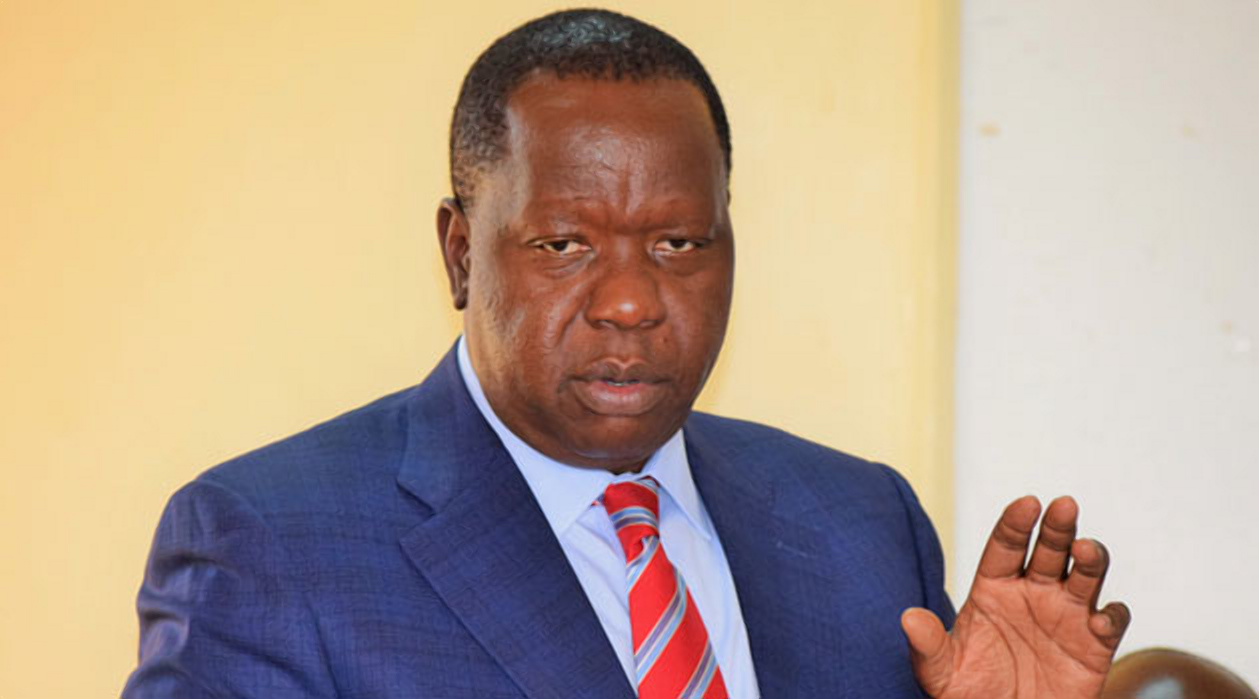
Jubilee Party Deputy Leader and former Interior Cabinet Secretary Fred Matiang’i has renewed calls for the full disclosure of Kenya’s Government-to-Government (G-to-G) petroleum importation agreement, saying recent remarks by Ugandan President Yoweri Museveni have raised fresh questions about how the arrangement was structured and implemented.
Matiang’i is calling for the agreement to be made public in its entirety, including details surrounding the involvement of intermediaries and companies that participated in the petroleum supply chain.
His demands come days after President Yoweri Museveni disclosed that Uganda had previously been purchasing petroleum products through intermediaries in Kenya, rather than obtaining them directly through the government-to-government framework.
Museveni made the remarks on September 17, 2026, during the groundbreaking ceremony for a 320-million-litre petroleum storage terminal in Mpigi District, Uganda. He said he had been alerted to the use of middlemen by a Kenyan legislator whom he identified as “Jirongo.”
Museveni later clarified that the person he was referring to was the late former Kenyan lawmaker Cyrus Jirongo, who, according to the Ugandan president, had informed him around 2019 about the involvement of intermediaries in Uganda’s petroleum procurement arrangements.
The Ugandan President said the information prompted him to question how petroleum products were being procured for Uganda and eventually seek an alternative arrangement that would allow the country to source fuel more directly.
Museveni also presented figures comparing the premiums Uganda was paying under the previous arrangement with those under its later direct procurement system. According to figures cited by Museveni, the diesel premium fell from 118 US dollars per metric tonne to 83 dollars, while the petrol premium dropped from 97.50 dollars to 61.50 dollars. The aviation fuel premium, according to the same figures, fell from 114.25 dollars to 79.25 dollars per metric tonne.
The remarks have since generated renewed debate in Kenya over the country's own G-to-G petroleum importation framework and the role played by private oil marketing companies.
Matiang’i argues that the latest revelations make it necessary for the Kenyan Government to provide the public with complete information about the agreement.
In his statement, the former Cabinet Secretary said the G-to-G agreement should be published in full and that the role of intermediaries should be disclosed and subjected to scrutiny.
He also called for the National Oil Corporation of Kenya (NOCK) to be restored to what he described as its proper role in securing petroleum supplies and helping stabilise the local fuel market.
Matiang’i has maintained that the public has a right to understand how the arrangement works, particularly where public resources and the country's fuel supply are concerned.
He argued that transparency should be central to any arrangement involving public money and questioned who benefited from the oil importation framework, the costs involved and the reasons behind the structure adopted.
The latest demand is not the first time Matiang’i has raised concerns about the G-to-G oil agreement. Reporting from September 20 indicates that he had previously said, during an April 19 appearance on Citizen TV's Sunday Live, that he would not have signed the agreement and had called for its publication.
The Government, however, has defended the petroleum importation framework and rejected suggestions that it was designed to facilitate an improper arrangement.
Energy Cabinet Secretary Opiyo Wandayi has explained that the framework was introduced in response to serious foreign-exchange challenges that Kenya faced in 2022.
According to the Energy Ministry, the arrangement was intended to help secure petroleum supplies while easing pressure on Kenya's foreign-exchange reserves at a time when the country was experiencing a shortage of US dollars.
The agreement was brokered in 2023 with three major international oil companies: Aramco Trading Fujairah FZE, Abu Dhabi National Oil Company (ADNOC) Global Trading Ltd and Emirates National Oil Company (Singapore) Private Limited, commonly known as ENOC.
The companies were tasked with supplying refined petroleum products under extended credit terms, with the arrangement intended to reduce the immediate foreign-exchange burden associated with fuel imports.
Wandayi has further explained that the international oil companies appointed licensed Oil Marketing Companies in Kenya to handle local supply logistics.
The companies initially brought into the arrangement included Gulf Energy Limited, Galana Energies Limited and Oryx Energies Kenya Limited.
As the arrangement progressed, additional companies were nominated, including One Petroleum Limited, Asharami Synergy Limited and BE Energy Limited, following what the government described as a vetting and de-risking process.
The Energy Ministry maintains that the participation of these companies did not contradict the government-to-government nature of the arrangement because the international suppliers remained responsible for supplying petroleum products while licensed Kenyan companies handled aspects of local logistics.
The Government has also argued that the framework helped preserve Kenya's foreign-exchange reserves and contributed to stability in the Kenya shilling-US dollar exchange rate.
The controversy has nevertheless intensified following Museveni's comments about Uganda's previous use of intermediaries in petroleum procurement through Kenya.
While the Ugandan President's remarks concerned Uganda's procurement arrangements, the comments have prompted questions in Kenya about the broader regional petroleum supply chain, including the distinction between government-to-government agreements, international suppliers and local oil marketing companies.
Museveni has also subsequently indicated that some Kenyan media reports added interpretations to his original remarks. Uganda's official broadcaster reported that the President said his comments were about Uganda's previous procurement system and that he was not accusing the current Kenyan Government of wrongdoing.
This distinction is important because the claims surrounding Uganda's previous fuel procurement arrangements should not automatically be treated as proof of wrongdoing in Kenya's separate G-to-G agreement.
Nevertheless, Matiang’i argues that the controversy provides a reason for greater public scrutiny of Kenya's petroleum importation framework.
His central demand is for the Government to publish the agreement and provide clarity on the role of intermediaries, the companies involved, pricing arrangements and the flow of petroleum products under the framework.
The debate also comes at a time when fuel prices and petroleum supply remain important issues for Kenyan households, businesses and the wider economy.
Petroleum prices affect transportation, manufacturing, agriculture, electricity generation and the cost of goods and services. As a result, questions surrounding the procurement and distribution of fuel attract significant public interest.
The G-to-G arrangement was introduced against the backdrop of economic and foreign-exchange pressures, and the Government maintains that its primary objective was to secure a reliable supply of petroleum while reducing pressure on the country's dollar reserves.
Critics, including Matiang’i, are instead demanding greater transparency over how the system operates and who benefits from the arrangements.
The latest dispute therefore centres on two competing questions: whether the G-to-G framework achieved its stated economic objectives, and whether the Government has provided sufficient information about its implementation.
For Matiang’i, publication of the agreement would allow Kenyans and relevant oversight institutions to examine the arrangement and determine how the petroleum supply chain operates.
He has specifically called for the role of middlemen to be disclosed and scrutinised, while also advocating for a stronger role for NOCK in securing petroleum supplies and supporting stability in the domestic fuel market.
As the debate continues, the Government's explanation remains that the G-to-G framework was established to address foreign-exchange constraints and ensure reliable petroleum supplies, while local oil marketing companies were brought in to facilitate logistics.
Matiang’i, on the other hand, is calling for the full agreement and related information to be placed in the public domain.
The controversy is now likely to keep attention focused on the structure of Kenya's petroleum importation system, the role of international suppliers and local oil marketing companies, and the mechanisms used to determine the cost of imported fuel.
For the public, the key issue remains access to clear and verifiable information on how the agreement was negotiated, how it has been implemented and how public interests have been protected.
The renewed calls for disclosure come as Kenya continues to debate the balance between securing strategic fuel supplies, protecting foreign-exchange reserves and ensuring transparency in major public-interest procurement arrangements.

You Might Also Like
-
Kithure Kindiki's September 21 visit to Tharaka Nithi combined development inspections, public engagement and political messaging. He inspected road construction works, addressed residents at Gaciongo Market and defended the decision by Mount Kenya elders to endorse him as their spokesperson and rep
-
Azimio la Umoja has officially rebranded as the Ukombozi Alliance, with Wiper leader Kalonzo Musyoka announcing the new political identity ahead of the 2027 General Election.
-
The disappearance of 53-year-old Lily Chorono Kimtai from Kaplamai, Trans Nzoia County, has left her family facing unanswered questions since September 9, 2026. Her reported message about travelling to Mombasa, the subsequent loss of phone communication and the disappearance of her husband's license
-
The High Court has declared unconstitutional a law restricting retired presidents from engaging in active politics, affirming their constitutional right to participate in political activities as private citizens.
-
COTU Secretary-General Francis Atwoli is calling for constitutional reforms to clearly regulate the conduct and political activities of retired presidents, arguing that Kenya needs a framework that will apply to former heads of state beyond individual political circumstances.
-
The demand by Kenyan women senators for a probe into the reported pregnancies of 36 learners at Bakisa Secondary School in Webuye, Bungoma County, has placed child protection and the safety of school-going girls at the centre of national attention. With 13 girls reportedly having already given birth