



High Court Declares Law Restricting Retired Presidents From Active Politics Unconstitutional
The High Court has declared unconstitutional a law restricting retired presidents from engaging in active politics, affirming their constitutional right to participate in political activities as private citizens.
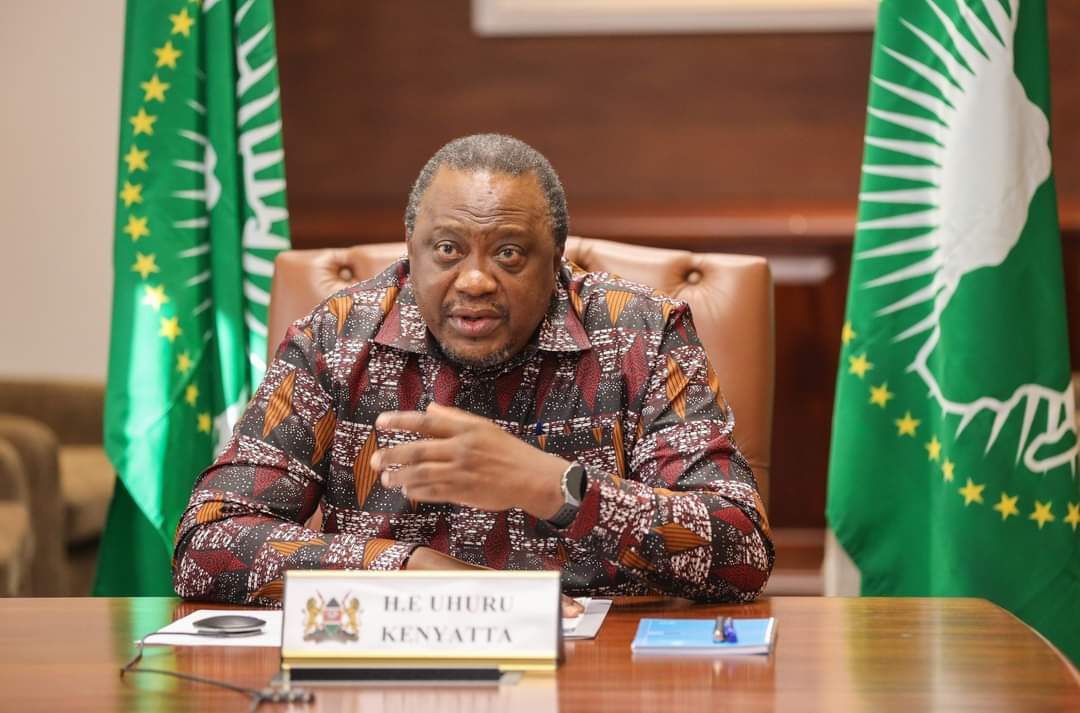
Former President Uhuru Kenyatta has received a significant boost after the High Court declared unconstitutional provisions of the law that had been used to restrict retired presidents from engaging in active political activities.
The judgment, delivered by Justice Bahati Mwamuye on Monday, September 21, 2026, addressed provisions of the Presidential Retirement Benefits Act that sought to limit the political activities of former heads of state.
The ruling comes against the backdrop of renewed political activity involving retired President Uhuru Kenyatta, whose continued participation in Kenya's political affairs has generated debate in recent years.
The court's decision has now clarified that retirement from the presidency does not, by itself, strip a Kenyan citizen of constitutional political rights.
Justice Mwamuye's decision focused on the constitutional rights of retired presidents and whether Parliament could use legislation to restrict those rights simply because an individual had previously served as head of state.
The judgment effectively removes the legal basis for treating retired presidents differently from other citizens when it comes to participating in political activities, subject to other laws that apply to all citizens.
The decision is particularly significant for Uhuru Kenyatta, who has remained involved in national political discussions since leaving office in September 2022.
The former president has continued to participate in political and public activities, including his involvement in the Jubilee Party and the wider opposition political landscape.
The latest judgment follows another High Court decision delivered only a week earlier concerning the political activities of retired presidents.
On September 14, Justice Lawrence Mugambi had upheld Section 6 of the Presidential Retirement Benefits Act, which prevents retired presidents from holding political party leadership positions for more than six months after leaving State House.
However, that ruling also recognised that retired presidents remain free to join political parties and participate in party activities. The restriction specifically concerned holding political office within a political party.
The two decisions therefore dealt with different aspects of the law governing retired presidents.
Justice Mwamuye's latest ruling goes further in addressing the broader question of political participation and the constitutional rights of former presidents.
The court's position is that citizenship and constitutional rights do not automatically disappear when a person leaves the presidency.
Kenya's Constitution provides citizens with political rights, including the right to participate in political activities and to form, join or participate in the activities of political parties.
The central question before the court was therefore whether legislation could lawfully impose additional restrictions on a retired president because of the office that person previously occupied.
Justice Mwamuye found provisions of the law unconstitutional, effectively affirming that a retired president remains a private citizen with political rights.
The decision could have wider implications beyond Uhuru Kenyatta because it applies to the legal framework governing retired presidents generally.
Kenya has had several former presidents who have remained influential in national affairs after leaving office. The question of how much political activity a retired president should be allowed to undertake has therefore remained an important constitutional and political issue.
Supporters of restrictions on former presidents have previously argued that retired heads of state occupy a unique position because of the influence, networks and public profile they retain after leaving office.
A previous High Court ruling by Justice Lawrence Mugambi relied partly on this reasoning when upholding the restriction against retired presidents holding political party leadership positions beyond six months after leaving office. The judge noted that former presidents could wield significant influence capable of affecting political competition.
The latest ruling, however, draws an important distinction between holding a formal leadership position in a political party and participating in political activities as a citizen.
This distinction is particularly relevant to Uhuru Kenyatta, who served as Kenya's fourth president between 2013 and 2022.
Following Justice Mugambi's September 14 ruling, Uhuru's office indicated that he would comply with the requirement to relinquish his position as Jubilee Party leader.
His office said the ruling did not amount to a restriction on his political life and that he would respect the court's direction regarding his party position.
The latest judgment now changes the legal environment surrounding political participation by retired presidents.
It also comes at a politically sensitive period, with Kenya preparing for the 2027 General Election.
Uhuru Kenyatta's political influence has remained a subject of national discussion, particularly amid growing political realignments and the emergence of various opposition alliances ahead of the next election.
In recent weeks, political leaders allied to President William Ruto have criticised Uhuru over his continued involvement in national politics.
Some Kenya Kwanza leaders have accused the former president of supporting opposition efforts against the current administration, while Uhuru's allies have maintained that his participation in political affairs is within his constitutional rights. These are competing political claims rather than findings established by the court.
The court ruling does not determine the political positions of Uhuru Kenyatta or any other retired president. Instead, it addresses the legal question of whether legislation can restrict their political rights because they previously occupied the presidency.
The decision therefore places renewed emphasis on the constitutional principle that political rights belong to citizens.
For Uhuru Kenyatta, the ruling could provide greater legal clarity as he continues to engage in public and political affairs.
However, the judgment does not necessarily mean that a retired president is free from every legal restriction applicable to political activity.
Other constitutional provisions, electoral laws, political party regulations and laws applicable to all citizens remain relevant.
The ruling should therefore be understood within the broader legal framework governing political participation in Kenya.
The judgment also raises questions about the relationship between Parliament and the Constitution.
The Presidential Retirement Benefits Act was enacted to provide former presidents with retirement benefits and establish certain conditions surrounding their post-presidential status.
Some of its provisions, however, have increasingly faced constitutional scrutiny, particularly where they appear to impose restrictions on rights guaranteed under the 2010 Constitution.
The latest case demonstrates the role of the Judiciary in reviewing legislation and determining whether statutory provisions comply with constitutional rights.
It also highlights the continuing debate over how Kenya should balance the special status of former heads of state with their rights as ordinary citizens.
For Uhuru Kenyatta, the immediate significance of the ruling is that his retirement from the presidency cannot, on its own, be used as a basis for preventing him from participating in political activities.
The judgment could also influence future discussions concerning former presidents who may wish to remain active in national politics after leaving office.
The decision comes at a time when political parties and coalitions are positioning themselves ahead of the 2027 General Election. Various political figures are reorganising their alliances, while former leaders continue to play roles in shaping national political debates.
The ruling is therefore likely to attract considerable attention from political parties, constitutional lawyers and other stakeholders.
For the public, the key issue arising from the judgment is the extent to which political rights can be limited through legislation.
The High Court has now provided its interpretation of that question in relation to retired presidents, holding that retirement from State House does not automatically remove a person's constitutional political rights.
The decision marks another important development in Kenya's continuing constitutional debate over the rights and responsibilities of former presidents.
It also provides a distinction between participating in politics and holding formal political party office — an issue that has featured prominently in recent court proceedings involving Uhuru Kenyatta.
As Kenya moves closer to the 2027 General Election, the legal position established by the court is likely to remain relevant to discussions surrounding the role of retired presidents in national political life.
For now, the ruling means that a retired president remains entitled to participate in political activities as a citizen, while the specific restrictions on holding political party office must be considered separately under the applicable law and court decisions.
The judgment therefore offers fresh legal clarity on the political rights of former heads of state and places constitutional protections at the centre of the debate over their continued participation in Kenya's political affairs.

You Might Also Like
-
The Mau evictees' return to the forest has brought renewed attention to a dispute that has remained unresolved for years. While the affected families say they returned because they had not received compensation, Narok authorities have warned them against reoccupying the protected forest and instruct
-
Kithure Kindiki's September 21 visit to Tharaka Nithi combined development inspections, public engagement and political messaging. He inspected road construction works, addressed residents at Gaciongo Market and defended the decision by Mount Kenya elders to endorse him as their spokesperson and rep
-
Azimio la Umoja has officially rebranded as the Ukombozi Alliance, with Wiper leader Kalonzo Musyoka announcing the new political identity ahead of the 2027 General Election.
-
The disappearance of 53-year-old Lily Chorono Kimtai from Kaplamai, Trans Nzoia County, has left her family facing unanswered questions since September 9, 2026. Her reported message about travelling to Mombasa, the subsequent loss of phone communication and the disappearance of her husband's license
-
Former CS Fred Matiang’i is demanding full disclosure of Kenya’s G-to-G oil deal, citing concerns over transparency, accountability and the role of intermediaries in petroleum imports.
-
COTU Secretary-General Francis Atwoli is calling for constitutional reforms to clearly regulate the conduct and political activities of retired presidents, arguing that Kenya needs a framework that will apply to former heads of state beyond individual political circumstances.