



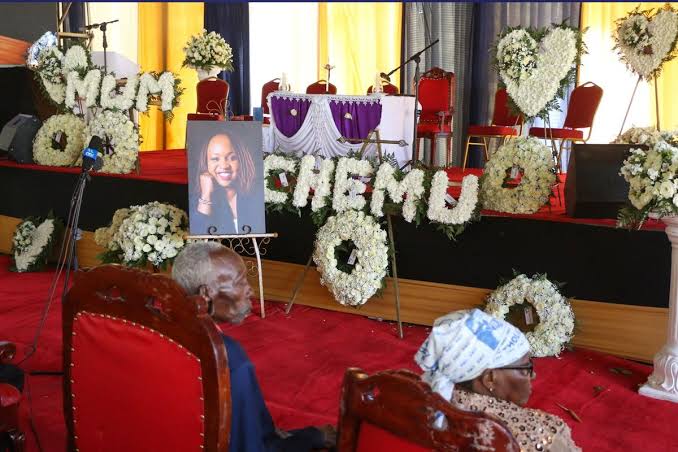
Kelvin Kimwatu Withdraws Court Case Over Burial of Wife Rosemary Chemutai Koech
Kelvin Kimwatu Withdraws Court Case Over Burial of Wife Rosemary Chemutai Koech
Kelvin Kimwatu Withdraws Court Case Over Burial of Wife Rosemary Chemutai Koech
Kelvin Kimwatu, the husband of former KCB employee Rosemary Chemutai Koech, has withdrawn the court case he had filed in connection with the burial of his wife, informing the court that he will no longer pursue her exhumation or contempt of court proceedings.
Kimwatu's decision marks a significant development in the legal dispute surrounding the burial of Rosemary Chemutai Koech. The case had brought the circumstances surrounding her burial before the court, with Kimwatu previously seeking legal intervention over the matter.
However, during the latest court proceedings, Kimwatu informed the court that he had decided to withdraw the case and would no longer pursue the orders he had initially sought.
Among the matters he has abandoned are his request for the exhumation of his wife's remains and proceedings relating to alleged contempt of court.
The withdrawal means that, for now, Kimwatu will not continue with the legal process seeking to have Rosemary's remains exhumed. He has also indicated that he will not proceed with the contempt proceedings that formed part of his earlier application.
The case has attracted attention because of the circumstances surrounding the burial and the legal disagreements that followed. The decision by Kimwatu to withdraw the proceedings brings an important change to the dispute, particularly regarding the future of the exhumation request.
Court cases involving burial and exhumation can be emotionally and legally complex, especially when disagreements arise among family members or other parties connected to the deceased. Such disputes may require the court to consider competing interests while also taking into account the dignity of the deceased and the wishes of the parties involved.
In this case, Kimwatu had approached the court seeking intervention over the burial of his wife. His latest decision, however, signals that he no longer intends to pursue the matter through the court in the form of the orders he had previously sought.
The withdrawal of the case does not necessarily erase the circumstances that led to the legal proceedings, but it means that the specific applications Kimwatu had placed before the court will no longer be pursued by him.
Of particular significance is the decision to abandon the exhumation request. Exhumation is a serious legal and personal matter, and Kimwatu's decision means that he will not continue seeking an order that would require his wife's remains to be removed from their burial place.
The contempt of court proceedings have also been withdrawn. Such proceedings generally arise where a party is accused of failing to comply with a court order. By choosing not to pursue that aspect of the case, Kimwatu has effectively brought an end to that part of his legal challenge.
The latest development now leaves questions about what prompted the withdrawal and whether the parties involved have reached an understanding outside the courtroom. However, unless such details are formally presented to the court or made public, the reasons behind the decision remain a matter for the parties concerned.
For the family and those who have followed the case, the withdrawal is likely to bring some relief from the continued legal uncertainty surrounding the burial.
The death and burial of a loved one can already be a difficult experience for families, and disagreements that proceed to court can add further emotional strain. The decision to withdraw the case could therefore mark the beginning of a new phase for those involved as they seek to move forward.
Rosemary Chemutai Koech was a former employee of KCB, and the dispute surrounding her burial had resulted in court proceedings involving her husband. Kimwatu's decision to withdraw the case means that the court will no longer be asked, through his application, to determine whether her remains should be exhumed or whether contempt proceedings should continue.
The development also highlights the role of the courts in resolving disputes that arise after the death of a person. Where disagreements occur concerning burial arrangements, interested parties can seek legal intervention to have their concerns addressed. However, parties also retain the option of withdrawing proceedings where they no longer wish to pursue them.
In Kimwatu's case, his decision to withdraw represents a voluntary move away from the legal route he had initially chosen.
The court's handling of the matter will now focus on the formal conclusion of the proceedings following the withdrawal. The precise legal effect of the withdrawal will depend on the court's orders and the nature of the applications that were before it.
For now, the key development remains that Kimwatu has told the court that he will not pursue the exhumation of Rosemary's remains or continue with the contempt of court proceedings.
The withdrawal could bring an end to a legal chapter that had placed the circumstances of Rosemary's burial under judicial scrutiny. It also removes the immediate possibility of an exhumation order being sought by Kimwatu through the case he had filed.
As the matter comes to a close, attention is likely to shift away from the courtroom and towards the family's next steps following the withdrawal.
The case has served as a reminder of how deeply personal family disputes can become when they involve burial arrangements and the final resting place of a loved one. It has also demonstrated how such disagreements can move from private family matters into the public and legal arena.
Kimwatu's latest decision provides a clear indication that he is no longer seeking to use the court process to challenge the burial through an exhumation application or to pursue contempt proceedings.
Unless another party brings a separate application before the court, the withdrawal effectively ends his current legal pursuit over the matter.
The development is therefore a significant turning point in the dispute surrounding Rosemary Chemutai Koech's burial, with her husband choosing to discontinue the legal proceedings he had initiated.
For the family, the conclusion of the case could provide an opportunity to focus on mourning and closure without the added uncertainty of continued court proceedings.
At this stage, Kimwatu's position is clear: he has withdrawn the case and informed the court that he will no longer pursue either the exhumation of his wife or the contempt of court proceedings.
The decision brings the matter into a new phase and leaves the burial arrangements as they currently stand, subject to any future legal action that may independently arise.

You Might Also Like
-
Moi International Airport in Mombasa has been severely disrupted following the ongoing aviation workers’ strike that began on August 30, 2026. The industrial action by Kenya Aviation Workers Union (KAWU) members has affected airport operations, resulting in flight delays, cancellations and strande
-
Kipkelion elders today, August 31, 2026, held a crucial meeting to deliberate on the proposed Londiani Referral Hospital, amid growing concerns over the project's delayed implementation and reports of a possible change of location. The elders are said to have reaffirmed their interest in having the
-
Esther Passaris Explains Support for Ruto, Citing Development Projects in Nairobi
-
A 45-year-old woman identified as Doris Murei Nandi was allegedly shot dead on Sunday, August 30, 2026, at the GSU Mess near the Eldoret State Lodge following a dispute with Police Constable Nathan Kirwa. Police recovered seven spent 9mm cartridges and a rifle holster at the scene. Kirwa reportedly
-
Kenya's aviation sector is facing major disruption after Kenya Aviation Workers Union (KAWU) members resumed their strike on Sunday, August 30, 2026, with the industrial action entering its second day on Monday. The strike has disrupted operations at Jomo Kenyatta International Airport (JKIA), Moi I
-
The Chinese contractor undertaking the construction of the Rironi–Mau Summit road is expected to complete the tarmacking of the Rironi–Naivasha section by December, in a development that could provide major relief to motorists who have endured persistent traffic congestion along the busy route.