



Mombasa Airport Paralysed: Aviation Strike Leaves Passengers Stranded as Flights Face Major Disruptions
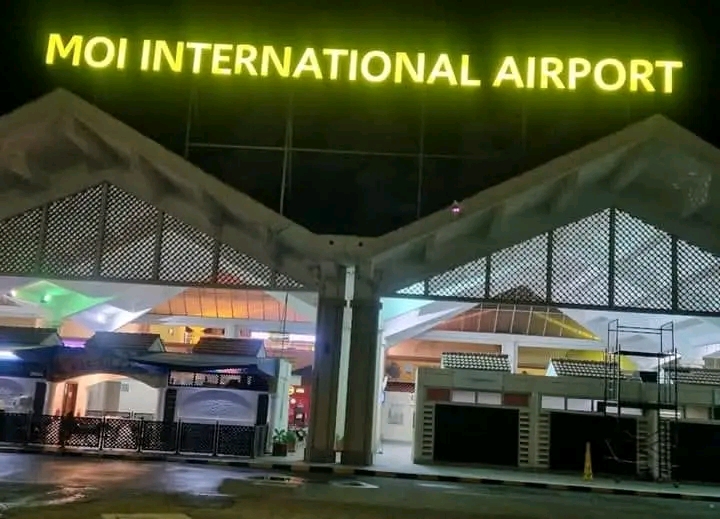
Moi International Airport in Mombasa has been severely disrupted following the ongoing aviation workers’ strike that began on August 30, 2026. The industrial action by Kenya Aviation Workers Union (KAWU) members has affected airport operations, resulting in flight delays, cancellations and stranded passengers. Although the airport has not been officially declared permanently closed, operations have been brought close to a standstill in some areas. Negotiations between the union, government and aviation employers are continuing, with passengers advised to confirm their flight status directly with their airlines before travelling to the airport.
Moi International Airport Grinds to a Near Halt as Aviation Workers’ Strike Strands Passengers in Mombasa
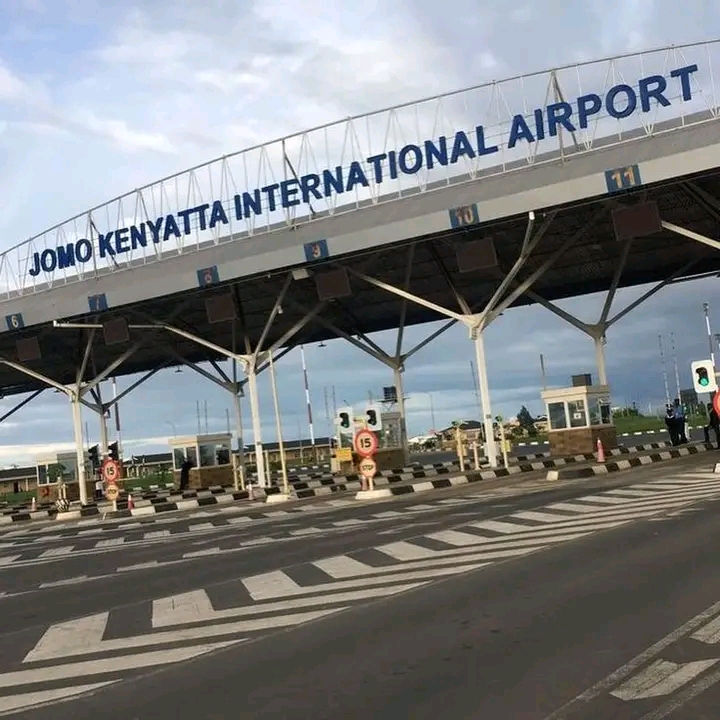
MOMBASA, Kenya — August 31, 2026: Moi International Airport in Mombasa has been hit by major operational disruptions as an aviation workers’ strike enters its second day, leaving passengers stranded and flights delayed or disrupted. The situation is part of a wider industrial action affecting Kenya’s airports, including Jomo Kenyatta International Airport (JKIA) in Nairobi. Reports from Monday confirm that Moi Airport was among the facilities affected after workers under the Kenya Aviation Workers Union (KAWU) downed tools and began a go-slow.
Is Moi International Airport actually closed?
The most accurate description is that Moi International Airport has not been permanently or officially closed, but its operations have been severely disrupted and brought close to a halt by the workers’ industrial action.
This distinction is important. A formal airport closure would normally mean that the facility has been officially shut and flights are prohibited from operating. What is happening in Mombasa is different: airport and aviation personnel have withdrawn or slowed down services, making it difficult for airlines to operate flights normally.
Citizen Digital reported that operations at both JKIA and Moi International Airport in Mombasa had ground to a near halt following the commencement of the strike. People Daily similarly reported that passengers were stranded at both airports on Monday as aviation workers withdrew services over unresolved labour grievances.
Therefore, travellers should not assume that every scheduled flight has been cancelled, but neither should they assume that a booking means the flight will operate normally.
What caused the disruption?
The immediate cause is a strike by members of the Kenya Aviation Workers Union (KAWU).
The union represents workers involved in different aspects of Kenya's aviation industry. Its members have raised grievances concerning employment conditions, welfare, previously agreed benefits and negotiations with aviation-sector employers.
According to Reuters, KAWU said its grievances included the failure to conclude a collective bargaining agreement with the Kenya Civil Aviation Authority (KCAA) and what the union described as inadequate cooperation from the Kenya Airports Authority (KAA) and airline Jambojet.
The dispute did not suddenly emerge on Monday. Reports indicate that there had been attempts to establish a framework for negotiations between the union and employers. Citizen Digital reported that a framework agreement had been signed on July 27 after Roads and Transport Cabinet Secretary Davis Chirchir brought the parties together and established a timetable for negotiations. However, the process subsequently failed to produce the resolution workers were seeking.
The failure to resolve the disagreements eventually resulted in renewed industrial action.
Strike began on Sunday
The current disruption began on Sunday, August 30, 2026, when aviation workers commenced a go-slow and withdrew services at major Kenyan airports.
The impact was immediately felt at JKIA, which handles the largest volume of international and domestic air traffic in Kenya. However, the effects were not confined to Nairobi.
Moi International Airport in Mombasa was also affected, creating significant concern for travellers in the coastal region.
By Monday, August 31, the strike had entered its second day, with reports of continued disruptions, delayed flights and passengers being left waiting for information.
The situation is particularly significant for Mombasa because Moi International Airport is a major gateway to Kenya's Coast. It serves domestic passengers travelling between Mombasa and Nairobi and other Kenyan destinations, as well as international travellers visiting the coastal tourism region.
Passengers stranded in Mombasa
One of the most serious consequences has been the number of passengers unable to travel according to their original schedules.
People Daily reported that thousands of passengers were stranded at JKIA and Moi International Airport following the strike.
Reports from the wider airport disruption indicate that passengers have faced long waiting periods, cancellations and uncertainty over when they would be able to travel.
At JKIA, some travellers spent the night inside airport facilities while waiting for airlines to provide information. By Monday morning, some airlines had begun arranging hotel transfers for affected passengers.
The same broader disruption has raised concerns among passengers travelling through Mombasa because flights arriving from Nairobi can also be affected by disruptions at JKIA.
For example, a passenger travelling from Nairobi to Mombasa may have a valid ticket and an apparently active flight number, but the aircraft could still be delayed because of operational problems at the originating airport.
Flights have not necessarily stopped completely
One of the key issues emerging from the investigation is the need to distinguish between airport closure and flight disruption.
Current reports do not support the claim that Moi International Airport has been permanently closed.
Instead, the airport is operating under extremely difficult circumstances because critical aviation workers are participating in industrial action.
At the national level, the Kenya Airports Authority has acknowledged widespread flight delays and advised passengers to contact their airlines before travelling to airports.
This means that some flights may still operate while others may be delayed, cancelled or rescheduled.
The situation can also change rapidly. A flight that appears scheduled in an airline's system may subsequently be delayed because the airline cannot complete the required airport or air-traffic-control processes.
Air traffic control problems add to the crisis
The disruption is not simply about check-in counters or airport ground staff.
KAA said Monday that disruption to Air Traffic Control services was continuing to affect flights at JKIA, with some services experiencing delays and cancellations. Passengers were therefore urged to confirm the status of their flights with their respective airlines before travelling to the airport.
This is particularly important because air traffic control is fundamental to the safe movement of aircraft.
When staffing levels are affected, airlines cannot simply continue operating a normal schedule regardless of the circumstances. Flights may have to be held, delayed, rerouted or cancelled depending on available aviation personnel and operational conditions.
Government and union negotiations
Attempts were made to resolve the dispute before the strike escalated.
According to Reuters, KAWU Secretary General Moss Ndiema said government officials and union representatives met on Sunday but failed to resolve the outstanding issues. The parties were expected to resume engagements on Monday, with negotiations scheduled to continue from 11 a.m.
However, the union indicated that the strike would continue while the negotiations were taking place.
This leaves passengers facing uncertainty because the duration of the disruption depends heavily on whether the government, aviation authorities and the union can reach an agreement.
If negotiations produce a breakthrough, airport operations could begin returning to normal. If talks fail, the disruption could continue and potentially cause a larger backlog of passengers and flights.
Why Mombasa is particularly vulnerable
Moi International Airport is strategically important to the Kenyan economy.
Mombasa is one of Kenya's most important tourism destinations, attracting both domestic and international visitors. The airport provides access to hotels, beaches, marine attractions, business centres and other coastal destinations.
A prolonged disruption could therefore affect more than passengers.
Hotels could experience delayed arrivals and cancellations. Tour operators could face changes to scheduled excursions. Taxi and transport operators could lose business when flights are cancelled. Airlines could also face additional costs from aircraft and crew disruptions.
International tourists who connect through Nairobi could be particularly affected because a problem at JKIA can have a knock-on effect on flights to Mombasa.
The economic consequences
Kenya's aviation industry plays an important role in tourism, trade and business travel.
A major airport disruption can affect the entire travel chain.
When flights are cancelled, passengers may need accommodation, meals and alternative transport. Airlines may need to reorganise aircraft schedules and crew movements. Hotels can lose bookings when tourists cancel trips or fail to arrive.
For Mombasa, the implications could be significant if the disruption lasts several days because the Coast relies heavily on tourism.
The strike therefore presents a challenge not only to aviation workers and airlines but also to businesses that depend on a steady flow of travellers.
What passengers travelling through Moi Airport should do
Passengers scheduled to travel from Moi International Airport should not rely solely on their original flight schedule.
The safest approach is to contact the airline directly and confirm whether the flight is operating.
KAA has specifically advised passengers affected by the disruption to liaise with their airlines and confirm flight status before heading to the airport.
Passengers should also ask their airline about:
Whether the flight has been cancelled or delayed.
The expected departure time.
Whether they have been rebooked.
Whether accommodation is being provided for passengers affected by prolonged delays.
Whether they can change their travel date without additional charges.
Whether an alternative route is available.
Travellers should also avoid assuming that a flight showing as "scheduled" on an online flight tracker will necessarily depart on time.
What happens next?
The immediate future of Moi International Airport depends largely on the negotiations between KAWU, government officials and aviation employers.
The strike has already entered its second day, and reports indicate that talks were continuing on Monday.
If an agreement is reached, workers could resume normal duties, allowing airlines and airport authorities to begin clearing the backlog.
However, even after workers return, passengers should expect continued delays for some time because airlines will need to deal with aircraft, crew and passenger backlogs created during the disruption.
If the industrial action continues, the consequences could become more serious, with more cancellations, stranded passengers and disruption to tourism and business travel.
Bottom line
The latest evidence shows that Moi International Airport in Mombasa has not been officially and permanently closed, but aviation workers' industrial action has severely disrupted operations and brought activity close to a halt. The disruption began on Sunday, August 30, and continued into Monday, August 31, affecting passengers at both Moi Airport and JKIA.
The central dispute involves unresolved labour grievances raised by KAWU, including collective bargaining issues, working conditions, welfare and previously agreed employment benefits. Negotiations between the union and government have so far failed to produce an immediate solution, although further talks were expected on Monday.
For travellers, the most important message is simple: do not travel to Moi International Airport without first confirming your flight directly with the airline. The airport remains an operating facility, but the strike means normal flight schedules cannot currently be relied upon.
The situation remains fluid, and a breakthrough in negotiations could restore operations, while a failure to reach an agreement could prolong the disruption and increase the number of stranded passengers

You Might Also Like
-
Kipkelion elders today, August 31, 2026, held a crucial meeting to deliberate on the proposed Londiani Referral Hospital, amid growing concerns over the project's delayed implementation and reports of a possible change of location. The elders are said to have reaffirmed their interest in having the
-
Esther Passaris Explains Support for Ruto, Citing Development Projects in Nairobi
-
A 45-year-old woman identified as Doris Murei Nandi was allegedly shot dead on Sunday, August 30, 2026, at the GSU Mess near the Eldoret State Lodge following a dispute with Police Constable Nathan Kirwa. Police recovered seven spent 9mm cartridges and a rifle holster at the scene. Kirwa reportedly
-
Kenya's aviation sector is facing major disruption after Kenya Aviation Workers Union (KAWU) members resumed their strike on Sunday, August 30, 2026, with the industrial action entering its second day on Monday. The strike has disrupted operations at Jomo Kenyatta International Airport (JKIA), Moi I
-
The Chinese contractor undertaking the construction of the Rironi–Mau Summit road is expected to complete the tarmacking of the Rironi–Naivasha section by December, in a development that could provide major relief to motorists who have endured persistent traffic congestion along the busy route.
-
Kelvin Kimwatu Withdraws Court Case Over Burial of Wife Rosemary Chemutai Koech